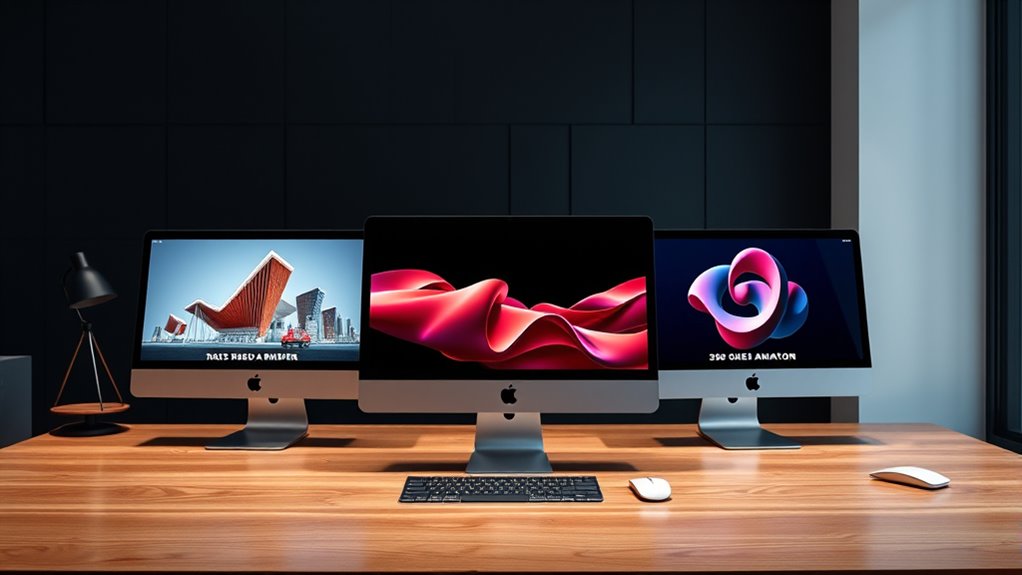

When it comes to 3D rendering on a Mac, choosing the right Mac Studio depends on your performance needs and budget. The Mac Studio M3 Ultra stands out as the best overall for its unmatched processing power, making complex renders faster and smoother. For those seeking high-end capabilities without breaking the bank, the Mac Studio with M4 Max offers a compelling mix of performance and value. Meanwhile, the Mac mini with M4 Pro provides a compact, budget-friendly option that still handles demanding 3D tasks well. The main challenge in this category is balancing raw power against cost and form factor. Keep reading for a detailed breakdown of each option, helping you find the best fit for your 3D rendering needs.

Get your wardrobe favorites delivered free with Prime
- Fast, free delivery on millions of items
- Prime Video, Amazon Music and more included
- Member-only deals all year
Key Takeaways
- The Mac Studio M3 Ultra dominates in sheer performance, ideal for complex, large-scale projects.
- Memory capacity, especially 64GB or more, is crucial for smooth multitasking and handling large 3D files.
- The Mac mini with M4 Pro offers excellent value but may fall short for extremely intensive rendering workflows.
- Form factor matters: larger Mac Studios provide more expandability and cooling, benefiting sustained heavy loads.
- Choosing between M3 Ultra and M4 Max depends on your specific rendering complexity and budget constraints.
| Apple 2024 MacBook Pro with M4 Pro Chip, 14-inch, 24GB RAM, 1TB SSD, Space Black (Renewed) |  | Best Portable Power for 3D Rendering | Processor: M4 Pro or M4 Max | Display: 14.2-inch Liquid Retina XDR | RAM: 24GB | VIEW ON AMAZON | See Our Full Breakdown |
| Apple Mac Studio M3 Ultra 32-Core CPU / 80-Core GPU, 256GB RAM, 1TB SSD |  | Best for Heavy-Duty 3D Rendering and Professional Workflows | Processor: M3 Ultra 32-core CPU / 80-core GPU | Memory: 256GB | Storage: 1TB SSD | VIEW ON AMAZON | See Our Full Breakdown |
| Apple 2024 Mac mini Desktop Computer with M4 Pro Chip, 24GB Memory, 512GB SSD |  | Best Compact Desktop for 3D Rendering | Processor: M4 Pro with 12-core CPU and 16-core GPU | Memory: 24GB | Storage: 512GB SSD | VIEW ON AMAZON | See Our Full Breakdown |
| Apple 2026 Mac mini with M4 Pro Chip, 10-core CPU and GPU, 24GB Memory, 1TB Storage | 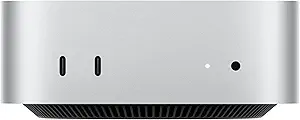 | Best Entry-Level Desktop for 3D Beginners | Processor: M4 Pro with 10-core CPU/GPU | Memory: 24GB | Storage: 1TB SSD | VIEW ON AMAZON | See Our Full Breakdown |
| Apple 2026 MacBook Pro with M5 Max Chip, 16.2-inch Liquid Retina XDR, 36GB RAM, 2TB SSD | 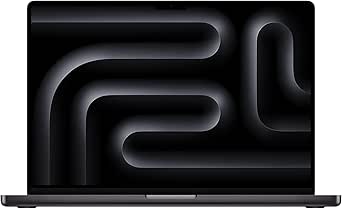 | Best for High-End Mobile 3D Workstations | Processor: M5 Max with 18-core CPU / 32-core GPU | Display: 16.2-inch Liquid Retina XDR | Memory: 36GB | VIEW ON AMAZON | See Our Full Breakdown |
| Apple Mac Studio with M4 Max, 16-Core CPU, 40-Core GPU, 64GB Unified Memory, 2TB SSD | | Best Overall for 3D Rendering | Processor: M4 Max 16-Core CPU | Graphics: 40-Core GPU | Memory: 64GB Unified Memory | VIEW ON AMAZON | See Our Full Breakdown |
| Apple 2026 Mac Studio Desktop Computer with M5 Max Chip |  | Best for High-End 3D and AI Workloads | Processor: M5 Max chip | Memory: Up to 128GB unified memory | Memory Bandwidth: 614GB/s | VIEW ON AMAZON | See Our Full Breakdown |
| Apple 2026 MacBook Pro Laptop with M5 Max Chip, 14.2-inch Liquid Retina XDR Display, 36GB RAM, 2TB SSD |  | Best Portable Power for 3D Professionals | Processor: M5 Max, 18-core CPU | Display: 14.2-inch Liquid Retina XDR | Memory: 36GB Unified Memory | VIEW ON AMAZON | See Our Full Breakdown |
| Apple 2024 MacBook Pro Laptop with M4 Max, 14-inch Liquid Retina XDR Display, 36GB RAM, 1TB SSD |  | Best Compact Desktop Replacement for 3D Work | Processor: M4 Max | Display: 14-inch Liquid Retina XDR | Memory: 36GB Unified Memory | VIEW ON AMAZON | See Our Full Breakdown |
| mac studio for 3d rendering | Processor | Storage | Memory | Connectivity |
|---|---|---|---|---|
| Apple 2024 MacBook Pro with M4 | M4 Pro or M4 Max | 1TB SSD | — | — |
| Apple Mac Studio M3 Ultra 32-C | M3 Ultra 32-core CPU / 80-core GPU | 1TB SSD | 256GB | Thunderbolt 5, USB 3, HDMI 2.1, 10Gb Ethernet |
| Apple 2024 Mac mini Desktop Co | M4 Pro with 12-core CPU and 16-core GPU | 512GB SSD | 24GB | Thunderbolt, HDMI, Gigabit Ethernet, USB-C, headphone jack |
| Apple 2026 Mac mini with M4 Pr | M4 Pro with 10-core CPU/GPU | 1TB SSD | 24GB | Thunderbolt, HDMI, USB-C, Ethernet |
| Apple 2026 MacBook Pro with M5 | M5 Max with 18-core CPU / 32-core GPU | 2TB SSD | 36GB | Wi-Fi 7, Bluetooth 6, Thunderbolt 5, MagSafe 3 |
| Apple Mac Studio with M4 Max | M4 Max 16-Core CPU | 2TB SSD | 64GB Unified Memory | Standard Thunderbolt and USB |
| Apple 2026 Mac Studio Desktop | M5 Max chip | Up to 2x faster storage | Up to 128GB unified memory | Thunderbolt 5, HDMI, SDXC |
| Apple 2026 MacBook Pro Laptop | M5 Max, 18-core CPU | 2TB SSD | 36GB Unified Memory | — |
| Apple 2024 MacBook Pro Laptop | M4 Max | 1TB SSD | 36GB Unified Memory | — |
More Details on Our Top Picks
Apple 2024 MacBook Pro with M4 Pro Chip, 14-inch, 24GB RAM, 1TB SSD, Space Black (Renewed)
This MacBook Pro stands out for its powerful M4 Pro or M4 Max chip, making it a compelling choice for artists who need mobility without sacrificing performance. Compared with the Mac mini options, its portability is a major advantage, allowing me to work on 3D projects from anywhere. While it doesn’t match the raw performance of a dedicated desktop like the Mac Studio, its integrated display and battery life make it ideal for on-the-go workflows. The 14.2-inch Liquid Retina XDR display ensures detailed visuals, crucial for 3D rendering work. However, the premium price and the fact that this is a renewed product could be deterrents for some buyers concerned about longevity and warranty coverage.Pros:- Powerful M4 Pro or M4 Max chip capable of demanding tasks
- Vivid Liquid Retina XDR display for detailed visuals
- Excellent portability with long battery life
Cons:- Premium price may be prohibitive
- Renewed status may involve warranty concerns
Best for: Creative professionals who need high performance yet require portability for 3D modeling and rendering.
Not ideal for: Heavy-duty rendering at the highest complexity levels — the device’s thermal design may limit sustained performance compared to desktops.
- Processor:M4 Pro or M4 Max
- Display:14.2-inch Liquid Retina XDR
- RAM:24GB
- Storage:1TB SSD
- Ports:Three Thunderbolt 5, MagSafe 3, SDXC, HDMI, headphone jack
- External Displays Support:Up to 2 with M4 Pro, up to 4 with M4 Max
Our verdict“This pick suits mobile professionals who prioritize performance and display quality over maximum desktop upgradeability.”
Apple Mac Studio M3 Ultra 32-Core CPU / 80-Core GPU, 256GB RAM, 1TB SSD
The Mac Studio with M3 Ultra delivers exceptional processing and graphics power, making it a standout for complex 3D rendering tasks that require sustained high performance. Compared to the Mac mini options, its thermal management and larger form factor support longer, intensive workloads without throttling. Its support for up to 8K resolution and 8 displays makes it ideal for multi-monitor setups critical in professional environments. The extensive memory and fast SSD storage further streamline large project workflows. However, its high price point and lack of upgrade options post-purchase make it less suitable for users seeking flexibility or a smaller budget.Pros:- Top-tier CPU and GPU for demanding rendering tasks
- Supports multiple high-resolution displays with ease
- Fast SSD and massive memory capacity
Cons:- High investment cost
- Limited upgrade options after purchase
Best for: Professional 3D artists and studios needing maximum raw power and multi-display support.
Not ideal for: Budget-conscious hobbyists or those who require portability — the desktop form factor and high cost may be prohibitive.
- Processor:M3 Ultra 32-core CPU / 80-core GPU
- Memory:256GB
- Storage:1TB SSD
- Display Support:Up to 8K, 8 displays
- Connectivity:Thunderbolt 5, USB 3, HDMI 2.1, 10Gb Ethernet
Our verdict“This machine is best suited for professional studios and power users prioritizing maximum performance over cost or portability.”
Apple 2024 Mac mini Desktop Computer with M4 Pro Chip, 24GB Memory, 512GB SSD
The Mac mini with M4 Pro chip offers a surprisingly capable platform for 3D rendering within a small footprint. Its compact 5×5-inch design makes it ideal for tight spaces, yet it doesn’t compromise much on performance—comparable to the higher-end MacBook Pro in CPU power. While it supports multiple ports for connectivity, it lacks dedicated GPU options, which could limit performance in extremely GPU-intensive rendering projects. Compared to the Mac Studio, it’s less powerful, but for users who need a space-efficient solution with solid performance, it hits a sweet spot. However, the limited upgradeability and higher price relative to base models can be drawbacks.Pros:- Compact and space-efficient design
- Powerful M4 Pro chip for demanding tasks
- Multiple ports for versatile connectivity
Cons:- Limited upgrade options
- No dedicated GPU, potential performance bottleneck for intensive rendering
Best for: Small studios or home offices where space is limited but high-performance rendering is needed.
Not ideal for: Heavy multi-GPU workflows or users seeking future upgrade paths due to fixed RAM and storage configurations.
- Processor:M4 Pro with 12-core CPU and 16-core GPU
- Memory:24GB
- Storage:512GB SSD
- Dimensions:5 x 5 x 2 inches
- Connectivity:Thunderbolt, HDMI, Gigabit Ethernet, USB-C, headphone jack
Our verdict“This Mac mini is a smart choice for space-conscious professionals who need solid 3D rendering power in a small form factor.”
Apple 2026 Mac mini with M4 Pro Chip, 10-core CPU and GPU, 24GB Memory, 1TB Storage
The latest Mac mini with M4 Pro chip offers a balance of performance and affordability, making it suitable for newcomers to 3D rendering or those working on less complex projects. Its 10-core CPU and GPU provide enough power for basic to moderate rendering tasks, especially compared with older Mac mini models. While it lacks the high-end GPU options found in larger desktops, it remains a capable choice for learning and small-scale professional work. Its compact size and seamless Apple ecosystem integration are added benefits. The main tradeoff involves limited upgrade options and the higher price relative to performance compared to older models or Windows alternatives.Pros:- Compact and easy to place anywhere
- Decent CPU and GPU for entry-level rendering
- Good connectivity options
Cons:- Limited upgrade options
- No dedicated GPU options
Best for: Beginners or hobbyists starting 3D projects who want Apple ecosystem benefits without the highest-tier investment.
Not ideal for: High-end professional or studio-level rendering where maximum GPU power and upgrade paths are necessary.
- Processor:M4 Pro with 10-core CPU/GPU
- Memory:24GB
- Storage:1TB SSD
- Dimensions:5 x 5 inches
- Connectivity:Thunderbolt, HDMI, USB-C, Ethernet
Our verdict“This Mac mini is best for entry-level users seeking a compact, capable Apple-based system for learning and small projects.”
Apple 2026 MacBook Pro with M5 Max Chip, 16.2-inch Liquid Retina XDR, 36GB RAM, 2TB SSD
The MacBook Pro with M5 Max chip redefines portable power, ideal for demanding 3D rendering on the move. Its 16.2-inch Liquid Retina XDR display offers stunning visuals, critical when evaluating detailed renders. The 36GB of RAM and 2TB SSD ensure smooth handling of large models and projects. Compared to the Mac Studio, this is a less powerful desktop but provides unmatched mobility for professionals who need to work from multiple locations. However, at around 4.7 pounds, it’s heavier than typical laptops, and the cost is high, especially considering the premium features. It’s less suited for users who prioritize maximum desktop performance over portability.Pros:- Exceptional CPU and GPU performance with M5 Max
- Large, vibrant display for detailed visual work
- Ample memory and storage for intensive projects
Cons:- Heavy for a laptop at nearly 5 pounds
- Premium price limits accessibility for some users
Best for: High-end professionals needing a mobile workstation with top-tier specs for 3D rendering.
Not ideal for: Budget-conscious users or those with minimal need for portability, as the price and weight are significant considerations.
- Processor:M5 Max with 18-core CPU / 32-core GPU
- Display:16.2-inch Liquid Retina XDR
- Memory:36GB
- Storage:2TB SSD
- Battery Life:All-day
- Connectivity:Wi-Fi 7, Bluetooth 6, Thunderbolt 5, MagSafe 3
Our verdict“This device is best for mobile professionals who need desktop-level performance in a portable form factor.”
Apple Mac Studio with M4 Max, 16-Core CPU, 40-Core GPU, 64GB Unified Memory, 2TB SSD
This Mac Studio stands out as the top choice for serious 3D artists due to its powerful M4 Max chip and extensive GPU core count, which significantly accelerates rendering times compared to the Mac Mini with M4 or M4 Pro chips. The 64GB of unified memory ensures smooth multitasking and handling complex scenes, making it ideal for demanding workflows. Its compact, quiet design means it can sit comfortably on any desk without adding clutter or noise. While its price isn’t discussed, this model’s high-end specs justify the investment for professionals. However, its reliance on the Apple ecosystem limits flexibility for users who need to integrate with non-Apple hardware or prefer more customizable setups.
Pros:- Exceptional CPU and GPU power tailored for rendering and AI tasks
- Large 64GB unified memory supports complex projects
- Compact and quiet, ideal for desktop use
Cons:- High price point may be prohibitive for some users
- Limited expandability and flexibility outside Apple environment
Best for: Professional 3D artists and visual effects studios needing maximum rendering speed and multitasking capacity.
Not ideal for: Budget-conscious hobbyists or those seeking flexible hardware options outside Apple’s ecosystem.
- Processor:M4 Max 16-Core CPU
- Graphics:40-Core GPU
- Memory:64GB Unified Memory
- Storage:2TB SSD
- Form factor:Desktop, compact
- Connectivity:Standard Thunderbolt and USB
Our verdict“This Mac Studio is best suited for professionals who require top-tier rendering performance within a compact, silent design.”
Apple 2026 Mac Studio Desktop Computer with M5 Max Chip
The M5 Max-equipped Mac Studio is designed for professionals pushing the limits of 3D rendering, AI, and media processing. Its extensive 128GB memory bandwidth and up to 2x faster storage surpass the M4 Max models, making it ideal for massive datasets and complex simulations. The inclusion of extensive ports like Thunderbolt 5, HDMI, and SDXC ensures seamless workflow integration with peripherals and external displays. Compared with the M4 Max version, this model offers a significant boost in raw power and memory capacity, but it comes with a higher price tag and potentially limited availability. Its lack of an integrated display means you’ll need to pair it with high-quality monitors, adding to overall costs.
Pros:- Unmatched CPU and GPU performance with M5 Max
- Extensive connectivity options for professional workflows
- Supports large memory configurations and fast storage
Cons:- Price and availability may be restrictive
- No bundled peripherals or display
Best for: High-end 3D artists, AI developers, and media professionals requiring maximum processing and memory bandwidth.
Not ideal for: Casual users or those with limited budgets who do not need the utmost performance or extensive connectivity.
- Processor:M5 Max chip
- Memory:Up to 128GB unified memory
- Memory Bandwidth:614GB/s
- Storage:Up to 2x faster storage
- Connectivity:Thunderbolt 5, HDMI, SDXC
- Dimensions:7.7 inches square
Our verdict“This desktop is perfect for power users who demand the highest performance and connectivity for 3D and AI tasks.”
Apple 2026 MacBook Pro Laptop with M5 Max Chip, 14.2-inch Liquid Retina XDR Display, 36GB RAM, 2TB SSD
The MacBook Pro with M5 Max is a compelling choice for artists who need high performance on the go. Its 18-core CPU and 32-core GPU deliver desktop-level rendering speeds, rivaling the Mac Studio in a portable form factor. The 14.2-inch Liquid Retina XDR display provides critical color accuracy and high contrast, which is vital for visual work. Its 36GB RAM and 2TB SSD ensure demanding projects run smoothly without bottlenecks. Compared to the Mac Mini with M4, this model offers significantly more power and better display quality, though at a higher price. While its battery life and portability are impressive, the premium cost might be a barrier for some users, especially those not fully embedded in Apple’s ecosystem.
Pros:- High-performance M5 Max chip with AI acceleration
- Vivid Liquid Retina XDR display for precise editing
- Excellent portability with robust specs
Cons:- Premium price point
- Limited storage for demanding projects without external drives
Best for: Creative professionals who need mobility without sacrificing high-end rendering and multitasking capabilities.
Not ideal for: Budget users or those who prefer desktops with upgrade paths and larger screens.
- Processor:M5 Max, 18-core CPU
- Display:14.2-inch Liquid Retina XDR
- Memory:36GB Unified Memory
- Storage:2TB SSD
- Battery Life:All-day
- Ports:Thunderbolt 5, HDMI, SDXC
Our verdict“This laptop strikes a balance between power and portability, ideal for mobile professionals needing top-tier rendering capabilities.”
Apple 2024 MacBook Pro Laptop with M4 Max, 14-inch Liquid Retina XDR Display, 36GB RAM, 1TB SSD
The M4 Max MacBook Pro offers impressive power in a portable 14-inch package, making it suitable for mobile 3D artists and those who prefer a lightweight workstation. Its 14-inch Liquid Retina XDR display ensures excellent color fidelity and contrast for detailed visualization. The 36GB RAM and 1TB SSD support demanding rendering tasks, though the storage might require external drives for larger projects. Compared with the Mac Mini or Mac Studio, this model offers a more integrated experience, including a high-quality display and reliable battery life. Its main tradeoff is the high price relative to performance, especially for users who can’t fully leverage its portability or don’t need the dedicated mobile form factor.
Pros:- Powerful M4 Max chip with excellent AI and rendering capabilities
- Vivid Liquid Retina XDR display
- All-day battery life and seamless Apple integration
Cons:- Higher cost relative to performance for some workflows
- Limited storage capacity without external solutions
Best for: Mobile professionals who need robust performance without sacrificing portability or display quality.
Not ideal for: Users requiring extensive storage or those preferring a desktop setup with upgrade potential.
- Processor:M4 Max
- Display:14-inch Liquid Retina XDR
- Memory:36GB Unified Memory
- Storage:1TB SSD
- Battery Life:All-day
- Ports:Thunderbolt 5, HDMI, SDXC
Our verdict“This MacBook Pro is ideal for professionals who value high performance, portability, and display quality in a compact form.”

How We Picked
Products were evaluated based on their raw processing power, GPU capabilities, memory capacity, and overall build quality, all critical for 3D rendering workflows. We prioritized configurations with high-core CPUs and GPUs, as these directly impact rendering speed and efficiency. Price and value were also considered, ensuring options cater to different budgets without sacrificing essential performance features. The ranking reflects a balance between maximum performance for demanding tasks and practical considerations like size and expandability, making sure each pick serves a clear user profile.
| mac studio for 3d rendering | Connectivity |
|---|---|
| Apple 2024 MacBook Pro with M4 | — |
| Apple Mac Studio M3 Ultra 32-C | Thunderbolt 5, USB 3, HDMI 2.1, 10Gb Ethernet |
| Apple 2024 Mac mini Desktop Co | Thunderbolt, HDMI, Gigabit Ethernet, USB-C, headphone jack |
| Apple 2026 Mac mini with M4 Pr | Thunderbolt, HDMI, USB-C, Ethernet |
| Apple 2026 MacBook Pro with M5 | Wi-Fi 7, Bluetooth 6, Thunderbolt 5, MagSafe 3 |
| Apple Mac Studio with M4 Max | Standard Thunderbolt and USB |
| Apple 2026 Mac Studio Desktop | Thunderbolt 5, HDMI, SDXC |
| Apple 2026 MacBook Pro Laptop | — |
| Apple 2024 MacBook Pro Laptop | — |
Factors to Consider When Choosing Mac Studio For 3d Rendering
When selecting a Mac Studio for 3D rendering, understanding key factors beyond raw specs can save you money and frustration. Think about your typical project size and complexity, as this influences how much GPU and RAM you need. Budget constraints often lead to tradeoffs between performance and cost, so prioritize what matters most for your workflow. Additionally, consider the form factor if space and portability are concerns. Lastly, future-proofing your setup with higher specs can extend the usable life of your investment, especially as rendering software demands grow.
Performance and GPU Power
The core of 3D rendering performance lies in processing power and GPU capabilities. Opt for configurations with multiple GPU cores, like the M3 Ultra or M4 Max, which significantly reduce rendering times for complex scenes. Avoid underpowered models if your projects involve high-poly models or real-time rendering, as it will lead to lengthy wait times and frustration. Remember, more GPU cores typically mean higher costs, so balance your budget with the need for speed.
Memory Capacity
Large 3D projects often require extensive RAM to operate smoothly. 64GB or more is ideal for professional workflows, allowing multiple applications and large files to run simultaneously without bottlenecks. Lower RAM configurations may suffice for simpler tasks but risk slowing down or crashing during intensive rendering. Investing in higher memory capacities pays off if you handle complex scenes regularly, but be aware that it can increase the initial cost.
Form Factor and Expandability
The size and design of your workstation influence cooling, noise, and future upgrades. Larger Mac Studios tend to offer better thermal management and more ports for expansion, which benefits long rendering sessions. Compact models like the Mac mini are more space-efficient but may limit upgrade options and thermal performance under heavy loads. Consider your workspace and whether you might want to upgrade components later when choosing the size.
Price and Future-Proofing
While high-end configurations deliver peak performance, they come at a premium. Balance your current rendering needs with potential future demands—opting for slightly higher specs can extend the useful lifespan of your machine. Be cautious of models with lower RAM or GPU cores if you anticipate scaling up your projects. Remember, investing more upfront can save you from needing an upgrade sooner, but only if it aligns with your budget.
Software Compatibility and Ecosystem
Ensure your preferred 3D software fully supports the hardware you choose, especially when considering new Apple Silicon chips. Compatibility issues can negate performance gains, so verify that your key tools are optimized for the latest Macs. Also, the Apple ecosystem offers seamless integration with other devices, which can streamline your workflow. Factor in your existing setup to avoid bottlenecks or compatibility frustrations.
Frequently Asked Questions
Is the Mac Studio with M3 Ultra enough for large-scale 3D rendering projects?
Yes, the Mac Studio with M3 Ultra offers exceptional processing and GPU power suited for demanding 3D rendering tasks. Its high-core CPU and GPU configurations significantly reduce render times, making it a favorite among professionals working on complex scenes. However, for extremely large projects or multi-user environments, consider models with even higher specs or additional external GPU options if supported. This ensures your setup remains efficient as project complexity grows.
Should I choose a Mac mini or Mac Studio for 3D rendering?
The choice depends on your performance needs and workspace constraints. The Mac mini with M4 Pro provides a more affordable, compact solution capable of handling moderate to high-end rendering tasks, especially with ample RAM. The Mac Studio, on the other hand, offers superior cooling, more ports, and higher GPU power, making it better suited for sustained heavy workloads. For professional, large-scale projects, the Mac Studio is generally the better investment despite its higher cost.
How much RAM do I need for complex 3D rendering?
For complex projects involving high-poly models, detailed textures, and large scenes, 64GB of RAM or more is recommended. This ensures smooth multitasking and prevents slowdowns or crashes during intensive rendering sessions. If your work is less demanding, 32GB may suffice, but keep in mind that future projects might require upgrading. Always consider your current and anticipated workload when choosing RAM capacity, as it directly impacts workflow efficiency.
Can I upgrade components like RAM or storage later?
Most Mac Studio models are configured with soldered RAM, which cannot be upgraded after purchase. Storage options, however, are often upgradeable or expandable via external drives, depending on the model. This makes choosing the right initial configuration important, especially for RAM, which should meet your long-term needs. Planning ahead for future storage expansion can save money and prevent workflow interruptions down the line.
What is the best way to future-proof my Mac for 3D rendering?
Investing in the highest available CPU and GPU cores, along with ample RAM (64GB or more), is the most effective way to future-proof your machine. Also, selecting a model with better thermal management and expandability options ensures sustained performance during intensive workloads. Keep an eye on upcoming software updates and hardware releases, as staying compatible with the latest tools can extend your setup’s relevance for years. Higher initial investment in top-tier specs often pays off in long-term efficiency.
Conclusion
For demanding professional 3D artists and studios, the Mac Studio with M3 Ultra remains the best overall choice, offering unmatched power and efficiency. Budget-conscious creators who still require robust performance should consider the Mac mini with M4 Pro, which balances cost and capability. Those seeking premium, long-term solutions will find the Mac Studio with M4 Max a compelling upgrade—delivering high-end specs with future scalability. Beginners or those with lighter workloads can start with the Mac mini, while large studios should look toward the M3 Ultra or M4 Max configurations for sustained, demanding rendering. Matching your specific project scope and budget will guide you to the right fit.