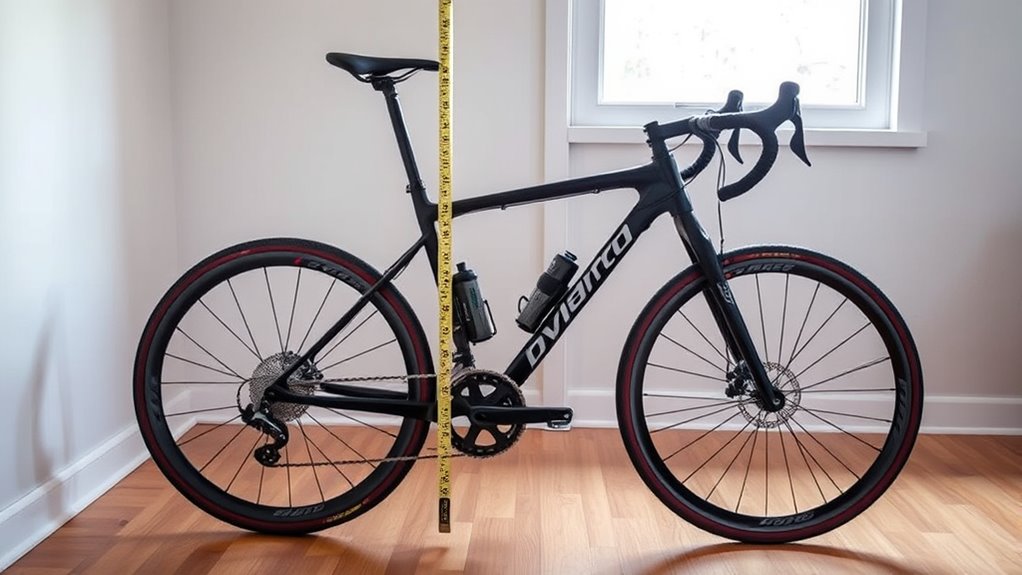

To size a bike at home, start by measuring your standover height—stand over the bike with your feet flat and check the distance from ground to top tube, ensuring 1-2 inches of clearance for comfort. Next, assess your reach by sitting on the saddle and extending your arms to handlebar level, adjusting as needed. Consider stack height to match your torso length and riding style. Knowing these measurements will help you choose the perfect fit and ride confidently.
Key Takeaways
- Measure standover height by standing over the bike frame on flat ground, ensuring 1-2 inches clearance for road bikes.
- Determine reach by sitting on the saddle and extending your arms forward to check handlebar distance.
- Measure stack height from the bottom bracket center vertically to the top of the head tube for proper upright positioning.
- Use at-home tools like a tape measure and a level surface to accurately assess frame dimensions without professional help.
- Combine standover, reach, and stack measurements to select a bike that aligns with your body proportions for comfort and control.
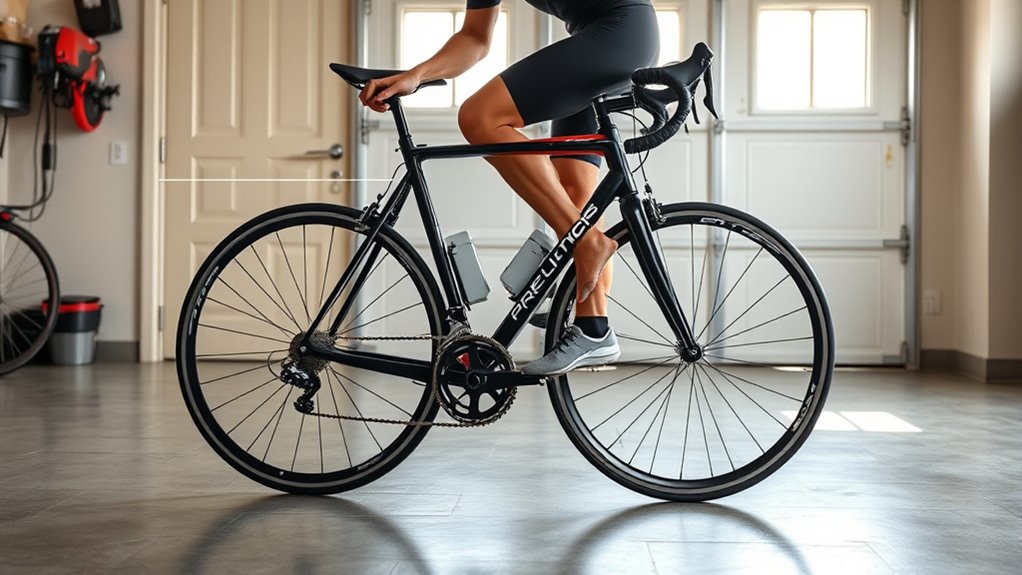
Finding the right bike size at home is vital to guarantee comfort, safety, and efficient riding. When you’re choosing a bike, focusing on your body measurements and how the bike’s frame geometry interacts with your physique makes all the difference. The key is achieving an ergonomic fit—meaning the bike supports your natural posture and movement, reducing fatigue and improving control. To do this, start by considering the frame geometry, which includes measurements like top tube length, seat tube length, and head tube angle. These elements influence how your body aligns with the bike and how comfortable you’ll feel during rides.
Choosing the right bike size ensures comfort, safety, and optimal performance tailored to your body’s fit.
The first step is evaluating your standover height, which is the distance between the ground and the top tube of the bike frame. When you’re standing over the bike, there should be about 1-2 inches of clearance for road bikes and slightly more for mountain bikes. This guarantees you can dismount quickly and comfortably without feeling cramped or risking injury. To measure this at home, use a tape measure and stand over the bike frame, making sure you’re on flat, level ground. If the standover height feels tight, consider a smaller frame size; if there’s too much clearance and the bike feels unstable, you might need a larger size.
Next, focus on the reach, which is how far you have to stretch from your saddle to the handlebars. Proper reach is essential for maintaining an ergonomic fit, preventing strain on your back, neck, and shoulders. You can approximate this by sitting on the bike or a similar height surface, then reaching forward comfortably to grip the bars. If your shoulders are hunched or you’re stretching excessively, the reach is too long. Conversely, if you’re overly curled or cramped, it’s too short. Adjusting the stem length or handlebar position can fine-tune this aspect, but starting with a bike that naturally fits your reach is ideal.
Stack height, which measures the vertical distance from the center of the bottom bracket to the top of the head tube, also impacts comfort. A higher stack provides a more upright, relaxed riding position, suitable for endurance or leisure riding. A lower stack promotes a more aggressive, aerodynamic stance, often preferred in racing. When sizing at home, compare your torso and arm length to these measurements to find a bike with an appropriate stack height. Additionally, frame geometry plays a crucial role in how these measurements translate into comfort and performance.
All these elements—standover, reach, and stack—interact with the bike’s frame geometry to determine how well the bike matches your body. Taking the time to accurately assess each at home guarantees you’ll choose a bike that offers an ergonomic fit, making every ride safer, more comfortable, and more efficient.
GDMINLO Soft Tape Measure Double Scale Body Sewing Flexible Tailor Craft Vinyl Ruler for Weight Loss Medical Body Measurement, Has Centimetre Scale on Reverse Side 60-inch(White)
Measuring range: 0 to 60 inches and 0 to 150 centimeters. There is a centimeter scale on the…
As an affiliate, we earn on qualifying purchases.
As an affiliate, we earn on qualifying purchases.
Frequently Asked Questions
How Often Should I Re-Measure My Bike Fit?
You should re-measure your bike fit every 3 to 6 months, or whenever you notice discomfort, pain, or changes in flexibility. Regular bike fit maintenance guarantees maximum comfort and performance. Sizing intervals depend on your riding frequency and physical changes. If you’ve experienced weight changes or injuries, it’s best to check your fit sooner. Staying proactive helps prevent injuries and keeps your rides enjoyable.
Can Shoe Size Affect Bike Sizing Accuracy?
Did you know that shoe size can sometimes mislead bike sizing? Your shoe size doesn’t always perfectly match your foot length, which is what really matters when sizing a bike. If your shoe size is off or your foot length changes, it can affect your bike fit accuracy. Always measure your foot length directly and consider it over just shoe size to guarantee a comfortable, precise fit.
What Adjustments Can Improve Comfort on a Poorly Fitted Bike?
To improve comfort on a poorly fitted bike, start by adjusting your saddle height so your leg slightly bends at the bottom of the pedal stroke. Also, tweak the handlebar reach to ensure you’re not overstretching or feeling cramped. These small changes can make a big difference, reducing discomfort and preventing strain. Experiment with these adjustments until you find a position that feels natural and supports your riding style.
How Do I Choose the Right Handlebars for My Height?
Choosing the right handlebars is like finding your bike’s handshake. For your height, pick handlebar width that matches your shoulder width for comfort and control. Consider handlebar shape—flat, riser, or drop—based on your riding style. A wider handlebar offers stability, while a narrower one boosts agility. Test different options to see what feels natural, ensuring your hands and shoulders stay relaxed during long rides.
Is a Professional Bike Fitting Necessary for Home Sizing?
A professional bike fitting isn’t always necessary, but it can dispel bike fitting myths and guarantee comfort. If you’re confident with DIY fitting tips, you can try adjusting saddle height and handlebar position yourself. However, if you experience persistent discomfort or want ideal performance, a professional fitting helps fine-tune your setup. It’s especially useful for preventing injuries and making sure your bike matches your unique body measurements.

DURATECH 41 Pieces Bike Repair Tools, Complete Bike Tools Kit with Storage Box, Mountain Bike Maintenance Tools, for Mountain, Road, and Park Bicycle with Chain Riveter, Tire Levers, Crank Puller
Complete Kit: Our Bike tool kit includes everything you need to perform both major or delicate work without…
As an affiliate, we earn on qualifying purchases.
As an affiliate, we earn on qualifying purchases.
Conclusion
By understanding standover height, reach, and stack, you can find the perfect bike size from home. Remember, a properly fitted bike can improve comfort and reduce injury risk. Did you know that over 60% of riders experience discomfort due to incorrect sizing? Taking the time to measure and choose wisely guarantees every ride is safe, enjoyable, and tailored just for you. So, get your measurements right and hit the road with confidence!

Shcobomo Bicycle Bike Seat Cushion Height Measuring Tool, Precision Gauge for MTB & Road Bike Saddle Adjustment, Magnetic Height Adjustment Tool for Cycles, Universal Fit for All Bike Types
Scientific Measurement for Optimal Riding: With the MTB road bike saddle measure tool, quickly and precisely find your…
As an affiliate, we earn on qualifying purchases.
As an affiliate, we earn on qualifying purchases.

Bike Repair Kit, Bicycle Repair Bag With Tire Pump, Bike Tool Kit for Camping Travel, 16-in-1 Bike Multitool, Bicycle Tire Repair Kit, 4mm and 5mm Allen Wrenches, Used for Mountain Bike and Road Bike
【Bike Repair Kit】- Bike tool kit includes 1pcs mini tire pump with extra valve, 1pcs 16-in-1 bike multitool,…
As an affiliate, we earn on qualifying purchases.
As an affiliate, we earn on qualifying purchases.