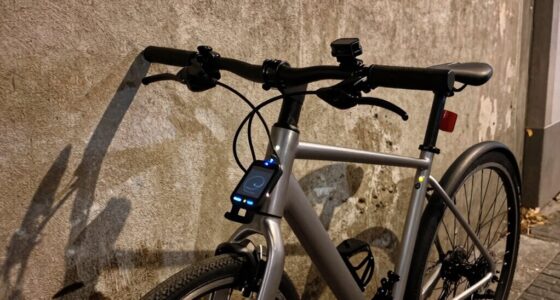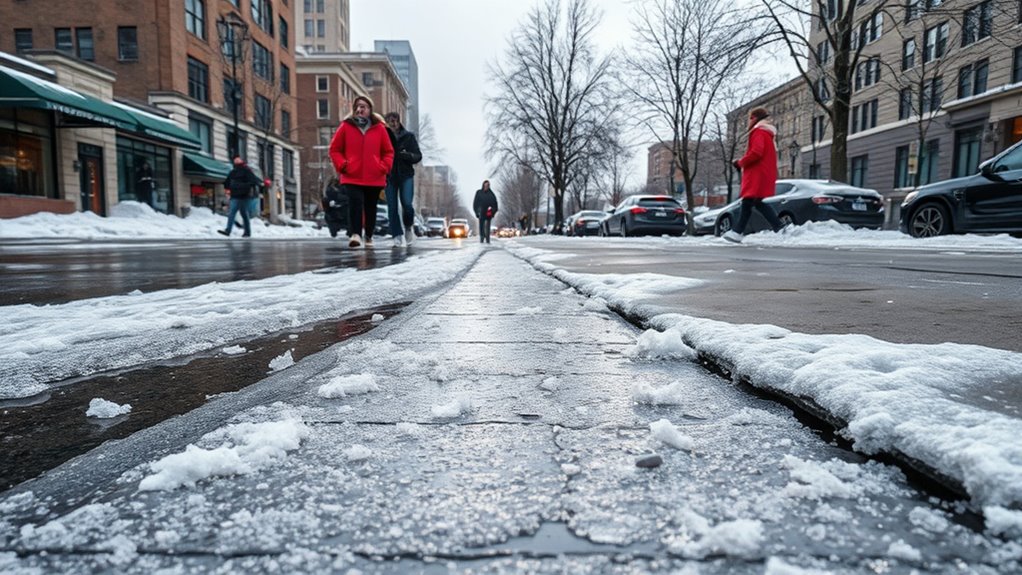

To safely navigate ice, slush, and salt during winter city riding, equip yourself with layered, waterproof gear, thermal gloves, and reflective accessories for visibility. Reduce your speed, increase your stopping distance, and steer smoothly to avoid skidding. Choose plowed main roads with well-maintained tires, and stay alert for hidden hazards. By adjusting your riding style and gear, you’ll keep safe and enjoy the season’s unique ride. Keep going to discover more essential tips for winter city riding.
Key Takeaways
- Use tires with enhanced traction or studded options to navigate icy and slushy surfaces safely.
- Maintain proper tire pressure and keep tires clean of salt and debris for optimal grip.
- Reduce speed, increase following distance, and avoid sudden movements on icy or salt-covered roads.
- Choose plowed main roads over side streets with deeper snow, ice, or salt buildup.
- Wear reflective gear and ensure bright lights for visibility in low-light winter conditions.

Have you ever wondered how to enjoy city riding during winter? Traversing through icy streets, slush, and salt can seem daunting, but with the right approach, you can stay safe and comfortable. The key is investing in proper winter city riding gear that keeps you warm, dry, and visible. Think layered clothing, waterproof jackets, thermal gloves, and a good helmet with a face shield. These essentials not only boost your comfort but also considerably improve your winter city riding safety. Bright-colored gear or reflective accessories ensure you’re seen by drivers, pedestrians, and fellow cyclists, which is essential when visibility drops during snowstorms or early sunsets.
Invest in warm, waterproof, and reflective gear for safe winter city riding.
When you’re dressed appropriately, your focus shifts from discomfort to enjoying the ride. However, gear alone isn’t enough. You need to adapt your riding style to winter conditions. Slow down and give yourself extra stopping distance—icy patches and slush can be deceptive, causing your tires to slip unexpectedly. Keep your weight centered and avoid sudden movements; smooth acceleration and gentle braking help prevent skidding. It’s wise to avoid riding over snowbanks or slush piles that could hide potholes or ice patches. Always stay alert for salted or sanded sections, which might be slippery if not properly cleared. Additionally, choosing performance upgrades such as tires with better traction can make a significant difference in maintaining control on icy surfaces.
Tire choice plays an essential role in winter city riding safety. Consider switching to tires with better traction for icy surfaces or adding studded tires if your city experiences severe winter weather. Maintaining proper tire pressure is equally important, as under-inflated tires lose grip more easily on slick surfaces. Regularly inspect your bike for salt or debris buildup that can corrode components and reduce braking efficiency. Keeping your bike clean and well-maintained ensures it responds reliably when conditions are less than ideal.
Planning your routes can make a big difference. Stick to main roads that are more likely to be plowed and salted, and avoid side streets or alleyways where snow tends to accumulate and ice persists longer. Riding during daylight hours minimizes risk, as visibility tends to be better. If you have to ride in the evening or early morning, ensure your lights are bright enough and that your reflective gear is prominent. Always stay aware of your surroundings—pedestrians, parked cars, and other riders may behave unpredictably in winter conditions.
Ultimately, enjoying city riding during winter requires preparation, awareness, and cautious riding. With the right winter city riding gear and a focus on winter city riding safety, you can traverse icy streets confidently and keep winter’s challenges from dampening your ride. Embrace the season’s unique beauty while prioritizing your safety, and you’ll find winter riding to be both rewarding and invigorating.

WEEROCK 20×4.0 Studded Fat Tire Bike Snow Tire, Heavy-Duty Winter Bicycle Tyre with Studs, 5-30 PSI Anti-Skid Spike Tires with Inner Tubes for 20" Snow Bike, Electric Bike, Fat Mountain Bike
- Tire Size: 20 x 4.0 snow bicycle tires
- Package Includes: 2 tires with inner tubes
- Designed For: 20-inch fat, e-bike, snow bikes
As an affiliate, we earn on qualifying purchases.
As an affiliate, we earn on qualifying purchases.
Frequently Asked Questions
How Do I Prevent My Bike From Rusting in Winter Conditions?
To prevent your bike from rusting in winter, store it in a dry, covered area when not riding. Regularly clean off ice, slush, and salt from your bike, especially around the chain and frame, to avoid corrosion. Use a rust prevention spray or lubricant on metal parts for extra protection. Proper bike storage is key, so keep your bike sheltered, and maintain it regularly to guarantee it stays in good shape all winter.
What Are the Best Tires for Icy and Slushy Roads?
A wise rider knows that “a chain is only as strong as its weakest link,” so choose tires with aggressive tread design, like studded or deep-tread tires, for icy and slushy roads. You should also manage your tire pressure wisely—lower it slightly for better grip without risking pinch flats. These strategies improve traction and safety, helping you navigate winter’s challenges confidently.
How Can I Improve Visibility During Winter Rides?
To improve visibility during winter rides, you should wear proper winter gear that includes bright, reflective clothing. Use visibility accessories like LED bike lights, reflective strips, and mounted reflectors on your bike and helmet. Keep your lights charged and clean for maximum brightness. Additionally, wear a high-quality, clear visor or goggles to prevent fogging. These steps make sure you’re seen clearly, enhancing your safety in low-light winter conditions.
What Clothing Is Most Effective for Cold, Wet Rides?
Think of your clothing as a fortress against winter’s chill. You should use layering techniques: start with moisture-wicking base layers, add insulating mid-layers, and top with waterproof gear to fend off rain and slush. This combination traps heat and keeps you dry, turning your ride into a warm adventure rather than a frozen ordeal. Stay protected, stay comfortable, and conquer winter’s icy grip with smart clothing choices.
How Do I Maintain Brakes on Icy, Salted Surfaces?
You should regularly check your brake pad selection to guarantee they’re suitable for icy, salted surfaces, opting for those with better grip. Keep your brake fluid maintained by flushing and topping it up to prevent freezing or corrosion. When riding, apply brakes gently to avoid slipping, and be mindful of salt buildup on components. Regular maintenance helps your brakes stay responsive and safe in winter conditions.
WEEROCK 20×4.0 Studded Fat Tire Bike Snow Tire, Heavy-Duty Winter Bicycle Tyre with Studs, 5-30 PSI Anti-Skid Spike Tires with Inner Tubes for 20" Snow Bike, Electric Bike, Fat Mountain Bike
- Tire Size: 20 x 4.0 snow bicycle tires
- Package Includes: 2 tires with inner tubes
- Designed For: 20-inch fat, e-bike, snow bikes
As an affiliate, we earn on qualifying purchases.
As an affiliate, we earn on qualifying purchases.
Conclusion
So, as you brave the icy streets, remember that winter’s harsh beauty always comes with a twist—your trusty bike, now a snow-covered relic, might just be the best proof that even in the coldest months, your ride isn’t quite the escape you imagined. Ironically, it’s the salt and slush that keep the city moving, reminding you that sometimes, the toughest conditions reveal the most unexpected joys… or at least a good story to tell.

Chiwo Reflective Vest Running Gear 2Pack, High Visibility Safety Vest
- High Visibility in All Conditions: 360-degree reflective bands visible from 800+ feet
- Adjustable Fit for Comfort: Shoulder to waist expands from 13" to 21"
- Universal Size for All: Waist adjusts from 27" to 40"
As an affiliate, we earn on qualifying purchases.
As an affiliate, we earn on qualifying purchases.

MOREOK Waterproof & Windproof -30°F Winter Gloves for Men/Women, 3M Thinsulate Thermal Gloves Touch Screen Warm Gloves for Skiing,Cycling,Motorcycle,Running-Black-L
- Insulation: 200g 3M Thinsulate for warmth
- Touchscreen Compatibility: Sensitive thumb fingertips for device use
- Durable Grip: Anti-slip nitrile rubber palm
As an affiliate, we earn on qualifying purchases.
As an affiliate, we earn on qualifying purchases.