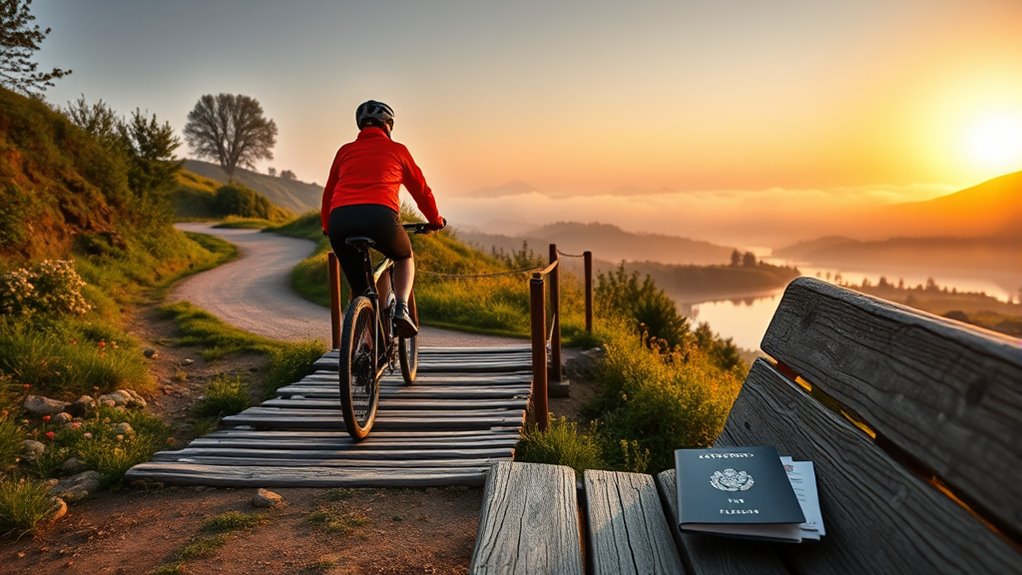

When crossing borders by bike, make sure your passport is current, with enough blank pages, and carry digital and physical copies of visas, itineraries, and contacts. Pack essential gear securely and be prepared for customs checks by having receipts and permits on hand. Stay organized and cooperative during inspections, follow local regulations, and maintain a friendly attitude. If you want detailed tips on maneuvering these steps smoothly, keep exploring for more helpful advice.
Key Takeaways
- Carry valid passports, necessary visas, and digital/printed copies of travel documents for smooth border checks.
- Prepare and organize all required documents, including itineraries and permits, for quick access during crossings.
- Ensure your bike is in good condition, waterproofed, and has identification tags and regional permits if needed.
- Be aware of customs regulations, declare valuables if required, and keep receipts for expensive gear.
- Stay calm, polite, and cooperative, and familiarize yourself with each country’s entry procedures to facilitate seamless crossings.
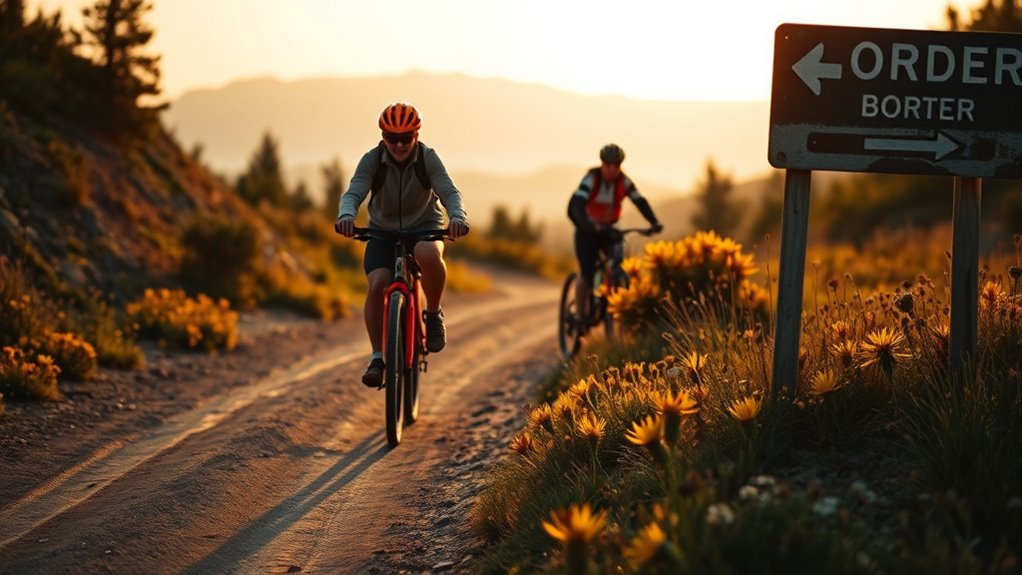
Have you ever wondered what it’s like to travel across borders on two wheels? It’s an exhilarating experience, but it also requires careful planning. One of the first things to consider is understanding visa requirements. Different countries have varying policies, and some might demand specific documents even for short stays. Before you hit the road, research each country’s entry rules. Some nations may grant visa-free entry for a limited period, while others require you to apply in advance. Make sure your passport is up to date and has sufficient blank pages for stamps. Carry digital and physical copies of your visas, as you might need to show them at border crossings. Also, keep copies of your travel itinerary, accommodation details, and emergency contacts handy. Planning ahead helps you avoid unnecessary delays or surprises at border points.
Alongside your travel documents, your bike packing gear plays a crucial role in smooth border crossings. Well-organized gear not only keeps your belongings safe but also makes the process easier. Pack essentials such as a first aid kit, multi-tool, and spare parts for your bike. Make sure your luggage is secure, waterproof, and easy to handle, since you’ll likely need to unload or present your gear at checkpoints. Have your bike ready for inspection—clean and in good working order—so officials can quickly verify it’s roadworthy. Your gear should include identification tags and any permits required for cycling through certain regions, especially if you plan to ride on protected or restricted routes. Don’t forget to carry a power bank or portable charger to keep your devices powered, as border officers might request digital records or scans of your documents.
Being prepared also means understanding what you might need to declare at borders. Customs officials may ask about your belongings, especially if you’re carrying expensive gear or large quantities of equipment. Be honest and straightforward, and have your receipts handy if necessary. If you’re crossing multiple borders, keep a checklist of the required documents and gear to ensure nothing gets left behind. It’s wise to familiarize yourself with the local customs regulations and restrictions beforehand to avoid any issues. Staying calm, polite, and cooperative during the process can make your crossing much smoother. Remember, border crossings are just part of the adventure—proper preparation with the right visa documentation and well-packed gear keeps you moving forward without unnecessary setbacks. So, gear up, do your homework, and enjoy every mile of your cross-border cycling journey.
As an affiliate, we earn on qualifying purchases.
Frequently Asked Questions
Do I Need a Visa for Border Crossings by Bike?
Whether you need a visa for border crossings by bike depends on your nationality and destination. You should check the specific entry requirements for each country on your travel itinerary planning. Also, confirm your bike maintenance is up to date to avoid delays. Having the necessary documents ready speeds up border crossings, so double-check visa requirements beforehand to make your journey smoother.
How Do I Handle Language Barriers at Borders?
Did you know that over 7,000 languages are spoken worldwide? When facing translation challenges at borders, stay patient and use simple phrases or gesture to communicate. Learn basic words like “hello,” “thank you,” and “where’s the restroom?” to ease interactions. Be aware that local dialects can vary greatly, so having a translation app or phrasebook handy helps bridge language gaps smoothly, making your crossing experience less stressful.
Are There Specific Bike Insurance Requirements for Crossing Borders?
You should check the border requirements for bike insurance in each country you plan to visit, as they vary. Many places require proof of bike insurance coverage, and some may have specific mandates for foreign cyclists. It’s best to carry an international bike insurance policy or confirm your current coverage meets border requirements. Always verify with local authorities beforehand to avoid issues crossing borders with your bike.
What Customs Procedures Apply to Bikes and Gear?
Getting your ducks in a row is vital when crossing borders with your bike. You’ll need to follow bike import regulations and gear declaration procedures to guarantee smooth sailing. Customs may inspect your bike and gear, so be prepared to show receipts or proof of ownership. Declare all gear honestly to avoid delays or fines. Staying organized and aware of these procedures helps you breeze through customs and hit the road without a hitch.
Can I Cross Borders During Night Hours?
You can cross borders during night hours, but you should check specific border policies first. Night crossings can be quicker and quieter, but safety considerations are vital—ensure your bike lights are working, wear reflective gear, and stay alert. Plan your route in advance, and be aware of any restrictions or limited services at night. Prioritize your safety to make the crossing smooth and secure.
As an affiliate, we earn on qualifying purchases.
Conclusion
Now that you know what documents to carry and tips to follow, crossing borders by bike becomes much simpler. Did you know over 80% of cyclists report smoother crossings when prepared? Staying organized and patient will help you avoid delays and enjoy your adventure. Remember, a little extra effort upfront makes all the difference. So gear up, stay alert, and embrace the journey—border crossings are just part of the exciting story you’ll tell!
As an affiliate, we earn on qualifying purchases.
As an affiliate, we earn on qualifying purchases.