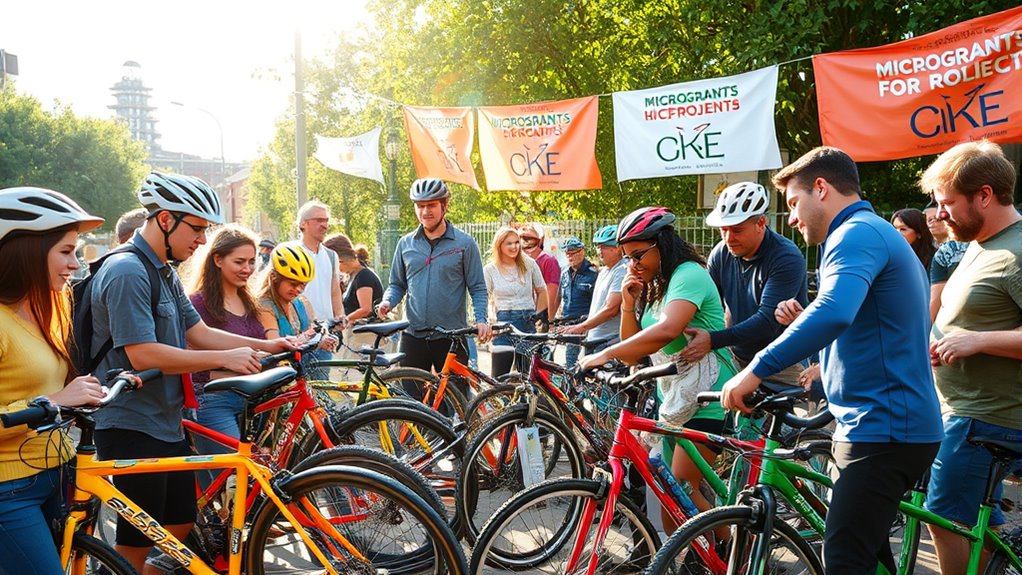

To find and apply for microgrants for bike projects, start by exploring local government websites, community foundations, and cycling groups for available funding opportunities. Look for grant pages that specify eligibility, deadlines, and application requirements. Use social media and community forums to discover timely openings, and network with cycling clubs for hidden opportunities. Focusing on successful examples can help strengthen your application—keep exploring to uncover more tips and strategies to boost your chances.
Key Takeaways
- Search local government, community foundations, and cycling organizations’ websites for dedicated microgrant opportunities.
- Review eligibility criteria, deadlines, and required documents to tailor your application effectively.
- Clearly define your project goals, activities, and community involvement to strengthen your proposal.
- Use persuasive, active language in your application and attach relevant supporting materials.
- Follow up after submission, and leverage successes to access larger funding or future grants.
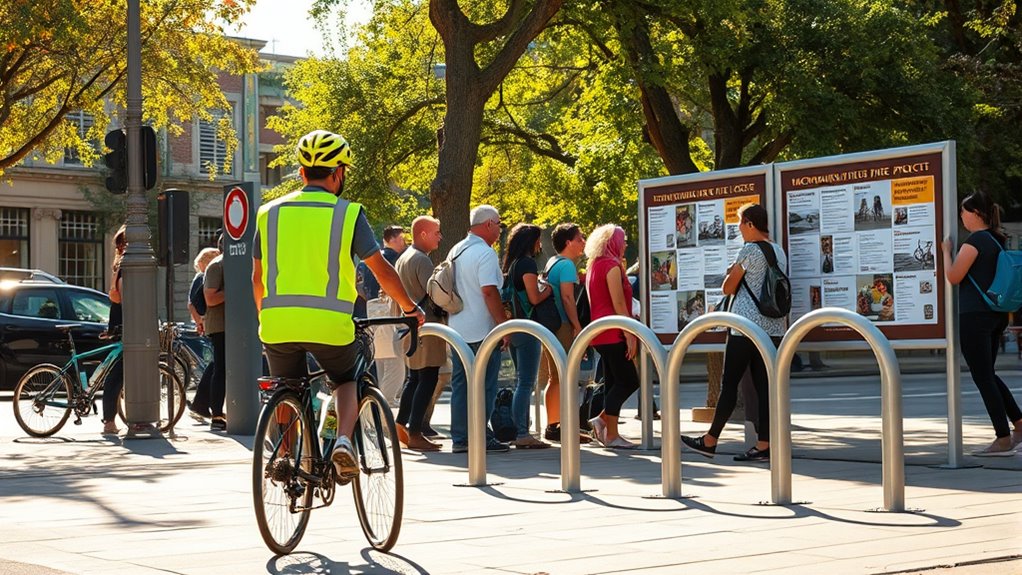
If you’re passionate about improving your community’s bike infrastructure or promoting cycling initiatives, microgrants offer a practical way to turn your ideas into reality. These small but impactful funding sources can help you implement projects that enhance bike safety and foster community engagement. Securing a microgrant means you don’t need to navigate large, complicated funding processes; instead, you can focus on creating tangible change within your neighborhood or city. Many local governments, nonprofit organizations, and cycling advocacy groups offer microgrants specifically designated for bike-related projects, making it easier than ever to find funding opportunities aligned with your goals.
Microgrants help turn cycling ideas into community-impacting projects effortlessly.
To find suitable microgrants, start by researching online. Look for local government websites, community foundations, and cycling advocacy organizations that list available grants. Many of these entities have dedicated pages for microgrants, outlining eligibility criteria, application deadlines, and project requirements. Social media platforms and community forums are also valuable resources; they often share timely opportunities and success stories from others who have received funding for similar projects. Networking within local cycling clubs or community groups can help you uncover hidden opportunities and gain insights into what funders are looking for in a successful application.
When applying for a microgrant, clarity and focus are key. Define your project’s goals clearly and demonstrate how it will improve bike safety or increase community engagement. Be specific about the activities you plan to undertake, such as installing bike racks, creating educational signage, or organizing a bike safety workshop. Highlight how your project will involve community members, encouraging participation and fostering a sense of ownership. Funding bodies want to see that their investment will have a meaningful, lasting impact, so include details about potential partnerships, outreach strategies, and how you’ll measure success.
Writing a compelling application requires attention to detail. Follow the guidelines carefully, and tailor each proposal to align with the funder’s priorities. Use active voice to make your case more persuasive, and avoid jargon or vague statements. Attach any necessary documents, like project timelines, budgets, or letters of support, to strengthen your submission. Be concise but thorough, making sure your passion for improving bike safety and community engagement shines through. Remember, microgrants are designed to support community-driven projects, so emphasize how your initiative will bring people together and make cycling safer and more accessible for everyone.
Once you submit your application, stay engaged with the funder. Follow up if permitted, and be prepared to answer questions or provide additional information. Securing a microgrant can be a stepping stone toward transforming your community’s cycling landscape. With persistence and a clear vision, you can leverage these small grants to create big change, making biking safer and more appealing for all residents. Additionally, understanding the technical aspects of emailing can help you effectively communicate your project to potential supporters and funders, increasing your chances of success.

Sandbaggy In Ground Bike Rack | U Shaped, Commercial, Outdoor, 1 Loop, Steel | Black, 14.5" x 34" (10)
EXTRA STURDY: IN GROUND INSTALLATION – Our floor bike rack provide the best stability and most reliable support…
As an affiliate, we earn on qualifying purchases.
As an affiliate, we earn on qualifying purchases.
Frequently Asked Questions
What Are the Eligibility Criteria for Microgrants?
You need to demonstrate your project promotes bike safety and encourages community engagement. Typically, microgrant programs require applicants to be local organizations, community groups, or individuals with a clear plan to benefit your neighborhood. Your project should align with the grant’s goals, show measurable impact, and sometimes include a budget outline. Make sure your application highlights how your bike project will improve safety and foster community involvement to meet eligibility criteria.
How Long Does the Application Process Usually Take?
Imagine you submit a microgrant application for a community bike repair station. Typically, the application processing time varies but usually takes about 4 to 8 weeks, depending on the grant provider. The grant timeline depends on factors like completeness of your submission and review schedules. To stay informed, check for updates regularly, and prepare to respond promptly if additional information is requested, ensuring a smoother process.
Can International Projects Qualify for Microgrants?
Yes, international projects can qualify for microgrants, especially if they align with international funding priorities and promote project sustainability. When applying, make certain your project demonstrates long-term impact and benefits beyond local borders. Many microgrant programs support global initiatives that encourage sustainable transportation solutions. By highlighting how your project fosters international collaboration and sustainability, you increase your chances of securing funding for your bike project.
Are There Specific Project Themes or Focuses Required?
Imagine a safe, vibrant neighborhood where everyone bikes freely. The project themes often emphasize bike safety and community engagement, so your proposal should focus on promoting safe cycling practices and encouraging local participation. While there’s flexibility, aligning your project with these themes increases your chances. Clearly showcase how your initiative fosters safer biking environments and strengthens community bonds, making your application stand out amidst the focus on these key areas.
What Are Common Reasons for Application Rejection?
Application rejection reasons often stem from common pitfalls like incomplete forms, unclear project goals, or missing supporting documents. You might also face rejection if your project doesn’t align with the grant’s focus or if your budget seems unrealistic. To improve your chances, double-check all requirements, clearly articulate your project’s impact, and make sure your application is thorough and well-organized. Avoiding these common pitfalls can boost your success rate.

Aluminum Vertical Metal Sign Multiple Sizes Safety First Please Walk Your Bike from Here Thank You! Bike, Pet & Skateboard with Border Weatherproof Street 9x12Inches
PREMIUM QUALITY: Our industrial metal signs are made of durable .040IN high quality aluminum that will last for…
As an affiliate, we earn on qualifying purchases.
As an affiliate, we earn on qualifying purchases.
Conclusion
Think of microgrants as seeds waiting to bloom, each one a tiny spark that can ignite a bike project into full flourish. With your passion as the wind and your ideas as the soil, you can nurture these grants into vibrant pathways for change. Don’t wait for the perfect moment—grab your chance, plant your vision, and watch as your bike project grows, weaving a stronger community thread by thread, pedal stroke by pedal stroke.

DURATECH 41 Pieces Bike Repair Tools, Complete Bike Tools Kit with Storage Box, Mountain Bike Maintenance Tools, for Mountain, Road, and Park Bicycle with Chain Riveter, Tire Levers, Crank Puller
Complete Kit: Our Bike tool kit includes everything you need to perform both major or delicate work without…
As an affiliate, we earn on qualifying purchases.
As an affiliate, we earn on qualifying purchases.

Chiwo Reflective Vest Running Gear 2Pack, High Visibility Adjustable Safety Vest for Night Cycling,Hiking, Jogging,Dog Walking, Construction Safe (Green)
✔HIGHLY VISIBLE & SAFE – Excellent 360 Degree reflective bands keep you safe in all weather conditions(rain, fog,…
As an affiliate, we earn on qualifying purchases.
As an affiliate, we earn on qualifying purchases.