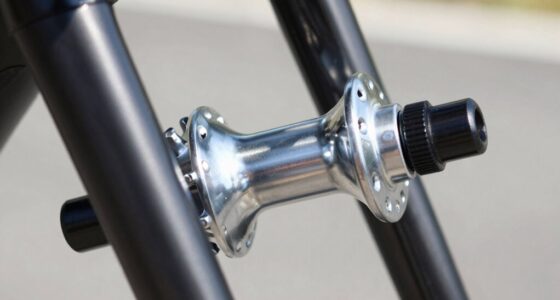
Choosing the right chainring depends on your riding style, terrain, and bike compatibility. Larger chainrings increase speed but can make pedaling tougher, while smaller ones offer easier pedaling for hills. Swapping a chainring is straightforward if you have the right tools and verify compatibility with your crankset’s bolt circle diameter. Proper installation and gear selection can boost your ride’s efficiency. Keep exploring to learn simple steps to swap and select the perfect chainring for your needs.
Key Takeaways
- Match chainring size and bolt circle diameter (BCD) to your crankset for compatibility.
- Larger chainrings increase gear ratio, covering more ground per pedal stroke; smaller ones ease pedaling uphill.
- Use appropriate tools like Allen keys or bolt wrenches for easy removal and installation.
- Upgrading chainrings can improve speed, climbing, or shifting efficiency depending on your riding goals.
- Regularly check and maintain chainring bolts to ensure optimal performance and longevity.
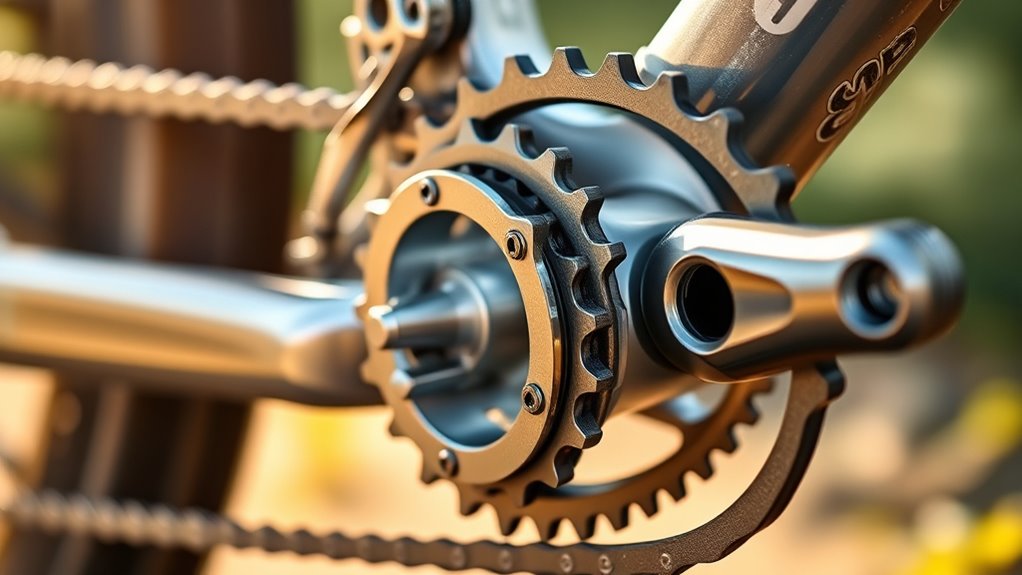
Ever wonder how your bike’s gears translate your pedaling into smooth movement? It all comes down to gear ratios and how your chainring interacts with your rear cassette. Your chainring, the large gear attached to the crankset, plays an essential role in determining how hard or easy it feels to pedal at different speeds. When you shift to a larger chainring, you increase the gear ratio, making each pedal stroke cover more ground but requiring more effort. Conversely, a smaller chainring reduces the gear ratio, making pedaling easier, especially uphill or against headwinds. Understanding this balance helps you optimize your riding for speed or comfort, depending on your terrain and goals. Selecting the right chainring involves considering the materials used in its construction. Chainring materials directly impact weight, durability, and performance. Common options include aluminum, which offers a lightweight and stiff option ideal for racing or fast riding. Aluminum chainrings are popular because they strike a good balance between weight savings and strength, allowing for quick acceleration and efficient power transfer. Steel is heavier but offers excellent durability and is often found on more affordable or rugged bikes, making it a solid choice for daily commuting or mountain biking. Some high-end models incorporate carbon fiber, which provides exceptional stiffness and very low weight, but these tend to be pricier. When selecting a chainring material, think about your riding style and how much weight savings matter to you versus durability. Additionally, understanding chainring compatibility** and proper installation techniques can help ensure optimal performance and longevity. The process of swapping or upgrading chainrings is straightforward, especially if you’re familiar with bike maintenance basics. First, check your crankset compatibility, including bolt circle diameter (BCD) and number of bolt holes. Most modern cranksets use standard sizes, but it’s worth confirming before purchasing a new chainring. To replace the chainring, you’ll need a chainring bolt wrench or Allen keys, depending on your bike’s setup. Remove the existing chainring by unscrewing the bolts, then align the new one and tighten everything securely. It’s a simple upgrade that can drastically change your riding experience—whether you want higher gears for speed or smaller gears for climbing. Keep in mind, though, that changing your chainring may also necessitate adjusting your derailleur limit screws or indexing to ensure smooth shifting**.

TRUSOON 2 Pack Bike Hoist, Heavy Duty Ebike Lift Pulley System for Garage Ceiling Overhead Storage for Bicycle, Ladders, Snowboard, Holds Up to 85 lbs Capacity, Fit 10-16 Foot High Ceilings
HEAVY DUTY FOR EBIKES: Engineered for heavy-duty bike and ebike, our powder-coated steel hoist offers a solid 85-lb...
As an affiliate, we earn on qualifying purchases.
Frequently Asked Questions
How Do I Measure My Current Chainring Size Accurately?
To measure your current chainring size accurately, start by counting the number of teeth on the chainring. Use a ruler or caliper for precision. Once you have the tooth count, you can perform a gear ratio calculation to understand your bike’s gearing setup better. This measurement helps you choose compatible chainrings when swapping or upgrading, ensuring smooth performance and ideal gear ratios for your riding style.
Can I Mix Different Brand Chainrings on the Same Crankset?
You can mix different brand chainrings on the same crankset, but it’s not ideal. Brand compatibility matters because chainrings have specific bolt patterns and chainring spacing that may not align perfectly. Mixing brands can cause issues with fit and shifting performance. To avoid problems, check that the chainrings share compatible bolt patterns and ensure the chainring spacing matches your crankset’s specifications. This helps maintain smooth shifting and proper chain engagement.
What Are the Signs My Chainring Needs Replacing?
Did you know that a worn chainring can cause up to 20% loss in pedaling efficiency? If your chainring shows signs of wear like teeth that are chipped, bent, or have developed shark fin-shaped edges, it’s time to replace it. Misaligned or incompatible chainrings can also cause poor shifting. Regularly inspecting for uneven wear guarantees you maintain chainring compatibility, keeping your ride smooth and efficient.
How Does Chainring Size Affect Climbing Versus Sprinting?
You’ll notice that a larger chainring makes climbing harder but boosts your sprinting power, while a smaller one eases climbs and favors cadence optimization. Higher gear ratios from bigger chainrings require more effort but deliver faster speeds on flats or sprints. Conversely, smaller chainrings lower gear ratios, making climbs easier and helping you maintain a steady cadence. Choose your chainring size based on your riding style and terrain to balance climbing ease and sprinting efficiency.
Are There Specific Chainring Materials Better for Durability?
Sure, if you want your chainring to survive a zombie apocalypse or just your daily commute, go for steel or aluminum—these materials are known for their durability. If you’re all about ditching weight, carbon might tempt you, but it’s less durable. So, choose steel or aluminum for longevity, and save the lightweight carbon for those who enjoy risking it all on a whim.
Garage Gator 68221 Motorized 8 Bike Lift, Black
Assembled Dimensions: 60.00" W X 60.00" D X 30.00" H
As an affiliate, we earn on qualifying purchases.
Conclusion
Now that you know the basics of choosing and swapping chainrings, you’re ready to customize your bike like a pro. Think of your chainring as the heart of your gearing system—each one pumping power to keep you moving smoothly. With a little knowledge and some simple swaps, you’ll find the perfect fit just like a tailor fitting a suit. Ride confidently and enjoy the ride, knowing you’ve got the right gear to conquer any trail or road ahead.

DURATECH 41 Pieces Bike Repair Tools, Complete Bike Tools Kit with Storage Box, Mountain Bike Maintenance Tools, for Mountain, Road, and Park Bicycle with Chain Riveter, Tire Levers, Crank Puller
Complete Kit: Our Bike tool kit includes everything you need to perform both major or delicate work without...
As an affiliate, we earn on qualifying purchases.
23 Piece Bike Tool Kit - Bicycle Repair Tool Box Compatible - Mountain/Road Bike Maintenance Tool Set with Storage Case
【Complete Bike Tool Kit】: The CYCLISTS 23 piece Bike Tool Kit contains all the tools to help you...
As an affiliate, we earn on qualifying purchases.