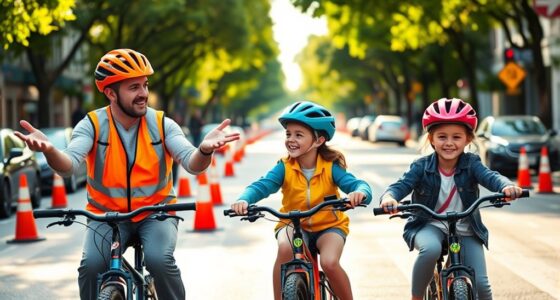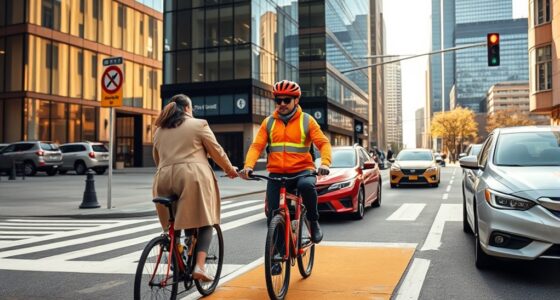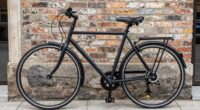
When riding near parked cars, stay alert to sudden door openings and vehicles pulling out unexpectedly. Keep a safe distance of at least three feet and use your eyes to scan for movement and signals. Bright clothing and reflective gear help increase your visibility. Slow down in tight spaces and avoid blind spots, especially in urban areas. Being aware of common hazards and practicing defensive riding will help you stay safe—discover more tips to ride confidently and avoid dangers.
Key Takeaways
- Maintain at least a three-foot distance from parked cars to avoid door openings and sudden movements.
- Stay alert and scan frequently for signals or signs of vehicle movement.
- Avoid riding in blind spots where drivers may not see you.
- Wear bright or reflective clothing to increase visibility around parked vehicles.
- Slow down and use hand signals when passing parked cars, especially in busy areas.
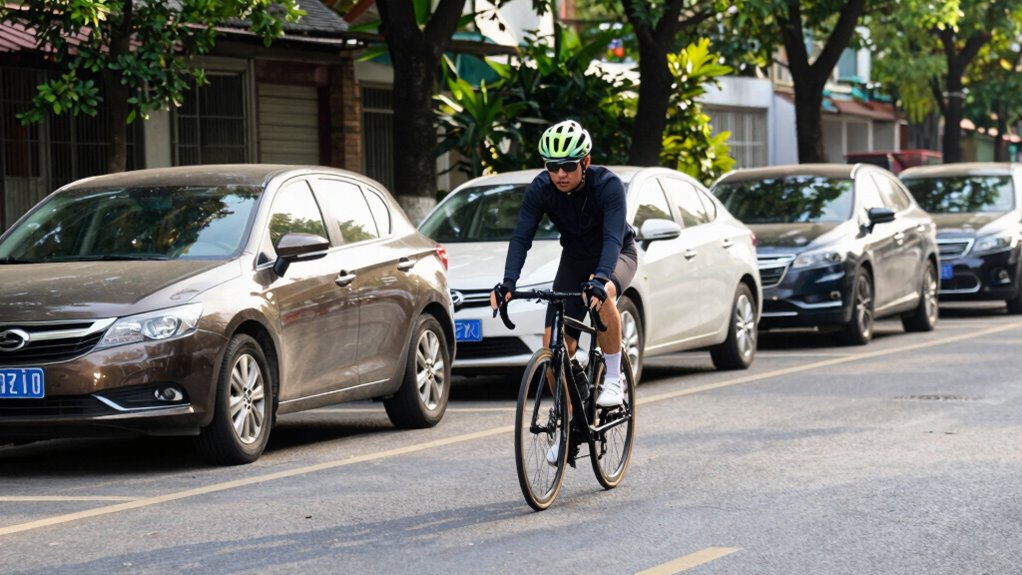
Have you ever wondered how to stay safe when riding your bike near parked cars? It’s a common scenario, especially in busy parking lots and urban streets, and knowing how to navigate these areas can make a big difference in your safety. Parking lot safety involves more than just watching out for moving vehicles; it requires awareness of the risks posed by parked cars and the potential for distracted driving. Drivers often get distracted for a moment—checking their phones, adjusting the radio, or looking away—and that split second can lead to dangerous situations for cyclists.
When riding near parked cars, always assume that a driver might suddenly open a door or pull out without warning. Many accidents happen when a driver, while distracted driving, fails to see a cyclist approaching. To stay safe, keep a safe distance from parked vehicles, ideally about three feet, so you have enough room to react if someone suddenly opens a door or if a car starts to move. Be especially cautious around the front and rear of parked cars, as these are common spots for doors to open unexpectedly or for vehicles to start backing out.
Always maintain a three-foot distance from parked cars to stay safe from sudden door openings or moving vehicles.
Keep your eyes moving—scan the parking lot or street continuously for any signs of movement. Look out for pedestrians, drivers, and any signals that indicate a vehicle might be about to move. Wearing bright or reflective clothing helps increase your visibility, especially in low light or crowded areas. Remember, distracted driving is a leading cause of accidents, so never assume a driver sees you. Avoid riding in blind spots of parked cars, and always prepare to brake or swerve if you sense a door opening or a vehicle pulling out suddenly. Additionally, understanding parking lot safety and the common hazards can help you anticipate potential dangers more effectively. Being aware of driver distraction and how it impacts driving behavior can further improve your safety. Recognizing common blind spots of parked vehicles can also help you better position yourself for safety and avoid unexpected hazards.
Riding defensively becomes essential in these situations. Slow down when passing parked cars, and give yourself plenty of time to react. Use hand signals to communicate your intentions clearly to drivers and pedestrians. Be particularly alert in busy parking lots, where cars often back out without warning, and in urban areas, where distracted driving is more common. If possible, stick to designated bike lanes or paths—they’re designed with your safety in mind and help you avoid the hazards associated with parking lot safety. Being familiar with traffic rules and how they apply to cycling can further enhance your safety in these environments. Additionally, practicing situational awareness can help you identify hazards before they become emergencies.
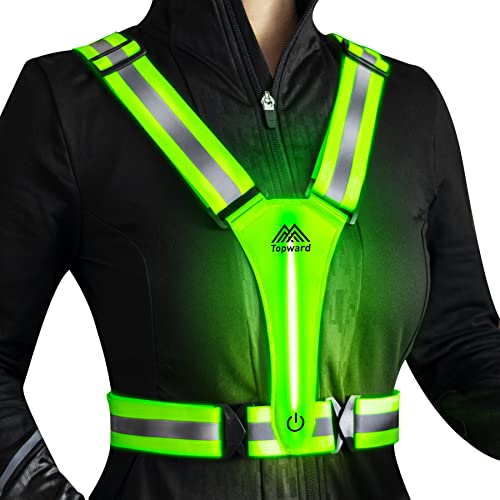
Topward LED Reflective Vest Safety Gear, Light Up Vest for Night Walking Cycling, High Visibility Running Vest with Reflective Strips, USB Rechargeable with Adjustable Waist/Shoulder
- Enhanced Visibility: Visible from over 1000 feet in all weather
- LED Flash Lights: Front and back LED lights for safety
- USB Rechargeable: Built-in LED lights with USB charging
As an affiliate, we earn on qualifying purchases.
As an affiliate, we earn on qualifying purchases.
Frequently Asked Questions
How Close Can I Legally Ride to Parked Cars?
You can legally ride within three feet of parked cars, but always prioritize safety. Follow parking etiquette by maintaining a safe distance to avoid door openings or sudden movements. Use proper lane positioning, staying close to the curb or edge of the road, to stay predictable and visible. Keep a cautious eye for pedestrians or drivers pulling out, and adjust your distance as needed to guarantee a safe, smooth ride near parked vehicles.
What Should I Do if a Parked Car Suddenly Opens Its Door?
If a parked car suddenly opens its door, you should immediately slow down and steer away to avoid door hazards. Keep your eyes on parked vehicles and be alert for passenger awareness signals, like someone reaching for the door handle. Always anticipate potential door openings, especially in busy areas. Staying alert and maintaining control helps you react swiftly, reducing risks associated with door hazards while riding near parked cars.
Are There Specific Laws for Riding Near Parked Cars in Different States?
Imagine weaving through a sea of silent sentinels—parked cars. Laws for riding near parked cars vary by state, so you need to stay sharp. Some states have clear parking lot etiquette and bike lane regulations, requiring you to ride at a safe distance and yield when necessary. Always check local laws before riding, and remember to stay alert, respecting road rules to keep your journey safe and smooth.
How Can I Improve Visibility When Riding Near Parked Cars?
To improve visibility when riding near parked cars, stay alert to their blind spots, which can hide pedestrians or cyclists. Use your horn signals to alert drivers or pedestrians of your presence, especially when approaching from behind or when a parked vehicle might block your view. Keep a safe distance and stay aware of opening doors. These actions help you stay visible and reduce the risk of accidents.
What Are the Best Safety Tips for Riding in Crowded Parking Areas?
When riding in crowded parking areas, prioritize helmet safety and guarantee your bike is well-maintained. Stay alert, look out for opening car doors, and signal your intentions clearly to others. Keep a safe distance from parked cars, especially near intersections or driveways. Regularly check your brakes and tires to avoid surprises. By staying vigilant and maintaining your bike, you reduce risks and enjoy a safer ride through busy parking lots.
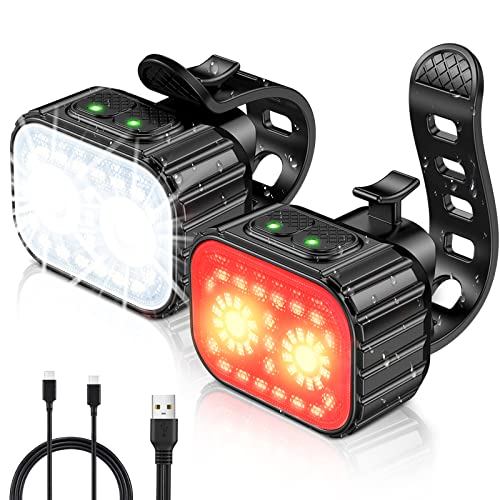
Cuvccn Bike Lights Super Bright, Rechargeable Bicycle Lights Set Multiple Modes, Waterproof Bike Lights for Night Riding/Cycling Safety, Front and Back Bike Reflectors Light, Long Battery Life
- High Brightness & Multiple Modes: 2 LEDs with 19 auxiliary LEDs, multiple modes
- Long Battery Life & Indicator: Up to 58 hours runtime, low-battery indicator
- Waterproof Design: IPX6 waterproof for rainy conditions
As an affiliate, we earn on qualifying purchases.
As an affiliate, we earn on qualifying purchases.
Conclusion
Riding near parked cars demands your awareness, your caution, and your respect. Stay alert to potential hazards, anticipate sudden movements, and maintain a safe distance. Be proactive in scanning for open doors, pedestrians, and moving vehicles. By staying vigilant, by riding confidently, and by keeping safety your priority, you protect yourself and others. Remember, your attentiveness is your best tool—use it wisely, stay prepared, and ride responsibly every time you’re near parked cars.

WITTKOP Bike mirror | Large HD field of vision | 360° rotatable & foldable | Mounting above & below | Break-proof & durable | ebike accessories, bike mirror handlebar mount, bicycle mirrors
- Clear HD Field of Vision: Large convex real glass mirror
- 360° Adjustable: Full rotation and tilting capability
- Durable & Break-Resistant: Reinforced with over 20% stronger materials
As an affiliate, we earn on qualifying purchases.
As an affiliate, we earn on qualifying purchases.
![Reflective Summer Cycling Gloves for High Visibility [Half Finger] – Fluorescent Hi-Vis Gloves with Biomotion Safety, Gel Padding & Touchscreen Fingers (Medium)](https://m.media-amazon.com/images/I/41+gSJckxQL._SL500_.jpg)
Reflective Summer Cycling Gloves for High Visibility [Half Finger] – Fluorescent Hi-Vis Gloves with Biomotion Safety, Gel Padding & Touchscreen Fingers (Medium)
- High Visibility Reflective Design: Fluorescent yellow and reflective panels for night riding
- Enhanced Hand Signal Visibility: Biomotion reflective placement highlights gestures
- Breathable Summer Material: Lightweight mesh for cooling and comfort
As an affiliate, we earn on qualifying purchases.
As an affiliate, we earn on qualifying purchases.