Even on short bikepacking tours, a reliable sleep system is essential because good rest boosts your safety, comfort, and overall experience. If you skip proper gear, you’ll wake up stiff, sore, or exhausted, making your ride less enjoyable and more tiring. By choosing the right sleeping bag, pad, and protection, you stay warm, dry, and ready for the next day. Keep going to discover how to pack and choose gear for maximum comfort and performance.

Get your wardrobe favorites delivered free with Prime
- Fast, free delivery on millions of items
- Prime Video, Amazon Music and more included
- Member-only deals all year
Key Takeaways
- Proper sleep systems ensure comfort and rest, even during short rides, enhancing overall enjoyment.
- Quality gear prevents discomfort and soreness, allowing quick recovery and continued riding.
- A reliable sleep setup improves safety by reducing fatigue-related mistakes.
- Efficient packing and protection of sleep gear maintain gear integrity and quick setup times.
- Well-designed sleep systems promote better sleep, boosting energy and mood for the next day’s ride.
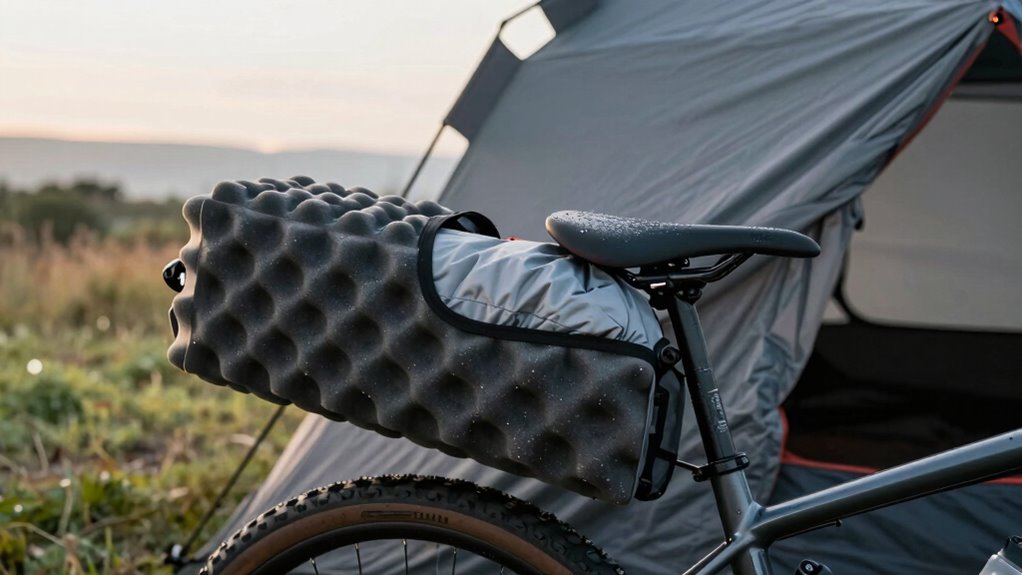
When bikepacking, having a reliable sleep system is essential for staying comfortable and rested on your journey. Even on short tours, your sleep setup can make or break your experience. If you arrive at your campsite exhausted or wake up stiff and sore, it’s tough to enjoy the ride and the scenery. That’s why investing in good camping gear for sleep and paying attention to packing tips can make all the difference. You don’t need to carry heavy, bulky equipment, but you do need to choose gear that’s lightweight, compact, and suited to your needs.
A quality sleeping bag or quilt suited to the expected temperatures is a must. When selecting your camping gear, consider how the bag compresses, its warmth-to-weight ratio, and whether it fits comfortably in your bikepacking setup. An inflatable sleeping pad or foam pad also plays a crucial role in your comfort. Inflatable pads tend to be more compact and provide better insulation, but foam pads are lighter and more durable. Whichever you choose, make sure it offers enough cushioning and insulates you from the ground, especially if you’re camping on uneven terrain or in cooler weather. Properly choosing adequate insulation can significantly improve your sleeping experience. Additionally, understanding the importance of gear weight can help you make better packing decisions. Incorporating lightweight materials into your sleep system can further enhance portability without sacrificing comfort. For example, selecting gear made from high-performance fabrics can reduce weight while maintaining durability.
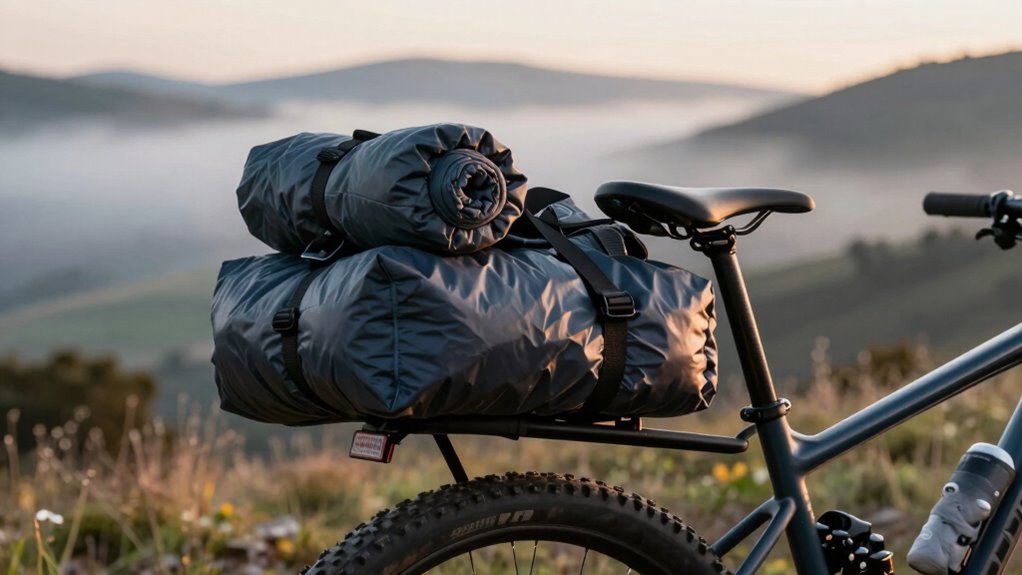
Packing tips for your sleep system focus on efficiency and protection. You want your gear to stay dry and secure during rides and stops. Use a stuff sack or dry bag to keep your sleeping bag and pad together, and pack them in a way that prevents punctures or damage. Place your sleep system in a readily accessible spot in your panniers or bikepacking bag, so you can quickly set up or pack down once you arrive. If you’re camping in variable weather, consider adding a bivvy or rain cover for extra protection against moisture. Additionally, choosing appropriate sleeping gear can significantly enhance your comfort and safety during unpredictable weather conditions.
Even on short tours, don’t underestimate the importance of properly setting up your sleep system. A well-chosen and correctly packed sleep setup keeps you warm, dry, and comfortable, making your ride more enjoyable. It allows you to rest properly so you wake up energized and ready for the next day’s adventure. Remember, the key is to balance comfort with weight and packability. With thoughtful camping gear selection and smart packing tips, you’ll find that your sleep system isn’t just a necessity but a vital part of your overall bikepacking experience—no matter how short the journey.
As an affiliate, we earn on qualifying purchases.
Frequently Asked Questions
How Do Bikepacking Sleep Systems Compare in Weight?
Bikepacking sleep systems vary in weight, often depending on lightweight materials and insulation efficiency. You’ll find ultralight options made from advanced fabrics that reduce weight without sacrificing warmth or comfort. These systems are designed to keep your gear minimal and manageable, especially on short tours. By choosing a sleep system with high insulation efficiency, you get warmth without added bulk, making it easier to carry and pack efficiently for your ride.
Can I Use Regular Camping Gear for Bikepacking?
You can use regular camping gear, but picture your bike as a chariot carrying a bulky, unwieldy load instead of a sleek, agile steed. Campground amenities and tent setup tips become your allies, making the experience smoother. Lightweight, compact gear will let you glide through trails with ease, while heavy, traditional gear might turn your adventure into a stumble. Opt for gear that complements bikepacking’s nimbleness for a truly enjoyable journey.
What’s the Best Sleep System for Cold Weather?
The best sleep system for cold weather offers excellent night insulation and helps with temperature regulation. Look for a sleeping bag rated for low temperatures, preferably with down or synthetic insulation. Pair it with an insulated sleeping pad to prevent heat loss from the ground. Use a sleep liner for extra warmth, and consider a bivvy or tent to shield you from wind and moisture. This combo keeps you warm and adjusts to changing conditions.
How Do Sleep Systems Affect Bike Handling?
Your sleep system influences bike handling by affecting bike stability and gear distribution. A bulky or uneven setup can shift your center of gravity, making your bike less stable and harder to control. Properly organizing your sleep gear guarantees balanced weight, improving handling on rough terrain. When your gear is well-distributed and your sleep system is compact, you maintain better bike stability, making your ride safer and more enjoyable.
Are Compact Sleep Systems Comfortable for Side Sleepers?
Yes, compact sleep systems can be comfortable for side sleepers if you consider comfort assessment and side sleeper considerations. Look for models with adequate cushioning, a slightly wider design, and good insulation to support your hips and shoulders. Prioritize sleeping pads with a bit of contouring or extra padding to prevent pressure points. Testing different setups before your trip helps guarantee you find a compact system that offers proper support and comfort for your sleeping style.
inflatable camping pad for bikepacking
As an affiliate, we earn on qualifying purchases.
As an affiliate, we earn on qualifying purchases.
Conclusion
Your bikepacking sleep system isn’t just gear—it’s the anchor of your journey’s dreams. Think of it as the lighthouse guiding you safely through night’s darkness, or the steady heartbeat that keeps your adventure alive. Even on short tours, a good sleep system fuels your spirit and sharpens your senses. When you choose wisely, you’re not just resting; you’re embracing the horizon’s promise, letting your sleep become the silent compass guiding every pedal stroke forward.
bikepacking dry bag for sleep gear
As an affiliate, we earn on qualifying purchases.
As an affiliate, we earn on qualifying purchases.
As an affiliate, we earn on qualifying purchases.
Fall Picks
fall essentials
As an affiliate, we earn on qualifying purchases.