
For most riders, I’d start with the AKASO EK7000 Pro: its touchscreen makes framing and basic setup more approachable than a bare-bones camera. The LKT DB5S stands out for front-and-rear recording, while the TIROL 1080p Bike Action Camera is a more bike-focused option with a wide-angle lens and included card. The main tradeoffs are simple: compact cameras are easier to mount but may offer fewer controls, while dual-camera systems add coverage and setup demands. Helmet fit, battery runtime, stabilization, and weather protection also vary across this lineup. Read on for how I’d match each camera style to your riding.

Get your wardrobe favorites delivered free with Prime
- Fast, free delivery on millions of items
- Prime Video, Amazon Music and more included
- Member-only deals all year
Key Takeaways
- The lineup splits into three distinct approaches: general-purpose action cameras, compact POV cameras, and bike or motorcycle-focused systems with dedicated mounts or front-and-rear coverage.
- The AKASO EK7000 Pro is the most approachable lead pick because its touchscreen offers a more direct way to check framing and settings than models that rely more heavily on buttons or app control.
- Front-and-rear coverage comes with extra setup: the LKT DB5S and MUFU 2K record from two directions, but their motorcycle-oriented design may be more involved than a single helmet camera.
- Included cards and mounts can change the out-of-box experience. Several models list a memory card or mounting accessories, but buyers should still check compatibility, fit, and whether the supplied mounts suit their helmet.
- Smart helmets trade flexibility for integration: the EKUZO and Mingzhe combine a helmet with camera features, so they may suit riders who want an all-in-one setup but not those who want to move a camera between helmets.




| helmet cameras for cyclist | Video resolution | Battery life | Connectivity |
|---|---|---|---|
| 4K Mini Body Camera with Audio | 4K at 30 fps | Up to 150 minutes | Wi-Fi and Bluetooth |
| AKASO EK7000 Pro 4K Action Cam | 4K at 30 fps; 1080p at 60 fps | Up to 140 minutes per battery | — |
| TIROL 1080p Bike Action Camera | Full HD 1080p | — | Wi-Fi, Bluetooth, and USB |
| Sixmou i3 4K Thumb Action Came | Up to 4K | Up to 90 minutes in 4K, 120 minutes in 2K, or 150 minutes in 1080p | Wi-Fi |
| AKASO EK7000 4K Action Camera | 4K at 30 fps; 2.7K at 30 fps | 90 minutes | — |
| Andoer 1080P Motorcycle Cyclin | 1920 × 1080 | — | — |
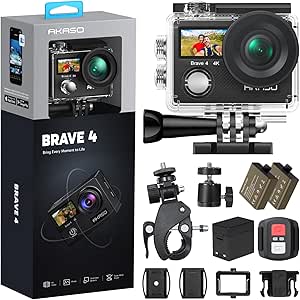
| AKASO Brave 4 4K30fps 20MP WiF | 4K at 30 fps | Up to 90 minutes | — |
| RunCam 4K Bendable Helmet Acti | 4K | Up to 6 hours | Wi-Fi |
| LKT DB5S Dual-Lens Motorcycle | — | Up to 5–6 hours | Wi-Fi |
| AKASO Brave 4 4K Action Camera | Up to 4K at 30 fps | — | — |
| POV Camera 4K with WiFi | 4K | — | WiFi and USB-C |
| EKUZO Smart Bike Helmet with D | — | Up to 4 hours | Bluetooth and WiFi |
| Action Camera with Dual Color | 1080p HD | — | — |
| Mingzhe Smart Bluetooth Cyclin | — | Up to 4 hours | Bluetooth music and call controls |
| MUFU 2K Dual Front & Rear Moto | — | — | WiFi |
More Details on Our Top Picks
4K Mini Body Camera with Audio and Video Recording, 1.5″ Screen, WiFi & Bluetooth, Wearable POV Camera for Sports and Outdoor Activities
For cyclists who want a small camera that can move between a helmet, chest, or bike mount, this model offers the most flexible setup in this group. Its 35 g weight keeps added helmet bulk down, while 4K/30FPS recording and 6-axis electronic stabilization are aimed at capturing detailed footage on moving rides. The 1.5-inch screen is handy for checking framing before setting off, though it is smaller than the AKASO EK7000 Pro’s 2-inch touchscreen. Wi-Fi and Bluetooth support quick sharing, but the stated 150-minute battery life may not cover a long day of riding without a recharge. I’d rank it ahead of the Sixmou i3 for bike versatility, but buyers should check the mounting and waterproofing accessories they need, since those may require separate purchases.
Pros:- 35 g body adds little weight to a helmet
- 4K/30FPS recording with 6-axis stabilization
- Screen allows a quick framing check before a ride
- Helmet, chest, and bike mounting options plus Wi-Fi and Bluetooth
Cons:- 150-minute stated battery life may fall short on long rides
- Small 1.5-inch screen is less convenient than the AKASO EK7000 Pro display
- Waterproofing and some mounting needs call for additional accessories
Best for: Cyclists who want a lightweight camera for helmet or chest POV and expect to share clips wirelessly after shorter rides.
Not ideal for: All-day riders and cyclists who need a weather-ready setup straight from the box; battery life is limited for extended recording, and waterproofing requires additional accessories.
- Video resolution:4K at 30 fps
- Stabilization:6-axis EIS 3.0
- Weight:35 g
- Screen:1.5 inches
- Battery life:Up to 150 minutes
- Connectivity:Wi-Fi and Bluetooth
- Mounting options:Helmet, chest, bike, and magnetic back plate
Our verdict“Choose this for lightweight, adaptable 4K bike POV on rides where its battery life and accessory needs are manageable.”
AKASO EK7000 Pro 4K Action Camera with Touchscreen
The EK7000 Pro is the easiest pick here for a cyclist who wants a conventional action-camera layout rather than a tiny wearable unit. Its 2-inch touchscreen gives more room to change settings and review clips than the 1.5-inch screen on the 4K Mini Body Camera, which can make pre-ride setup less fiddly. It records 4K at 30 fps and offers 1080p at 60 fps, giving riders a smoother-motion option when they do not need 4K detail. Two batteries, each rated for up to 140 minutes, offer more flexibility than the single-battery Sixmou i3. The tradeoff is bulk: at 61 g, it is heavier than the lighter POV models, and its 131-foot waterproof rating depends on the case. I’d pick it for approachable controls, not the lightest helmet setup.
Pros:- 2-inch touchscreen simplifies settings and clip review
- Records 4K at 30 fps or 1080p at 60 fps
- Includes two batteries rated for up to 140 minutes each
- Waterproof case supports use to 131 feet
Cons:- 61 g is heavier than the 4K Mini Body Camera and Sixmou i3
- Waterproofing depends on using the included case
- 4K recording is limited to 30 fps
Best for: New action-camera users who want a larger touchscreen, a spare battery, and straightforward settings for bike rides.
Not ideal for: Cyclists prioritizing minimal helmet weight or a streamlined bare-camera setup; it weighs more than the 35 g mini cameras and needs its case for waterproofing.
- Video resolution:4K at 30 fps; 1080p at 60 fps
- Photo resolution:20 MP
- Display:2-inch IPS touchscreen
- Weight:61 g
- Battery:Two 1350 mAh lithium polymer batteries
- Battery life:Up to 140 minutes per battery
- Waterproofing:Up to 131 feet with case
- Viewing angle:170 degrees
Our verdict“Pick the EK7000 Pro if a readable touchscreen and two-battery setup matter more than keeping your bike helmet camera especially light.”
TIROL 1080p Bike Action Camera with 170° Wide-Angle Lens and 32GB Card
Unlike the general-purpose AKASO cameras in this list, the TIROL is presented specifically as a bike camera, with a strap mount for helmet, handlebar, or seat-post placement and a quick-release anti-theft clamp. Its included 32GB card means riders can start recording without sourcing storage first, a practical advantage over the AKASO EK7000, which does not include a microSD card. The 170-degree lens covers a broad view of the road, though that wide perspective can make distant details look smaller. Its main compromise is resolution: Full HD 1080p is less detailed than the 4K options here, including the 4K Mini Body Camera. The 1.2-inch display is also modest, and the product data lists one P76 battery without a runtime figure. This makes more sense for basic ride documentation than footage intended for close inspection or heavy cropping.
Pros:- 32GB memory card included for recording out of the box
- Mounts for helmet, handlebar, or seat post
- Quick-release anti-theft clamp suits bike use
- Lightweight 41 g body with a 170-degree view
Cons:- 1080p maximum resolution offers less detail than the 4K Mini Body Camera
- 1.2-inch display is small for checking framing
- Battery runtime is not specified and only one battery is listed
Best for: Commuters and recreational cyclists seeking a bike-focused camera with included storage and quick-release mounting.
Not ideal for: Riders who want 4K footage, a larger setup screen, or a specified long battery runtime for extended rides.
- Video resolution:Full HD 1080p
- Viewing angle:170 degrees
- Weight:41 g
- Water resistance:Waterproof
- Display:1.2 inches
- Memory card:32GB SD card included
- Connectivity:Wi-Fi, Bluetooth, and USB
- Mounting:Strap mount for helmet, handlebar, or seat post
Our verdict“Choose the TIROL for straightforward bike recording with included storage, and skip it if 4K detail or a known long runtime is a priority.”
Sixmou i3 4K Thumb Action Camera with 64 GB Card
The Sixmou i3 is the smallest-feeling option for riders who want to keep a camera unobtrusive, weighing just 35.7 g and measuring 2.5 inches long. A magnetic attachment, rotating spring clip, and other included mounts give it more placement flexibility than the bike-focused TIROL, though cyclists should confirm that a chosen attachment is secure for their helmet and riding conditions. The included 64GB card offers more bundled storage than the TIROL’s 32GB card, and the camera supports up to 4K. Runtime is the clear limitation: up to 90 minutes in 4K, compared with the 150 minutes stated for the 4K Mini Body Camera. The camera itself is not waterproof, so wet-weather riding calls for its housing, which adds bulk. It suits short rides where compactness matters more than long recording sessions.
Pros:- Compact 35.7 g body is easy to carry or mount
- Supports video up to 4K
- Includes a 64GB Micro SD card
- Magnetic attachment, rotating spring clip, and other mounting accessories
Cons:- Up to 90 minutes of battery life when recording in 4K
- Camera requires its housing for waterproof use
- Housing can add bulk to an otherwise compact setup
Best for: Cyclists who want a compact, clip-on camera for shorter rides and value included storage and multiple mounting options.
Not ideal for: Long-distance riders or cyclists who need a waterproof camera without a housing; 4K runtime is up to 90 minutes and the camera body itself is not waterproof.
- Video resolution:Up to 4K
- Weight:35.7 g
- Dimensions:0.7 × 1.1 × 2.5 inches
- Battery:800 mAh lithium-ion, one included
- Battery life:Up to 90 minutes in 4K, 120 minutes in 2K, or 150 minutes in 1080p
- Storage:64GB Micro SD card included
- Waterproofing:Up to 131 feet with included housing
- Connectivity:Wi-Fi
Our verdict“Choose the Sixmou i3 for compact, short-ride bike recording with included storage, but plan on the housing for wet conditions.”
AKASO EK7000 4K Action Camera, 20 MP, Wi-Fi, EIS, Waterproof Case, Remote Control, Black
The AKASO EK7000 suits cyclists who want to start or control recording without reaching for the camera, thanks to its included 2.4G wrist remote. That can be useful when the camera is mounted on a helmet or elsewhere on the bike, though the remote itself is not waterproof. It records 4K at 30 fps, includes electronic image stabilization, and has a 2-inch display—features it shares with the more beginner-oriented EK7000 Pro. Compared with that Pro model, this package leans more on remote control than on a touchscreen; the supplied information does not identify a touchscreen. It also includes two batteries, but its listed 90-minute battery life is less generous than the Pro’s up-to-140-minute runtime per battery. A microSD card is not included, so storage must be arranged separately.
Pros:- Wrist remote can control recording from the rider’s wrist
- 4K at 30 fps and 20 MP photos
- Electronic image stabilization supports steadier moving footage
- Waterproof case supports use to 131 feet
Cons:- Wrist remote is not waterproof
- MicroSD card is not included
- Listed battery life is 90 minutes, shorter than the EK7000 Pro’s stated runtime per battery
Best for: Cyclists who mount a camera out of reach and want wrist-remote control for starting or managing recordings.
Not ideal for: Riders who need a waterproof remote, included storage, or longer stated runtime; the remote is not waterproof, a microSD card is absent, and battery life is listed at 90 minutes.
- Video resolution:4K at 30 fps; 2.7K at 30 fps
- Photo resolution:20 MP
- Stabilization:Electronic image stabilization
- Display:2 inches
- Battery life:90 minutes
- Batteries:Two lithium polymer batteries included
- Remote control:2.4G wrist remote; not waterproof
- Waterproofing:Up to 131 feet with waterproof case
- Memory card:MicroSD card not included
Our verdict“Choose the EK7000 if wrist-remote access is more useful to you than the EK7000 Pro’s larger touchscreen and longer stated runtime.”
Andoer 1080P Motorcycle Cycling Camera Bicycle Camera Helmet Action Camera 120° Wide Angle Lens IP66 Waterproof Built-in Battery with 32GB TF Card Helmet Mount Bicycle Stand for Outdoor Sports
The Andoer is a practical pick for cyclists who want a basic helmet camera kit without sourcing a card and mounts separately. Its 1080p video, 120° lens, helmet mount, and handlebar mount cover straightforward ride recording, while the included 32GB card means it can be set up with fewer extra purchases. Compared with the AKASO Brave 4 models, it gives up 4K capture, stabilization, and replaceable batteries; in return, it offers a simpler, more bike-focused bundle. The IP66 rating is useful for rain and splashes, but the listing does not claim full submersion protection. Its 600mAh built-in battery is also a limitation for long rides, and no recording-time figure is provided. I’d choose it for short outings and basic documentation, not demanding action footage.
Pros:- Includes a 32GB TF card, helmet mount, and handlebar mount for an easy start.
- 120° lens captures a broad view of the road and surroundings.
- IP66 protection is suited to dusty rides and rain or splashes.
- Supports TF cards up to 128GB for additional recording capacity.
Cons:- 1080p recording lacks the detail available from the AKASO Brave 4 cameras’ 4K modes.
- The 600mAh built-in battery has no stated recording time and is not listed as replaceable.
- No image stabilization is specified, which may leave rough-road footage shaky.
Best for: Cyclists who want a simple 1080p camera with a memory card and both helmet and handlebar mounting options included.
Not ideal for: Riders recording long days or seeking stabilized, high-detail footage; the small built-in battery has no stated runtime, and resolution is limited to 1080p.
- Video resolution:1920 × 1080
- Lens angle:120°
- Photo resolution:4032 × 3024
- Water and dust resistance:IP66
- Battery:3.7V, 600mAh built-in
- Included storage:32GB TF card
- Maximum supported storage:128GB TF card
- Included mounts:Helmet mount and handlebar mount
Our verdict“Choose the Andoer for short bike rides when an included card and two mounting options matter more than 4K detail or long battery life.”
AKASO Brave 4 4K30fps 20MP WiFi Action Camera with 64GB MicroSD Card Bundle
The AKASO Brave 4 bundle suits cyclists who want one camera for rides and water-based trips, with 4K at 30 fps, 20MP photos, and waterproofing to 40 meters when configured for underwater use. Its dual screens help frame a shot and review clips, while the included 64GB card and two batteries give it a stronger out-of-box setup than the Andoer 1080P. That versatility comes with a more involved package: the 40-meter rating is aimed at underwater use, and the supplied details do not specify an exposed-camera rain rating. For a bike-only buyer, the RunCam 4K Bendable offers far longer stated battery life and more flexible helmet aiming. The Brave 4 is the better fit if cycling is one of several activities, though its listed 90-minute battery life per charge calls for carrying a spare.
Pros:- Records 4K video at 30 fps and captures 20MP photos.
- Waterproof design supports use to 40 meters for water activities.
- Includes a 64GB microSD card and two rechargeable batteries.
- Dual screens aid framing and playback.
Cons:- Listed battery life is 90 minutes per charge, so longer rides may require battery changes.
- The 40-meter waterproof claim does not establish how the camera handles rain without its specified waterproof setup.
- Compared with the RunCam 4K Bendable, it lacks a stated six-hour runtime and flexible tube mount.
Best for: Cyclists who also want a compact action camera for swimming, snorkeling, or other outdoor activities and value a card and spare battery in the bundle.
Not ideal for: Bike commuters prioritizing long continuous recording or a camera specifically rated for exposed wet-weather cycling; stated battery life is 90 minutes per charge, and no rain rating is supplied.
- Video resolution:4K at 30 fps
- Photo resolution:20MP
- Waterproof depth:Up to 40 meters
- Image stabilization:Digital
- Battery life:Up to 90 minutes
- Batteries included:2 rechargeable lithium polymer batteries
- Included storage:64GB microSD card
- Display:Dual screens
Our verdict“Pick the AKASO Brave 4 bundle if you want a multi-activity 4K camera with included storage and spare power, rather than a bike-focused long-runtime setup.”
RunCam 4K Bendable Helmet Action Camera with App Control
For cyclists who want to record a full day without frequent battery changes, the RunCam’s standout is its up to six-hour battery life. Its bendable tube lets riders adjust the camera’s aim around different helmet shapes, a more targeted helmet setup than the bundled mounts on the Andoer 1080P. It also records 4K video and supports Wi-Fi preview through a phone app, making framing easier before setting off. The tradeoff is weather readiness: unlike the Andoer’s IP66 protection or the AKASO Brave 4 models’ waterproof configurations, this camera is listed as not water resistant. I would not choose it for regular rainy commutes without separate protection. No storage card capacity is specified, either, so buyers should check what is included before relying on it for a long recording session.
Pros:- Up to six hours of stated battery life supports longer recording sessions.
- Bendable tube helps aim the lens around different helmet shapes.
- 4K video recording offers more detail than the Andoer’s 1080p capture.
- Wi-Fi app preview helps check framing before riding.
Cons:- Not water resistant, limiting suitability for wet-weather bike use.
- Digital zoom can reduce image quality when zooming in.
- Storage card capacity and included card status are not specified.
Best for: Road and trail cyclists who record extended dry-weather rides and need adjustable helmet positioning with long stated battery life.
Not ideal for: Commuters who ride in rain or riders needing an all-weather camera; the product is listed as not water resistant.
- Video resolution:4K
- Battery life:Up to 6 hours
- Connectivity:Wi-Fi
- Water resistance:Not water resistant
- Lens:Wide angle
- Video format:MP4
- Storage type:Micro SD
- Mounting features:Slider and magic tape mounts
Our verdict“Choose the RunCam for long, dry bike rides where flexible helmet aiming and extended battery life matter more than weather protection.”
LKT DB5S Dual-Lens Motorcycle and Bicycle Camera, 2K Front and 1080p Rear
The LKT DB5S is the clearest choice here for riders who want to record what is happening behind them as well as ahead. Its 2K front and 1080p rear cameras provide two viewpoints, while loop recording and automatic incident detection are geared toward ongoing ride documentation rather than occasional action clips. The included 64GB card and up to five to six hours of stated runtime also give it a more ride-oriented setup than the AKASO Brave 4, which records from a single camera and lists 90 minutes per battery. The tradeoff is extra hardware and setup: a dual-lens system is less minimal than the RunCam 4K Bendable, and its rear lens angle is listed as only 15°. Riders should also format the card before use. I’d pick it for coverage, not the lightest helmet fit.
Pros:- Records 2K video at the front and 1080p at the rear.
- Loop recording and automatic incident detection suit ongoing ride documentation.
- Includes a 64GB microSD card and supports power-bank use while recording.
- Wi-Fi supports video preview and management from a phone.
Cons:- The memory card must be formatted before first use.
- Up to five to six hours of battery life may not cover every long ride without external power.
- The dual-lens setup is less minimal than the RunCam’s compact, bendable helmet camera.
Best for: Cyclists who want front-and-rear ride footage, loop recording, and incident-focused features for commuting or road documentation.
Not ideal for: Riders seeking a compact, lightweight helmet camera for casual clips; the dual-lens setup adds hardware, and the rear lens angle is listed as 15°.
- Front video resolution:2K
- Rear video resolution:1080p
- Frame rate:60 fps
- Battery capacity:1920mAh
- Battery life:Up to 5–6 hours
- Included storage:64GB microSD card
- Connectivity:Wi-Fi
- Recording features:Loop recording and automatic incident detection
Our verdict“Choose the LKT DB5S if recording both directions matters more than keeping your bike camera small and simple.”
AKASO Brave 4 4K Action Camera with Waterproof Case and Accessories
This AKASO Brave 4 is a flexible choice for cyclists who want to change framing between wide road scenes and tighter shots. It records 4K at 30 fps, includes electronic image stabilization, and offers four viewing angles from 70° to 170°—a useful range when helmet position or riding style changes. Compared with the Brave 4 64GB bundle, this package includes two batteries and a dual charger but does not include a microSD card, so recording requires a separate purchase. Its waterproof claim also depends on the included case, which adds bulk compared with the RunCam 4K Bendable helmet-focused design. The stated 90-minute runtime per battery is workable for shorter rides, but not as compelling as the RunCam’s six-hour claim. I’d favor it for varied action use, not minimalist bike commuting.
Pros:- Records up to 4K at 30 fps and captures 20MP photos.
- Electronic image stabilization helps reduce visible shake in ride footage.
- Four viewing angles allow framing to suit different riding scenes.
- Includes two rechargeable batteries and a USB dual charger.
Cons:- MicroSD card is required but not included, unlike the 64GB Brave 4 bundle.
- Waterproofing to 40 meters requires the case, which adds bulk to a helmet setup.
- Battery recording time is up to 90 minutes per battery, shorter than the RunCam’s stated six hours.
Best for: Cyclists who want adjustable viewing angles, electronic stabilization, and a camera they can also use for other action activities.
Not ideal for: Riders who want a ready-to-record kit or a low-profile helmet camera; a microSD card is not included, and waterproofing depends on the case.
- Video resolution:Up to 4K at 30 fps
- Photo resolution:20MP
- Image stabilization:Electronic
- Adjustable view angles:70°, 110°, 140°, and 170°
- Waterproof depth:Up to 40 meters with case
- Displays:2-inch rear screen and 0.96-inch front screen
- Batteries:2 rechargeable 1050mAh batteries
- Battery recording time:Up to 90 minutes per battery
- Memory card:MicroSD required; not included
Our verdict“Pick this Brave 4 when adjustable framing and stabilization matter more than an included memory card or a slim helmet-mounted profile.”
POV Camera 4K with WiFi, 64GB Card, Magnetic Mount, and Accessories
At 28 grams, this standalone camera is the lightest, least helmet-specific option in this group, making it a flexible pick for cyclists who want to move a camera between a helmet, clothing, or another mount. Its 4K recording and 150° view offer more detail and scene coverage than the 1080p Mingzhe helmet camera, while WiFi supports remote operation and file transfer. The magnetic mount and charging case add convenience, and recording while charging can help on longer outings. The tradeoff is weather exposure: this camera is not waterproof, so it is a poor match for rain or wet trail conditions. I would also plan to format the card before the first ride and check the mount is secure for the chosen helmet.
Pros:- 4K video with a wide 150° field of view
- 28g camera body keeps added helmet weight low
- Magnetic, clip, and lanyard mounting options
- Charging case and recording-while-charging support
Cons:- Not waterproof, limiting use in rain and wet conditions
- Card must be formatted before first use
- Requires an appropriate helmet attachment rather than being an integrated cycling helmet
Best for: Fair-weather cyclists who want a very light camera they can move between a helmet and other mounts, and who value 4K footage over an integrated helmet setup.
Not ideal for: Commuters who ride in rain or anyone wanting a camera that remains mounted and ready without checking the card format or weather protection.
- Video resolution:4K
- Field of view:150°
- Storage:64GB built-in
- Camera battery:500mAh
- Charging case battery:1800mAh
- Weight:28g
- Mounting:Magnetic mount, clip, and lanyard
- Connectivity:WiFi and USB-C
Our verdict“Choose this lightweight 4K camera for dry-weather bike rides if flexible mounting matters more than built-in rain protection.”
EKUZO Smart Bike Helmet with Dual Cameras, Bluetooth, and Adjustable Fit
The EKUZO puts front and rear recording directly into a bike helmet, so cyclists do not need to position two separate cameras or remember to start recording manually. The front camera reaches 2K and the rear records in 1080p; compared with the single-camera Mingzhe, that rear view gives this helmet a clearer role for riders who want footage from both directions. Bluetooth adds calls, navigation, and music, and recording starts when the helmet powers on. Those features come with practical compromises: the stated battery life is up to four hours, and opening the app disconnects Bluetooth. The 1.1kg listed weight is also substantial beside lightweight add-on cameras, so I would check comfort and fit before choosing it for long rides.
Pros:- Front camera records up to 2K and rear camera records in 1080p
- Recording starts automatically when the helmet powers on
- Bluetooth supports calls, navigation, and music
- Adjustable fit covers head circumferences from 21 to 24.8 inches
Cons:- Listed weight of 1.1kg is high compared with standalone cameras
- Battery life is limited to up to four hours
- Opening the app disconnects Bluetooth
Best for: Commuters and road cyclists seeking a single helmet with front-and-rear footage, hands-free Bluetooth features, and an adjustable fit within the listed size range.
Not ideal for: Riders prioritizing a lightweight helmet-camera setup, rides longer than four hours between charges, or uninterrupted Bluetooth use while accessing the app.
- Front camera:Up to 2K
- Rear camera:1080p
- Fit range:21–24.8 inches head circumference
- Battery life:Up to 4 hours
- Water resistance:IP5
- Connectivity:Bluetooth and WiFi
- Weight:1.1kg
- Materials:ABS outer shell and EPS inner material
Our verdict“Pick the EKUZO if integrated front-and-rear bike footage matters more than low weight or uninterrupted app and Bluetooth use.”
Action Camera with Dual Color Screen, Waterproof, 32GB, 2 Batteries, and Mounting Kits
This is the most straightforward choice here for cyclists who want waterproofing without an extra housing and an included mounting kit. Its 40g body is still relatively light, and the two color screens can help frame a shot before setting off, though that feature matters more for setup than routine helmet recording. Compared with the 4K POV Camera, this model trades resolution and storage for stated waterproof construction and two included batteries. It records in 1080p, and the product data does not specify battery runtime, so I would not assume the extra battery guarantees a full day of riding. The 32GB card may also need more frequent file management. It suits basic ride footage, not cyclists seeking detailed 4K capture or known endurance.
Pros:- Waterproof design does not require an additional housing
- Two color screens help with framing and setup
- Two batteries and mounting kits are included
- 40g weight is manageable for a compact camera
Cons:- Records in 1080p, with no 4K recording listed
- Storage is limited to 32GB
- Battery runtime is not specified
Best for: New or occasional cyclists who want a simple, waterproof 1080p camera with included mounting kits and spare battery for short rides.
Not ideal for: Cyclists who need 4K detail, long documented recording time, or enough storage for extended rides without offloading footage.
- Video resolution:1080p HD
- Waterproof:Yes
- Screens:Dual color front and rear screens
- Storage:32GB built-in memory card
- Batteries included:Two
- Weight:40g
- Mounting:Mounting kits included
Our verdict“Choose this for basic wet-weather bike footage if waterproofing and included accessories matter more than 4K resolution or stated battery endurance.”
Mingzhe Smart Bluetooth Cycling Helmet with 1080p Camera and Turn Signal Lights
The Mingzhe is aimed at cyclists who want a camera, turn-signal lights, and Bluetooth in one helmet rather than a camera-first setup. Its wrist-style remote controls the features, which can make the signals easier to operate without reaching for a phone. Compared with the EKUZO, it has a simpler single 1080p camera rather than front-and-rear recording, but its listed 14 vents and 58–61cm fit range give buyers useful helmet-specific details. The battery runs for up to four hours, so regular riders should plan around charging rather than expect all-day operation. The fixed size range also makes fit a deciding factor, and the 90-day warranty is shorter than the EKUZO’s stated two-year coverage.
Pros:- Built-in 1080p camera records rides without a separate camera mount
- LED turn signals add a dedicated visibility feature
- Wrist-style remote controls helmet functions
- 14 vents and adjustable straps support fit and airflow
Cons:- Fit is limited to 58–61cm head circumference
- Battery life is up to four hours
- 90-day warranty is shorter than the EKUZO helmet’s stated coverage
Best for: Urban commuters with a 58–61cm head circumference who want integrated turn signals, Bluetooth controls, and a camera in one cycling helmet.
Not ideal for: Riders outside the listed fit range, cyclists wanting rear-facing footage, or those needing longer battery runtime or a longer stated warranty.
- Camera:1080p
- Head circumference:58–61cm (22.83–24.02 inches)
- Battery:1350mAh built-in
- Battery life:Up to 4 hours
- Lighting:LED turn signal lights
- Connectivity:Bluetooth music and call controls
- Ventilation:14 vents
- Remote:Wrist-style remote; CR2032 battery
- Material:ABS
Our verdict“Choose the Mingzhe for city bike commuting if its size fits and turn signals matter more than dual-camera coverage.”
MUFU 2K Dual Front & Rear Motorcycle Helmet Camera with 4000mAh Battery, IP66 Waterproof, WiFi, 64GB
The MUFU’s strongest case for cyclists is its combination of front-and-rear 2K recording, IP66 waterproofing, and a stated runtime of up to eight hours. That makes it better suited to long rides and changeable weather than the dry-weather 4K POV Camera, which is lighter but not waterproof. Loop recording and 64GB storage support ongoing capture, while night vision is useful when rides extend into low light. The tradeoff is that this is a motorcycle helmet camera, not an integrated cycling helmet; buyers need to confirm mounting compatibility and added bulk on a bike helmet. There is no GPS listed, and full control and viewing require a smartphone. I would choose it for endurance and two-way coverage, not for the simplest lightweight setup.
Pros:- 2K recording from both front and rear cameras
- IP66 waterproof rating suits wet-weather riding
- Up to 8 hours of stated recording time
- Loop recording, night vision, WiFi, and 64GB memory
Cons:- Designed as a motorcycle helmet camera, so bike-helmet fit and mounting need checking
- No GPS functionality is listed
- Smartphone is required for full control and viewing
Best for: Cyclists adapting a compatible helmet setup for long rides who prioritize front-and-rear footage, wet-weather protection, and extended recording time.
Not ideal for: Riders seeking a lightweight, bike-specific integrated camera or GPS-tagged footage, and anyone unwilling to rely on a smartphone for control and viewing.
- Camera resolution:2K front and rear
- Battery capacity:4000mAh
- Recording time:Up to 8 hours
- Storage:64GB
- Recording mode:Loop recording
- Low-light feature:Night vision
- Connectivity:WiFi
Our verdict“Choose the MUFU for long, wet-weather rides when dual-view recording and battery endurance outweigh bike-specific fit and smartphone dependence.”
How We Picked
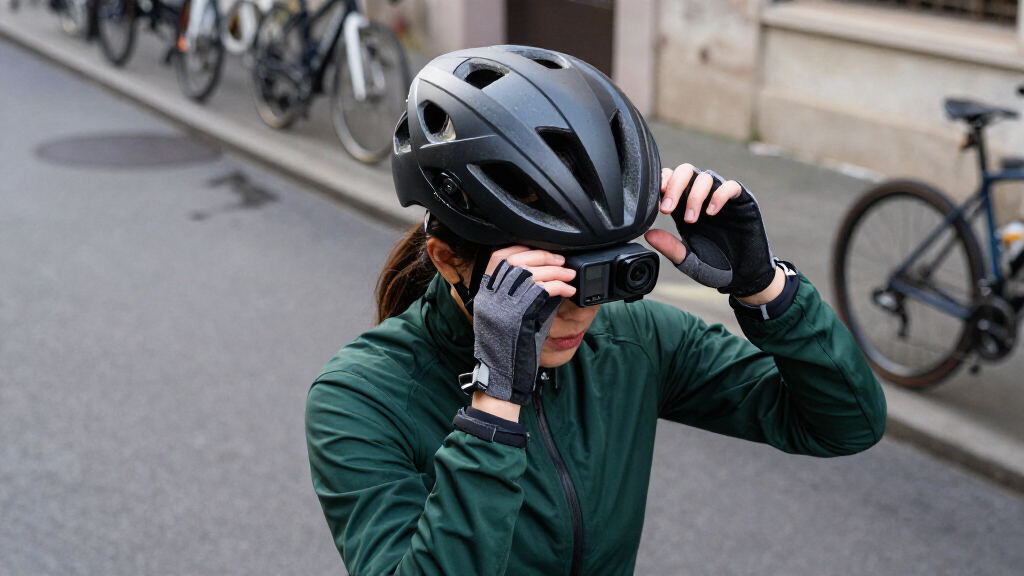
I compared these 15 options by how directly they serve a cyclist who wants a camera mounted on or integrated with a helmet. The ranking emphasizes usable recording features, practical mounting, stated weather protection, controls, included storage or accessories, and whether a product is designed for bikes rather than adapted from general sports or motorcycle use. I also weighed the burden of the setup: a compact camera can be convenient, while dual-camera systems can capture more directions but call for more mounting and wiring decisions.
The order reflects suitability for a broad range of cyclists, not a claim that one spec wins every ride. The AKASO EK7000 Pro leads for its accessible touchscreen and general-purpose format; bike-specific options and compact POV models follow where their design serves a narrower need. I place integrated smart helmets and motorcycle-oriented dual-camera systems lower for general helmet-camera use because they commit the buyer to a helmet or a more involved installation. Product details are based on the supplied specifications; I do not treat them as proof of real-world battery life, video quality, fit, or stabilization.
Factors to Consider When Choosing Helmet Cameras For Cyclists
Choosing a helmet camera is less about chasing the biggest resolution label and more about matching the camera to your rides, helmet, and recording habits. I’d settle the mounting and coverage questions first, then compare recording features and day-to-day handling.
Decide whether you need one view or two
A single forward-facing camera is the simpler choice for documenting a route or recording what is ahead. Dual-camera products can add a rear view, which may matter to riders who want footage from both directions, but they also create more points to mount, position, and maintain. Don’t assume a motorcycle system will attach neatly to every bicycle helmet or frame. Check the product’s installation method and whether its cables, camera units, or controls fit your setup. If you mainly want a compact record of the ride ahead, extra coverage can add complexity without much benefit.
Check mounting fit before comparing resolution
A camera’s listed resolution cannot help if its mount leaves it tilted, loose, or poorly placed. Compare the included mount with your helmet shape and vent layout, and check whether the camera can be aimed without blocking your view or interfering with straps. A helmet mount and a handlebar mount serve different purposes: the first follows your head, while the second records from a steadier fixed position. Buyers often treat included accessories as universal, but attachment styles and helmet designs vary. If you plan to move the camera between helmets, favor a mounting system you can remove and reposition without a full reinstall.
Treat resolution and stabilization as separate questions
Resolution describes the recorded image size, not how steady or readable the footage will look on a bumpy road. Stabilization can matter more on rough paths, while a wide-angle lens can capture more of the surroundings but may make distant details appear smaller. A higher resolution label is not a guarantee of better low-light footage or clearer moving subjects. Look for clear information about stabilization rather than assuming it from a 4K claim. Match the camera to your likely use: evidence and route records may call for a different balance than footage intended for close review or editing.
Plan for battery life, storage, and recording time
Battery capacity and stated recording duration are not interchangeable, and the supplied product details do not give a comparable runtime for every option. Long rides make replaceable batteries, charging access, or a second battery more relevant than a small display. Check what memory card is included, what capacity the camera supports, and how recording files are managed; a bundled card does not answer every storage question. Continuous recording can fill storage faster than short clips, so consider how often you can offload footage. Avoid choosing based only on the included card if your rides are long or frequent.
Match weather protection to your riding conditions
Waterproof ratings and cases are not identical forms of protection. A camera described as waterproof may rely on a separate case, while an IP rating communicates a different kind of protection from water and dust. Check whether the rating applies to the camera itself or only when housed in an accessory, and whether operating the controls remains practical in wet conditions. Riders who regularly face rain should also think about charging-port covers and how moisture could affect mounts or connections. Do not treat a water-resistant description as permission to submerge a camera unless the manufacturer explicitly supports that use.
Choose between a separate camera and a camera helmet
An integrated smart helmet can reduce the number of separate items to mount and manage, but it ties the camera to that helmet. A standalone camera is easier to move between helmets and other mounting positions, though it adds setup work. Fit and protection should remain the primary reasons to choose a helmet; camera features cannot compensate for a helmet that does not suit the rider. Check the helmet’s sizing and adjustment details independently from its camera specifications. If you already own a comfortable helmet, a separate camera is often the less limiting route.
Frequently Asked Questions
Is a helmet camera or handlebar camera better for recording a bike ride?
A helmet camera follows where you look, which can capture a useful view when you check a junction or turn your head. A handlebar camera holds a more fixed angle and may show the road consistently, but it will not follow your gaze. Neither position is automatically better for every purpose: the right choice depends on whether you value a rider-directed view or a steady forward frame. Check that the mounting position does not obstruct your vision, controls, or helmet fit. Some cameras support multiple mounts, but verify compatibility before planning to switch positions.
Do I need a dual-camera system for cycling?
Most riders who want a simple record of the route ahead can begin with a single camera. A dual system can capture front and rear views, which may be useful if recording coverage from both directions is a priority. That added coverage can mean more installation steps, more equipment to position, and potentially more charging or storage planning. Motorcycle-focused models may also be less straightforward to fit to a bicycle helmet than a compact action camera. Choose dual recording for a clear coverage need, not just because two cameras sound like a larger feature set.
Does a 4K helmet camera always record better footage than a 1080p model?
No: resolution is only one part of the result, and it does not tell you how well a camera handles vibration, movement, or dim conditions. Stabilization, lens angle, mounting stability, and how the footage will be viewed all affect usefulness. A wide-angle view can capture more surroundings, but small details farther away may be harder to make out. If you need to review specific events, prioritize readable footage and a stable mount over the resolution label alone. Compare the available feature details and avoid treating an unlisted performance trait as guaranteed.
Can I use a motorcycle camera on a bicycle helmet?
Some motorcycle and bicycle cameras may be adaptable, but the product label alone does not confirm a good helmet fit. Check the mounting hardware, camera placement, cable routing, and whether the system is intended for a helmet or another part of a motorcycle. Dual-camera systems can require more installation work than a compact single-unit camera. Make sure the setup does not interfere with helmet straps, ventilation, or safe head movement. If those details are unclear, a bike-focused or general action camera with a compatible helmet mount may be easier to manage.
Should I buy a smart helmet with a built-in camera or keep my helmet and add a camera?
An integrated camera helmet may suit someone who wants fewer separate components and is already shopping for a new helmet. A separate camera makes more sense if your current helmet fits well or you want to move the camera between helmets or mounts. With an integrated model, evaluate the helmet’s fit and adjustment range independently from its recording features. Also check whether camera placement, controls, and charging access work for your riding routine. Avoid replacing a suitable helmet just for camera features unless the full helmet is a good choice for you.
Conclusion
For a broad mix of bike rides, I’d choose the AKASO EK7000 Pro as the best overall, especially if a touchscreen matters for checking settings and framing. The TIROL 1080p Bike Action Camera is my best value-style pick for riders drawn to a bike-specific format, wide-angle lens, and included card, while the AKASO Brave 4 is a stronger match for buyers who want a general action-camera bundle with accessories. Beginners should start with the EK7000 Pro’s touchscreen rather than jumping straight to a more involved dual-camera setup. For specific needs, the LKT DB5S suits riders seeking front-and-rear coverage, and the EKUZO Smart Bike Helmet or Mingzhe Smart Bluetooth Cycling Helmet may appeal to someone who wants an integrated helmet-camera package. If compact size is your priority, compare the thumb-sized Sixmou i3 and other small POV options against the controls and mounting flexibility you need.