
TL;DR
Stylish bike accessories can make your ride more comfortable, convenient, and personal when you choose them for the way you actually ride. Start with dependable lights and a suitable lock, then add the right bag, weather protection, and comfort upgrades for your bike and route. Check fit and local rules before buying, because sizing and compatibility vary by brand and bike.
A rustle of canvas at your handlebars, a bright bell at your thumb, a clean stripe of reflective tape catching a car’s headlights: a few thoughtful details can change how a bike feels to ride. Stylish bike accessories do more than dress up a frame. They can make your commute easier, your errands less awkward, and your bike feel more like yours.

Get your wardrobe favorites delivered free with Prime
- Fast, free delivery on millions of items
- Prime Video, Amazon Music and more included
- Member-only deals all year
The best picks start with your ride. A person rolling five minutes to a café needs different gear from someone carrying a laptop through a rainy commute or touring with a week of supplies. In this article, you’ll learn how to combine practical features with personal expression, choose accessories that fit, and build a look that keeps visibility and comfort in the picture. Think of your bike as a well-loved jacket: the right pockets and fasteners matter as much as the color.
Choose lights for dependable seeing and visibility, then add reflectors for light returning from its source.
Match bag style to your load: handlebar bags for essentials, frame bags for compact central storage, and panniers for larger carries.
Check bike clearances, mounting points, weight limits, and e-bike cable or battery placement before buying.
Treat saddle and grip fit as personal; sizing and feel vary by rider and brand.
Coordinate colors around your bike while keeping lights and reflective details easy to see.
Start with the gear that makes every ride safer
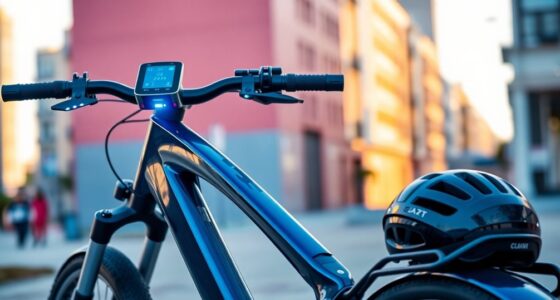
Stylish bike accessories can support safer riding when dependable lights and reflective details come before decorative extras. A front light helps you see the road and helps others notice you; a rear light makes your presence clearer from behind. Reflectors work differently: they return light toward its source, so they complement lights rather than replace them. This distinction matters because a reflector depends on another light shining on it, while an active light can make you visible when there is little ambient traffic or illumination.
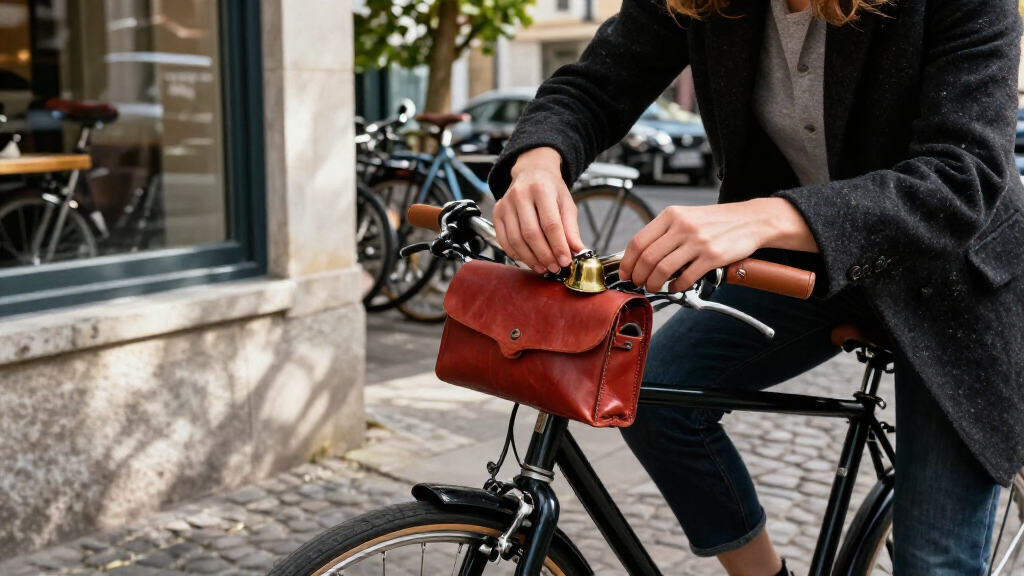
Imagine you leave work in October as the sky turns slate gray. A compact rechargeable light on your handlebar, a rear light on your seatpost, and a reflective ankle band give approaching drivers several chances to spot movement. The band’s motion can make it more noticeable than a static patch, while the lights provide visibility from different directions. A polished brass bell adds personality and lets you signal pedestrians without shouting. Check local equipment rules, since requirements for lights and reflectors vary by location.
When you’re choosing a light, look at how it attaches, how you charge it, and whether you can remove it easily when you park. A secure mount matters because vibration can shift the beam away from the road or make the light fall off. Rechargeable models save battery waste over time, but only if you remember to charge them; a replaceable battery can be easier to manage on a long trip. A beautiful light that rattles loose on a rough lane won’t serve you well. Dark, minimalist accessories can look sharp, but add reflective accents where they’ll catch headlights, such as a bag flap or trouser cuff.
Keep the distinction clear: lights help you see and be seen; reflectors return light toward its source.
That small detail matters on a dim ride home. You can create a coordinated look with silver trim or a shared accent color while keeping visibility easy to spot. Check that bags, baskets, and clothing don’t cover a light or reflector; even a well-chosen accessory can undermine the setup if it blocks the parts meant to be seen.
Popular right now

Vitamix 5200 Professional-Grade Blender

LG 55-Inch QNED73B Mini LED 4K Smart TV (2026)

De'Longhi Magnifica Duo Fully Automatic Espresso Machine with Milk Frother, Silver
As an affiliate, we earn on qualifying purchases.
Choose a bag that fits your route and keeps the bike steady
The right bike bag depends on what you carry and where you want its weight to sit. A handlebar bag keeps small essentials close at hand, a frame bag places cargo near the bike’s center, and panniers carry larger loads on a rack. A basket offers quick access for a tote or groceries, though loose items may need a strap or cover. These placements affect more than convenience: cargo near the bike’s center generally has less influence on steering, while a heavy handlebar load can make the front end feel harder to turn.
For a short ride to the bakery, a small handlebar pouch might hold your keys, phone, and a folded shopping bag. On a weekday commute, panniers can carry a laptop and lunch without putting a heavy backpack against your shoulders. That moves weight off your back, but the loaded bike may be wider and require care when passing through tight spaces. If you take a narrow frame bag, check that it leaves room for water bottles and doesn’t rub against cables. On a loaded bike, weight placed high or unevenly can change the way the bike handles, much like a lopsided suitcase tugging at your wrist. Keeping paired panniers balanced helps the bike feel more predictable, especially when starting, stopping, and cornering.
Bag appearance tells only part of the story. Look at mounting style, capacity, weather protection, and whether you can remove the bag quickly when you reach your destination. A bag described as water-resistant may handle a light shower; a fully waterproof bag with sealed seams and closures offers more protection in steady rain. That extra protection can be useful for electronics, but it may come with less convenient access or a higher price. Check those details before trusting it with a laptop, and consider a separate dry sleeve if you need another layer of protection.
| Bag style | Works well for | Check before buying |
|---|---|---|
| Handlebar bag | Small essentials and quick access | Handlebar clearance and secure attachment |
| Frame bag | Tools or compact loads kept central | Frame space, bottle access, and cable clearance |
| Panniers | Commuting, shopping, and larger loads | Rack compatibility and heel clearance |
| Basket | Quick errands and easy access | Load limits and a way to secure loose items |
Modular bags and mounts can move between bikes, which helps if you share gear or switch between a commuter and a weekend bike. Their convenience depends on a reliable fit: a loose mount can rattle, shift, or interfere with steering. Confirm the attachment fits your specific model, especially on an e-bike where cables, lights, and the battery may limit mounting space. After fitting a bag, test it with your usual load on a familiar route; an empty bag won’t reveal how added weight affects handling.
Add comfort upgrades that suit your body and bike
Comfort accessories work best when they match your body, riding position, and bike setup. Grips, saddles, ergonomic handlebars, and padded gloves can all affect how a ride feels, but no single shape suits everyone. Fit and adjustment matter; even a well-made saddle can feel wrong if it doesn’t suit you or sits at the wrong height. The point of a comfort upgrade is to reduce pressure or fatigue for your particular ride, not simply to add more padding or choose the most elaborate shape.
Consider a rider who starts commuting every day after years of occasional weekend spins. Their palms may tire first, so wider grips or padded gloves could help. But if their wrists are bent sharply because of handlebar position, thicker grips may not solve the cause. Another rider on the same route might feel fine through the hands but want a different saddle shape. Try one change at a time, and take a short ride before committing to a full-day trip. That way, you’ll know whether the upgrade helped or simply moved the discomfort elsewhere. Changing several things at once makes it harder to tell which adjustment made a difference.
Comfort gear can still look intentional. Leather-look grips, textured cork, or a saddle with a subtle color panel can echo a bag or frame detail. Materials also change how an item feels over time: a soft surface may be pleasant initially but wear sooner, while a firmer grip may last longer yet feel less forgiving on rough roads. Treat the bike like a chair you use outdoors: the materials and angles should feel good during the ride, not just look pleasing on a shop wall.
Buying guidance should account for differences between brands: sizing and fit vary, even when product labels use the same terms. Check the maker’s dimensions, fit notes, and return policy. If a saddle or grip causes pain, numbness, or pressure that persists, pause and review your setup rather than assuming you simply need to get used to it. Persistent discomfort can be a sign that the position or fit needs attention, and adding another accessory may not address it.
- Grips: compare diameter and shape with your hand size and riding position.
- Saddles: look for a fit that supports your usual posture and ride length.
- Gloves: check padding placement and whether the material works in your weather.
Build a coordinated look without hiding useful details
Stylish bike accessories look more considered when a few colors and materials connect them, while safety and function remain visible. You might pair a forest-green frame with a tan canvas bag and brass bell, or use black accessories with one vivid red light. The aim isn’t to match every piece; it’s to make the choices feel like they belong together. Limiting the palette also makes it easier to replace or add a piece later without making the whole setup feel mismatched.
Try this simple process before ordering a whole set:
- Pick a base: use your frame color or a neutral such as black, navy, or tan.
- Add one accent: repeat a color in a bell, bag patch, or bottle cage.
- Check visibility: keep lights unobstructed and include reflective details for dim conditions.
- Test the setup: turn the handlebars, check clearances, and ride a short familiar route.
Picture a cream commuter with a brown basket and dark green rain cape. A small amber reflector and bright rear light can sit neatly within that palette, so safety details look like part of the design. Still, a carefully matched set can be less useful than one well-chosen piece if it blocks a light or gets in the way of a cable. A quick check from the front, rear, and sides can reveal obstructions that are hard to notice from the saddle.
Urban cycling gear increasingly blends with everyday clothing, and compact rechargeable lights, tool-free mounts, and modular bags make it easier to adapt a setup. Each feature has a practical tradeoff: tool-free mounts save time when removing an item, but need to hold securely on rough roads; rechargeable lights reduce disposable batteries, but need regular charging. Product features change, so check current specifications rather than assuming a mount fits every year’s model. That helps your personal expression last longer than a trend cycle.
Protect your ride from rain, theft, and quick wear
Weather protection, a dependable lock, and durable construction make a stylish setup more useful day after day. Fenders help keep road spray off your clothes, while waterproof bags and packable rain layers protect your belongings when clouds roll in. A quality lock should reflect your bike’s value, where you leave it, and how long it stays unattended. These choices involve tradeoffs: heavier gear can offer more protection, but may be inconvenient enough that you leave it at home.
On a wet Tuesday, full fenders can spare your back from the dirty stripe that water flicks up from the rear wheel. They add bulk and need enough clearance around the tires, so check your frame and wheel setup before buying. Shoe covers may help on longer rides, but can feel excessive for a quick trip in mild weather. For bags, inspect seams and closures as well as the fabric: a sturdy roll-top can protect gear better than a pretty zippered pouch during a downpour. A waterproof closure may take longer to open, which matters if you reach for your phone or keys often.
For security, think about your actual parking pattern. A rider who leaves a valuable e-bike outside a busy station for hours may need a stronger lock and a secure rack than someone who brings a simple city bike indoors at work. A heavier lock can be inconvenient to carry, so consider whether you’ll keep it on the frame or at your destination; a lock that stays home cannot protect the bike. E-bikes are heavier and may have battery or cable placements that limit accessory choices, so check weight ratings and frame compatibility before fitting a rack or mount.
Durability can justify a higher price when you use an item often. Compare repairability, replaceable parts, warranty, fit, and reliable performance rather than price alone. A bag with a replaceable buckle may stay in service longer than a cheaper one that must be discarded when one clip breaks. Look for recycled or lower-impact materials if that matters to you, and check how the maker describes their claims. A long-lasting item can reduce replacement waste, though its value still depends on whether it fits your bike and routine well enough to use regularly.
Put together a useful setup for the ride you actually take
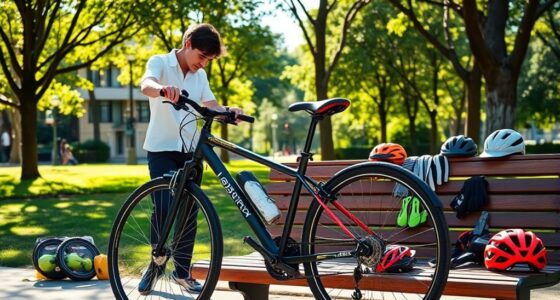
A good accessory setup starts with your regular route, then grows to meet real needs. Daily commuters often benefit from lights, a lock, a way to carry belongings, and a helmet; fenders and a compact repair kit depend on weather, distance, and road conditions. A recreational rider on dry paths may prioritize a bottle cage and a small tool roll instead. Thinking in terms of regular use helps you avoid paying for features that sound appealing but add weight or clutter without solving a problem on your rides.
Take Maya, who rides 20 minutes to work, stops for groceries on Fridays, and parks outdoors during the day. She could begin with dependable front and rear lights, a lock suited to that parking spot, and rear panniers that carry both her work bag and a few groceries. The panniers keep weight off her shoulders, but she should check rack fit and heel clearance and practice riding with the wider load. Fenders would pay off on wet mornings; a decorative basket might be lovely, but only if it can handle her usual load securely. Choosing panniers first gives her more capacity, while a basket may make quick access easier.
Use this quick check before you buy:
- Route: Are you riding in traffic, on wet roads, or in low light?
- Load: Do you carry a phone and keys, a workday’s supplies, or shopping?
- Fit: Do the dimensions, mounting points, and weight limits suit your bike?
- Use: Can you remove the accessory, charge it, clean it, or repair it easily?
Those questions connect style with the consequences of everyday use: usefulness, comfort, safety, and compatibility all belong in the buying decision. You can add one item at a time, ride with it, and see whether it earns its place. A small setup that works is more satisfying than a polished collection that rattles, rubs, or sits unused. Reassess after a few rides, because what seems convenient at home may feel cumbersome once the bike is loaded and moving.
Frequently Asked Questions
What accessories are useful for a daily bike commute?
Start with front and rear lights, a lock, a helmet, and a way to carry your things. Fenders and a compact repair kit help depending on your route, weather, and distance; check local rules for required equipment.
Which bike bag should I choose?
Choose a handlebar bag for small essentials, a frame bag for compact cargo kept central, and panniers for a larger work or shopping load. A basket gives quick access, but use a strap or cover to keep loose items in place.
How can I make my bike look stylish without compromising safety?
Pick a simple color palette, then add dependable lights and reflective accents where others can see them. A dark minimalist look can work well if you keep those visibility details clear and unobstructed.
What should I check before buying accessories for my bike?
Check the accessory dimensions, mounting points, clearance, and weight rating against your bike. On an e-bike, confirm it won’t interfere with cables, lights, or the battery; sizing and fit can vary by brand.
Do I need special accessories for an e-bike?
Not always, but choose gear rated for the bike’s weight and compatible with its frame and electrical parts. A sturdy lock and a carrying setup that fits around the battery and cables are common priorities.
Conclusion
Choose accessories by asking one practical question first: what would make your next regular ride easier, safer, or more comfortable? Start there, check the fit, then bring in colors and materials that feel like you. Good style follows useful choices, from the bag that carries your groceries to the light that catches a driver’s eye at dusk.
Build your setup one piece at a time. Soon, your bike will feel less like a standard model and more like a familiar companion, ready to roll through rain, errands, and the last gold light of the evening.