If your bike makes unusual noises, start by listening for when the sound occurs—braking, pedaling, or coasting—and check related components. Squeals often mean worn brake pads or dirty rotors, so replace or clean them. Clicking during pedaling could point to chain or cassette issues; clean, lubricate, or replace parts as needed. Grinding on the pedals suggests worn bearings or loose pedals. Address these common problems promptly, and you’ll learn more about keeping your bike quiet and smooth.
Key Takeaways
- Identify when the noise occurs (braking, pedaling, coasting) to target specific components for inspection.
- Check and replace worn brake pads or clean rotors to eliminate squealing and grinding noises.
- Regularly clean, lubricate, and inspect the chain, cassette, and derailleur to prevent clicking and rattling sounds.
- Examine bottom bracket and pedal bearings for play or roughness; service or replace bearings if needed.
- Ensure proper gear alignment and derailleur adjustment to stop chain slap and shifting noises.
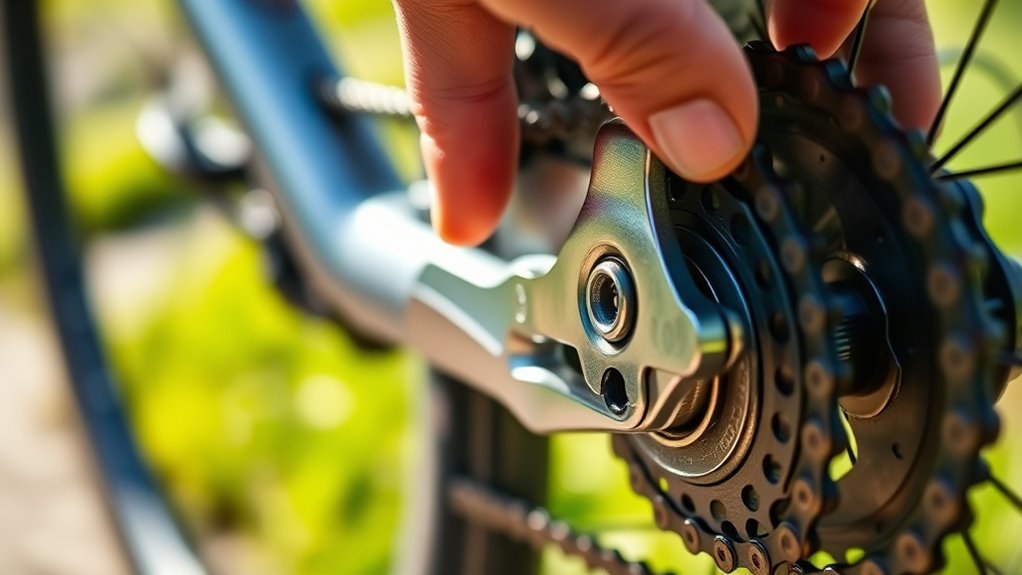
Bike noises can be frustrating, but identifying the source is often straightforward if you know what to look for. When you hear a squeal, click, or grind, it’s a sign that something needs your attention. The first step is to listen carefully and observe when the noise occurs—during pedaling, braking, or coasting. This can help narrow down the problem area. For instance, if the noise happens when you brake, the issue might be with your brake pads or rotors. Worn-out brake pads often squeal because of metal-on-metal contact, and replacing them usually fixes the problem. If the noise persists after pad replacement, check if the rotors are warped or dirty, and clean or true them as needed.
Identifying bike noises involves noting when they occur—braking, pedaling, or coasting—to pinpoint the source.
If you notice a clicking or popping sound when pedaling, it’s likely related to your drivetrain. The chain might be dirty, dry, or worn. Regularly cleaning and lubricating your chain can eliminate many noises. If the sound continues, inspect the chain for stiff links or excessive wear; replacing a worn chain can restore smooth operation. Your cassette or freehub could also be culprits. Worn cogs cause slipping and clicking, which you can diagnose by shifting through gears. If shifting is rough or sounds abnormal, consider replacing the cassette or servicing the freehub. Proper lubrication of drivetrain components can also help reduce unnecessary friction.
Grinding noises while pedaling often point to issues with your bottom bracket or pedals. A creaking or grinding sound that intensifies with force might mean the bottom bracket bearings are worn or need lubrication. Remove the cranks and check for play or roughness in the bottom bracket. If you find excessive movement or noise, you might need to replace or service the bearings. Pedals can also cause grinding if they’re loose or damaged. Tighten the pedal axles with a wrench, and if they’re still noisy or wobbling, consider replacing them.
Chain slap or rattling sounds are typically caused by loose or incorrectly adjusted derailleur or chain tension. Check your derailleur alignment and ensure your chain has the proper tension. If your derailleur hanger is bent, realign it with a derailleur hanger alignment tool. Proper gear indexing prevents chain rubbing and noise during shifts. Additionally, inspect your cables and housing for wear or dirt, which can impede smooth shifting and cause noise. Lubricate and replace cables if necessary. Regularly inspecting and maintaining components can also prevent many common noises.
In short, many bike noises are simple to fix once you’ve identified their source. Regular maintenance, like cleaning, lubricating, and inspecting parts, can prevent most issues. But when noises persist despite your efforts, don’t hesitate to seek professional help. Addressing these sounds early keeps your ride smooth, safe, and enjoyable.
Furthermore, understanding bedroom decor themes can inspire you to create a cozy, rustic ambiance that complements your bike maintenance space by incorporating natural materials and vintage accents, making your workspace both functional and inviting.
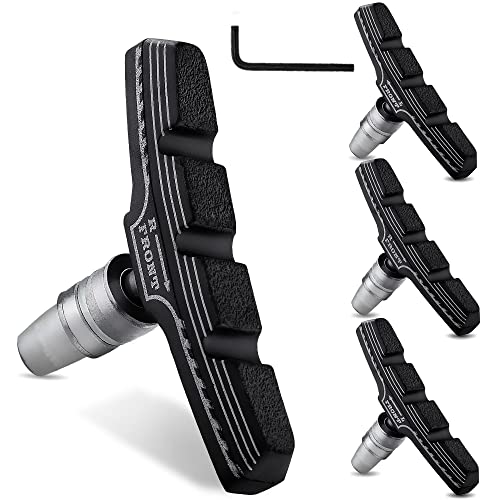
Hapleby 4PCS Premium Bike Brake Pads, Professional Mountain Bicycle V-Brake Pads, Bike Brake Blocks Kit, for Free Hex Wrench
【HARD-WEARING MATERIAL】 The brake pads are made of hyathetic fiber and nitrile rubber, they have supreme durable and…
As an affiliate, we earn on qualifying purchases.
As an affiliate, we earn on qualifying purchases.
Frequently Asked Questions
How Often Should I Lubricate My Bike to Prevent Noises?
You should lubricate your bike regularly to keep it quiet and smooth. For most riders, applying lubricant every 100 to 200 miles or once a month is enough, depending on riding conditions. If you ride in wet or muddy areas, you might need to do it more often. Always check your chain, derailleurs, and cables, and lubricate them when they start to squeak or feel stiff.
Can Improper Tire Pressure Cause Unusual Bike Noises?
While improper tire pressure might seem minor, it can cause unusual bike noises. When your tires are underinflated or overinflated, they don’t roll smoothly, creating squeaks or thuds. You notice the noise, and it’s easy to overlook its cause. Check your tire pressure regularly to keep your ride quiet and comfortable. Properly inflated tires reduce unnecessary noise, making your cycling experience smoother and more enjoyable.
What Tools Are Necessary for Basic Bike Noise Repairs?
When you want to fix common bike noises, you’ll need a few basic tools. Grab a set of Allen wrenches, a Phillips and flat-head screwdriver, and a bike pump with a pressure gauge. A chain tool and lubricant are also handy for noise caused by chain issues. With these tools, you can tighten bolts, adjust components, and lubricate parts, making your bike run smoother and quieter.
How Do I Identify if a Noise Is From the Chain or Derailleur?
Imagine the hum of your bike shifting smoothly, then sudden squeaks or clunks break that harmony. To tell if a noise comes from the chain or derailleur, listen closely while pedaling. If the sound is rhythmic and synced with your pedal stroke, it’s likely your chain. If it’s more erratic or occurs during gear shifts, the derailleur is probably the culprit. Check for loose or misaligned parts to confirm.
Are There Specific Brands Known for Quieter Bike Components?
You might wonder if certain brands make quieter bike components. Some companies like Shimano, SRAM, and Campagnolo are renowned for producing smooth, reliable parts that tend to operate quietly. High-quality materials and precise manufacturing help reduce noise. Choosing well-reviewed, reputable brands can make your ride more peaceful. Also, regular maintenance and proper installation enhance noise reduction, regardless of the brand, ensuring you enjoy a quieter, smoother cycling experience.

WD-40 Specialist Bike Chain Lube, 6 OZ
Apply this lubricant to your bike chain for high-performing lubrication for dry, wet, or varying conditions. The fast…
As an affiliate, we earn on qualifying purchases.
As an affiliate, we earn on qualifying purchases.
Conclusion
Now that you’re armed with tips to tackle those pesky bike noises, you’re practically a bike-whisperer! Remember, ignoring these sounds is like ignoring a ticking time bomb—eventually, it’ll blow up in your ride’s face. Regular maintenance and quick fixes keep your bike whispering sweet nothings instead of loud complaints. Stay attentive, stay proactive, and your bike will reward you with smooth, silent rides that feel almost magical. Happy cycling!
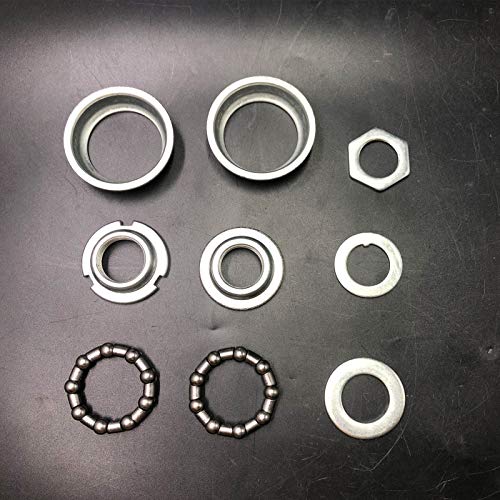
2" Cup Bottom Bracket Set,One-Piece Bottom Bracket Cup Set Bearings Included,Silver
2" Cup Bottom Bracket Set,One-Piece Bottom Bracket Cup Set Bearings Included,Silver
As an affiliate, we earn on qualifying purchases.
As an affiliate, we earn on qualifying purchases.

Chigadper Bike Cassette Removal Tool Kit with Chain Whip, Freewheel Remover Tool Kit & Lockring Extractor, Compatible with Shimano SRAM 7 to 12 Speed Bicycle Cassettes and Disc Brake Lockrings
【Complete 3-in-1 Cassette Tool Set】 This all-in-one kit includes every tool needed for cassette and freewheel maintenance: a…
As an affiliate, we earn on qualifying purchases.
As an affiliate, we earn on qualifying purchases.