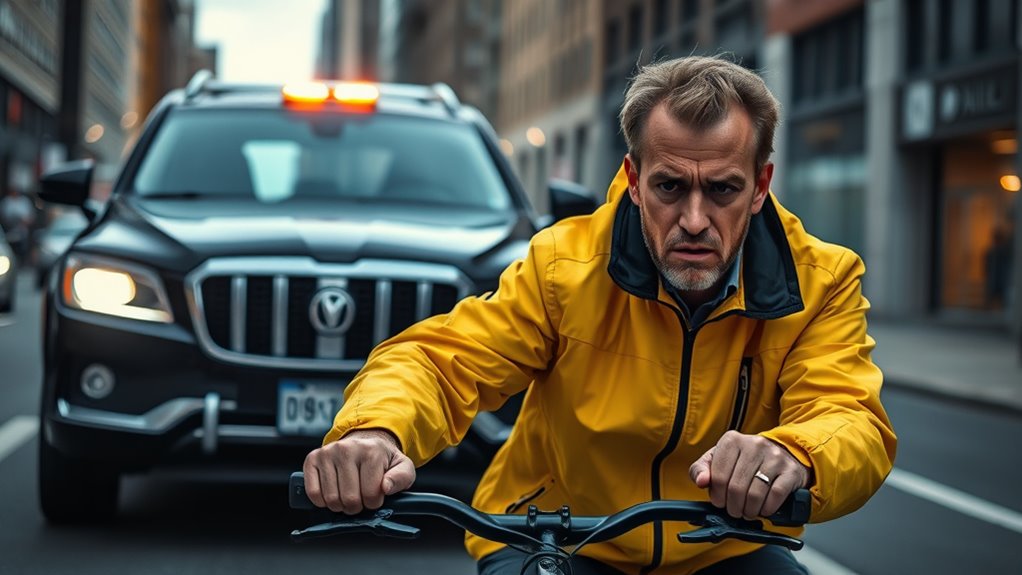

When facing aggressive drivers on your bike, stay calm and avoid eye contact or gestures that could escalate tensions. Keep your hands on the handlebars, ride predictably, and move safely out of their way if needed. Use a phone or whistle to alert others if necessary, and consider riding with a group for added safety. Reporting encounters helps authorities address dangerous drivers. Learn more about staying safe and handling road rage effectively.
Key Takeaways
- Stay calm, avoid eye contact, and do not retaliate to prevent escalation.
- Maintain a steady, predictable ride and use signals to communicate intentions clearly.
- Slow down or pull over safely if a driver becomes aggressive or hostile.
- Use safety tools like a whistle or phone, and ride with a group for added security.
- Report aggressive incidents to authorities with detailed descriptions to support enforcement efforts.

Have you ever found yourself face-to-face with an aggressive driver on the road? It can be unsettling, especially as a cyclist vulnerable to the actions of others. When you’re out riding, you rely on your awareness and calmness to navigate safely, but encounters with hostile drivers can test your composure. It’s important to remember that their aggression isn’t about you personally; it’s often a reflection of their own frustrations or bad driving habits. Staying calm and focused helps you avoid escalating the situation. Keep your hands firmly on the handlebars and maintain a steady, predictable pace. Avoid making eye contact or gesturing—any sign of engagement might provoke further hostility. Instead, look ahead and proceed with confidence, signaling your intentions clearly with your bike’s signals if needed.
If a driver is tailgating or shouting, don’t try to confront them. Instead, slow down slightly or pull over when it’s safe to do so, creating space between you and the hostile driver. Remember, your priority is your safety, not winning a confrontation. If the driver’s behavior continues or worsens, try to find a safe spot to stop and wait until they pass. If you’re on a busy street, move to a designated bike lane or a less congested area. This reduces the risk of a collision and helps you stay out of harm’s way. You should also be aware of your surroundings—watch for pedestrians, parked cars, and other obstacles that could complicate your maneuvering.
Carrying a phone or a whistle can be useful if you need to alert others or call for help. Also, consider riding with a group, especially on routes where you might encounter aggressive drivers. There’s safety in numbers, and a group can deter hostile behavior. It’s equally important to report aggressive driving incidents to local authorities. Providing details like license plate numbers, descriptions, and the location can help law enforcement address dangerous drivers and improve overall road safety. Remember, your attitude and reactions play a crucial role in your safety. Remaining calm and non-confrontational not only protects you physically but also helps prevent the situation from escalating. Ultimately, your goal is to stay safe, avoid confrontation, and keep your focus on the road ahead.
Frequently Asked Questions
How Can I Prevent Road Rage Incidents Before They Happen?
To prevent road rage incidents before they happen, you should stay visible and predictable by riding in a straight line and using hand signals. Keep a calm demeanor, avoid sudden movements, and don’t make eye contact with aggressive drivers. Stay focused on the road and maintain a safe distance from vehicles. By staying composed and alert, you can reduce the chances of provoking anger and keep yourself safe.
What Legal Rights Do Cyclists Have During Aggressive Encounters?
During aggressive encounters, you have the right to stay safe and assert your presence on the road. You’re protected by laws that recognize bicycles as vehicles, meaning drivers must respect your space and follow traffic rules. If a driver threatens or harms you, you can report it to authorities. Always document incidents and stay calm to guarantee your safety and legal protection. Your rights help you defend yourself and seek justice if needed.
Should I Record or Photograph Aggressive Drivers?
Imagine you’re a brave explorer capturing a rare bird’s behavior. Recording or photographing aggressive drivers serves as your evidence, documenting their actions for safety and legal reasons. It’s like gathering clues in a mystery, helping authorities understand incidents. Always make certain you’re in a safe position first. Your recordings protect you and can be vital if disputes escalate, turning your ride into a well-documented adventure of safety and accountability.
How Do I Stay Calm During a Threatening Situation?
In a threatening situation, staying calm is essential. Take deep breaths to steady yourself, and focus on maintaining a safe distance. Keep your movements slow and deliberate, avoiding sudden gestures that could escalate the scene. Remind yourself that you’re in control, and don’t engage with aggression. Staying composed helps you think clearly and respond effectively, reducing the risk of escalation and keeping you safer until help arrives.
What Community Resources Are Available for Cyclist Safety?
You can access a variety of community resources to boost your safety as a cyclist. Local bike advocacy groups often provide safety workshops, route planning, and emergency contacts. Police departments may offer safety programs or reporting services for dangerous drivers. Check if your city has a bike safety coalition or community centers with cycling classes. These resources help you stay informed, prepared, and connected, ensuring you ride confidently and securely.
Conclusion
So, next time you encounter an aggressive driver, remember it’s ironic—you’re the vulnerable cyclist, yet staying calm and composed might just be your strongest move. While they’re busy unleashing fury behind the wheel, you’re the one in control, steering safely with patience. Ironically, their rage can’t shake your peace if you refuse to give in. Keep your cool, stay alert, and maybe one day, they’ll learn a thing or two from your quiet strength.