When choosing between 2-piston and 4-piston e-bike brakes, you’ll find that 4-piston systems provide greater stopping power, especially on steep hills and long descents, thanks to increased pad contact and better heat dissipation. While 2-piston brakes are simpler and more affordable, they may struggle with consistent performance during intense rides. For demanding terrains and safer stops, upgrading to 4-piston brakes can make a noticeable difference—exploring further reveals which setup suits your riding style best.
Key Takeaways
- 4-piston brakes provide more consistent and powerful stopping force, ideal for steep descents and high-speed riding.
- 2-piston brakes are simpler, lighter, and more affordable but may require more frequent maintenance for optimal performance.
- 4-piston systems offer better heat dissipation and modulation, reducing brake fade during prolonged use.
- 2-piston brakes are sufficient for urban or recreational riding with less demanding braking needs.
- Choosing between them depends on riding style, terrain difficulty, and desired braking performance.
How Do 2-Piston and 4-Piston E‑Bike Brakes Differ in Design?
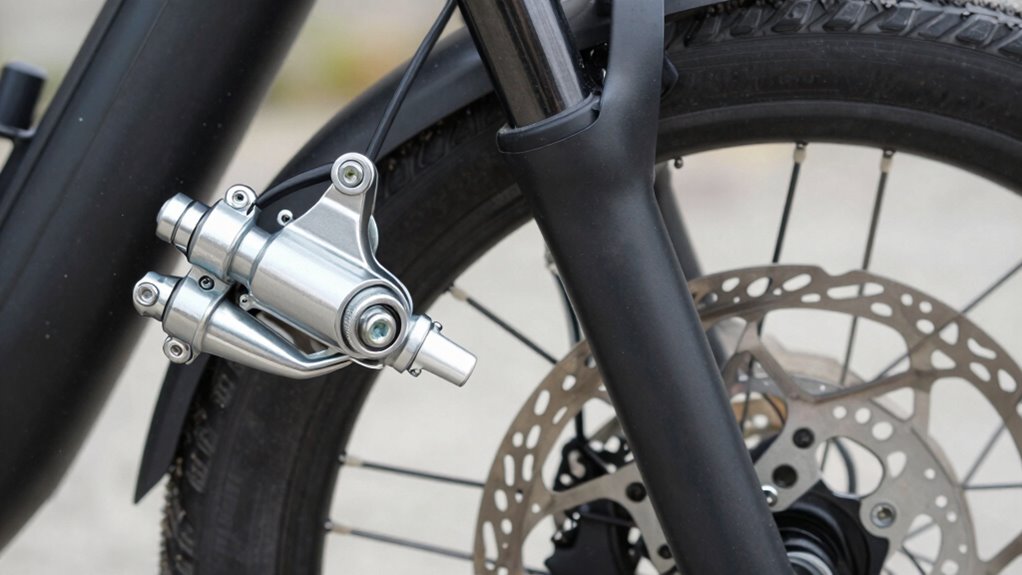
While both 2-piston and 4-piston e-bike brakes serve to slow you down effectively, they differ considerably in how they are designed. The main difference lies in caliper size and piston count, which influence braking performance. A 2-piston caliper has a smaller size and uses fewer brake pads, typically two, which limits its ability to evenly distribute pressure. In contrast, a 4-piston caliper is larger, with four pistons working together to apply even force across more brake pads. This design allows for better heat dissipation and more consistent braking. Additionally, the brake pad material plays a role; high-quality composites can improve braking response and durability, especially in larger calipers. The contrast ratio of the calipers also affects how well they perform under different conditions, especially in high-heat scenarios. Furthermore, the caliper design impacts maintenance ease and pad replacement frequency. Overall, the design differences impact how efficiently each system manages heat and pad wear.
Which Brake System Offers Better Stopping Power for Steep Hills and Long Descents?
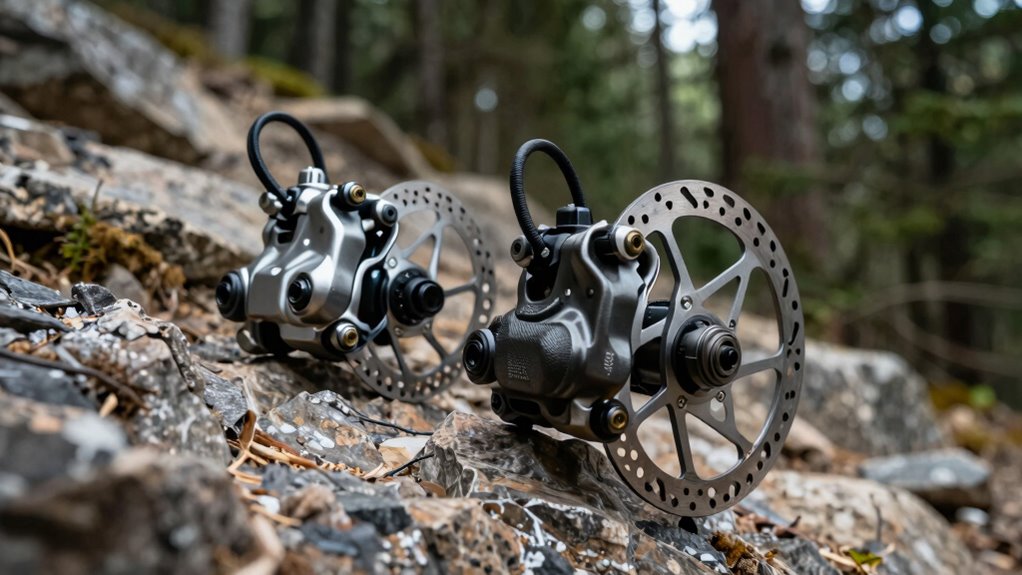
When tackling steep hills and long descents, your braking system’s ability to provide strong, reliable stopping power becomes essential. Generally, 4-piston brakes offer better braking efficiency due to increased pad contact and greater leverage, allowing you to slow down more effectively under heavy loads. They tend to maintain consistent performance during prolonged descents, reducing the risk of brake fade. However, 2-piston brakes can still deliver adequate stopping power for many riders, but they may require more frequent maintenance to keep their braking efficiency supreme. The increased complexity of 4-piston systems means they might need more maintenance, but their superior stopping power on steep terrain makes them a preferred choice for aggressive downhill riding. Modern brake technology continues to evolve, improving performance and durability for both systems. Ultimately, your choice depends on your riding style and terrain demands.
How Do Heat Dissipation and Modulation Compare Between 2- and 4-Piston Brakes?
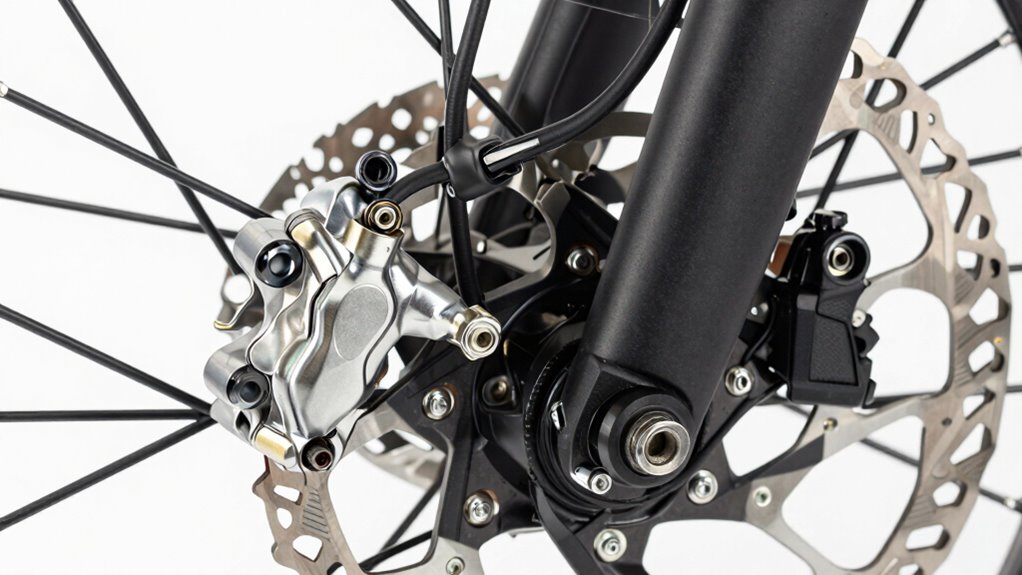
Heat dissipation and modulation are key factors that influence braking performance, and they differ especially between 2- and 4-piston brakes. Four-piston brakes generally provide better heat dissipation due to more uniform pressure distribution, helping prevent overheating during long descents. Proper brake maintenance also plays a vital role; high-performance pads can improve heat management and modulation, regardless of piston count. Rotor design also impacts heat flow; larger or vented rotors enhance cooling and reduce fade. Design features such as venting and material choices significantly affect heat flow and overall braking efficiency. Additionally, visual and auditory cues can aid riders in monitoring brake performance and preventing overheating, especially during intense descents. Correct brake adjustment ensures optimal contact and reduces unnecessary heat buildup, further improving performance. Proper brake pad selection can also improve heat dissipation and modulation, making braking more consistent under various conditions. Modulation is finer with 4-piston brakes, giving you more control by allowing smoother application of force, especially when paired with optimized rotor design. Ultimately, 4-piston brakes excel in heat management and modulation, making them more reliable under prolonged or aggressive riding conditions.
What Are the Pros and Cons of 2-Piston E‑Bike Brakes?

2-piston e-bike brakes offer a balanced mix of simplicity, efficiency, and affordability, making them a popular choice for many riders. They typically use durable brake pad materials like organic or metallic compounds, which provide reliable stopping power. These brakes are easier to maintain than more complex systems, but regular inspection of brake pad wear is essential to guarantee peak performance. Maintenance tips include checking brake pad thickness, cleaning calipers, and replacing pads when they become worn down. While they deliver solid braking for everyday riding, they might lack the modulation and heat dissipation of more advanced systems during intense downhill descents. Overall, 2-piston brakes are a practical, cost-effective option suitable for most urban and recreational riders. Additionally, understanding the differences in brake types can help riders make more informed choices based on their riding style and terrain. To optimize performance, riders should also be aware of the proper adjustment techniques, which are essential for achieving consistent braking response. Proper brake pad materials can also influence durability and stopping performance across various riding conditions. Recognizing how heat dissipation affects brake performance can help riders prevent fade during extended descents, especially as modern innovations like sintered pads continue to improve braking capabilities.
When Should You Choose 4-Piston E‑Bike Brakes?

If you frequently ride downhill or engage in high-speed, technical terrains, 4-piston e-bike brakes can give you the stopping power and control you need. They’re ideal if you want better fade resistance during intense rides. Consider choosing 4-piston brakes when:
- You prefer a bold, aggressive aesthetic that matches high-performance bikes.
- You’re willing to handle increased maintenance requirements for peak performance.
- Your riding involves steep descents and demanding terrain where extra braking power is essential.
- You value consistent, reliable stopping performance over lighter, simpler setups.
- Additionally, modern brake technology enhances safety and control during challenging rides, especially as brake materials improve durability and heat dissipation. Proper brake setup is also crucial for ensuring optimal performance and longevity.
While 4-piston brakes offer superior control, they tend to be more complex and require more upkeep. If aesthetics, reliability, and power are priorities, these brakes are a smart choice.
How to Pick the Right Brake Setup for Your Riding Style and Budget?
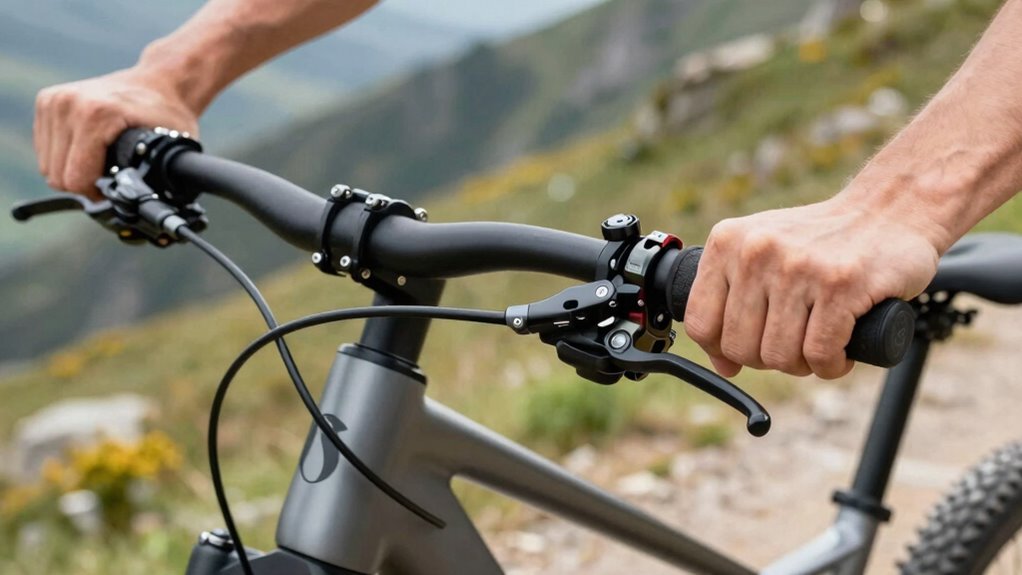
Choosing the right brake setup depends heavily on your riding style and budget. If you ride aggressively or downhill often, investing in 4-piston brakes provides stronger stopping power and better heat dissipation. For casual or commuting riders, 2-piston brakes might be sufficient and more affordable. Consider your ability to perform brake maintenance; more complex systems like 4-piston brakes may require extra attention but offer superior performance. When evaluating upgrade options, think about long-term benefits—higher-end brakes can reduce wear and improve reliability. If budget is tight, starting with quality 2-piston brakes and upgrading later is a smart move. Ultimately, matching your brake choice to your riding needs ensures safety, efficiency, and a satisfying riding experience.
Frequently Asked Questions
Are 4-Piston Brakes Heavier Than 2-Piston Systems?
Yes, 4-piston brakes are generally heavier than 2-piston systems due to their additional pistons and larger calipers. The weight difference also depends on material choices, as lighter materials like aluminum reduce overall weight. If you prioritize lighter setup, consider material differences. However, if stopping power is your main concern, the extra weight of 4-piston brakes might be a worthwhile trade-off for improved performance.
How Does Brake Pad Wear Differ Between 2- and 4-Piston Brakes?
You’ll notice that 4-piston brakes typically have a longer pad lifespan because they distribute braking force more evenly, reducing uneven wear patterns. In contrast, 2-piston brakes may experience faster pad wear, especially on the inner pads, due to concentrated pressure. This means you’ll need to monitor wear more frequently with 2-piston systems, while 4-piston brakes offer more consistent wear, helping you save on replacement costs.
Can 2-Piston Brakes Be Upgraded to 4-Piston?
You can upgrade your 2-piston brakes to 4-piston, but you’ll need to check upgrade compatibility and consider hydraulic system differences. Not all 2-piston setups fit directly onto 4-piston calipers, and some may require adapters or new levers. Confirm your bike’s frame and fork can support the larger calipers, and be prepared for potential modifications. An upgrade improves braking power but requires careful compatibility checks.
Do 4-Piston Brakes Require More Maintenance?
Yes, 4-piston brakes generally require more maintenance because they have more components, which means you’ll need to keep up with brake fluid maintenance and caliper inspection frequency. The additional pistons can lead to increased wear and potential for leaks, so regular checks ensure best performance. Staying on top of these maintenance tasks helps prevent issues and keeps your braking system reliable and effective during rides.
Which Brake Type Is More Suitable for Urban Commuting?
They say, “A chain is only as strong as its weakest link,” so for urban commuting, 2-piston brakes often suit you best. They offer excellent brake modulation for city speeds, providing reliable urban safety without excessive maintenance. While 4-piston brakes deliver more stopping power, their complexity isn’t always necessary in stop-and-go traffic. Choose 2-piston for easy handling and consistent control in urban environments, keeping your ride smooth and safe.
Conclusion
Choosing between 2- and 4-piston e-bike brakes depends on your riding needs and budget. Don’t assume more pistons always mean better; consider your terrain and riding style first. If you think you don’t need top-tier stopping power, remember that the right brake setup can boost confidence and safety. Investing in quality brakes tailored to your riding guarantees you enjoy better control and peace of mind on every ride.