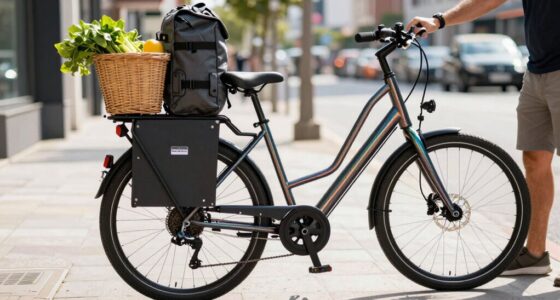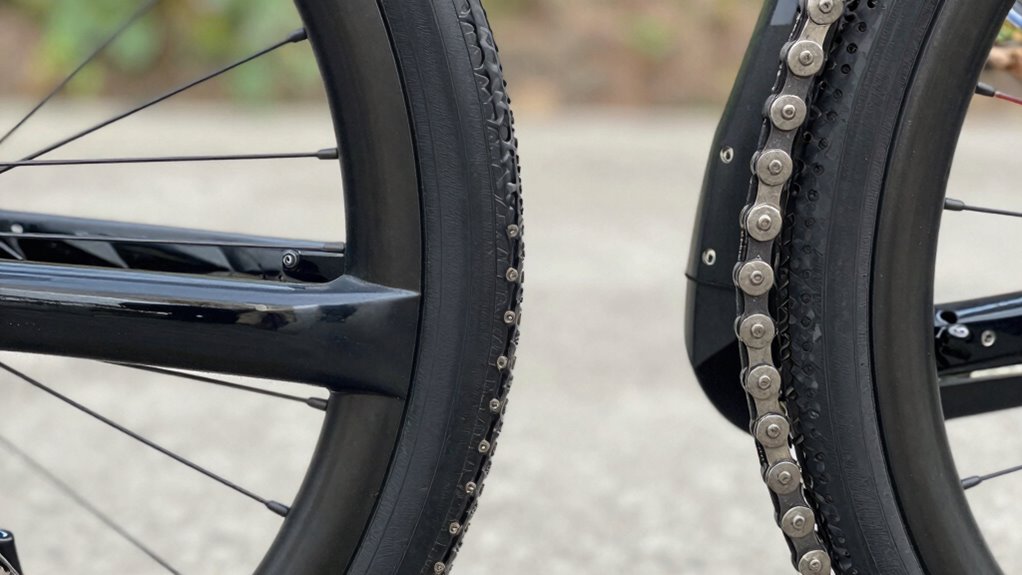

A belt drive saves you more time because it’s quicker to install and requires less maintenance than a chain. Belts need minimal adjustments, don’t require lubrication, and last longer with fewer repairs. Chains, on the other hand, demand frequent tensioning, lubrication, and more frequent replacements, which can slow you down. Overall, belt drives make your daily rides smoother and less time-consuming—if you want to know more, keep exploring the details.
Key Takeaways
- Belt drives require less time for installation, tensioning, and alignment compared to chain systems.
- Belts need minimal maintenance like lubrication and adjustments, saving time over the long term.
- Belt drives have fewer replacements and repairs, reducing bike downtime and ongoing upkeep efforts.
- They operate more quietly and smoothly, decreasing time spent on fine-tuning gear performance.
- Weather-resistant belts require less cleaning and maintenance, saving time in adverse conditions.
Which Drivetrain Saves You More Time: Belt Drive or Chain?
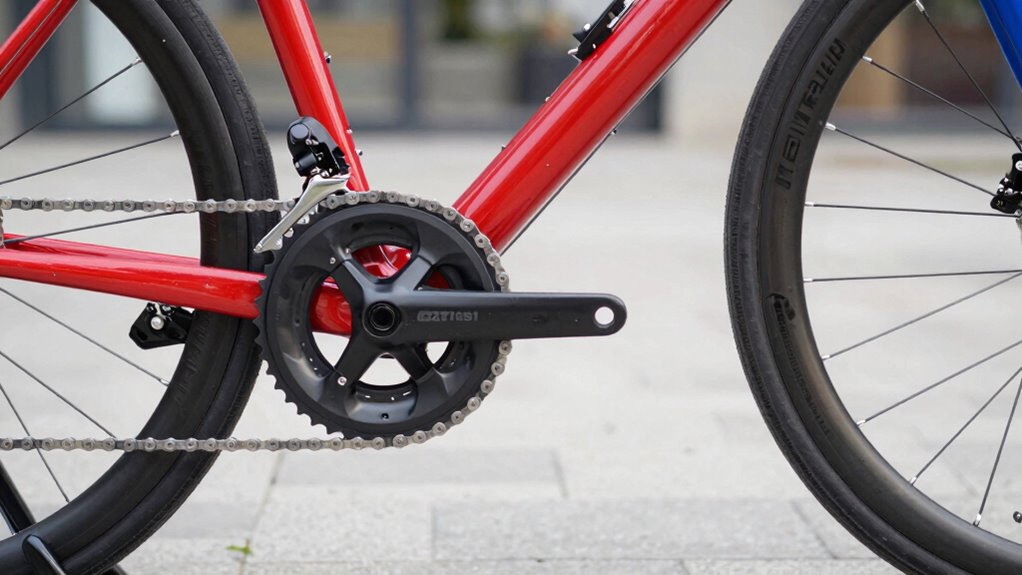
When it comes to saving time on maintenance and setup, belt drives generally offer a quicker and more straightforward experience than chains. They require less frequent adjustments and are easier to install, helping you get on the road faster. Additionally, belt drives tend to be cleaner, which benefits bike aesthetics by reducing grease stains and grime. You’ll also notice they operate more quietly, lowering noise levels during rides. This means less fuss when tuning your bike and a more enjoyable experience overall. Belt drives are less prone to rust and dirt buildup, saving you time on cleaning. Moreover, their resistance to corrosion and dirt accumulation means they can withstand various weather conditions better, further reducing maintenance requirements. If convenience, cleaner aesthetics, and quieter operation matter to you, a belt drive can considerably cut down your maintenance time and keep your bike looking sleek. Regular inspection of drive components can also help prevent unexpected issues and extend the lifespan of your drivetrain. Choosing a belt drive with maintenance-friendly design features can make routine upkeep even simpler.
Key Differences Between Belt Drives and Chains

Belt drives and chains differ markedly in design, maintenance, and performance, making each suitable for different riding preferences. Material comparison reveals that belts are typically made from reinforced polymers or carbon-fiber composites, offering a smooth, lightweight, and quiet operation. Chains, on the other hand, are usually metal, such as stainless steel, providing durability and strength for high-torque applications. Noise levels are another key difference: belts produce considerably less noise, making for a quieter ride, while chains tend to be louder due to their metal-to-metal contact. Maintenance varies too; belts require less frequent adjustments and lubrication, whereas chains need regular lubrication and tension adjustments. Understanding these material and noise distinctions will help you choose the drivetrain that aligns with your riding style and priorities. Additionally, maintenance requirements can significantly influence your choice based on how much time you’re willing to dedicate to upkeep. The longevity of each option can also vary depending on riding conditions and maintenance habits. Moreover, proper installation techniques are essential to maximize performance and lifespan, especially for chains.
How Quickly Can You Install and Set Up Each System?
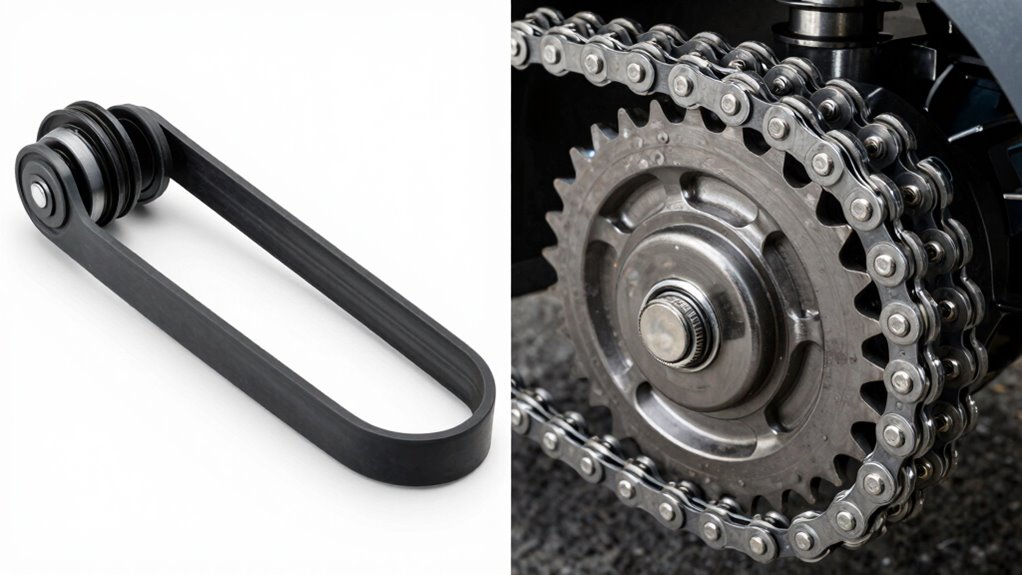
Installing and setting up belt drives generally takes less time and effort than installing chains. Their installation speed benefits from straightforward alignment and fewer components, making the process quicker. Belt drives typically come pre-tensioned or require minimal adjustment, which simplifies setup and reduces downtime. In contrast, chains usually demand more precise tensioning, alignment, and sometimes additional lubrication, complicating installation. The setup simplicity of belt systems allows you to get your equipment running faster, especially for those with limited technical experience. Overall, belt drives are designed for quicker, more efficient setup, saving you valuable time during installation. If you prioritize a fast, hassle-free installation process, belt drives clearly have the edge over chains. Additionally, the installation process for belt drives tends to be more straightforward due to their fewer components and easier maintenance requirements. A maintenance-friendly design further enhances setup efficiency by reducing the need for frequent adjustments or repairs. Moreover, the ease of adjustment of belt systems means they can be readjusted or replaced more quickly if needed, minimizing downtime. The simple tensioning process of belt drives also contributes to faster setup and easier ongoing maintenance, making them more user-friendly for DIYers and professionals alike. For optimal performance, selecting the right pulley size is essential to ensure proper belt tension and longevity.
Maintenance and Durability: Which Lasts Longer and Saves Time?

Although both belt drives and chains require regular maintenance, belt drives generally last longer and demand less ongoing attention. You won’t need to worry about frequent lubrication, as belt drives don’t require lubrication frequency like chains do. This means less mess and lower maintenance time. Additionally, belt drives have superior wear resistance, allowing them to withstand the stresses of daily use without significant degradation. Chains, on the other hand, can stretch and wear out faster if not properly lubricated, leading to more frequent replacements. Overall, belt drives tend to be more durable, reducing the time and effort you spend on upkeep. Proper maintenance practices can further extend the lifespan of your drive systems, making belt drives a more reliable choice. Regular inspections and preventative maintenance are essential in keeping both systems running smoothly, but belt drives still require less frequent attention. If minimizing maintenance time is your goal, belt drives offer the longer-lasting, low-maintenance solution. Moreover, understanding the materials used in belt construction can help you select options that are best suited for your specific needs. Recognizing the importance of proper tensioning can also prevent premature wear and improve overall longevity. Support networks for new fathers can also help manage the additional responsibilities and stress involved with maintenance routines.
Daily Riding: Which Drivetrain Helps You Save More Time?
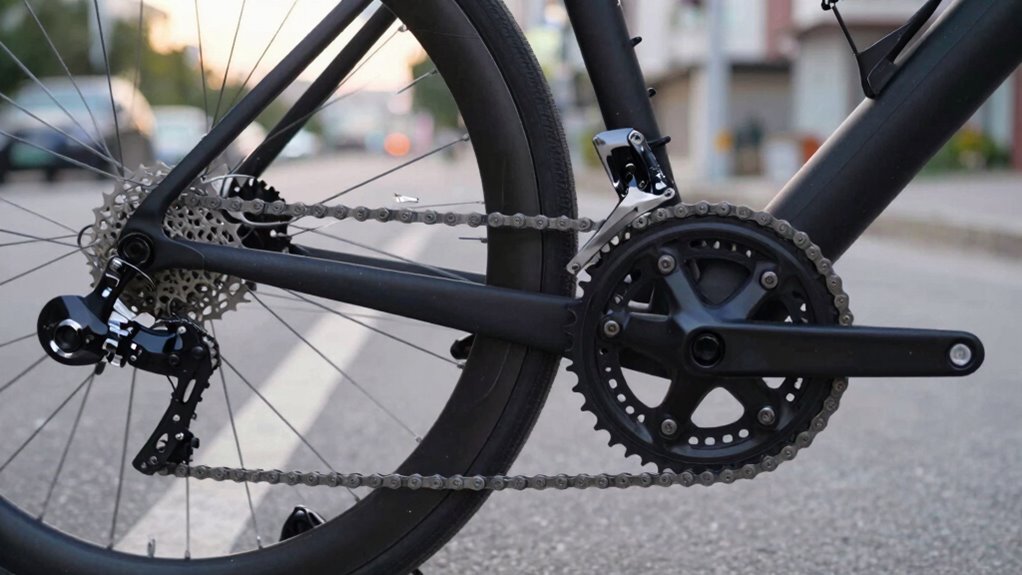
When you’re riding daily, saving time on maintenance and adjustments can considerably improve your experience. Belt drives require less frequent tuning and are cleaner, saving you time during regular checks. Chain drives, however, often need more adjustments to maintain ideal gear ratios, especially if you change gears frequently. In regard to riding comfort, belt drives provide smoother, quieter shifts, reducing the need for fine-tuning to achieve the perfect gear ratio. This consistency means fewer interruptions during your ride. If you prioritize quick, reliable gear changes and minimal downtime, belt drives help you stay focused on your ride instead of maintenance. Overall, for daily riding, a belt drive can save you more time by offering better riding comfort and less fuss with gear ratios. Additionally, reliability of belt drives contributes to fewer unexpected repairs, making them a practical choice for daily commuters. Furthermore, low-maintenance systems like belt drives tend to have a longer lifespan with proper care, reducing the need for frequent replacements. For many riders, the ease of use associated with belt drives makes them a preferred choice for everyday cycling, especially when considering the time-saving benefits that come with less upkeep and adjustments. Incorporating durability into your decision can further enhance your riding experience by minimizing downtime.
Frequently Asked Questions
Are Belt Drives Quieter Than Chains During Operation?
Belt drives are generally quieter than chains during operation, thanks to their smoother sound levels and reduced vibration. You’ll notice less noise comparison, making them ideal if you prefer a quieter ride or work environment. The rubber belts absorb vibrations better, producing minimal sound, whereas chains tend to be noisier with rattling and squeaking. So, if quietness is a priority, belt drives definitely offer a more peaceful experience.
How Do Belt Drives Perform in Wet or Muddy Conditions?
Think of your belt drive as a slick swimmer in muddy waters—its wet performance isn’t its strongest suit. When exposed to rain or mud, it can slip or lose grip, decreasing efficiency. Belt drives aren’t as mud-resistant as chains, which handle wet and muddy conditions better. For off-road adventures or wet environments, chains tend to keep you rolling smoothly, making them the more reliable choice.
Can I Convert My Existing Chain Drivetrain to a Belt Drive?
Yes, you can convert your chain drivetrain to a belt drive. Start by researching compatible frame and crank options, then follow a detailed conversion process involving replacing the rear wheel hub, installing a belt-compatible sprocket, and adjusting tension. Remember to follow maintenance tips like keeping the belt clean and properly tensioned to guarantee smooth operation. Consulting a professional bike shop can make the process easier and ensure a proper fit.
What Are the Initial Costs Difference Between Belt Drive and Chain Systems?
You’ll find that belt drive systems typically have higher initial costs compared to chains due to the premium materials and manufacturing. The cost comparison shows that installation expenses can also be steeper for belts since they often require specific frame adjustments and tensioning tools. Chains tend to be cheaper upfront and easier to install, but belts might save you money long-term with less maintenance. Consider your budget and maintenance preferences when choosing.
Which Drivetrain Is More Eco-Friendly Over Its Lifespan?
If you’re aiming to save Mother Earth, a belt drive’s your best bet. It boasts a better sustainability impact thanks to its quieter operation, less lubrication, and recyclability of materials. Chains, on the other hand, often require more frequent replacements and pose disposal issues. So, over its lifespan, a belt drive proves more eco-friendly, helping you reduce your carbon footprint while keeping your bike greener and cleaner.
Conclusion
So, in the battle of belt drive versus chain, it’s like choosing between a lightning-fast jet and a relentless marathon runner. Belt drives whisk you through setup and maintenance in the blink of an eye, while chains might drag on forever with their greasing and adjustments. If you want to save time and keep your rides smooth as silk, belt drives are your secret weapon—your ticket to riding like the wind without the hassle!