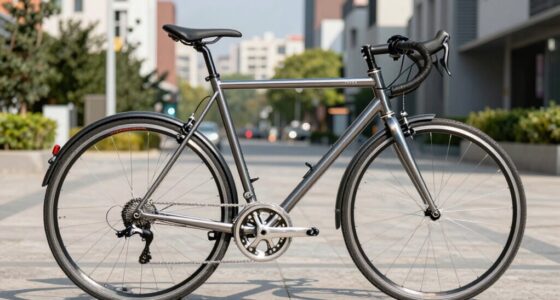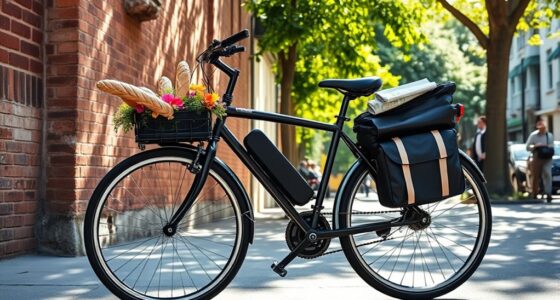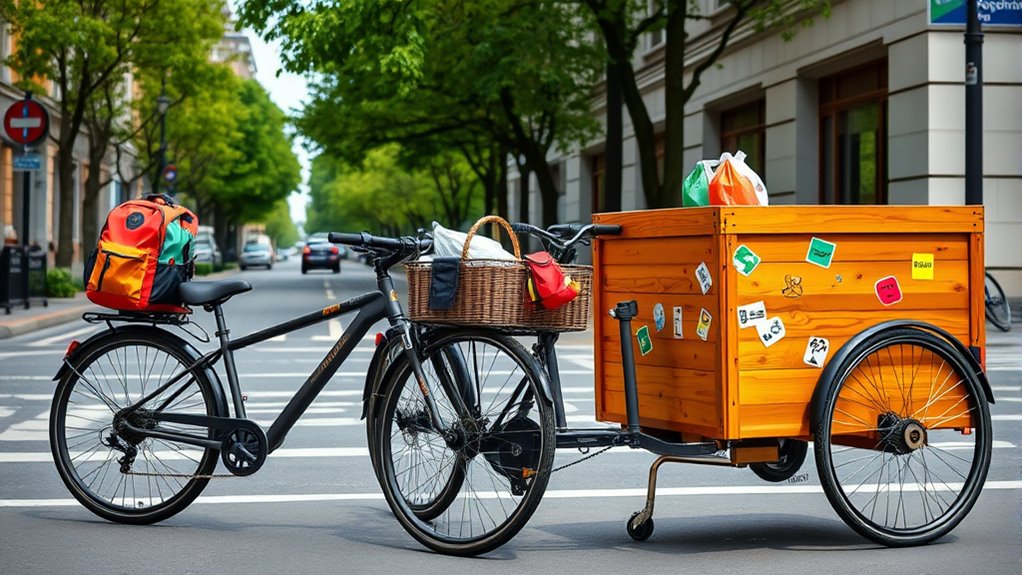

Cargo bikes come in three main types: longtail, midtail, and box bikes, each designed to suit different hauling needs. Longtail bikes are great for larger loads and longer trips, while midtail bikes offer a balanced mix of cargo capacity and maneuverability perfect for city riding. Box bikes feature large, enclosed cargo areas, ideal for bulky or delicate items. Keep exploring to find out which type best fits your lifestyle and hauling needs.
Key Takeaways
- Longtail bikes extend rear cargo space for larger loads but are less maneuverable in tight urban areas.
- Midtail bikes offer a balance between cargo capacity and easy handling, positioned between longtail and traditional bikes.
- Box-bikes feature large, enclosed cargo boxes, ideal for bulky or delicate items, with enhanced stability and customization options.
- Frame materials like aluminum and steel influence bike weight, durability, and maintenance needs across all types.
- Cargo capacity varies by model, with box-bikes providing the most extensive options, suitable for families and small business usage.
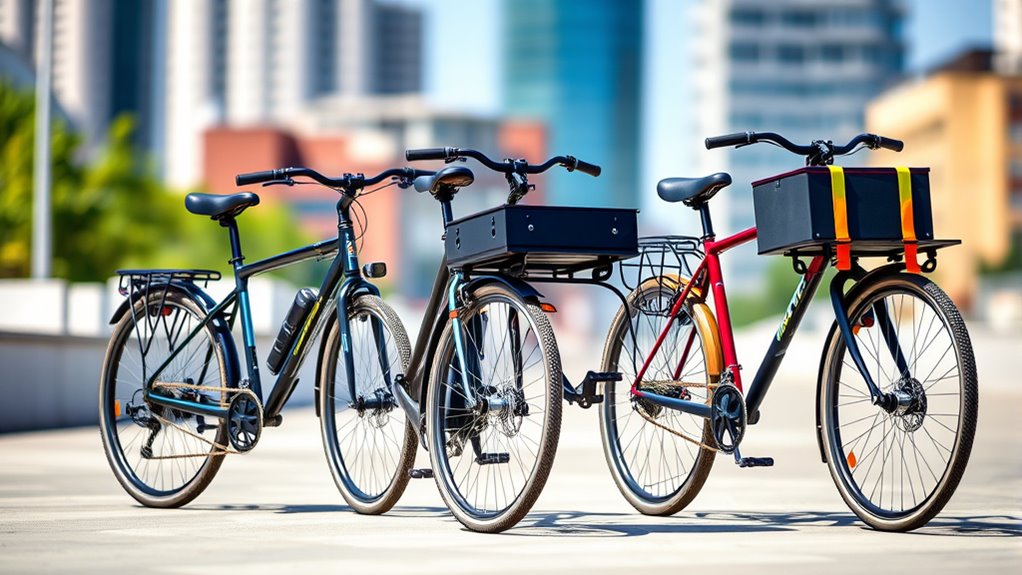
Midtail bikes sit between longtail and traditional bikes, offering a more compact design but still capable of carrying a respectable amount of cargo. They’re perfect if you want a bike that’s more maneuverable in tight urban spaces while still providing sufficient cargo capacity options. These bikes typically feature a shorter rear section but can still accommodate bags, small crates, or child seats. Their frame materials are similar to longtail bikes, with aluminum and steel being the most common choices, allowing you to customize the bike to match your weight preferences and load requirements.
Box-bikes, also known as Bakfiets, are distinguished by their large, enclosed front or rear box, making them the go-to choice for transporting bulky or delicate items. These bikes often have a low center of gravity, providing excellent stability when loaded. They’re especially popular among families and small business owners who need to move larger loads regularly. When selecting a box-bike, consider the bike frame materials for longevity and ease of maintenance. Many models feature steel frames for strength, but some newer versions incorporate aluminum to reduce weight without sacrificing durability. The cargo capacity options are extensive in box-bikes, with some models offering adjustable or removable boxes, so you can customize the setup based on what you need to carry.
In essence, understanding the differences in bike frame materials and cargo capacity options helps you pick the right cargo bike that fits your lifestyle and hauling needs. Whether you opt for a longtail, midtail, or box-bike, each type provides a practical, eco-friendly way to move large loads or passengers efficiently around town.
Frequently Asked Questions
What Are the Best Cargo Bikes for Steep Hills?
For steep hills, you should choose an electric assist cargo bike with strong motor power and high torque. Look for models with a reliable battery to support extended rides and guarantee it has ample cargo capacity to handle your needs. Electric assist makes climbing hills easier, so pick a bike with a powerful motor and good weight distribution. This way, you’ll enjoy smooth, effortless rides even on challenging inclines.
How Do Cargo Bikes Compare to Traditional Bikes in Safety?
Think of cargo bikes as sturdy ships steering busy waters; they’re generally safe but require extra vigilance. You’ll find that bike safety with cargo bikes depends on awareness of cargo bike hazards like top-heavy loads and wider frames. Compared to traditional bikes, cargo bikes can be more stable if loaded properly, but they demand extra skill and caution. Always stay alert, especially in traffic, to avoid potential hazards.
Can Cargo Bikes Be Easily Stored in Small Apartments?
Yes, cargo bikes can fit into small apartments with the right storage solutions. You might need to fold or disassemble parts, or find designated apartment compatibility options like wall mounts or compact storage racks. Consider measuring your space carefully to guarantee the bike fits comfortably. While it may take some effort, with smart storage solutions, you can keep your cargo bike nearby without cluttering your living area.
What Maintenance Is Required for Long-Term Use?
You’ll want to regularly check your bike frame durability to prevent cracks or damage, especially after heavy use. Tire maintenance is also vital; keep tires properly inflated, inspect for wear, and replace them when needed to guarantee safe riding. Additionally, lubricate the chain and brakes periodically. Doing these simple steps helps your longtail cargo bike stay in top shape for long-term use.
Are There Any Legal Regulations for Cargo Bike Use?
Think of riding a cargo bike like steering through a busy river—you need to follow the currents of regulations. You generally don’t need a license, but rules vary by location. Check local parking regulations to avoid fines, especially in designated bike zones or restricted areas. Staying informed about legal requirements guarantees your ride remains smooth and safe, helping you navigate the waterways of urban mobility confidently.
Conclusion
Now that you know the differences between longtail, midtail, and box bikes, it’s clear that choosing the right cargo bike depends on your needs. Think of it as finding the perfect tool for your adventure—each type has its own strengths, like pieces of a puzzle fitting together. Whichever you pick, you’ll gain a reliable partner that turns your everyday errands into a smooth ride. Embrace the ride, and let your cargo bike transform your journey!