When choosing between compact cargo e-bikes and full-size models, you’ll notice big differences in load capacity, range, and maneuverability. Compact bikes are lighter, easier to handle, and fit into tight spaces, but they can only carry smaller loads and travel shorter distances. Full-size bikes handle heavier cargo and longer trips better, though they’re bulkier and require more effort to maneuver. Want more details? Keep exploring to see how these factors can impact your ride.

Get your wardrobe favorites delivered free with Prime
- Fast, free delivery on millions of items
- Prime Video, Amazon Music and more included
- Member-only deals all year
Key Takeaways
- Compact e-bikes are lighter and smaller, offering better maneuverability and easier storage in tight spaces.
- Full-size cargo bikes have larger batteries, providing greater range and capacity for heavier or bulkier loads.
- Compact models suit light hauling like groceries or small packages, while full-size bikes handle larger, heavier cargo.
- Handling is simpler on compact bikes due to their smaller size, whereas full-size bikes may be more challenging to maneuver.
- Cost and maintenance vary, with compact bikes generally being more affordable and easier to maintain for modest cargo needs.
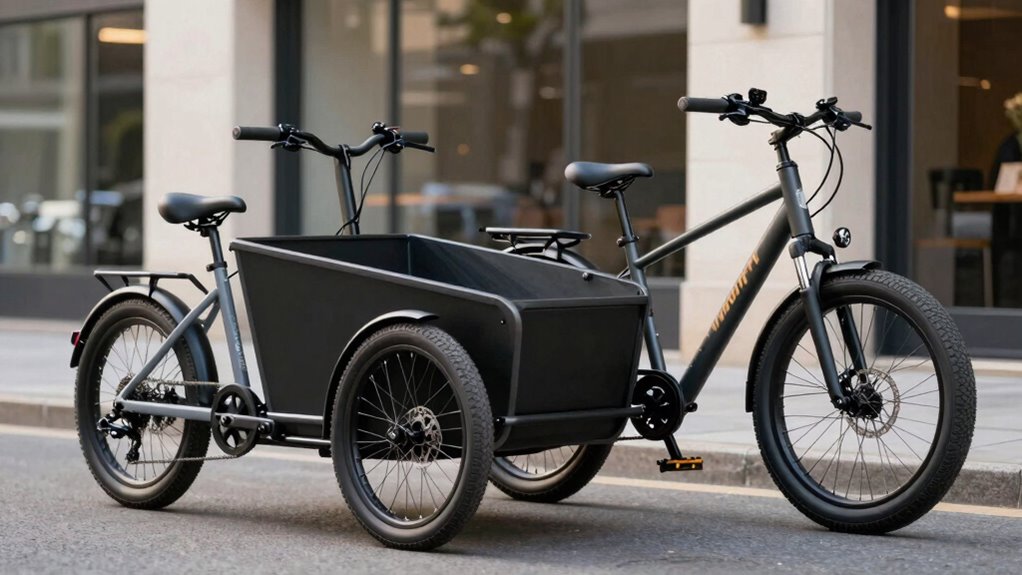
Are compact cargo e-bikes the right choice for your hauling needs, or should you stick with full-size models? The answer depends on what you prioritize most in your daily rides. Compact cargo e-bikes are smaller, lighter, and more maneuverable, making them an excellent option if you navigate tight city streets or need to park easily. But when it comes to actual hauling, you’ll want to consider how their battery life and cargo capacity stack up against full-size models. Generally, compact e-bikes have smaller batteries, which means their battery life is shorter. This can limit how far you can go before needing a recharge, especially if you’re carrying heavy loads. On the other hand, full-size cargo bikes often feature larger batteries, giving you more extended range and more consistent power, even when fully loaded. This makes them better suited for longer trips or when you need to haul substantial goods regularly. Additionally, the battery capacity of a cargo e-bike directly impacts its range and usability for extended rides or heavier cargo loads. Cargo capacity is another essential factor. Compact cargo e-bikes usually have limited space, designed for lighter loads like groceries, small packages, or a child seat. If your hauling needs involve frequent transport of bulky or heavy items, a full-size cargo bike provides a significant advantage with its larger cargo area and higher weight capacity. These bikes are built to handle bigger loads without compromising stability or performance, which is critical if you’re carrying tools, multiple shopping bags, or even larger items. Moreover, the size and weight of the bike can influence how easily you can handle it during stops or when navigating stairs or uneven terrain. Understanding the overall maintenance of different e-bike sizes can help you make a more informed decision about long-term ownership. If your cargo needs are modest, the smaller size of a compact e-bike might be more convenient, especially since it’s easier to store and carry through crowded areas. Additionally, considering the cost and affordability of each type can help you select a model that fits your budget while meeting your hauling requirements.
Popular right now

Dyson V8 Cyclone Cordless Vacuum

Samsung 48 4K OLED Smart TV (2026) with WireLogic 8ft Ultra High Speed HDMI Cable

Hisense E6SR Series 55-Inch 4K UHD Hi-QLED Roku Smart TV
As an affiliate, we earn on qualifying purchases.
Frequently Asked Questions
How Do Compact Cargo E-Bikes Compare in Price to Full-Size Models?
You’ll find compact cargo e-bikes generally cost less than full-size models, making them more affordable for many riders. The price comparison shows that smaller bikes often have lower price tags due to fewer materials and simpler designs. Affordability factors like battery capacity, build quality, and features also influence costs. If you’re on a budget, a compact cargo e-bike might be a smarter choice, offering essential cargo space without breaking the bank.
Are Compact Cargo E-Bikes Suitable for Long-Distance Commuting?
You can definitely use a compact cargo e-bike for long-distance commuting, but it’s like packing a small backpack for a week-long trip—it’s doable, but you might feel the squeeze. They handle urban terrain well and offer decent cargo capacity, perfect for daily errands. However, if you’re carrying a lot of gear or planning extended rides, a full-size model might be more comfortable and efficient over long distances.
What Safety Features Are Unique to Full-Sized Cargo E-Bikes?
Full-sized cargo e-bikes often feature enhanced safety considerations like integrated lights, sturdy frame structures, and advanced braking systems designed for heavier loads. These bikes also provide increased cargo capacity, which means you can carry larger or more delicate items securely. The added stability and safety features help prevent accidents when handling heavy loads, making full-sized models a safer choice for transporting substantial cargo over longer distances.
Can Compact Cargo E-Bikes Handle Steep Hills Effectively?
Yes, compact cargo e-bikes can handle steep hills effectively, especially if they have a higher battery capacity and good weight distribution. A powerful motor and sufficient battery help you climb challenging inclines with ease. Additionally, a well-balanced weight distribution ensures stability and control. While they may have less power than full-sized models, many compact options are designed to tackle steep hills comfortably, making them adaptable for urban and hilly terrains.
How Do Maintenance Needs Differ Between the Two Bike Types?
You’ll find that maintenance needs differ mainly in battery life and frame durability. Compact cargo e-bikes typically have smaller batteries, so they may require more frequent charging and eventual replacement. Their frames are often lighter but less durable, needing careful inspection for cracks or wear. Full-size bikes usually have sturdier frames and larger batteries, which may last longer and require less frequent repairs, but they still need regular checks for overall condition.
Conclusion
So, whether you opt for a compact cargo e-bike or go full size, just remember: one’s perfect for sneaking through tight alleys, the other for hauling grandma’s watermelon collection. Either way, you’re basically a two-wheeled superhero—minus the cape, but hey, who needs it when you’ve got pedals and a dash of style? Just pick your size and embrace the chaos. After all, in the world of cargo bikes, bigger isn’t always better—unless you’re carrying a small army.