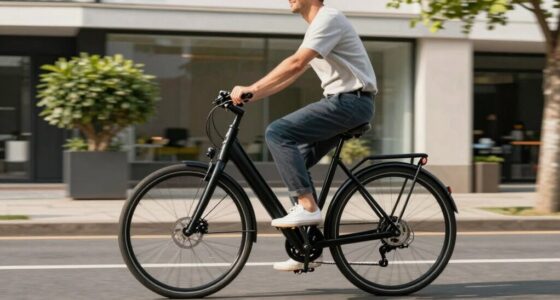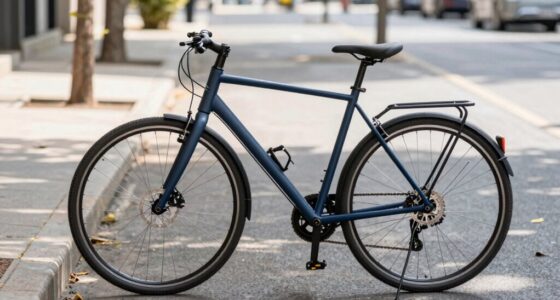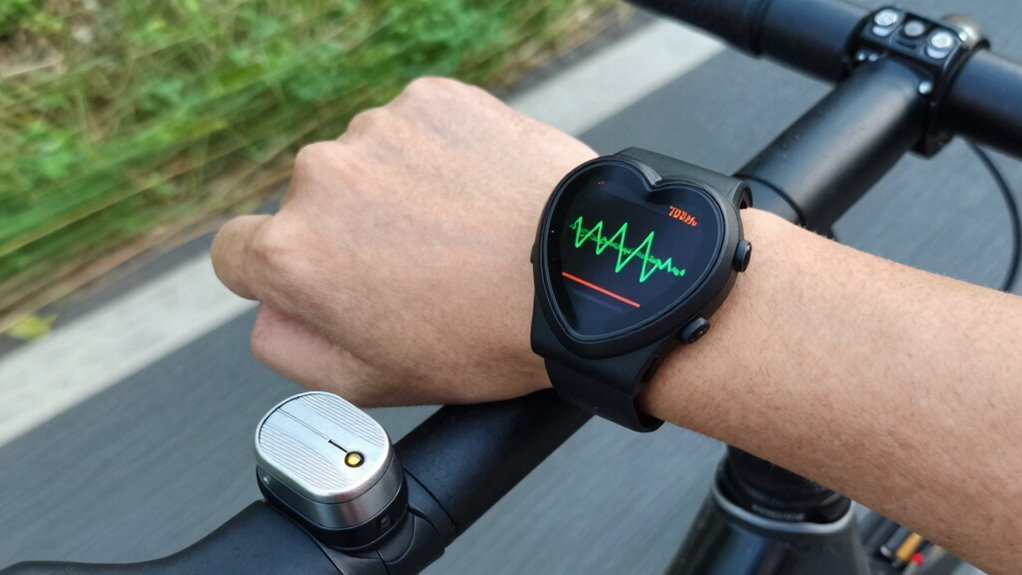

Heart rate monitors tell you how hard your heart is working, helping you stay in specific effort zones to improve endurance and prevent overtraining. Cadence sensors measure pedal strokes per minute, giving you insight into your rhythm and technique, which boosts efficiency and reduces fatigue. Both tools offer unique data that, when combined, improve your overall cycling performance. Keep exploring to discover how integrating these devices can elevate your training results even further.

Get your wardrobe favorites delivered free with Prime
- Fast, free delivery on millions of items
- Prime Video, Amazon Music and more included
- Member-only deals all year
Key Takeaways
- Heart rate monitors measure your cardiovascular effort and help maintain training within specific intensity zones.
- Cadence sensors track pedal strokes per minute, optimizing cycling rhythm and efficiency.
- Heart rate data aids in assessing overall fitness level and endurance progress.
- Cadence insights improve pedaling technique, reduce fatigue, and enhance power output.
- Combining both devices provides a comprehensive view of effort and technique for better training outcomes.

When choosing between heart rate monitors and cadence sensors, understanding how each tool enhances your training can make a significant difference. Both devices serve unique purposes and can impact your training effectiveness, but knowing what each one reveals helps you use them most effectively. Heart rate monitors track your heart’s activity, providing real-time data on your cardiovascular effort. This information helps you stay within specific zones, whether you’re aiming for fat burning, endurance, or high-intensity training. By monitoring your heart rate, you can adjust your intensity to maximize workout benefits and avoid overtraining. On the other hand, cadence sensors focus on your pedal strokes per minute, offering insights into your cycling rhythm. Maintaining an ideal cadence improves efficiency, helping you conserve energy during long rides or races. They’re especially useful for cyclists looking to refine their technique and maximize power output.
Training effectiveness depends heavily on how well you interpret and act on the data from these devices. Heart rate monitors allow you to measure your effort relative to your fitness level, making your training more precise. For example, if your goal is endurance building, staying within your aerobic zone ensures you’re working hard enough without exhausting yourself prematurely. Cadence sensors, meanwhile, help you develop a smooth, consistent pedaling pattern, which translates into better efficiency and less fatigue. Incorporating these tools into your routine can help you identify areas for improvement and tailor your workouts accordingly. Using data analysis can further enhance your training by giving you insights into your progress over time. Additionally, understanding the compatibility of devices with your existing gear ensures seamless integration and consistent data collection during workouts. By combining both tools, you get an all-encompassing picture of your performance, enabling you to tailor your workouts more accurately. You’ll find that your progress accelerates when you understand how each metric influences your overall fitness. Additionally, incorporating biodiversity principles into your training environment can enhance your mental well-being and motivation.
As an affiliate, we earn on qualifying purchases.
Frequently Asked Questions
Can Both Devices Be Used Together Effectively?
Yes, you can use both devices together effectively. Sensor integration allows you to connect heart rate monitors and cadence sensors to your fitness device or app, enabling seamless data synchronization. This combined approach provides an all-encompassing view of your workout, helping you track intensity and cadence simultaneously. By syncing both sensors, you get a more detailed analysis, ultimately improving your training and helping you reach your fitness goals faster.
Which Device Is More Affordable Long-Term?
A cadence sensor generally costs less upfront and has lower maintenance requirements, making it more affordable long-term. Heart rate monitors tend to be pricier and may need battery replacements or calibration over time, increasing costs. If you’re on a budget, a cadence sensor offers a cost-effective way to track your cycling cadence without ongoing expenses. However, if heart rate data is essential, investing in a monitor might be worthwhile despite higher long-term costs.
Are There Compatibility Issues With Specific Sports?
You might face sports-specific compatibility issues with heart rate monitors or cadence sensors depending on your activity. Some devices struggle with device integration challenges during high-intensity or specialized sports like swimming or mountain biking. Always check if your device supports your sport’s specific requirements, such as waterproof features or rugged durability. Confirming compatibility beforehand helps prevent frustration and ensures you get accurate data tailored to your activity.
How Often Should These Sensors Be Replaced?
Think of your sensors as your loyal sports gear—eventually, even the sturdiest need replacing. Typically, a heart rate monitor or cadence sensor lasts about 1 to 2 years, depending on usage and care. Replacement frequency varies, but if you notice inconsistent readings or dead zones, it’s time to swap them out. Monitoring sensor lifespan guarantees your data stays sharp and your workouts stay on track.
Do They Require Calibration for Accuracy?
Most sensors don’t require regular calibration for accuracy, but it’s a good idea to check your device’s settings periodically. Sensor calibration can help guarantee your heart rate monitor or cadence sensor provides precise readings, especially if you notice inconsistent data. To maintain device accuracy, follow the manufacturer’s guidelines for calibration or updates, and consider recalibrating if you notice discrepancies during your workouts.
As an affiliate, we earn on qualifying purchases.
Conclusion
Imagine you’re training for a race, wondering if you’re pushing hard enough. Using a heart rate monitor, you see your effort level, while a cadence sensor reveals your stride rhythm. Combining both gives you a full picture—like Sarah, who improved her stamina by balancing her heart rate and cadence. Don’t settle for just one; harness both tools to optimize your training, stay motivated, and reach your goals faster. Your perfect workout companion is just a sensor away.
bike cadence and heart rate monitor combo
As an affiliate, we earn on qualifying purchases.
As an affiliate, we earn on qualifying purchases.
As an affiliate, we earn on qualifying purchases.
Halloween Picks
halloween
As an affiliate, we earn on qualifying purchases.