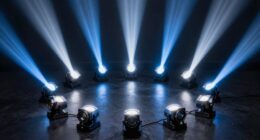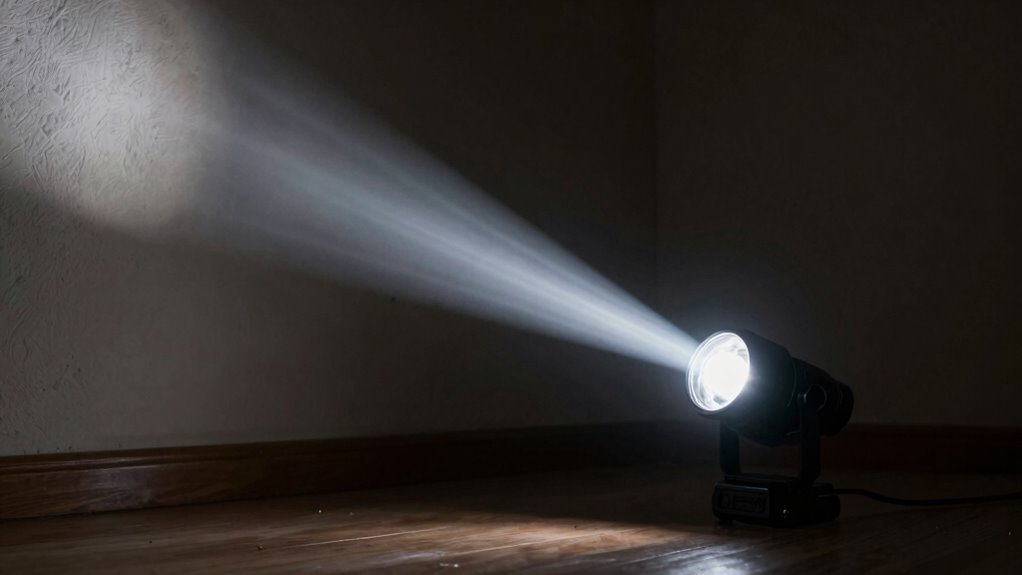

A 1200-lumen flashlight might still feel dim because lumens measure total light output, not how bright it appears in your space. Factors like beam angle, light distribution, and environmental reflectivity influence perception. A wide beam spreads the light over a larger area, making it seem less bright, while a narrow beam concentrates the light and feels more intense. If you want to understand these differences better, keep exploring how lumens and lux affect brightness.
Key Takeaways
- Lumens measure total light output, but perceived brightness depends on beam angle and light distribution.
- A wide beam spreads light over a large area, reducing perceived brightness despite high lumens.
- Lux indicates light intensity per unit area; a low lux level makes a light seem dim even if lumens are high.
- Color temperature affects brightness perception; cooler light may appear sharper, warmer light may seem dimmer.
- Environmental factors and reflectivity influence how bright a 1200-lumen light appears in different settings.
Why a 1200-Lumen Flashlight Might Still Feel Dim
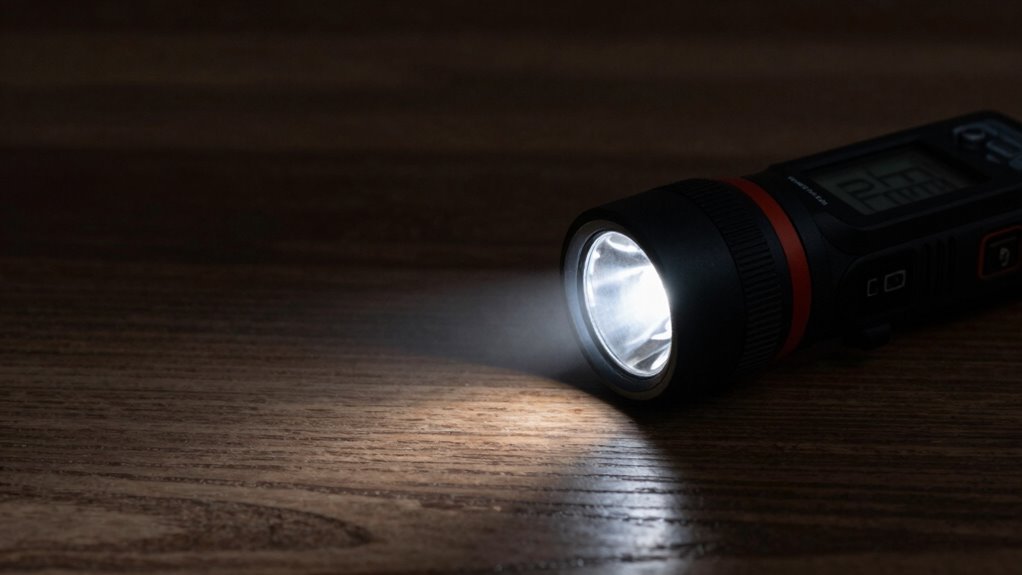
Even with a high output of 1200 lumens, a flashlight can still feel dim if you’re not considering how light spreads and how your eyes perceive brightness. The beam focus plays a vital role; a narrow, intense beam concentrates light in a small area, making it seem brighter, while a wide beam disperses light, reducing perceived brightness. Additionally, color temperature influences how bright a light appears; cooler temperatures (bluish light) often seem sharper and more intense than warmer (yellowish) tones. So, even with impressive lumen output, if your flashlight’s beam is diffused or has a warm color temperature, it might not feel as bright as expected. Paying attention to these factors can help optimize your flashlight’s perceived brightness and performance, much like understanding precious metal investments can enhance your financial strategy. Recognizing how light distribution affects brightness can also help you select the right flashlight for your needs, especially when considering beam angle and how it impacts coverage. Furthermore, the environmental context in which you use the flashlight can significantly influence how bright it appears to your eyes. Also, understanding how perceived brightness varies with different environmental conditions can lead to better flashlight choices.
Lumens vs. Lux: What Really Defines Brightness in Your Flashlight
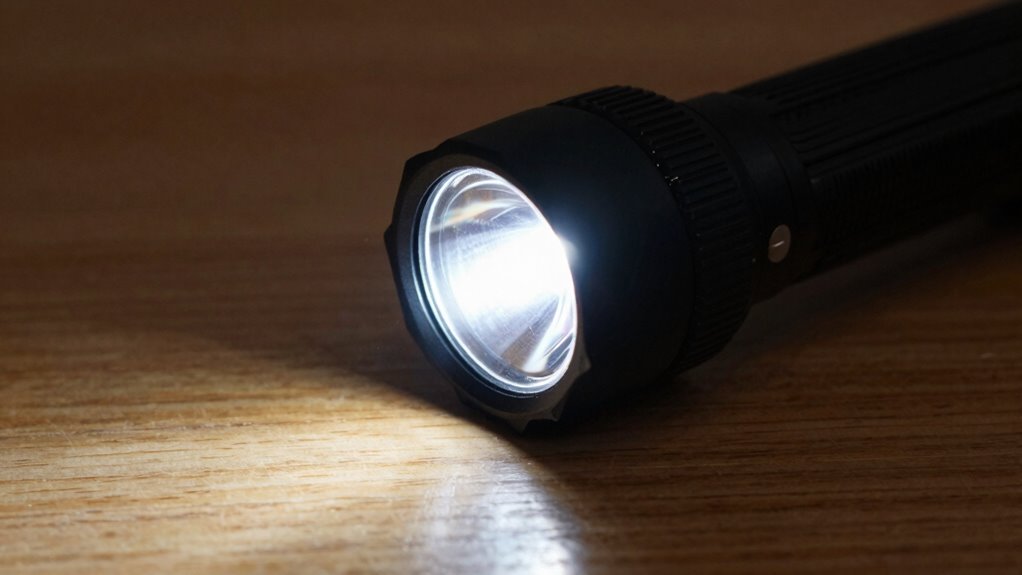
While lumens measure the total amount of light a flashlight produces, they don’t tell the whole story about how bright it appears to you. Brightness also depends on factors like color temperature and beam angle. A higher color temperature gives off a cooler, bluish light, which can seem harsher or dimmer depending on your needs. Meanwhile, beam angle influences how concentrated the light is; a narrow beam creates a brighter, more focused spot, while a wider beam spreads light out, making it feel less intense even if the lumens are the same. beam angle plays a key role in how you perceive brightness, especially in different environments. Additionally, perceived brightness can vary based on ambient lighting conditions and the environment’s reflectivity. So, understanding how these aspects interact helps you gauge true brightness. color temperature and beam angle are crucial factors that affect perceived brightness beyond just lumens. It’s not just about lumens but how that light is distributed and perceived in your environment. Recognizing the importance of light distribution can help you choose a flashlight that truly meets your needs. Moreover, light diffusion impacts how evenly the light spreads, influencing your overall perception of brightness.
How to Evaluate Light Distribution to Ensure Brightness in Your Space

To guarantee your space is adequately lit, you need to evaluate how light is distributed across the area. Start by examining the beam spread of your light source. A wider beam spread covers more area, reducing dark spots and creating a balanced look. Next, assess light uniformity, ensuring the brightness is evenly distributed without hotspots or shadows. Use a light meter or simply observe from different angles to identify uneven areas. Proper light distribution prevents overly bright zones or dim corners, making your space feel consistently bright. Adjust fixtures or add supplementary lighting if needed to improve beam spread and light uniformity. This approach helps you achieve a well-lit environment where brightness feels natural and inviting. When choosing lighting, consider light distribution principles like beam angle and fixture placement to optimize overall illumination. Additionally, understanding lumen output can help you select fixtures that provide sufficient brightness for your specific needs. Moreover, paying attention to light uniformity ensures a balanced and comfortable lighting experience throughout your space. Being aware of beam angle can also help in customizing light spread to suit different areas within your space. Recognizing the importance of light layering can further enhance the ambiance and functionality of your lighting design.
Understanding How Brightness Is Measured and Why Lumens Alone Can Be Misleading
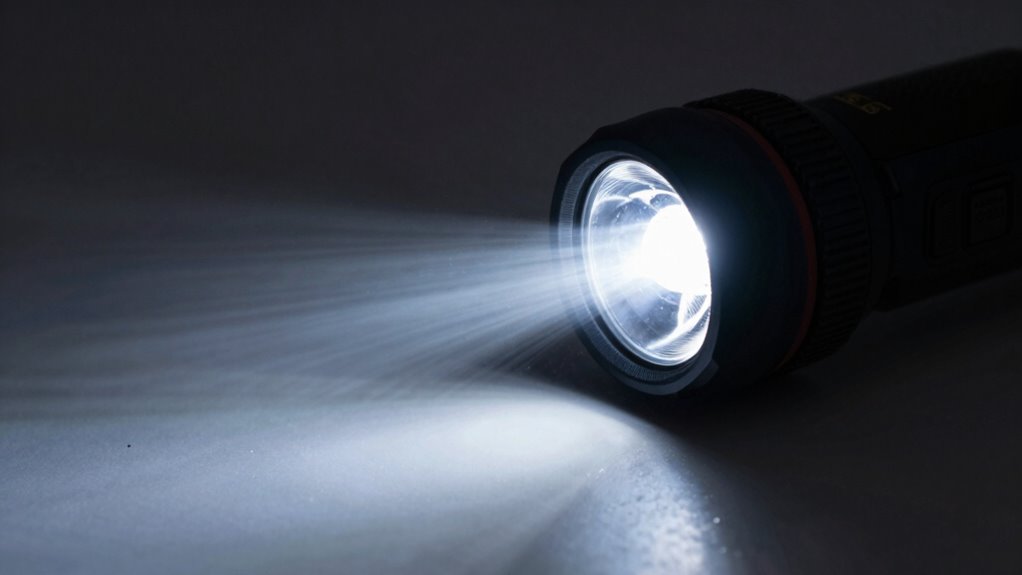
Understanding how brightness is measured is essential because relying on lumens alone can be misleading. Photometric units, like lumens, measure total light output but don’t account for how our eyes perceive brightness. Light perception varies based on factors like environment and individual sensitivity. To clarify, here’s a comparison:
| Brightness Factor | Impact on Light Perception |
|---|---|
| Lumens | Total light emitted; quantity focus |
| Lux | Light per unit area; intensity |
| Distribution | How light spreads; focus on coverage |
| Environment | Surroundings influence perception |
| Human Eye | Sensitivity varies; perception differs |
Additionally, perceived brightness is influenced by the context and individual differences, making it important to consider multiple measures when evaluating lighting.
Tips for Choosing a Bright Flashlight Based on Lumens and Lux Coverage
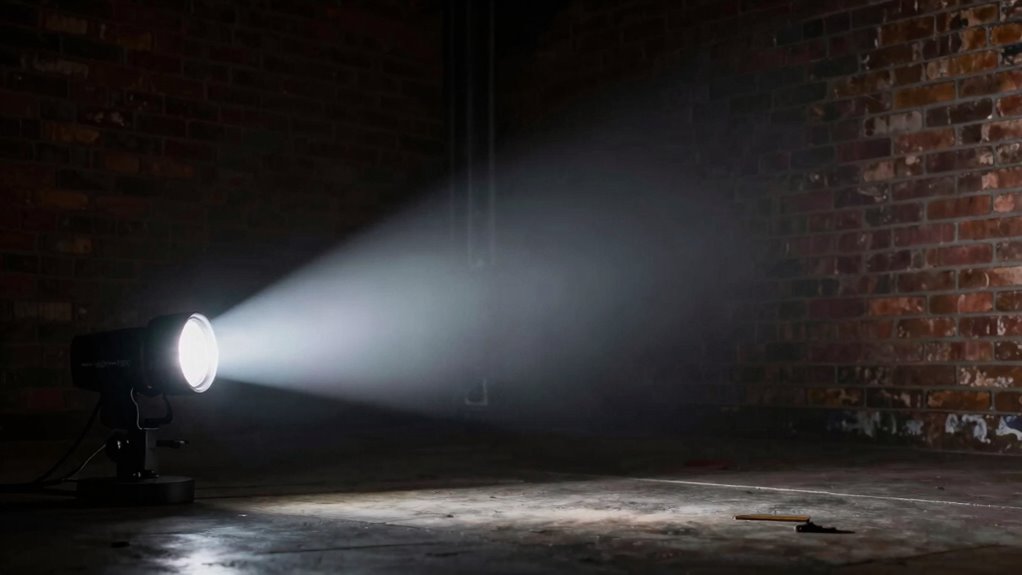
Choosing the right flashlight depends on how you plan to use it, and both lumens and lux play key roles in making that decision. Consider the beam angle, which influences how you focus or spread the light; a narrower beam offers more lux coverage on a specific spot, ideal for detailed tasks. Conversely, a wider beam covers more area but with less intensity. Pay attention to battery life, especially if you’ll be using the flashlight for extended periods—higher lumens often drain batteries faster. Balancing these factors helps you select a flashlight that provides enough brightness where needed without sacrificing runtime. Additionally, beam angle significantly impacts how the light is distributed and how well it suits your particular tasks. Understanding the relationship between lumens and lux can help you choose a flashlight that performs optimally in different scenarios. For example, considering light distribution can ensure you select a flashlight that meets your specific illumination needs.
Frequently Asked Questions
How Does Ambient Lighting Affect Perceived Flashlight Brightness?
Ambient lighting markedly impacts how bright your flashlight feels. If the surrounding area has high color contrast, your beam appears more vivid, making it seem brighter. Beam focus also matters; a well-focused beam concentrates light, cutting through ambient light better. So, in a brightly lit environment, even a powerful flashlight may seem dim because the ambient light washes out its brightness, reducing its perceived intensity.
Can Battery Quality Influence Lumen Output and Brightness?
Imagine your flashlight as a race car; if the battery’s performance is poor, power stability drops, and so does your brightness. A low-quality battery can’t supply consistent energy, causing lumen output to fluctuate and dimming your light. When you use high-quality batteries, you guarantee steady power, maximizing brightness and performance. Don’t let inferior batteries slow you down—invest in quality for a brighter, more reliable shine.
Are Higher Lux Ratings Always Better for Illumination?
Higher lux ratings aren’t always better because light distribution and beam angle matter more. If a light has a narrow beam angle, it delivers intense illumination to a small area, resulting in high lux but limited coverage. Conversely, a wider beam spreads light over a larger space, reducing lux but increasing overall illumination. So, choose based on your needs, balancing lux with beam angle and how well the light spreads.
How Does Reflector Design Impact Perceived Brightness?
Reflector design markedly impacts perceived brightness by shaping the beam focus. A well-designed reflector with the right shape directs light precisely, making the beam appear brighter and more focused. If you choose a reflector with a narrow beam focus, your light feels more intense and concentrated. Conversely, wider reflectors spread light over a larger area, reducing perceived brightness even if the lumen output remains the same.
What Role Does Color Temperature Play in Brightness Perception?
Color temperature greatly influences your perception of brightness. Warmer tones, with lower Kelvin values, create a cozy, inviting feel but can make a space seem dimmer due to less visual contrast. Cooler tones, with higher Kelvin values, enhance contrast and make details pop, making the light appear brighter. So, choosing the right color warmth helps you perceive the actual brightness more accurately and creates the desired ambiance.
Conclusion
Remember, a 1200-lumen flashlight might not always seem as bright as you’d expect—because brightness depends on both lumens and lux. Did you know that a flashlight’s perceived brightness can drop by up to 50% if the beam isn’t focused properly? So, next time you’re choosing a light, consider how the light is distributed. By understanding these measurements, you can pick a flashlight that truly lights up your space, not just one with high lumen numbers.