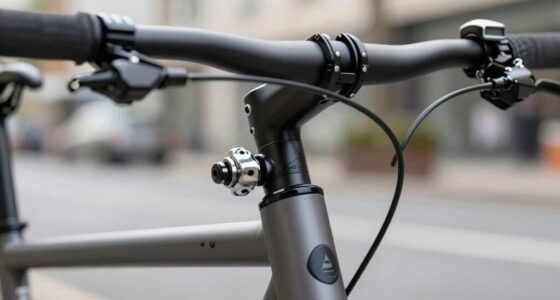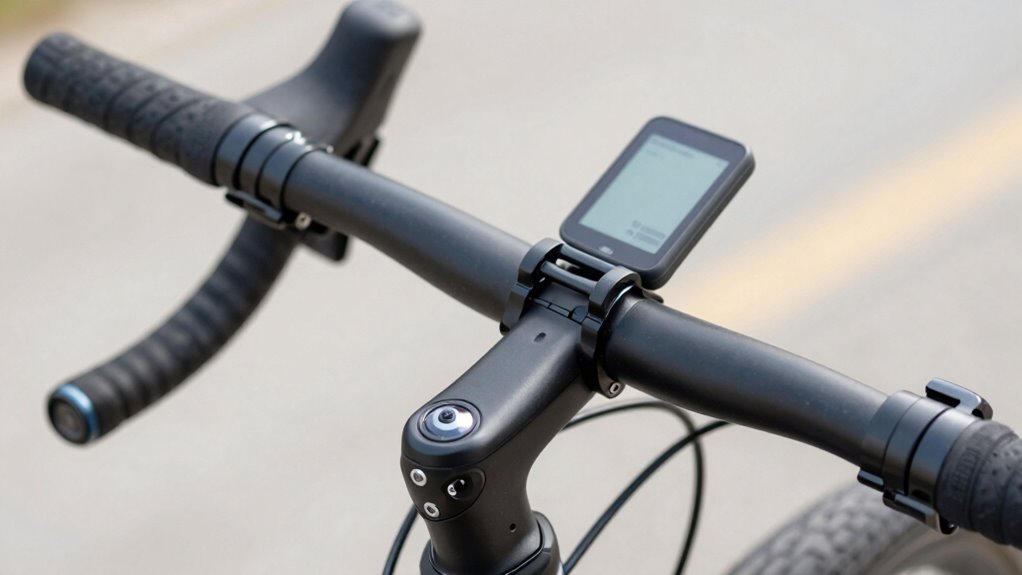

Out-front mounts are generally safer in crashes because they attach above the stem, reducing leverage and impact points that can damage your GPS. They’re more impact-resistant due to their secure position and materials designed for shock absorption, like reinforced plastics or impact-resistant rubber. Stem mounts are easier to install but tend to be less durable during crashes, risking device damage. To learn how proper installation and material choices can further protect your GPS, keep exploring these options.
Key Takeaways
- Out-front mounts are more impact-resistant, reducing the risk of GPS damage during crashes by attaching above the stem and near the steering axis.
- Stem mounts are less durable in impacts, as their lower position and potential for movement make them more vulnerable during crashes.
- Using impact-resistant materials like reinforced plastics or rubber enhances crash durability for both mount types, protecting your device.
- Proper installation with secure locking mechanisms and gradual tightening prevents damage and ensures stability during rugged rides.
- Choosing an out-front mount with shock absorption features offers better crash protection and prolongs device lifespan.
Which Bike GPS Mount Keeps Your Device Safer in Crashes?
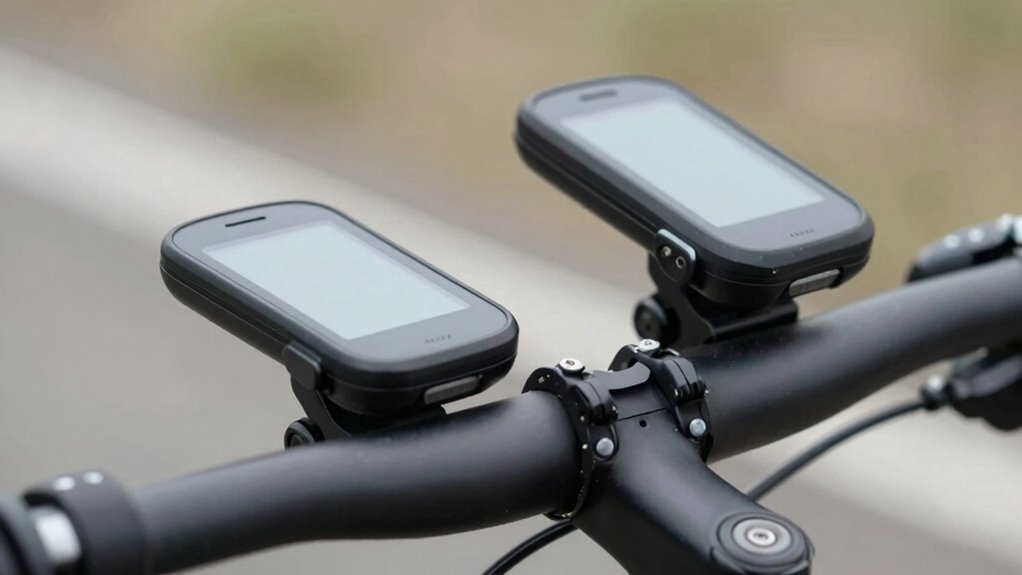
When it comes to protecting your bike GPS during crashes, the mounting style can make a significant difference. Out-front mounts generally offer better mount durability because they attach securely above the stem, reducing the risk of detachment during impacts. This positioning also improves rider visibility, making it easier to glance at your device without shifting your focus from the road. Stem mounts, on the other hand, may be less durable in crashes due to their lower position and potential for movement or breakage upon impact. While they can be simpler to install, they often compromise rider visibility and safety. Overall, an out-front mount tends to keep your device safer in a crash, providing a stronger, more stable hold and better access during rides. Additionally, choosing a mount made from energy-efficient materials can contribute to more sustainable cycling gear. Properly securing your GPS with a high-quality mount can also prevent accidental drops and damage, ensuring longevity and reliability in all riding conditions.
Key Factors for Choosing a Crash-Resistant GPS Mount
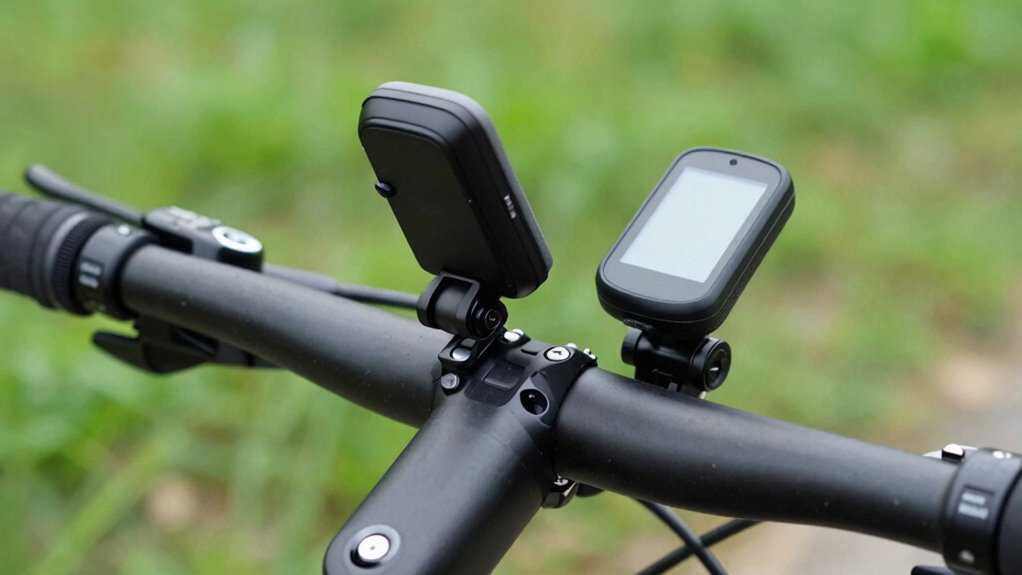
When selecting a crash-resistant GPS mount, you need to take into account the impact resistance of the materials used. Stable mounting features help keep your device secure during rough rides and crashes. Focusing on these key factors ensures your GPS stays protected when it matters most. Additionally, choosing mounts with impact-resistant materials can significantly improve durability and safety.
Impact Resistance Materials
Choosing the right impact resistance material for your GPS mount is essential if you want it to withstand crashes and rough handling. The durability of your mount depends on the mounting materials used, which directly affect crash durability. Materials like reinforced plastics, rubber, and aluminum offer different levels of shock absorption and strength. For example, rubber provides excellent impact cushioning, while aluminum offers high durability with some weight. Consider the environment and potential impacts when selecting your materials. Additionally, understanding the properties of impact resistance materials can help you make more informed choices for your specific needs. Recognizing the importance of material properties can guide you in selecting the most suitable mount for your outdoor activities. Incorporating creative storytelling into your product descriptions can also enhance customer engagement and highlight the unique benefits of different materials.
Mounting Stability Features
Selecting a GPS mount with strong stability features is essential for guaranteeing it stays secure during rough rides or sudden impacts. Look for mounting durability that can withstand the stresses of tough terrain and frequent vibrations. Vibration resistance is vital because constant road or trail bumps can loosen or damage your mount over time. A stable mount minimizes movement, preventing your GPS from shifting or falling off during aggressive riding. Features like reinforced materials, secure locking mechanisms, and tight-fitting designs enhance overall stability. Whether you choose an out-front or stem mount, prioritizing these stability features helps protect your device and ensures reliable navigation. Ultimately, a well-designed, vibration-resistant, and durable mount keeps your GPS safe and accessible, no matter how rough the ride gets. Additionally, mounting stability features should include considerations for impact absorption to further safeguard your device during crashes, especially in shock-absorbing designs. Incorporating shock absorption elements can significantly reduce the risk of damage in the event of a crash, ensuring longevity and reliability of your GPS mount. To ensure maximum protection, selecting mounts with impact-resistant materials can provide extra defense against sudden shocks or falls. Furthermore, choosing mounts with flexible mounting options can help adapt to different bike frames and riding conditions, enhancing overall stability and durability.
Out‑Front vs. Stem Mounts: Which Is Safer and Easier to Use?
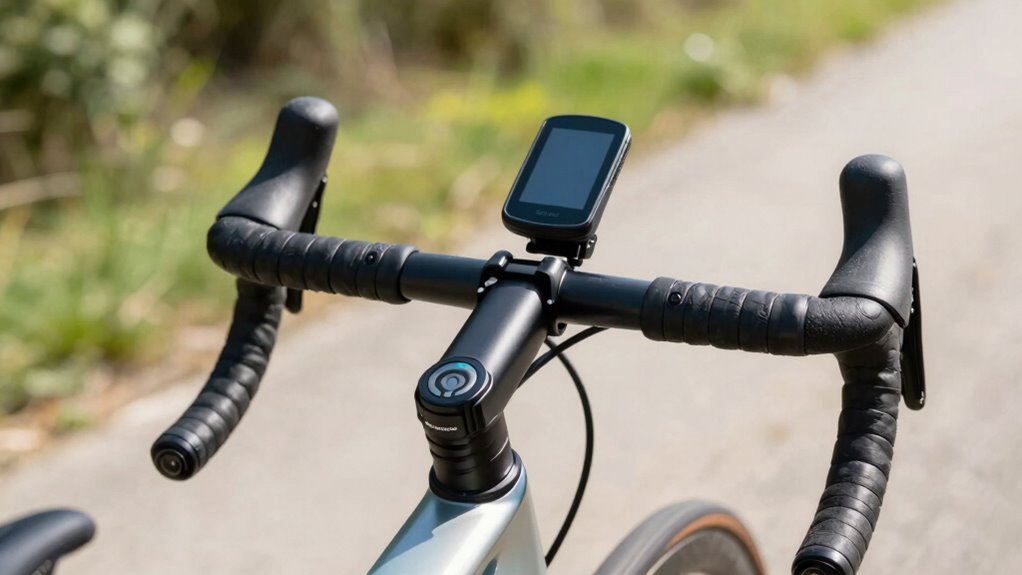
When choosing between out-front and stem mounts, you need to take into account how easily you can access your GPS during rides. Safety matters too—some mounts handle impacts better and keep your device secure. Plus, installation and adjustability can make a big difference in how comfortable and confident you feel using each type. Considering the local culture and terrain can also influence which mount style suits your riding environment best. Additionally, understanding the design principles of fashion, such as craftsmanship and functionality, can help you select a mount that balances aesthetics with durability.
Accessibility During Rides
Accessing your device quickly and safely during a ride is essential, and the mount position plays a significant role in this. Out-front mounts offer a clear line of sight, making it easier to glance at your device without shifting your focus. Stem mounts, on the other hand, are more accessible from a natural hand position on the handlebars. Here’s a quick comparison:
| Aspect | Out-Front Mounts | Stem Mounts |
|---|---|---|
| Mounting Aesthetics | Sleeker, integrated look | More visible, bulkier |
| Rider Comfort | Less obstruction, better visibility | Easier to reach without stretching |
Choose based on your preference for aesthetics and comfort, ensuring quick access without compromising safety.
Impact Resistance and Safety
Out-front mounts tend to offer better impact resistance because they keep your device closer to the bike’s steering axis, reducing leverage during a crash. This positioning minimizes the chance of your GPS smashing into the road hazards or causing injury if the bike falls. When it comes to helmet safety, a sturdy mount can prevent your device from flying off and hitting you or others. Out-front mounts are generally more secure, reducing the risk of sudden detachment during rough rides. They also help you maintain focus on the road, decreasing the likelihood of accidents. Proper mounting techniques can further enhance safety and impact resistance during rides. Incorporating impact-resistant mounts can provide extra protection in unexpected crashes, including features like shock absorption to better cushion impacts. – Better shock absorption during impacts – Reduced risk of device breakage in crashes – Less interference with helmet safety – Increased stability when orchestrating road hazards
Installation and Adjustability
Installing and adjusting your bike-mounted device varies considerably between out-front and stem mounts. Out-front mounts offer quick, tool-free installation and easy adjustments, making them ideal if you want a flexible setup. They typically come with mount compatibility that fits various devices and handlebars, giving you more options. In contrast, stem mounts are more straightforward but may require tools for installation and adjustments, which can be less convenient on the road. Aesthetic considerations also come into play; out-front mounts tend to look sleeker and less cluttered, maintaining a clean handlebar appearance. Stem mounts, while simpler to install, might be bulkier or less integrated into your bike’s overall look. Choose based on how much you value ease of adjustment, mount compatibility, and your bike’s visual style.
How to Install Your GPS Mount to Minimize Breakage Risks
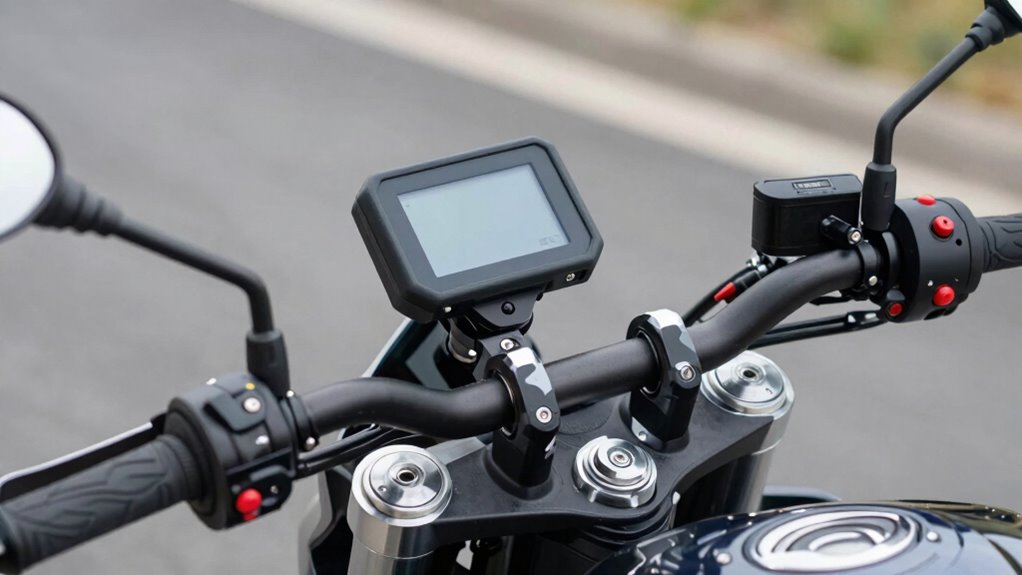
To minimize the risk of breaking your GPS mount during installation, it’s essential to handle the components carefully and follow the manufacturer’s instructions closely. Proper installation ensures better mounting durability and effective vibration absorption, reducing stress on the device. Using appropriate tools and techniques can help prevent overtightening and damage. Additionally, understanding the importance of mounting stability can guide you in achieving a secure setup that withstands rugged conditions. Ensuring your mount is vibration-resistant can further protect it from shocks and impacts during use. Paying attention to load‑planning can help distribute forces evenly, reducing the chance of damage from impacts or vibrations. Incorporating navigation and mapping considerations during setup can also improve the longevity of your GPS in challenging environments.
- Tighten bolts gradually, avoiding overtightening that can cause cracks
- Use vibration-dampening pads or inserts when possible
- Ensure the mount is securely attached to a stable, clean surface
- Check alignment regularly to prevent unnecessary stress during rides
Taking these steps helps distribute forces evenly, minimizing the chance of damage during impacts or harsh vibrations. Proper installation not only protects your GPS but also prolongs the life of your mount, ensuring it stays secure through rough conditions.
Real-World Crash Scenarios: How Mount Choice Protects Your Device and Rider
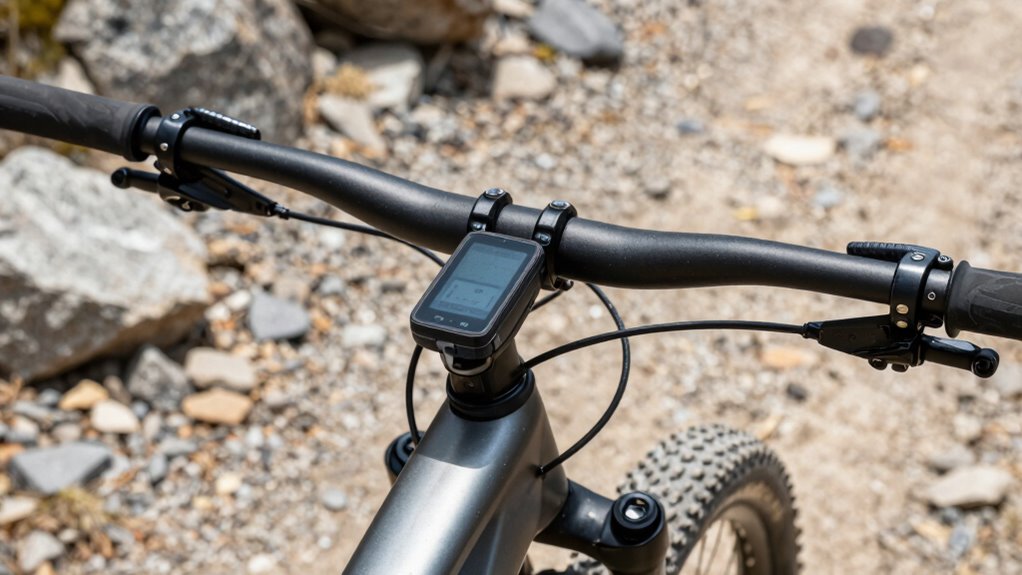
Choosing the right mount can make a significant difference when accidents happen on the road or trail. In a crash, a secure mount keeps your GPS device in place, preventing costly damage or loss. Out-front mounts tend to absorb impact better, reducing the risk of breakage and keeping your device intact. Stem mounts, while easier to install, may not hold up as well during a sudden jolt or fall. Beyond protection, mount aesthetics matter—an unobtrusive setup minimizes distraction and keeps your bike sleek. Rider comfort also comes into play; a well-chosen mount reduces vibrations and clutter, making your ride safer and more enjoyable. Ultimately, selecting a durable, well-designed mount helps preserve your device and keeps you focused on the road ahead. Durable mounts are essential for ensuring your device stays protected during unexpected impacts. Additionally, choosing a mount with shock absorption features can further enhance device longevity and rider confidence. Properly designed mounts can also prevent vibrations from damaging sensitive electronics, which is crucial for maintaining device accuracy and lifespan. Incorporating impact-resistant materials into the mount design further minimizes the risk of damage during crashes.
Final Tips: Picking the Best Mount to Keep Your GPS Safe in a Crash
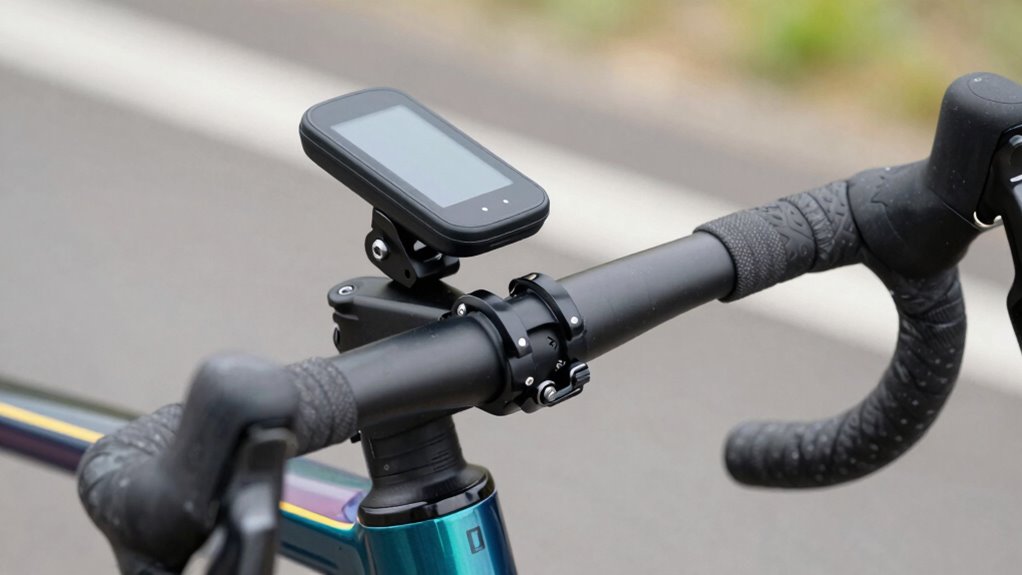
When selecting the best mount for your GPS, prioritize durability and impact resistance to guarantee your device stays protected during a crash. Focus on mounting aesthetics to make sure the setup looks clean and doesn’t distract you while riding. Check device compatibility carefully—make sure the mount fits your GPS model securely. Consider the type of crash scenarios you might face and choose a mount that absorbs shocks effectively. Incorporating proper knife techniques into your setup can help prevent damage during sudden impacts.
Frequently Asked Questions
Can a GPS Mount Prevent All Types of Crash Damage?
A GPS mount can’t prevent all crash damage, but it does protect your device from falls and impacts by securely holding it in place. Choose a mount compatible with your bike and consider theft prevention features like locking mechanisms to keep your GPS safe. While no mount can prevent every crash, a well-designed, sturdy mount minimizes damage and theft risks, giving you peace of mind during rides.
Are Aftermarket Mounts More Durable Than Original Manufacturer Options?
Think of aftermarket mounts as the armor in your toolkit, built with stronger materials designed to withstand more impacts. They often feature enhanced mount compatibility and superior material durability, making them more resilient than original manufacturer options. If you want your GPS to survive rough rides and crashes, opting for these durable upgrades can be a smart move, giving you peace of mind and keeping your device safe on every adventure.
How Often Should I Check My GPS Mount for Wear and Tear?
You should check your GPS mount for wear and tear every few months or after rough rides. Regular mount inspection helps identify loosening, cracks, or damage early. If you notice any issues, consider mount replacement to prevent losing your device during rides. Staying vigilant ensures your GPS stays secure, especially if you use aftermarket mounts, which can sometimes be more durable but still need regular checks for ideal safety.
Do Different Bike Terrains Affect the Safety of GPS Mounts?
The terrain can really shake things up, and yes, it affects your GPS mount’s safety. Rough, uneven terrain causes more vibration, which can loosen or damage your mount if it’s not secure. To stay on track, make certain your mount is stable and tightly fastened. Don’t rest on your laurels—regularly check for wear and tear, especially after tough rides, to keep your device safe and secure on any terrain.
Is There a Weight Limit for GPS Devices on Crash-Resistant Mounts?
Yes, there’s a weight limit for GPS devices on crash-resistant mounts. Check your mount’s specifications to confirm your device’s weight doesn’t exceed the recommended mount weight. Proper mount durability depends on following these guidelines, preventing damage during impacts. Overloading can compromise safety, so stay within the weight limit for maximum security. This way, your GPS stays secure and ready, even in rough terrain or a crash.
Conclusion
Think of your GPS mount as the shield in your riding adventure. Choosing the right one is like picking a sturdy armor—protecting your device from unexpected crashes. Whether you opt for out-front or stem mounts, prioritize durability and secure installation. With the right mount, you’re steering through bumps and falls like a knight with a trusted shield—keeping your GPS safe so you can focus on the ride ahead.