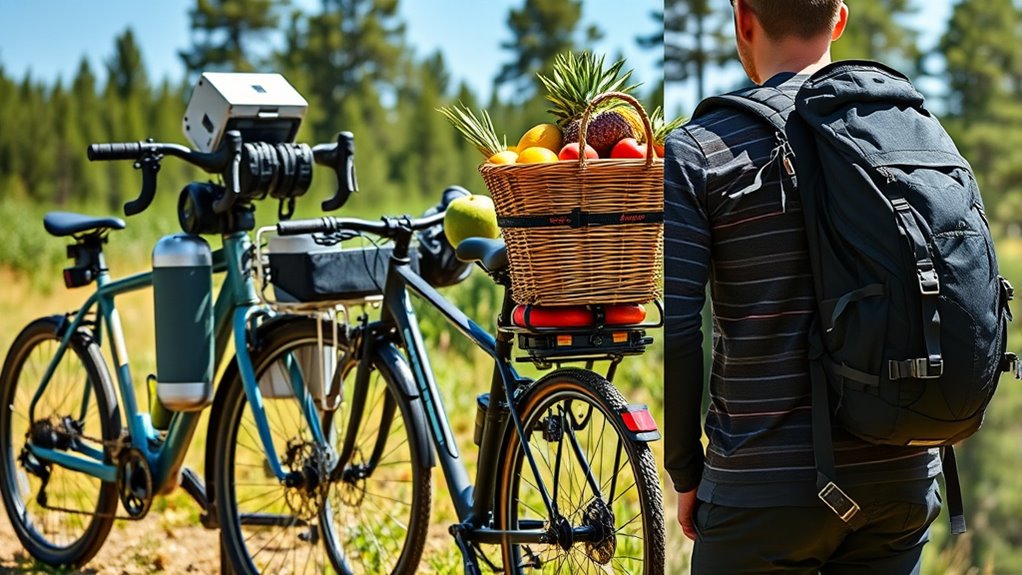

When choosing between panniers, baskets, and backpacks, consider your trip length, load size, and convenience. Panniers offer plenty of space with balanced weight distribution, perfect for longer rides and bulky gear. Baskets are great for quick access and light loads, ideal for short trips or shopping. Backpacks provide mobility and comfort but are best for lighter, personal items. Exploring more details helps you pick the best system for your needs and trip type.
Key Takeaways
- Panniers offer high capacity and balanced weight distribution, ideal for long trips and bulky gear.
- Baskets provide quick access and are suitable for short trips and lighter loads.
- Backpacks are portable, distribute weight across shoulders and hips, and excel on uneven terrain.
- Proper load placement is crucial: heavier items should be kept low and near the bike’s center for stability.
- Choice depends on trip duration, cargo size, and whether quick access or long-distance carrying is prioritized.

Have you ever wondered how professionals and outdoor enthusiasts carry their gear efficiently? It’s all about choosing the right carry system that balances cargo capacity and weight distribution. When you’re planning a trip or a workday that requires hauling equipment or supplies, understanding these factors helps you pick the best option for your needs. Panniers, baskets, and backpacks each have their strengths, but their effectiveness depends on how well they manage space and balance the load.
Panniers are a popular choice for cyclists and commuters because they offer generous cargo capacity without adding too much bulk to your body. They hang on either side of your bike, providing a stable platform that keeps weight evenly distributed across the frame. This balance is vital because it reduces strain on your back and shoulders, making longer rides more comfortable. Proper weight distribution also prevents your bike from becoming unstable or difficult to steer, especially when you’re carrying heavier items. Panniers allow you to pack efficiently, utilizing the full space available, which is ideal for longer trips or when you need to carry bulky gear. The key is to pack smartly, placing heavier items low and close to the bike’s center to maintain stability and prevent uneven wear on tires and components. Additionally, the use of projectors in home cinema setups can enhance your viewing experience during rest periods, making your trips more enjoyable.
Panniers offer ample cargo space with balanced weight distribution for comfortable, stable longer rides.
Baskets, on the other hand, are usually mounted at the front or rear of a bike or attached to a vehicle or wagon. They tend to have a more limited cargo capacity compared to panniers but are excellent for quick access and lighter loads. Because baskets sit on top of or in front of your frame, they can influence weight distribution depending on what you place inside. If you overload a basket, it can affect steering and balance, making your ride or commute less safe. Consequently, it’s vital to distribute weight evenly within the basket and avoid overloading it. For short trips or shopping runs, baskets are convenient, but for heavier loads or longer distances, they might not be the best choice.
Backpacks provide mobility and flexibility, especially when you’re on foot or need to carry gear over uneven terrain. They distribute weight across your shoulders and hips, which helps in balancing the load and reducing fatigue. However, the cargo capacity of backpacks is generally smaller than panniers or baskets, so they’re better suited for lighter, more personal gear. When packing your backpack, it’s important to position heavier items closer to your back to improve weight distribution and prevent back strain. Proper ergonomic packing ensures you stay comfortable and maintain good posture, especially during extended use.
Ultimately, the best carry system depends on your specific needs, how much cargo you need to carry, and how you prefer to distribute weight. Whether you opt for panniers, baskets, or backpacks, understanding their cargo capacity and weight distribution capabilities allows you to carry your gear efficiently and comfortably.
Frequently Asked Questions
Which Carry System Is Best for Long-Distance Touring?
For long-distance touring, panniers are your best choice because they’re designed for vehicle compatibility and offer excellent weather resistance, keeping your gear dry and secure. They distribute weight evenly, making riding comfortable over long miles. Baskets and backpacks might be less suitable, as they can affect balance and aren’t as weatherproof. Invest in sturdy panniers to guarantee a smooth, hassle-free journey.
How Do Weight Limits Differ Among Panniers, Baskets, and Backpacks?
Imagine your gear as a delicate dance partner; each carry system has a different rhythm. Panniers typically handle up to 25-30 pounds, offering balanced load distribution. Baskets often support similar weights but can be less secure. Backpacks usually carry 15-20 pounds comfortably, but uneven load impacts your balance. Know each system’s weight capacity to match your load, ensuring a smooth, carefree ride across long distances.
Are Certain Carry Systems Better for Specific Bike Types?
Certain carry systems suit specific bike types better. Panniers work well with touring or mountain bikes due to their bike frame compatibility and higher carry system weight limits, making them ideal for heavy loads. Baskets are great for cruiser or city bikes, offering easy access and versatility but may have lower weight limits. Backpacks suit commuter bikes, providing convenience without affecting bike balance, though they depend on your personal comfort and weight capacity.
How to Securely Attach Baskets or Panniers to Prevent Theft?
Think of your baskets or panniers as treasure chests; you want to keep them locked tight. Use sturdy locking mechanisms, like lockable quick-release clamps or padlocks, to secure them firmly. Theft deterrents, such as alarmed locks or cable locks, act like guardians protecting your valuables. Always double-check that your attachments are secure before leaving your bike unattended, turning your carry system into an impenetrable fortress.
What Maintenance Is Required for Different Carry Systems?
You should regularly perform cleaning routines on your carry systems to remove dirt and grime, especially after muddy rides. Inspect for wear and tear, such as frayed straps, loose fasteners, or damaged zippers, to guarantee safety and longevity. For panniers and baskets, check mounting points and buckles; for backpacks, examine straps and seams. Address issues promptly to keep your carry system secure and functional during your rides.
Conclusion
No matter which carry system you choose, remember that the right option can transform your ride into an unstoppable adventure. Panniers, baskets, and backpacks each have their perks, so pick what suits your style and needs. The wrong choice can turn a simple trip into a logistical nightmare, but the perfect system makes carrying gear feel effortless—almost like wielding a superpower. So, go ahead, find your ideal setup and conquer the road with confidence!