Understanding pedal types helps you choose what’s best for your riding style. Platform pedals are versatile and work with most shoes, making them ideal for casual or beginner riders. Clipless pedals connect you securely to the bike with special cycling shoes, giving you more control and efficiency. Hybrid pedals combine features of both, allowing use with regular or clipless shoes. Exploring these options further will help you find the perfect fit for your cycling needs.
Key Takeaways
- Platform pedals are versatile, compatible with most shoes, and ideal for casual riding and beginners.
- Clipless pedals use specialized cycling shoes with cleats for enhanced power transfer and control.
- Hybrid pedals combine features of platform and clipless systems, offering versatility for different riding preferences.
- Proper pedal and shoe compatibility, along with regular maintenance, are essential for safety and optimal performance.
- Choosing the right pedal depends on riding style, footwear, and your preference for ease or efficiency.
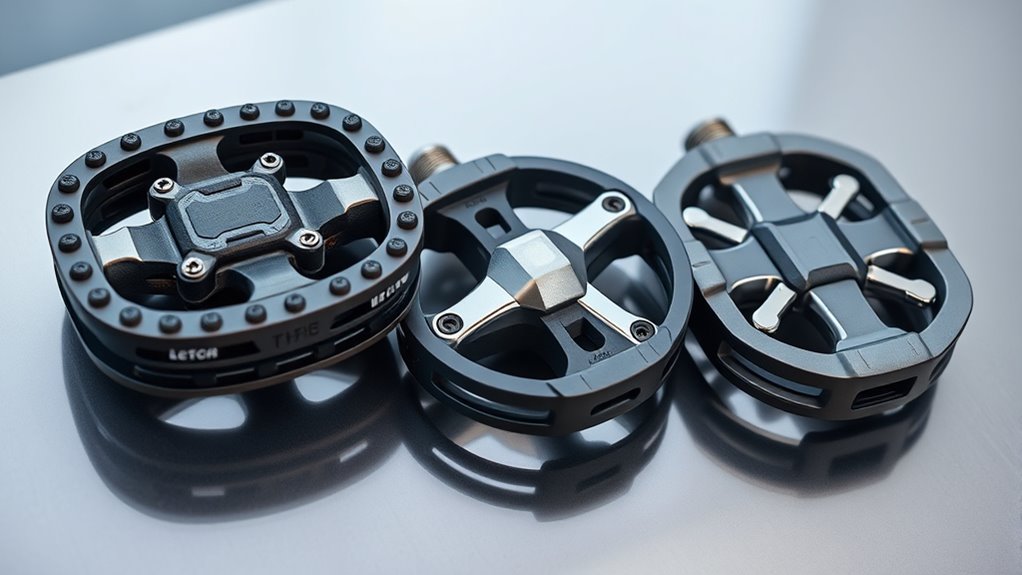
Have you ever wondered what makes a bike move forward? It all starts with the pedals, the interface between you and your bike’s drivetrain. Choosing the right pedal depends on several factors, especially footwear compatibility. Not all pedals work with every type of shoe, so it’s essential to consider what kind of footwear you prefer. Platform pedals, for example, are versatile and compatible with most shoes, making them great for casual riding or beginners. They’re flat and provide a large surface area for your foot, which means you can wear sneakers or casual shoes without hassle. On the other hand, clipless pedals require specialized cycling shoes with cleats that lock into the pedal mechanism. These provide a more efficient power transfer and better control, but only if your shoes have the right compatibility. Make sure to check the pedal’s cleat compatibility before buying, as different systems—such as SPD or Look—work with specific shoes.
Once you’ve selected your pedals, maintaining them is vital for safety and performance. Pedal maintenance tips include regularly inspecting for wear and tear, especially if you ride frequently. Keep the pedal bearings lubricated and free of dirt, which can cause squeaking or sluggish movement. If you notice any looseness or roughness when spinning the pedals, it might be time to service or replace the bearings. Cleaning your pedals after muddy or wet rides prevents buildup that can impede function. Also, check the cleats on your cycling shoes periodically—they wear out over time and can affect clip engagement and release. Tighten any loose screws and replace worn cleats promptly to avoid accidents. Additionally, bulb maintenance for bike lights can enhance your visibility and safety during rides in low-light conditions.
Choosing the right pedal isn’t just about comfort or efficiency; it’s about compatibility and maintenance. Platform pedals are straightforward, requiring little upkeep but offering less in terms of power transfer. Clipless pedals demand a bit more setup and care but reward you with improved pedaling efficiency and control. Whichever type you prefer, make sure your footwear compatibility aligns with your riding style and comfort. Regular maintenance—like cleaning, lubricating, and checking for wear—keeps your pedals functioning smoothly and prolongs their lifespan. By paying attention to these details, you guarantee a safer, more enjoyable ride every time you hop on your bike.
Frequently Asked Questions
How Do I Choose the Right Pedal Type for My Riding Style?
To pick the right pedal type, consider your riding style and pedal ergonomics. If you prefer casual rides, platforms with a lightweight design work well. For more efficiency and control, clipless pedals offer better power transfer, though they may add weight. Hybrid pedals suit versatile riding, balancing ease of use with performance. Test different options to find the perfect balance between pedal weight and comfort, ensuring your ride feels natural and efficient.
Are Clipless Pedals Suitable for Beginners?
About 70% of cyclists switch to clipless pedals for better power transfer, but are they suitable for beginners? Yes, clipless pedals offer advantages like increased efficiency and control. However, beginner considerations include mastering clipping in and out safely and getting used to the engagement mechanism. If you’re willing to practice and prioritize safety, clipless pedals can be a great choice; just start slow and stay cautious.
Can Hybrid Pedals Be Used With Both Mountain and Road Shoes?
Yes, hybrid pedals can be used with both mountain and road shoes because they offer versatile clipless compatibility and a flexible shoe pedal interface. This means you can enjoy the benefits of clipless pedals without switching shoes, making your ride more convenient. Just guarantee your shoes are compatible with the pedal’s clipless system, and you’ll have a smooth experience whether you’re on mountain trails or road routes.
What Maintenance Do Different Pedal Types Require?
Forget maintenance? Think again! For clipless pedals, you need to regularly check cleat alignment and lubricate pedal springs to keep clipping in smooth. Platforms and hybrids are simpler—just clean and occasionally grease the moving parts. Neglect your pedals, and you’ll face squeaks, stiffness, or worse, a sudden disconnection. So, give them some TLC—your ride depends on it. After all, neglect is the fastest way to pedal disaster!
How Do I Adjust Pedal Tension for Safety and Performance?
To adjust pedal tension for safety and performance, first locate the tension screw or knob on your pedals. Turn it clockwise to increase tension, making it harder to clip in or out, which improves safety. Turn it counterclockwise to decrease tension for easier clipping. Always test your adjustments on a safe surface, ensuring your pedal tension provides a balance between secure engagement and quick release, optimizing both safety and performance.
Conclusion
Now that you understand the different pedal types, think of choosing your pedals like picking the right shoes for a run. I once started with clipless pedals, feeling more connected to my bike, much like a dancer feeling every step. Just like finding the perfect shoe makes all the difference, selecting the right pedals boosts your confidence and comfort on the road. So, take your time, experiment, and enjoy the ride—your perfect pedal match is out there.