
To layer effectively for cold-weather rides without bulk, wear a moisture-wicking base layer that pulls sweat away from your skin, followed by a thin, insulating mid-layer such as fleece or synthetic fibers that trap heat without adding weight. Top it with a breathable, windproof outer layer to block wind and rain while allowing sweat vapor to escape. Focus on fit and fabric choice to stay warm without restricting movement. Keep exploring for more tips to stay comfortable in any weather.
Key Takeaways
- Use a moisture-wicking base layer to keep sweat away from your skin and prevent clamminess.
- Opt for lightweight, insulating layers like fleece or thin synthetic garments to trap heat without bulk.
- Choose a breathable outer shell that blocks wind and rain while allowing moisture vapor to escape.
- Layer strategically, adding or removing pieces based on activity level and weather changes to avoid overheating or chilling.
- Ensure each layer fits snugly but comfortably to maintain insulation and mobility without adding unnecessary bulk.
When riding in cold weather, layering your clothing is essential to stay warm and comfortable without overheating. The key is to select the right combination of insulation materials and moisture management strategies, allowing you to adapt to changing conditions while maintaining a sleek, non-bulky profile. Your goal is to trap heat close to your body without restricting movement or causing excessive sweating that can lead to chills once you stop riding.
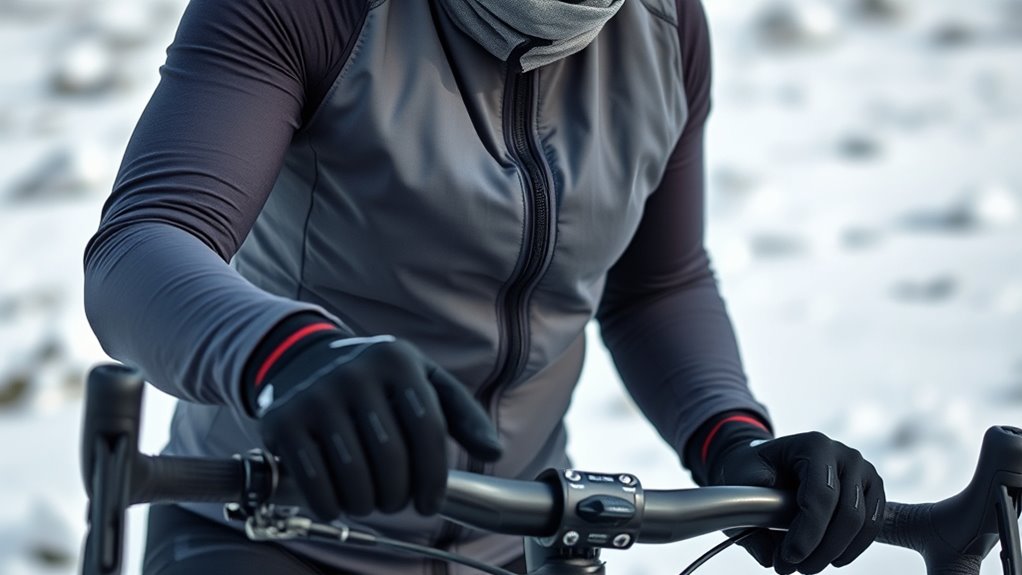
Start with a base layer made of moisture-wicking fabrics, such as merino wool or synthetic fibers. These materials excel at pulling sweat away from your skin, keeping you dry and preventing that clammy feeling that can quickly sap your body heat. A good base layer should fit snugly but not constrict, allowing for unrestricted blood flow and effective moisture transfer. As you pedal, this layer will work tirelessly to manage moisture, ensuring you stay comfortable even during intense efforts.
Start with a snug, moisture-wicking base layer to stay dry and comfortable during intense rides.
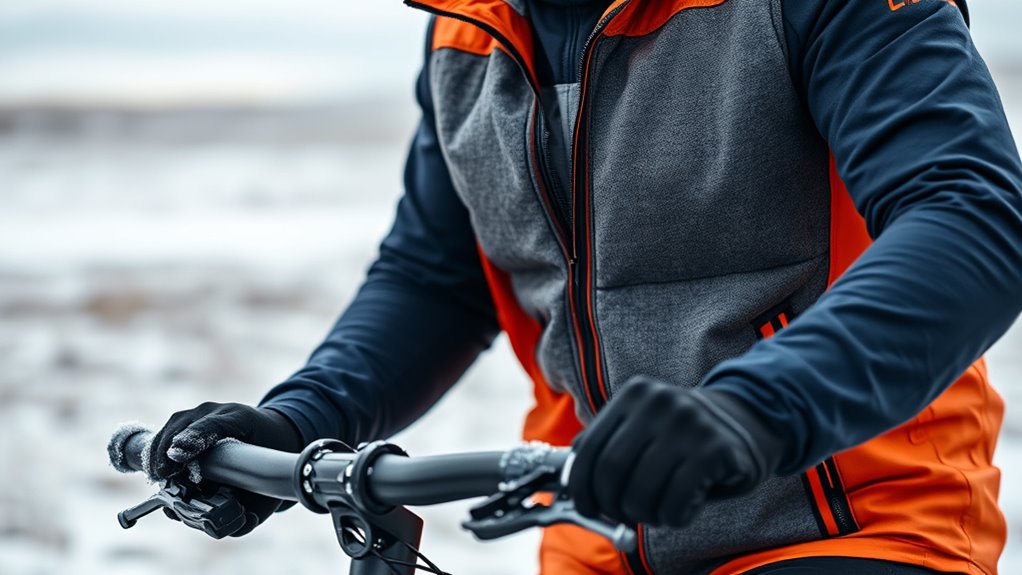
Over the base, add an insulating layer designed specifically for cold-weather riding. Insulation materials like fleece, wool, or advanced synthetic fibers trap body heat efficiently without adding bulk. These materials are lightweight yet provide excellent thermal retention, meaning you can stay warm without feeling like you’re carrying a ton of extra clothing. Avoid thick, heavy insulation that can restrict movement or cause overheating during climbs or strenuous efforts. The goal is to create a thin, effective barrier that holds in heat while remaining flexible.
If the weather is particularly harsh or if you’re riding in variable conditions, consider layering a windproof or water-resistant shell on top. This outer layer should block wind and repel moisture without trapping sweat inside. The best shells are breathable, allowing moisture vapor to escape while preventing external elements from penetrating. This combination ensures that moisture generated by your body doesn’t linger inside your layers, which can cause chilling and discomfort. Additionally, breathable fabrics in outer layers are crucial for preventing heat loss and maintaining optimal comfort during your ride.
Frequently Asked Questions
What Are the Best Materials for Cold-Weather Cycling Layers?
You should choose moisture-wicking fabrics like merino wool or synthetic materials such as polyester to keep sweat away from your skin and stay dry. For insulation, opt for lightweight, insulating materials like fleece or down, which trap heat without adding bulk. Combining these layers guarantees you stay warm and dry during cold-weather rides, while maintaining mobility and comfort without the need for bulky clothing.
How Do I Prevent Sweating During Intense Rides?
Sweating during intense rides is like trying to hold water in your hands—inevitable if you’re not careful. To prevent this, choose moisture-wicking fabrics that draw sweat away from your skin, and layer with breathable merino wool. These materials regulate temperature and keep you dry, reducing the risk of chills when you cool down. Stay attentive to your body’s signals and adjust layers accordingly for a comfortable, sweat-free ride.
What Accessories Are Essential for Winter Cycling?
You’ll want to prioritize essential winter cycling accessories like a good winter base layer and thermal gloves. The base layer keeps you warm and wicks moisture, while thermal gloves protect your hands from cold and wind. Consider adding a neck warmer or face mask for extra warmth and visibility accessories like lights and reflective gear. These essentials keep you comfortable and safe during cold rides without adding bulk.
How Do I Adjust Layers for Changing Weather Conditions?
To adjust layers for changing weather, you should use flexible layering techniques that allow quick modifications. Add or remove layers as needed, starting with a moisture-wicking base, then insulating layers, and a waterproof outer shell. Keep weather adaptability in mind by packing lightweight, packable layers that you can easily stash or pull out during your ride. This way, you stay comfortable and prepared no matter how conditions shift.
What Are Common Mistakes to Avoid in Layering?
Avoid layering myths like “more is better” or “thinner always means cooler”—these are common pitfalls that leave you sweaty or freezing. Don’t forget to check your materials; cotton traps moisture and ruins your ride. Over-layering causes bulk, making pedaling a chore, while under-layering leaves you shivering. Keep it simple, breathable, and adaptable to stay comfortable and avoid the classic rookie mistakes.
Conclusion
So, there you have it—master the art of layering and turn that frosty ride into a cozy cruise. Who knew that strategic clothing could make you feel like a thermal ninja rather than a shivering mess? Just remember, no matter how many layers you pile on, you’ll still look like a marshmallow on wheels. But hey, at least you’ll stay warm and arrive victorious—ready to brag about your insulating prowess at the next coffee stop.