

When choosing socks for cycling, both merino wool and synthetic blends offer advantages. Merino wool wicks moisture effectively, keeping your feet dry and reducing blisters, though it requires gentle care. Synthetics transfer moisture quickly and are designed for durability, resisting stretching and fading. To get the best performance, consider how each material handles moisture, wear, and comfort. Keep exploring to discover which option suits your riding style and ensures long-lasting comfort.
Key Takeaways
- Merino wool offers superior moisture-wicking and natural odor resistance, keeping feet dry and comfortable during long rides.
- Synthetic socks typically dry faster and are more durable, making them ideal for intense cycling and frequent washes.
- Well-designed synthetics undergo rigorous durability testing, ensuring they resist wear, stretching, and fading over time.
- Merino wool requires delicate care to prevent pilling, while synthetics are generally easier to maintain and more resistant to damage.
- For long-term performance and blister prevention, choose socks with proven moisture management and durability tailored to cycling conditions.
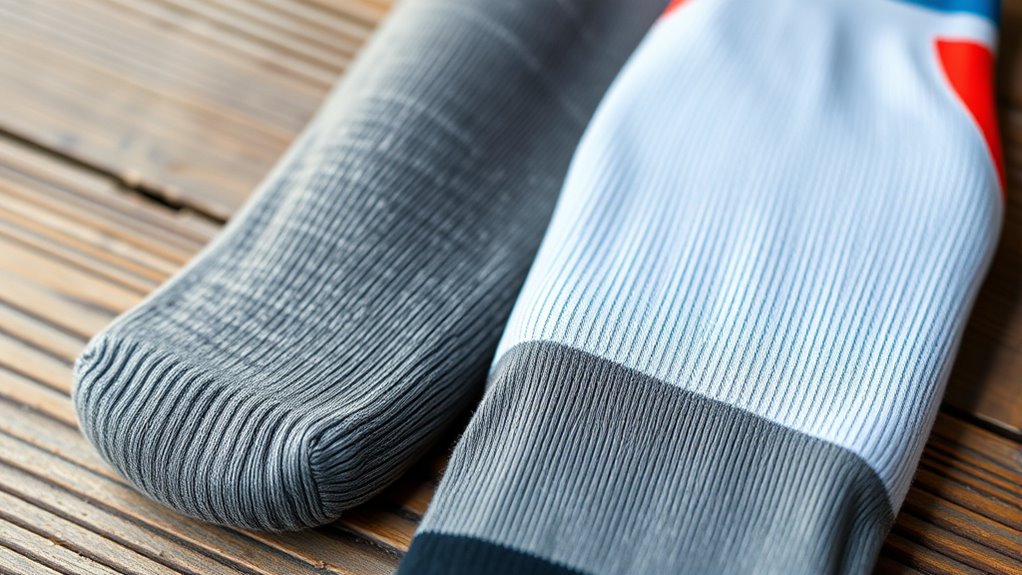
When it comes to staying comfortable and preventing blisters, the right pair of socks can make all the difference. On long bike rides, your feet endure a lot, and choosing the right material is essential. Merino wool and synthetic blends are the two main contenders, each offering unique benefits. To make an informed choice, you need to consider how they handle moisture management and how they’ve been tested for durability.
Moisture management is crucial when cycling because sweat can lead to discomfort and blisters if not properly controlled. Merino wool excels at wicking moisture away from your skin, keeping your feet dry even during intense efforts. Its natural fibers absorb sweat and release it slowly, which minimizes chafing. Synthetics, on the other hand, are engineered for rapid moisture transfer. They wick sweat away quickly, but sometimes, they can trap heat and moisture if not designed well, leading to dampness that causes blisters. The key is to look for synthetic socks that have been subjected to rigorous durability testing to guarantee they retain their moisture-wicking properties over time, especially after repeated washes and extended use.
Effective moisture management prevents blisters by keeping feet dry during cycling efforts.
Durability testing plays a vital role in determining how well your socks will hold up under cycling conditions. Merino wool socks are naturally resilient, but they can be prone to pilling if not treated carefully. High-quality merino socks undergo specific durability tests that simulate the wear and tear of cycling, ensuring they won’t fall apart after a few rides. Synthetic socks are often tested more extensively for abrasion resistance, stretch retention, and colorfastness. Since synthetics are designed for performance, many brands subject them to rigorous durability tests, guaranteeing they won’t fade or degrade quickly, even after many cycles of washing. Knowing that your socks have passed these tests gives you confidence that they’ll last through many rides without losing their performance.
Additionally, some performance-enhanced synthetic fabrics are engineered specifically to withstand the rigors of cycling, making them ideal for riders who put their gear through intense use. Knowing that your socks have passed these tests gives you confidence that they’ll last through many rides without losing their performance.
In the end, your choice depends on your priorities. If you value natural fibers with excellent moisture management and are willing to handle a bit more delicate care, merino wool might be your best bet. If you prefer socks that are engineered for durability and rapid moisture transfer, synthetics could serve you better, especially if they’ve undergone extensive durability testing. Both options have their strengths, but understanding how they perform in real-world cycling conditions ensures you stay comfortable mile after mile. Prioritizing moisture management and durability testing in your selection process helps you invest in socks that truly work for your rides, keeping your feet dry, comfortable, and blister-free.
Frequently Asked Questions
How Do Merino and Synthetic Socks Compare in Price?
You’ll find merino socks tend to be more expensive than synthetic ones due to their sock durability and natural material sustainability. While merino costs more upfront, it offers better insulation and odor resistance, making it a worthwhile investment. Synthetic socks are usually cheaper, but they may wear out faster and are less eco-friendly. Your choice depends on your budget and whether you prioritize long-lasting, sustainable materials over initial cost.
Are There Specific Brands Known for High-Quality Cycling Socks?
Think of cycling sock brands as the stars guiding your ride. Brands like Balega, Swiftwick, and SockGuy stand out for their reputation and material innovation. They craft high-quality socks that keep your feet comfortable and dry mile after mile. Their commitment to performance and durability makes them top choices for serious cyclists. Trust these brands to deliver socks that boost your ride, blending innovation with proven quality.
How Often Should I Replace My Cycling Socks?
You should replace your cycling socks when they show signs of reduced sock durability, like thinning, holes, or persistent odors despite proper sock hygiene. Typically, this means every 6 to 12 months, depending on how often you ride and how well you care for them. Regularly inspecting your socks helps prevent discomfort and maintains their performance, ensuring your feet stay comfortable and dry during every ride.
Can I Wear the Same Socks for Different Weather Conditions?
You can wear the same socks across different weather conditions, but it’s best to take weather adaptability into account. Merino wool offers excellent temperature regulation, keeping your feet warm or cool as needed, making it a versatile choice. For extreme cold or heat, sock layering can help, with lightweight synthetics on top of insulating merino. This approach ensures comfort and prevents moisture buildup, regardless of weather changes.
Do Sock Thicknesses Impact Cycling Performance?
Yes, sock thicknesses impact cycling performance, especially regarding sock material durability and moisture-wicking efficiency. Thicker socks offer better cushioning and warmth but can cause your feet to sweat more, reducing comfort and potentially affecting performance. Thinner socks enhance moisture-wicking efficiency, keeping your feet dry and reducing blisters. Choose a sock thickness suited to your ride conditions to optimize comfort, durability, and moisture management during cycling.
Conclusion
So, whether you choose the gentle caress of merino or the resilient whisper of synthetics, your socks become the silent heroes of your ride. Like a trusted compass guiding you through twists and turns, the right pair keeps you steady, comfortable, and ready for whatever the road throws your way. In the end, it’s not just about socks — it’s about finding that perfect harmony where comfort and performance dance in perfect unison beneath your feet.