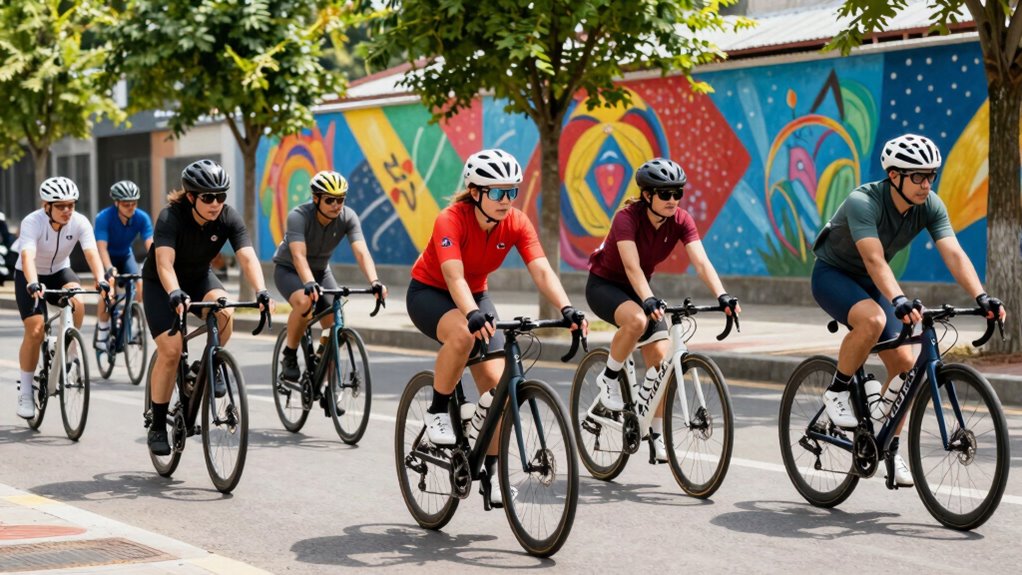
Using inclusive language in cycling spaces is essential because it creates a welcoming environment where everyone feels safe, respected, and able to participate. It helps break down physical, social, and financial barriers that can discourage people from engaging. By choosing your words carefully, you foster a sense of belonging and support diverse community involvement. If you want to understand how to make your cycling space more inclusive and accessible, keep exploring these important ideas.
Key Takeaways
- Inclusive language fosters a welcoming environment, encouraging participation from diverse backgrounds and abilities.
- It helps break down physical, social, and financial barriers to cycling access.
- Using respectful terms builds trust and signals safety for marginalized groups.
- Training in inclusive communication enhances cultural competence and reduces unintentional exclusion.
- Promoting inclusivity creates a supportive cycling community that values all voices and experiences.
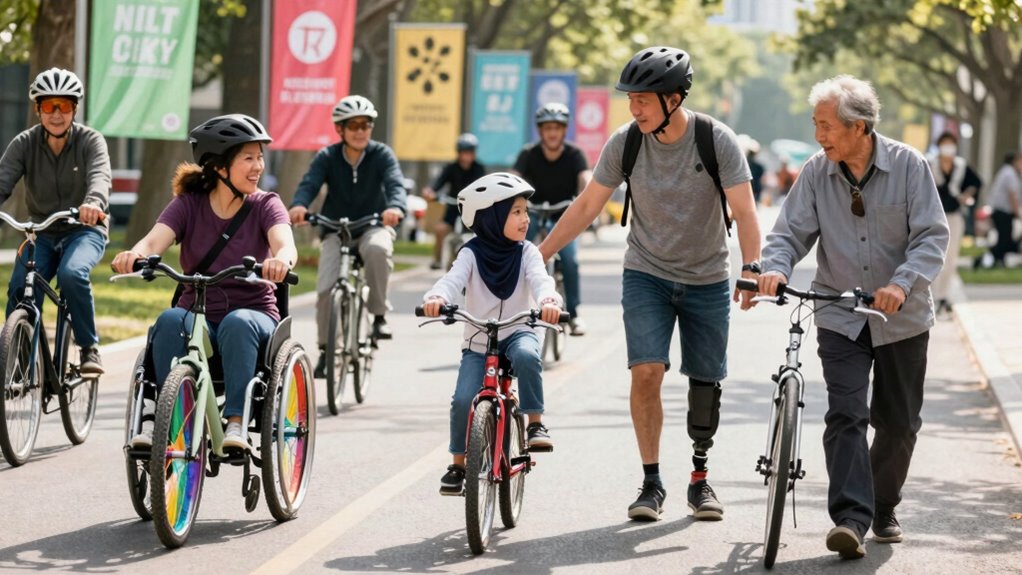
Inclusive language plays a vital role in making cycling spaces welcoming for everyone. When you choose your words carefully, you help break down accessibility barriers that might otherwise discourage certain groups from feeling comfortable or even attempting to ride. Language shapes perceptions, and if you use inclusive terms, you signal that these spaces are open and safe for people of all backgrounds, abilities, and identities. For instance, avoiding jargon or terms that inadvertently exclude can make a significant difference. Instead of saying “cyclist,” consider using “rider” or “biker” to be more neutral and welcoming. Recognize that some people may face physical, financial, or social accessibility barriers that make cycling seem out of reach. Your language can either reinforce these obstacles or help dismantle them by emphasizing inclusivity and support. Employing accessible language ensures that everyone feels acknowledged and respected in the conversation about cycling. Community engagement is essential in fostering an environment where everyone feels they belong. When you actively listen to community members’ experiences and concerns, you gain insight into what language resonates and what might unintentionally create exclusion. Engaging with diverse groups helps you understand their unique perspectives and the specific barriers they face. This involvement helps you identify specific accessibility barriers—whether they’re related to infrastructure, safety, or social stigma—that may prevent participation. Using inclusive language demonstrates respect and acknowledgment of these challenges, encouraging more community members to get involved and feel valued. Additionally, training and education on inclusive communication can significantly improve how cycling spaces accommodate and welcome marginalized groups. Building awareness around cultural competence can foster a more understanding and supportive environment. By fostering a culture of inclusivity, you help create cycling spaces that are welcoming and accessible to all. It also promotes a sense of shared ownership, making cycling spaces more dynamic and representative of the people they serve.
inclusive cycling community signage
As an affiliate, we earn on qualifying purchases.
As an affiliate, we earn on qualifying purchases.
Frequently Asked Questions
How Can I Start Using More Inclusive Language in My Cycling Community?
You can start using more inclusive language by replacing cycling slang with gender-neutral terminology, making everyone feel welcome. Address riders by their preferred pronouns, avoid assumptions based on appearance, and use words like “cyclist” or “rider” instead of gender-specific terms. Incorporate inclusive phrases into your conversations and signage, encouraging others to do the same. Small changes like these foster a more welcoming, respectful cycling community for everyone.
What Are Common Inclusive Language Mistakes to Avoid in Cycling Spaces?
You should avoid gendered language, like assuming someone’s gender or using terms like “guys” for everyone, and instead use gender-neutral terminology. Be mindful of respectful communication by listening carefully and avoiding stereotypes or assumptions about riders. Steer clear of language that could unintentionally exclude or offend. By focusing on inclusive language, you create a welcoming environment where all cyclists feel valued and respected.
How Does Inclusive Language Impact Marginalized Groups in Cycling?
When you use inclusive language, you break down language barriers, making marginalized groups feel seen and valued. This fosters genuine community representation, encouraging diverse participation. Without it, stereotypes and exclusion thrive, deterring those who need cycling spaces most. Your mindful words can transform intimidating environments into welcoming hubs, empowering everyone to ride confidently and belong, ultimately strengthening the entire cycling community through understanding and respect.
Are There Specific Terms I Should Replace to Be More Inclusive?
You should update terminology to be more inclusive by replacing phrases that assume gender or exclude certain groups. Use language sensitivity by choosing words that recognize diverse identities, such as swapping “guys” for “everyone” or “cyclists” for more specific terms. Incorporate terminology updates regularly to reflect respectful, current language. This approach fosters a welcoming environment, making cycling spaces accessible and respectful for all, regardless of background or identity.
How Can Organizers Promote Inclusive Language at Cycling Events?
Think of your cycling event as a welcoming garden; you can plant seeds of inclusivity by promoting inclusive language. Use clear, respectful words to emphasize bike safety and event accessibility, ensuring everyone feels safe and valued. Encourage volunteers and participants to use inclusive terms, provide language guidelines, and foster open conversations. This approach creates a space where all riders can pedal confidently, knowing they’re part of a supportive cycling community.
As an affiliate, we earn on qualifying purchases.
Conclusion
Using inclusive language in cycling spaces isn’t just about politeness; it’s about creating a community where everyone feels welcome and safe. Some might say it’s unnecessary or overly sensitive, but the truth is, small words can make a big difference. When you choose your words carefully, you help break down barriers and invite more people to enjoy cycling. So, keep the language open and welcoming—your words have the power to build a stronger, more inclusive cycling community.
accessible bike accessories for disabilities
As an affiliate, we earn on qualifying purchases.
As an affiliate, we earn on qualifying purchases.
cycling safety and accessibility training
As an affiliate, we earn on qualifying purchases.
As an affiliate, we earn on qualifying purchases.