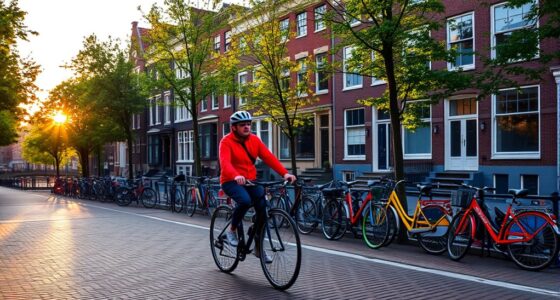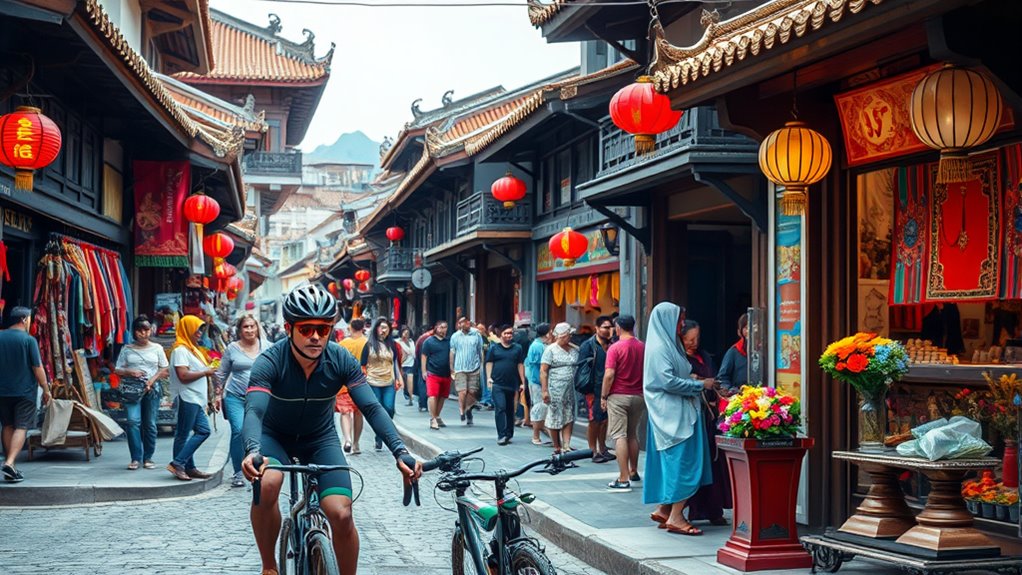

When cycling abroad, you should learn the local customs and traffic rules to stay safe and respectful. Pay attention to greetings, social norms around eye contact, and how locals behave around bicycles. Always carry safety gear, follow specific traffic signals, and plan your routes carefully. Respect cultural differences and observe how residents navigate their streets. If you keep exploring these etiquette essentials, you’ll enjoy a smoother, more authentic cycling experience in any new environment.
Key Takeaways
- Learn and respect local greeting customs and social norms to foster positive interactions.
- Observe and follow local bicycle etiquette, including riding sides and appropriate attire.
- Understand and comply with country-specific traffic laws, signals, and safety gear requirements.
- Use navigation tools and plan routes to avoid unsafe or high-traffic areas.
- Approach new environments with cultural sensitivity and respect to enhance immersion and safety.
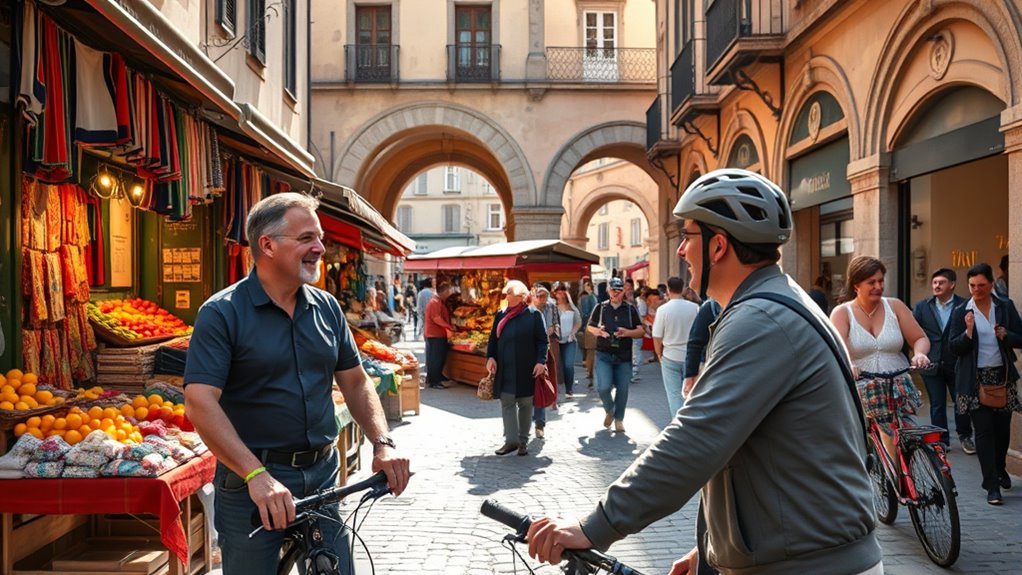
Ever wondered what it’s like to explore new countries on two wheels? Cycling abroad offers an exciting way to immerse yourself in different cultures, but it also requires understanding and respecting local customs to guarantee a smooth experience. Before you hit the road, take some time to learn about the traditions and social norms of the place you’re visiting. For instance, in some countries, it’s customary to greet people with a nod or a specific phrase, while in others, direct eye contact might be considered rude. Recognizing these subtleties shows respect and helps you connect more authentically with locals. Also, observe how locals behave around bicycles—are they ridden on the right or left side? Do people wear helmets or prefer more casual attire? These small details can guide you to adapt your behavior appropriately, so you don’t inadvertently offend or stand out as an outsider.
Along with understanding local customs, safety precautions are paramount when cycling abroad. Every country has its own set of traffic rules, and what’s common practice in one place can be dangerous or illegal elsewhere. Always familiarize yourself with local traffic laws before you start riding. For example, some countries require cyclists to use specific hand signals, while others may have strict rules about riding on sidewalks or designated bike lanes. Wearing a helmet isn’t just about safety; in some places, it’s legally mandated, and failing to comply could lead to fines. Carrying essentials like a reflective vest, lights, and a bell can also boost your visibility and alert drivers of your presence, especially in low-light conditions. Additionally, stay aware of road conditions—potholes, gravel, or uneven surfaces can be hazards if you’re not cautious. Incorporating Cultural Intelligence strategies like observing local behavior can help you navigate these nuances more effectively.
It’s equally important to respect local traffic flow and avoid unpredictable maneuvers that might confuse drivers or pedestrians. Using a GPS or local cycling maps can help you navigate safely and confidently. Also, plan your routes ahead of time to steer clear of high-traffic areas or unsafe neighborhoods. Remember, being polite and patient with other road users reflects well on you and fosters a safer environment for everyone.
In short, understanding local customs and following safety precautions go hand in hand when cycling abroad. These efforts not only protect you but also demonstrate respect for the community you’re visiting. Approach each new country with an open mind and a cautious attitude, and you’ll find that your cycling adventures are more enjoyable and enriching. By blending cultural awareness with safety awareness, you’ll create memorable experiences that are respectful, safe, and truly immersive.
Frequently Asked Questions
How Should I Handle Language Barriers While Cycling Abroad?
When facing translation challenges abroad, you should stay patient and use non-verbal communication to bridge gaps. Smile, gesture, and point to help convey your message clearly. Carry a translation app or phrasebook for quick reference, and learn a few basic local words to show respect. By staying open-minded and adaptable, you’ll navigate language barriers smoothly and enjoy your cycling adventure without misunderstandings.
What Should I Do if I Encounter Local Customs I Don’t Understand?
When you encounter local customs you don’t understand, stay calm and show respect. Use respectful gestures like a smile or a nod to acknowledge the tradition, even if you’re unsure of its meaning. If possible, ask politely for clarification or observe how locals behave in similar situations. Avoid making assumptions or dismissing customs, as this can lead to cultural misunderstandings. Your respectful approach helps foster positive interactions and shows genuine interest in their culture.
Are There Specific Safety Tips for Cycling in Unfamiliar Terrains?
When cycling in unfamiliar terrains, prioritize helmet safety by always wearing your helmet correctly and checking it for damage. Plan your route ahead of time, using local maps or apps to avoid risky areas. Stay alert for uneven surfaces or obstacles, and ride at a comfortable speed. Carry essentials like water and a basic repair kit. These steps help you stay safe and enjoy your adventure without unnecessary risks.
How Can I Respect Local Religious Sites While Cycling Nearby?
Think of yourself as a gentle breeze brushing past sacred grounds. You can respect local religious sites by dressing modestly, like wrapping yourself in respect’s quiet shawl. Keep an eye on signage, which acts as sacred whispers guiding your path. Cycle slowly and avoid loud noises, showing your reverence. By honoring these simple gestures, you honor the culture’s soul and ensure your journey remains respectful and enriching.
What Is the Best Way to Connect With Local Cyclists?
To connect with local cyclists, join local cycling events or group rides to immerse yourself in the Cycling community. Show genuine interest in their culture and share your experiences during cultural exchanges. Be respectful, friendly, and open-minded, which helps foster bonds. Asking for advice or tips also encourages conversations. Remember, building rapport with locals enhances your trip and creates meaningful connections that go beyond just cycling.
Conclusion
Now that you’re familiar with the cultural etiquette essentials, you’re ready to navigate foreign streets with confidence. Think of cycling abroad as a dance—you’ll find your rhythm, respect the local steps, and move gracefully through new surroundings. Embrace the experience with an open mind and a respectful attitude, and you’ll not only enjoy your journey but also become a welcomed guest in every community you visit. Happy cycling and safe travels!