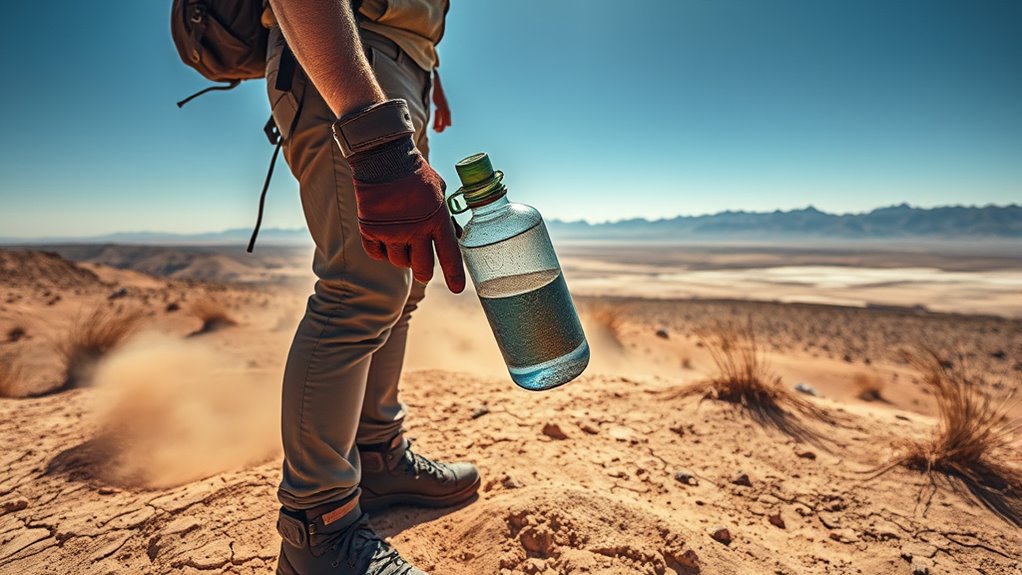
On long days, it’s essential to find reliable water sources and carry enough supplies to stay hydrated. Carry a reusable, leak-proof water bottle and fill it often, especially before heading into remote areas. Use portable filters or purification tablets if natural water sources are available. Remember to supplement water with electrolytes to replenish minerals lost through sweat. Staying proactive about hydration helps maintain your energy and focus—keep going, and you’ll discover tips to maximize your water intake.
Key Takeaways
- Carry a reusable, leak-proof water bottle to ensure water availability throughout the day.
- Use portable filtration systems or purification tablets to access safe drinking water from natural sources.
- Plan ahead by filling and refilling bottles regularly to maintain hydration and conserve water.
- Incorporate water-rich foods like fruits and vegetables to supplement water intake during long days.
- Monitor signs of dehydration, such as dry mouth or dark urine, and adjust water and electrolyte intake accordingly.
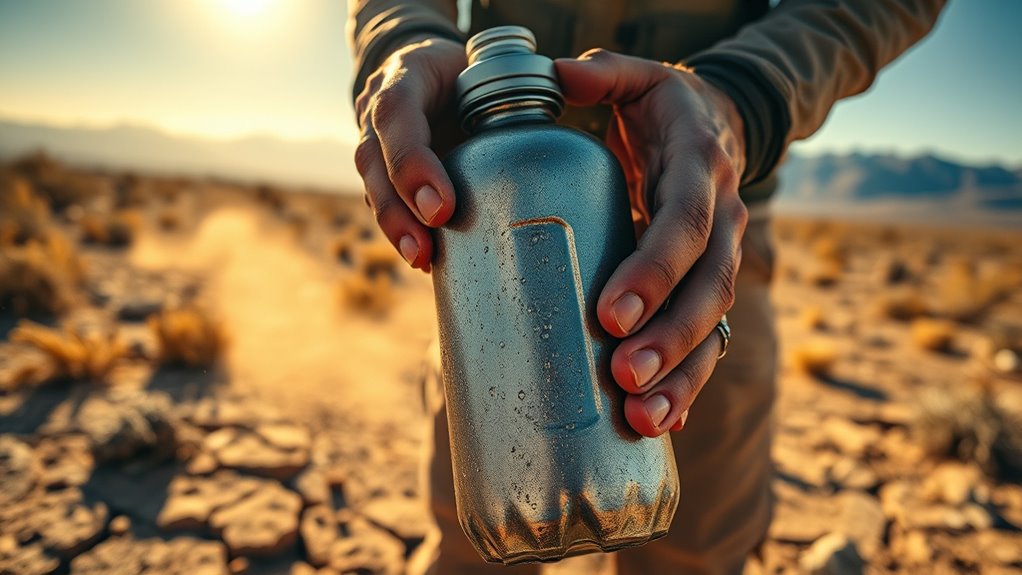
Long days can take a serious toll on your hydration levels, especially when you’re busy and often forget to drink enough water. When you’re constantly on the move, maintaining proper hydration isn’t just about quenching thirst; it’s also about supporting your overall health and energy levels. One key aspect often overlooked is electrolyte balance. Electrolytes like sodium, potassium, and magnesium are essential for muscle function, nerve signaling, and fluid regulation. Without enough electrolytes, you might feel sluggish, develop cramps, or experience dizziness, even if you’re drinking plenty of water. To keep your electrolyte levels in check, consider adding electrolyte tablets or drinks to your routine, especially if you’re sweating heavily or working in hot environments. These options help replenish lost minerals and prevent imbalances that can hinder hydration efforts. Additionally, understanding hydration technology can help you choose the most effective tools and strategies for staying properly hydrated during long days.
Water conservation becomes vital when you’re out and about or in situations where access to water is limited. Carrying a reusable water bottle is one of the simplest ways to guarantee you have water readily available. Look for bottles that are durable, leak-proof, and easy to carry, so you’re more inclined to drink regularly. If you’re in a setting with limited access to clean water, consider investing in a portable filtration system or water purification tablets. These tools allow you to make water safe to drink from natural sources like streams or lakes, reducing the risk of dehydration caused by contaminated water. Additionally, planning ahead helps you conserve water — for instance, filling your bottle before heading out and minimizing waste by avoiding unnecessary spills.
You should also be mindful of how much water you’re consuming throughout the day. Drinking small amounts frequently is more effective than gulping large quantities infrequently, as it helps your body absorb the water more efficiently. Keep in mind that hydration isn’t just about water intake; foods like fruits and vegetables can contribute greatly to your hydration levels. Incorporate water-rich foods such as watermelon, cucumbers, and oranges into your diet to supplement your drinking habits.
Sip small amounts often and eat water-rich fruits to stay optimally hydrated throughout the day.
Finally, pay attention to the signs your body gives you. Thirst, dry mouth, dark urine, and fatigue are indicators that you need more fluids. If you’re engaging in strenuous activity or sweating a lot, increase your water intake accordingly, and make sure to replace electrolytes lost through sweat. Staying hydrated on long days requires a combination of strategic water intake, electrolyte management, and water conservation practices. With these habits, you’ll keep your body functioning at its best, no matter how busy your day gets.
Frequently Asked Questions
What Are the Signs of Dehydration During Long Outdoor Activities?
You’ll notice signs of dehydration like feeling extremely thirsty, which is your body’s Thirst sensation signaling a need for fluids. You might also experience dizziness, dry mouth, or dark-colored urine, indicating electrolyte imbalance. Fatigue and muscle cramps are common too, showing your body’s electrolyte levels are dropping. Pay attention to these symptoms, and drink water regularly to stay hydrated and maintain your electrolyte balance during long outdoor activities.
How Much Water Should I Carry for a Full Day?
You should carry at least a gallon (about 4 liters) of water for a full day, especially if you’re active outdoors. Proper hydration planning involves estimating water storage based on your activity level and climate. Don’t assume you’ll find water easily; always bring enough, knowing dehydration can sneak up on you quickly. Adequate water storage keeps you safe and energized, making your long day more enjoyable and less risky.
Are There Portable Water Purification Options Suitable for Hiking?
Yes, there are portable water purification options ideal for hiking. You can use portable filtration devices that remove bacteria and protozoa, making water safe to drink. UV sterilization tools are also effective; they use ultraviolet light to kill viruses and bacteria quickly. Both options are lightweight and easy to carry, ensuring you stay hydrated and safe on long hikes without carrying excessive water.
Can I Hydrate Effectively With Drinks Other Than Water?
Imagine yourself trekking under the blazing sun, sweat pouring down your face. You can hydrate effectively with drinks other than water, like electrolyte drinks, which replenish essential minerals lost through sweat. These alternatives boost your energy and help prevent dehydration. Incorporate them into your hydration routine to stay balanced and refreshed. Just remember, while they’re helpful, don’t rely solely on sugary or artificial options—balance is key.
How Do I Prevent Water Bottle Leaks During Travel?
To prevent water bottle leaks during travel, make certain you use bottles with leak-proof caps and secure them tightly after filling. Opt for bottles with good insulation to keep water cool and prevent condensation that can cause leaks. Always check the caps for damage or wear before packing, and avoid overfilling. Carry bottles in designated compartments or padded holders to minimize movement and accidental spills during your journey.
Conclusion
Remember, staying hydrated is your best defense on long days. Keep water close, sip regularly, and listen to your body’s signals. Don’t wait until you’re thirsty to drink—think of it as filling your tank before it runs dry. As the saying goes, “An ounce of prevention is worth a pound of cure.” By carrying water and staying mindful, you’ll keep your energy high and your day running smoothly. Stay hydrated, and you’ll conquer whatever comes your way.