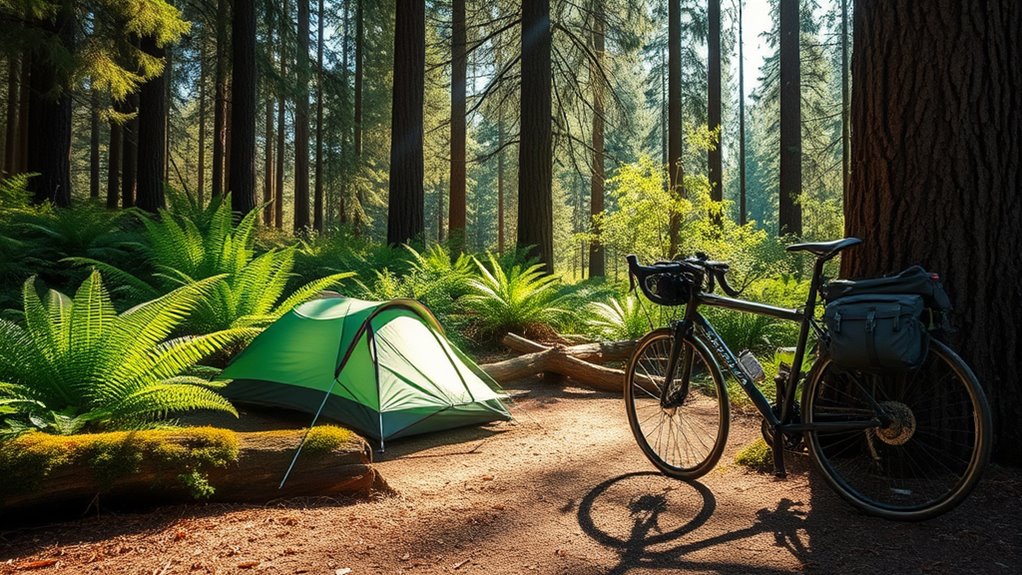
When bike tourers practice low-impact camping, they prioritize Leave No Trace principles by choosing durable, designated sites away from water sources and avoiding damage to plants or soil. Use eco-friendly gear, pack out all waste, and minimize water use by washing far from water bodies. Respect wildlife by keeping noise low and selecting sites that won’t disturb the environment. To discover simple tips for eco-savvy cycling adventures, keep exploring what you can do.
Key Takeaways
- Choose existing campsites or durable surfaces to minimize environmental impact while bike touring.
- Carry reusable gear, biodegradable soap, and eco-friendly supplies to reduce waste and pollution.
- Set up camps away from water sources, at flat, durable sites, and avoid damaging vegetation.
- Pack out all trash, waste, and food to prevent habitat disruption and maintain natural beauty.
- Respect wildlife by keeping noise low and avoiding disturbance, ensuring sustainable enjoyment of natural areas.
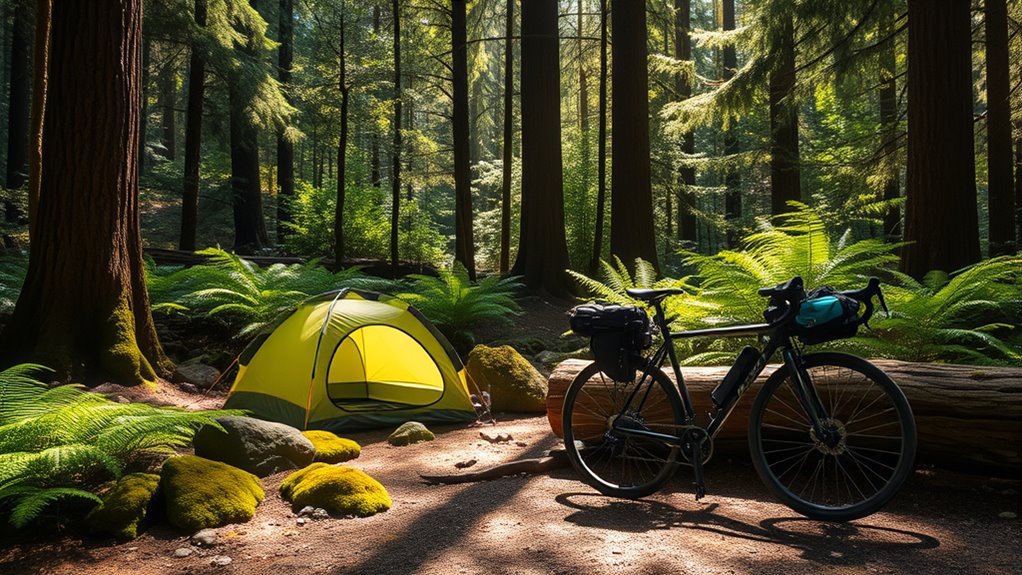
If you’re bike touring and want to minimize your environmental impact, practicing low-impact camping is vital. It guarantees you’re respecting the land and leaving it just as beautiful as you found it. The cornerstone of low-impact camping is adhering to Leave No Trace principles, which guide you to minimize your footprint during every stage of your trip. This means choosing campsites carefully, setting up away from water sources, and avoiding damage to plants or soil. When you stick to designated areas or durable surfaces like gravel or rock, you prevent unnecessary erosion and habitat destruction. Carrying eco friendly gear plays a key role in reducing your overall impact. Opt for lightweight, sustainable materials that are built to last, so you don’t have to replace gear frequently. Reusable containers, biodegradable soap, and energy-efficient lighting not only lessen waste but also keep your trip eco-conscious.
Your choice of gear should prioritize minimal environmental disturbance. For example, using a compact, pollution-free stove minimizes your carbon footprint and reduces the risk of wildfires. When you set up your tent, select flat, durable spots that won’t damage the ground or vegetation. Use established campsites whenever possible and avoid creating new ones, which can scar the landscape. Additionally, packing out all trash is non-negotiable—leave no trace of your visit behind. Bring biodegradable waste bags and be diligent about collecting every scrap, from food wrappers to hygiene products. Proper waste disposal prevents contamination of water sources and preserves the natural beauty for future travelers.
Choose flat, durable sites and pack out all trash to protect nature.
Another aspect of low-impact camping involves being mindful of water use. Carry a water filter or purification method to avoid contaminating lakes or streams. Wash dishes and yourself at least 200 feet away from water sources, and use biodegradable soap sparingly. This keeps ecosystems healthy and prevents pollution. When it comes to food, choose non-perishable, eco-friendly options that generate less packaging waste. Reusable utensils, bottles, and containers are better for the planet and save you money in the long run. Your goal is to create as little waste and disturbance as possible, which means respecting wildlife, avoiding loud noises, and keeping noise levels down. Additionally, understanding the importance of projector contrast ratio can be useful if you’re planning outdoor movie nights during your trip, ensuring clear visuals even in varying lighting conditions.
Ultimately, practicing low-impact camping on your bike tour is about being a responsible steward of nature. Every decision you make, from gear choices to campsite selection, should aim to preserve the environment. By following Leave No Trace principles and choosing eco friendly gear, you guarantee that future generations can enjoy the same natural beauty you do today. Your mindful approach not only enriches your experience but also helps protect the delicate ecosystems that make bike touring such a rewarding adventure.
Frequently Asked Questions
How Do I Find Eco-Friendly Camping Gear Options?
You can find eco-friendly camping gear options by researching sustainable brands known for using eco-friendly materials. Look for products made from recycled, organic, or biodegradable materials, and check labels for certifications like Fair Trade or Global Organic Textile Standard. Shop online or visit outdoor stores that emphasize sustainability. Reading reviews and asking for recommendations can also help you choose gear that aligns with your eco-conscious values, ensuring your camping trips are greener.
What Are the Best Practices for Waste Disposal?
You might think waste disposal is simple, but following Leave No Trace principles shows it’s anything but. Always pack out all trash and use biodegradable products to minimize impact. Dig catholes at least 200 feet from water sources, and avoid contaminating natural areas. By showing respect for nature, you help preserve the environment for future explorers, making your ride more eco-friendly and your impact truly minimal.
How Can I Minimize Noise Pollution While Camping?
To minimize noise pollution while camping, you can use soundproof tents that block out sound effectively. Apply noise reducing techniques like setting up your tent away from trails or water sources, and choose quiet times for activities. Keep conversations soft and avoid loud music. Being mindful of your noise levels helps preserve the peaceful environment for wildlife and fellow campers, making your outdoor experience more enjoyable and eco-friendly.
Are There Specific Sites That Promote Low-Impact Camping?
You can find sites that promote low-impact camping by seeking designated Leave No Trace sites or wilderness areas that emphasize Wildlife Respect. Look for parks or reserves with clear guidelines on minimal impact camping. Always follow Leave No Trace principles, such as packing out all waste and avoiding disturbances. By choosing these sites, you help preserve the environment, ensure wildlife stays undisturbed, and enjoy your adventure responsibly.
How Do I Handle Emergencies Sustainably During Camping?
When handling emergencies sustainably, you prioritize Leave No Trace principles by minimizing waste, avoiding harm to nature, and respecting wildlife. Prepare by carrying a first aid kit, knowing local emergency contacts, and planning escape routes. Stay calm, assess the situation, and act responsibly—using eco-friendly solutions whenever possible. Always remember, staying prepared and respecting the environment helps you manage emergencies effectively while keeping your impact minimal.
Conclusion
So, next time you’re tempted to pitch your tent smack dab in the middle of a pristine meadow, remember—you’re basically auditioning for the role of eco-villain. Keep it low-impact, respect the land, and leave no trace. After all, the environment didn’t sign up to be your personal campsite. Be the hero who pedals lightly and camps responsibly—because Mother Earth deserves better than your next Instagram shot. Stay eco-friendly, and let’s keep these spots beautiful for future adventurers!