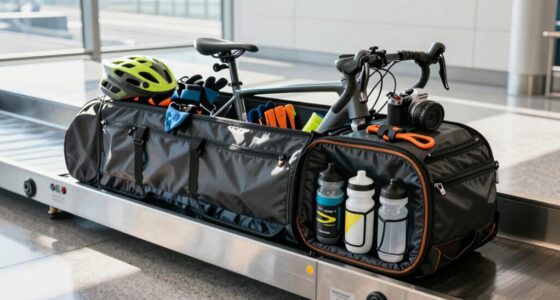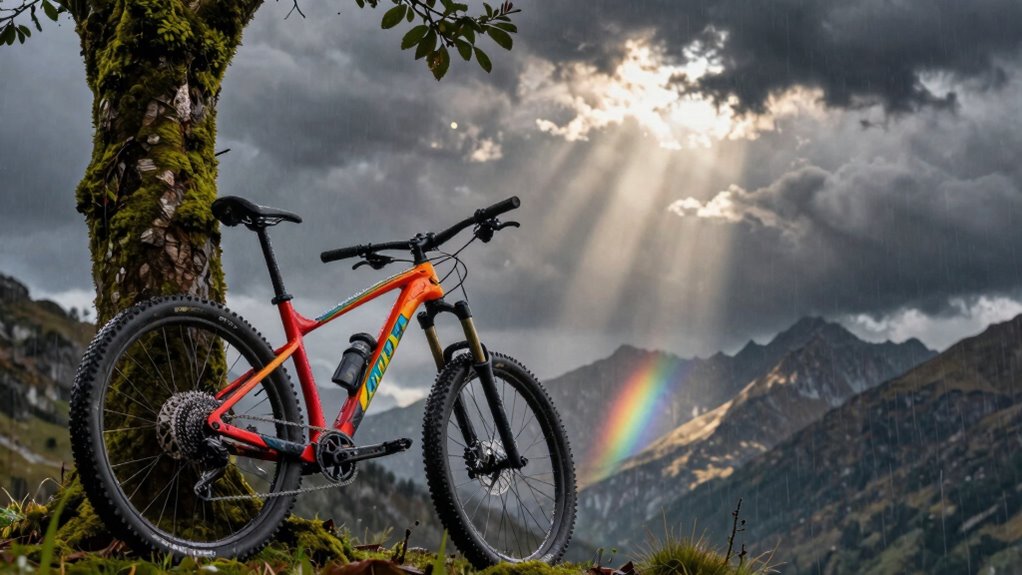

Being flexible with the weather can save your bike holiday by allowing you to adapt plans, avoid discomfort, and stay safe. If you’re prepared for rain with reliable gear and ready to switch routes, you transform setbacks into adventures. Pausing or seeking shelter keeps you comfortable and enthusiastic, even in bad weather. Embracing flexibility guarantees your trip remains enjoyable and memorable, whatever the forecast. Keep exploring how to turn weather challenges into opportunities for a smooth, fun ride.
Key Takeaways
- Adaptability allows riders to avoid uncomfortable or unsafe conditions, ensuring safety and enjoyment throughout the trip.
- Flexible plans enable quick route adjustments, such as seeking shelter or scenic detours, maintaining a positive experience.
- Investing in quality rain gear ensures comfort and safety, reducing stress caused by unexpected weather changes.
- Taking breaks or exploring indoor attractions keeps the trip enjoyable despite adverse weather.
- Embracing weather variability transforms potential setbacks into memorable adventures, fostering resilience and flexibility.
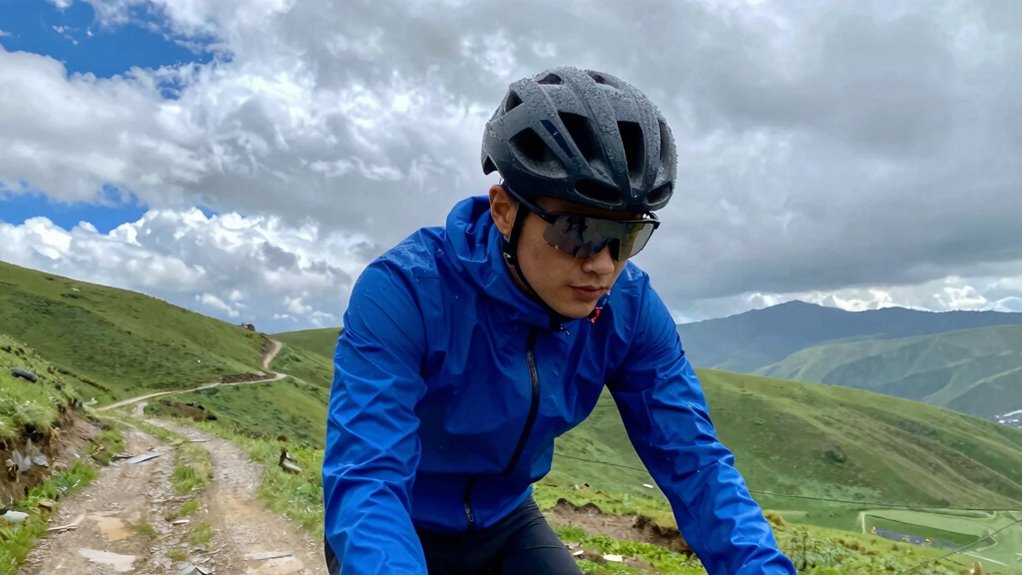
Planning a bike holiday can be exciting, but unpredictable weather often throws a wrench in your plans. You might wake up to clear skies, only to find rain rolling in by midday. That’s where weather flexibility becomes your best friend. Being adaptable means you can change your plans on the fly, avoiding unnecessary stress and discomfort. For example, if the forecast predicts rain, you can gear up with reliable rain gear and adjust your route to include sheltered or scenic spots that still let you enjoy your trip. Flexibility helps you make the most of your journey, regardless of weather hiccups.
Adapt your bike plans to weather changes for a more enjoyable, stress-free adventure.
When you embrace weather flexibility, route planning becomes more dynamic. Instead of sticking rigidly to a pre-set map, you can identify alternative paths that are safer or more enjoyable in bad weather. For example, if an unanticipated storm hits, you might switch from an exposed trail to a covered bike path or a scenic route through towns and cafes. This approach not only keeps you dry and comfortable but also allows you to explore more interesting areas that you might have overlooked. Keep a list of backup routes and indoor attractions, so you’re ready to pivot without losing momentum. Recognizing the importance of biodiversity can also inspire you to seek out routes that respect natural habitats and contribute to conservation efforts. Additionally, embracing weather adaptability can help you develop a more positive outlook on unforeseen challenges, transforming setbacks into part of the adventure. Incorporating climate resilience into your planning can further enhance your ability to handle different weather conditions effectively. Building resilience also means being prepared mentally for weather changes, which can make your trip more enjoyable overall.
Investing in good rain gear is essential when riding in uncertain weather. Lightweight, waterproof jackets, pants, and shoe covers can make a huge difference, turning a soggy ride into a manageable experience. With the right rain gear, you can continue riding comfortably or at least travel part of your route until the weather passes. Carrying compact rain gear means you’re prepared without adding significant weight to your bike. When you’re flexible about your schedule, you can pause for a break, wait out a downpour, or seek refuge in a cozy café, making the trip more enjoyable rather than a miserable slog. Plus, having the right gear can give you the confidence to tackle unpredictable weather with a positive attitude, transforming potential setbacks into opportunities for new experiences.
Ultimately, weather flexibility enhances your overall experience by reducing frustration and allowing spontaneous enjoyment. Instead of feeling trapped by the weather, you learn to see it as part of the adventure. By adjusting your route planning and equipping yourself with the right rain gear, you stay safe and comfortable, maintaining your enthusiasm no matter what Mother Nature throws your way. This mindset transforms potential setbacks into opportunities for discovery, ensuring your bike holiday remains memorable for all the right reasons.
As an affiliate, we earn on qualifying purchases.
Frequently Asked Questions
How Can I Find Weather Forecasts for Remote Cycling Locations?
You can find weather forecasts for remote cycling locations by checking specialized websites and apps that focus on remote weather patterns, like Windy or Mountain Weather. These platforms often offer detailed, up-to-date information. Keep in mind, forecast accuracy can vary in remote areas, so it’s wise to monitor weather updates regularly and stay flexible with your plans to adapt to changing conditions.
What Gear Should I Pack for Unpredictable Weather Conditions?
You should pack layered clothing to adapt easily to changing temperatures, including moisture-wicking base layers, insulating mid-layers, and a waterproof outer shell. Bring waterproof gear like a jacket, pants, and covers for your bags to stay dry during rain or unexpected showers. Don’t forget gloves and a hat for warmth, and consider quick-drying fabrics. Being prepared with versatile gear guarantees you stay comfortable, regardless of unpredictable weather.
How Do Weather Changes Affect Bike Maintenance Needs?
Weather changes can greatly impact your bike’s maintenance needs. You’ll notice increased bike tire wear in wet or rough conditions, so check your tires regularly. Also, frequent chain lubrication becomes essential after riding in rain or muddy areas, preventing rust and keeping your bike running smoothly. Staying proactive with these maintenance tasks ensures your bike stays reliable, no matter how unpredictable the weather gets during your holiday.
Are There Specific Routes Better Suited for Variable Weather?
You’ll find certain routes better suited for variable weather, especially those with versatile trail surfaces. Look for routes with well-maintained gravel or paved paths, which resist mud and puddles. These routes often feature scenic viewpoints that remain accessible even in rain or wind. Flexibility lets you switch to these safer, more stable routes when weather turns, ensuring your ride stays enjoyable and safe, regardless of sudden weather changes.
How Can I Communicate Weather Updates to Fellow Cyclists?
You can communicate weather updates to fellow cyclists by using a group chat or messaging app dedicated to cycling safety and weather planning. Share timely updates about changing conditions, and encourage others to do the same. You might also set up a regular check-in point or use weather apps with alerts to keep everyone informed. Clear, quick communication helps everyone stay safe and adapt plans as needed during your bike holiday.
As an affiliate, we earn on qualifying purchases.
Conclusion
Embracing weather flexibility means you can enjoy your bike holiday no matter what Mother Nature throws your way. Sure, unexpected rain or wind might seem inconvenient, but with a flexible plan, you can adapt and still make the most of your trip. Don’t let weather worries ruin your adventure—being adaptable ensures you’ll create memorable experiences regardless of the forecast. So, stay open-minded, and let the weather work for you, not against you.
bike route map with indoor attractions
As an affiliate, we earn on qualifying purchases.
As an affiliate, we earn on qualifying purchases.
As an affiliate, we earn on qualifying purchases.