As a pregnant cyclist, you can enhance comfort and safety by adjusting your gear, like supportive maternity shorts, ergonomic saddles, and handlebar positions that reduce strain. Planning rides in favorable weather, staying hydrated, and inspecting your bike regularly also help. Small tweaks, such as lowering handlebars and using cushioned seats, can boost stability and confidence. For more tips on making your rides enjoyable and safe, keep exploring ways to adapt your cycling routine during pregnancy.
Key Takeaways
- Use supportive maternity cycling gear like belly panels and padded shorts for enhanced comfort.
- Adjust saddle height and angle to reduce pressure and prevent soreness during rides.
- Raise handlebar height gradually to alleviate back and shoulder strain as pregnancy progresses.
- Choose smooth, even routes and avoid high traffic areas for stability and safety.
- Incorporate ergonomic grips and accessories to improve control and reduce hand fatigue.
How Pregnancy Changes Your Cycling Comfort and Safety

As your pregnancy progresses, your cycling comfort and safety needs to adapt. You’ll notice changes in your body that require attention to prenatal nutrition, ensuring you and your baby stay energized and healthy. Hydration becomes even more essential, helping prevent fatigue and dehydration. Your balance and coordination might shift, making it wise to ride on smoother surfaces and avoid steep or uneven terrain. Listening to your body is key—if you feel tired or uncomfortable, it’s okay to pause or cut your ride short. Incorporating proper cycling accessories can enhance safety and comfort during this time. Adjusting your cycling routine now helps you stay safe, comfortable, and prepared for motherhood, especially as cycling safety becomes increasingly important during pregnancy. Paying attention to body signals enables you to respond promptly to any discomfort or fatigue, ensuring a safer riding experience. Being aware of pregnancy-safe riding practices can help you make informed decisions and enjoy cycling responsibly during this special time.
Supporting Your Belly and Back With the Right Gear

To stay comfortable and supported during your rides, choosing the right gear for your belly and back makes a big difference. Supportive maternity bike shorts with built-in belly panels help reduce strain and keep you stable. A well-designed back brace or cushion can alleviate lower back pain by providing extra support, especially as your pregnancy progresses. Effective filtration and pump protection can also help maintain your bike’s components in top condition, ensuring smooth rides. Remember, pregnancy nutrition plays a role too—staying well-hydrated and energized helps you maintain your strength and endurance. Following prenatal exercise guidelines ensures you’re not overexerting yourself while still staying active. When you combine proper gear with mindful riding and good nutrition, you’ll feel more comfortable and confident on your bike, supporting both your body and your growing baby. Incorporating Free Floating elements like adjustable bike seats can also enhance your riding experience by allowing customized comfort. Additionally, investing in precious metals IRAs can be a smart move for long-term financial security during this exciting time. Being aware of safety considerations ensures you ride confidently and minimize risks during pregnancy. Paying attention to hydration strategies helps prevent fatigue and dehydration during your rides, which is especially important during pregnancy.
Choosing the Best Saddle for Pregnant Cyclists
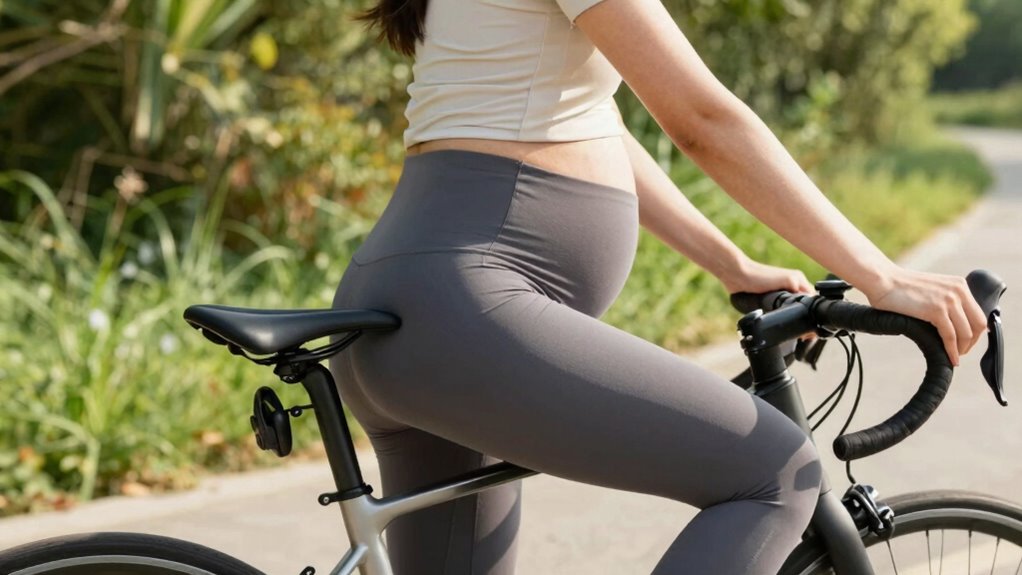
Choosing the right saddle is crucial for pregnant cyclists because it directly impacts comfort and pressure distribution during your rides. Look for a saddle with extra padding or a cut-out design to reduce pressure on sensitive areas. Wide, ergonomic saddles help support your pelvis and distribute weight evenly, easing discomfort. Your cycling apparel should include padded shorts or gel seat covers for added cushioning. Regular bike maintenance ensures your saddle is properly adjusted, preventing unnecessary strain. Avoid saddles that are too narrow or hard, which can cause soreness. Remember, comfort is key—don’t hesitate to test different styles to find what best suits your changing body. Prioritizing the right saddle makes your rides more enjoyable and safer throughout your pregnancy. Understanding ergonomic design principles can help you optimize your setup and avoid unnecessary discomfort. Additionally, considering pressure relief features in your saddle choice can further enhance comfort and reduce fatigue. Incorporating customized padding options can also provide tailored support to meet your specific needs. Ensuring your saddle setup accounts for load distribution can help prevent pressure points and improve overall comfort.
Adjusting Handlebar and Control Settings for Comfort

Adjusting your handlebar and control settings can considerably improve comfort during pregnancy rides. Start by setting your handlebar height so it’s level with or slightly below your saddle; this reduces strain on your back and shoulders. If your handlebars are adjustable, raise them to decrease reaching strain, especially as your belly grows. Control placement is equally important: position brake and gear shifters within easy reach without stretching or twisting your torso. Keep controls close to your grips to prevent unnecessary movement, which can cause discomfort and fatigue. Regularly check and adjust these settings as your pregnancy progresses, ensuring your riding position remains comfortable and safe. Proper handlebar height and control placement help you maintain better posture and reduce strain, making your ride more enjoyable. Additionally, paying attention to ergonomic adjustments can further optimize comfort and support during your rides. Incorporating ergonomic principles into your bike setup can also help prevent long-term discomfort and promote a healthier riding posture. For optimal bike fit, consulting with a professional can provide personalized adjustments tailored to your changing needs. Using smart technology features, such as adjustable handlebars with integrated sensors, can assist in maintaining ergonomic positioning effortlessly. Being aware of adjustable components on your bike allows for quick and easy modifications as your comfort needs evolve.
Tips to Stay Confident and Stable While Cycling During Pregnancy

Staying confident and stable on your bike during pregnancy is essential for both safety and enjoyment. To boost your cycling safety, focus on maintaining proper posture, riding at comfortable speeds, and avoiding uneven terrain. Incorporate prenatal exercise to strengthen muscles and improve balance, which helps prevent falls. Use the table below to keep key tips in mind:
| Tip | Why it matters | Example |
|---|---|---|
| Maintain a steady pace | Reduces fatigue and enhances control | Ride slowly on busy roads |
| Keep your center of gravity low | Improves stability during rides | Use a comfortable saddle |
| Stay alert and aware | Prevents accidents and boosts confidence | Watch for obstacles |
Additionally, practicing pregnancy-safe exercises can further enhance your stability and confidence while cycling. Incorporating balance training into your routine can also make a significant difference. Regularly checking your bike’s repair and maintenance status can also help prevent mechanical issues that might compromise your safety during rides. Engaging in proper hydration and nutrition can further support your overall stability and stamina on the bike. Moreover, paying attention to weather conditions can help you plan safer rides and avoid challenging situations.
Frequently Asked Questions
Can I Continue Cycling Throughout My Entire Pregnancy?
You can often continue cycling throughout your pregnancy with proper prenatal safety and cycling modifications. Listen to your body, avoid high-impact or risky activities, and consult your healthcare provider regularly. Adjust your bike for comfort, reduce intensity, and steer clear of rough terrain. These modifications help guarantee a safe, enjoyable experience, but always prioritize your health and your baby’s well-being before continuing any exercise during pregnancy.
Are There Specific Signs Indicating I Should Stop Cycling?
You should stop cycling if you notice prenatal warning signs like dizziness, severe pain, bleeding, or sudden shortness of breath. These symptoms indicate it’s time to prioritize safety and consult your healthcare provider. Always follow cycling safety tips such as avoiding rough terrain, staying hydrated, and listening to your body. If any discomfort arises, it’s best to rest and seek medical advice to guarantee both your safety and your baby’s well-being.
How Often Should I Take Breaks During Rides?
You should take breaks every 30 to 60 minutes during your ride to maintain good cycling posture and prevent fatigue. Pay attention to signs of discomfort or numbness, and adjust your bike fit if needed. Short breaks help you stretch, reset your posture, and stay comfortable. Listening to your body is key—if you feel pain or excessive fatigue, stop and make necessary adjustments before continuing.
What Are the Best Hydration Practices for Pregnant Cyclists?
You need to stay ahead of dehydration, especially during your ride. Prioritize hydration strategies that include sipping water regularly and incorporating electrolyte balance to prevent fatigue and maintain energy. Don’t wait until you’re thirsty—by then, you’re already behind. Keep a water bottle handy, and consider electrolyte drinks to replenish lost salts. Staying consistently hydrated guarantees you remain comfortable and safe, allowing you to enjoy your ride fully and confidently.
Can Cycling Help With Pregnancy-Related Discomforts?
Cycling can help alleviate pregnancy-related discomforts when you make proper posture adjustments and seat modifications. By maintaining good posture, you reduce strain on your back and pelvis, easing discomfort. Adjusting your seat height and angle guarantees comfort and proper support, preventing unnecessary pressure. Regular, gentle cycling improves circulation and relieves muscle tension, making pregnancy more comfortable. Just listen to your body and consult your healthcare provider before continuing any exercise routine.
Conclusion
As your pregnancy journey unfolds, think of your bike as a trusted partner that adapts with you. With the right gear and adjustments, you’ll glide smoothly through each mile, feeling confident and comfortable. Remember, your bike isn’t just a machine—it’s an extension of your evolving body, ready to support you like a steady anchor in a changing tide. Keep listening to your body, and enjoy this beautiful ride ahead.