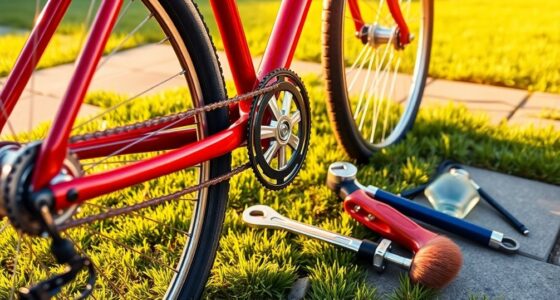
When choosing between drip lube and hot waxing for your chain, consider your riding conditions and preference. Drip lube is quick and easy, ideal for regular maintenance and wet or muddy rides. Hot waxing offers a durable, cleaner coating that reduces dirt attraction and extends lubrication intervals, but it takes more effort upfront. Both methods require consistent upkeep to keep your chain smooth and long-lasting. To discover tips on how to get the most out of each, continue exploring this guide.
Key Takeaways
- Drip lube is quick and easy for regular, routine chain maintenance, while hot waxing provides longer-lasting, more durable protection.
- Hot waxing offers superior dirt and moisture resistance, resulting in quieter rides and less frequent lubrication needs.
- Drip lube involves applying liquid oil directly to the chain, suitable for quick touch-ups, whereas hot waxing requires heating and immersing the chain.
- Hot waxing involves higher upfront costs and setup but extends chain life and reduces cleaning frequency over time.
- Proper chain care involves choosing the method suited to riding conditions, regularly cleaning, and reapplying lubricant or wax as needed.
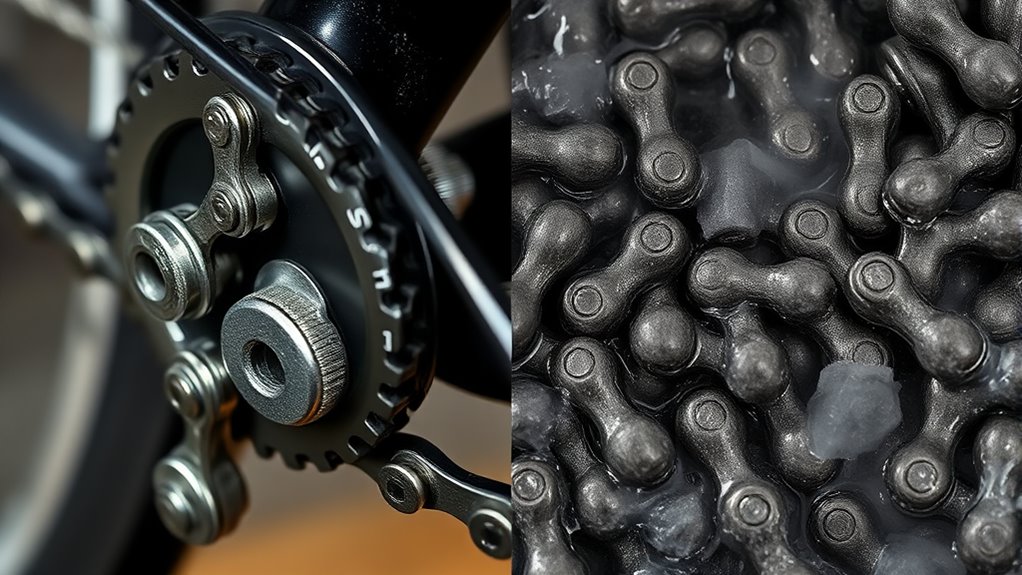
Maintaining your chain is essential for ensuring smooth performance and longevity. When you keep your chain properly lubricated, you reduce wear, prevent rust, and improve overall efficiency. To achieve this, you need to follow a consistent maintenance schedule that addresses chain lubrication regularly. This schedule involves inspecting your chain frequently, cleaning off dirt and debris, and applying the right type of lubricant. Proper chain lubrication isn’t just about adding oil; it’s about choosing the right method to suit your riding style and conditions. Two popular options are drip lube and hot waxing, each offering unique benefits and considerations.
Regularly lubricate and maintain your chain for optimal performance and longevity.
Drip lube is a straightforward method that involves applying a liquid lubricant directly onto the chain as it spins. It’s convenient, especially for riders who prefer quick maintenance without much fuss. You’ll want to apply drip lube after every few rides or whenever the chain appears dry or squeaky. The key is to target the rollers and pins, ensuring the lubricant penetrates deep into the chain links. Regular application as part of your maintenance schedule helps keep the chain coated and protected from moisture and dirt. Keep in mind, drip lube can attract more dirt over time, so it’s essential to wipe off excess and clean the chain periodically to prevent buildup. Additionally, choosing the right lubricant based on environmental conditions can significantly impact performance.
Hot waxing, on the other hand, involves immersing the chain in heated wax, which creates a thin, durable coating that penetrates deeply into each link. This process requires more effort but offers superior protection against dirt and moisture, making it ideal for long-term maintenance. Hot waxing creates a cleaner, quieter ride and reduces the frequency of lubrication needed. Once you’ve waxed your chain, you’ll notice less grime sticking to it, and it typically stays lubricated longer. However, hot waxing isn’t as convenient for quick touch-ups and needs a dedicated time and setup, often performed during a thorough cleaning session. It’s also more costly upfront but pays off in the longer run with less frequent maintenance.
Choosing between drip lube and hot waxing depends on your riding conditions, riding style, and maintenance preferences. Both require adherence to a maintenance schedule—regular checks, cleaning, and application—to ensure your chain remains in top shape. Whichever method you prefer, consistency is key. Neglecting your chain can lead to increased wear, slipping, or even chain failure. By understanding the benefits of each lubrication technique and sticking to a routine, you’ll extend your chain’s life and enjoy smoother, more efficient rides. Remember, a well-maintained chain isn’t just about performance; it’s about protecting your investment and ensuring safety on every ride. Proper lubrication also helps extend the lifespan of your chain and drivetrain components, saving you money in the long run.
Frequently Asked Questions
How Often Should I Apply Drip Lube or Hot Wax?
You should apply drip lube or hot wax based on your riding conditions, typically every 100-200 miles. For a solid maintenance schedule, check your chain regularly and reapply when you notice dryness or squeaking. Drip lube needs more frequent attention, especially in wet or muddy conditions, while hot wax lasts longer but still requires periodic touch-ups. Adjust your application frequency accordingly to keep your chain smooth and prolong its lifespan.
Can I Combine Drip Lube and Hot Waxing for Better Protection?
Yes, you can combine drip lube and hot waxing for better protection, but you should consider your chain compatibility and application techniques. Start by applying hot wax to create a solid, protective layer, then follow with drip lube to guarantee smooth movement and added lubrication. Be sure to clean your chain thoroughly between applications to avoid trapping dirt, and adjust your routine based on your riding conditions for ideal results.
Is Hot Waxing Suitable for All Types of Bike Chains?
Hot waxing isn’t suitable for all types of bike chains, especially delicate or heavily used chains. You should consider your chain material and the waxing techniques you prefer. If your chain is made of durable metal and you follow proper hot waxing procedures, it can provide smooth, superior protection. However, for sensitive or specialty chains, a different approach might serve you better, balancing benefits with your bike’s specific needs.
How Do Weather Conditions Affect Chain Care Choices?
Weather impacts your chain care choices considerably. In wet or muddy conditions, you should opt for drip lube because it penetrates deeper and resists washout. During dry, dusty seasons, hot waxing works better as it creates a protective barrier that repels dirt. Make seasonal adjustments to your chain maintenance routine, ensuring you choose the right lubrication method for peak performance and longevity in varying weather conditions.
What Are Signs That My Chain Needs Maintenance Beyond Lube or Wax?
If your chain shows excessive chain stretch or rust formation, it’s time for maintenance beyond just lube or wax. You might notice skipping gears, rough pedaling, or increased noise, indicating the chain has worn out or corroded. Regularly inspect for stiff links or elongation, and don’t delay replacing or deep-cleaning your chain to prevent further damage and ensure smooth riding.
Conclusion
Just like a knight tends to their steed, your chain needs love and attention. Whether you choose drip lube or hot waxing, remember that consistent care keeps your ride smooth and reliable. Think of it as guarding your chariot against the wear of time—like a modern-day Sisyphus, you maintain the effort for a lasting performance. Keep your chain well-kept, and you’ll enjoy the journey as much as the destination.