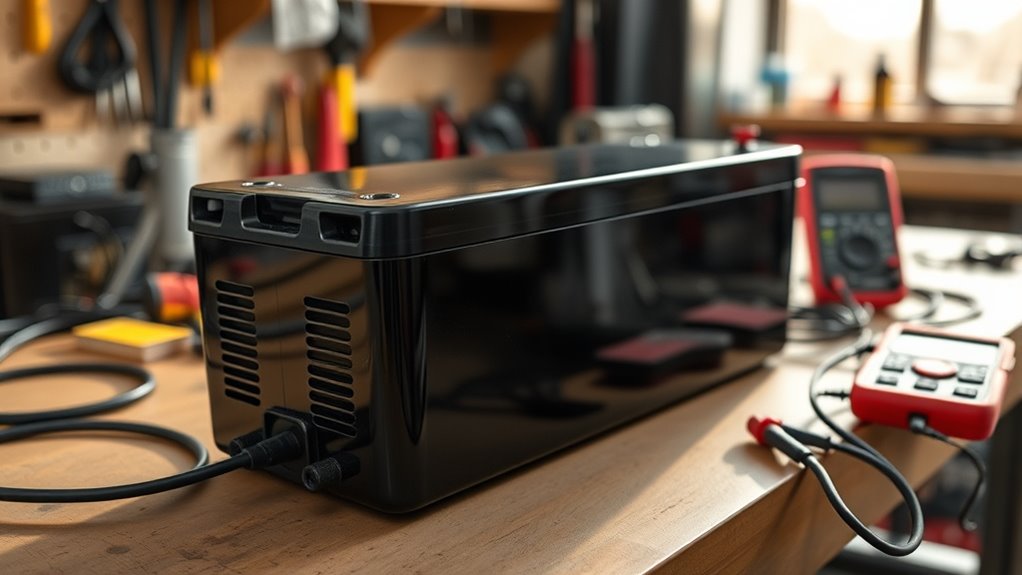

To care for your e-bike battery, always use the original charger and avoid letting it fully drain or overcharge. Keep it in a cool, dry place, and store it partially charged if you won’t ride for a while. Regularly monitor its condition and recharge as needed to prevent damage. Good habits like proper storage and avoiding extreme temperatures will extend its life. Continue exploring tips to keep your battery in top shape and ensure safe operation.

Get your wardrobe favorites delivered free — and shop member deals
- Fast, free delivery on millions of items
- Access to Prime Big Deal Days deals on October 6–7
- Prime Video, Amazon Music and more included
Key Takeaways
- Use the original charger and avoid overcharging by unplugging at 80-90% to prevent heat buildup and battery stress.
- Store the battery in a cool, dry place at around 50% charge for long-term preservation.
- Keep the battery between 20% and 80% charge for optimal performance and longevity.
- Charge frequently and avoid letting the battery fully drain or remain fully charged during storage.
- Handle the battery carefully, avoid extreme temperatures, and follow safety guidelines to prevent damage and ensure safe operation.
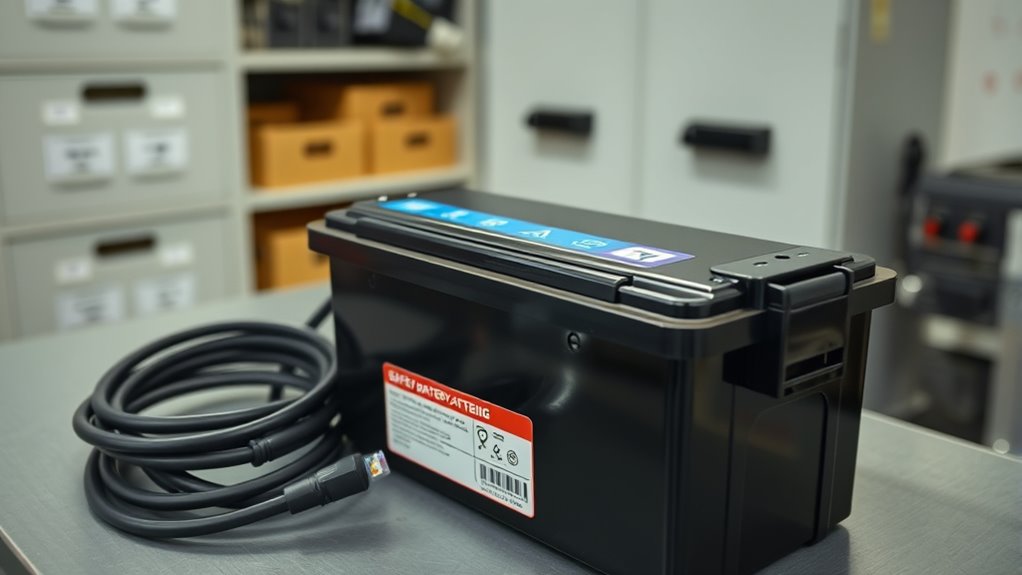
Taking good care of your e-bike battery is vital to guarantee it performs well and lasts longer. A well-maintained battery not only ensures your rides are smooth but also prevents costly replacements down the line. To maximize your battery’s lifespan, understanding proper charging practices is essential. Charging best practices involve more than just plugging in your e-bike; they’re about adopting habits that protect the battery’s health over time. For example, avoid letting the battery drain completely before recharging. Lithium-ion batteries, which are common in e-bikes, perform best when kept between 20% and 80%. Fully discharging or consistently charging to 100% can accelerate battery wear. It’s also wise to unplug the charger once your battery reaches around 80-90%—this helps prevent overcharging, which can generate excess heat and damage the cells. Using the original charger that came with your e-bike is another key aspect of charging best practices, as third-party chargers may not regulate power correctly, risking battery damage. Additionally, incorporating battery management systems can further optimize your battery’s longevity by monitoring and controlling charging conditions.
Temperature plays a significant role in maintaining your battery’s health. Always charge your e-bike in a cool, dry place. Extreme heat can cause the battery to degrade faster, while cold temperatures may temporarily reduce its capacity, though they are less damaging in the long run. If you plan to store your e-bike for an extended period, keep the battery partially charged—around 50%—and store it in a cool, dry environment. Avoid leaving the battery fully charged or completely drained during storage, as both extremes can harm the cells. Regularly check and recharge the battery if it remains unused for more than a few weeks to prevent deep discharge, which can be difficult to recover from.
Additionally, adopting consistent charging routines can extend your battery’s lifespan. Try to charge your e-bike frequently, rather than letting it sit for long stretches with a depleted battery. This not only preserves battery health but also ensures you’re always ready for your next ride. Keep an eye out for signs of battery wear, such as reduced range or inconsistent charging, and address these issues early. Proper storage, charging habits, and temperature management form the foundation of good e-bike battery care, helping you get the most out of your investment and enjoy reliable performance over many miles.
As an affiliate, we earn on qualifying purchases.
Frequently Asked Questions
How Often Should I Replace My E-Bike Battery?
You should replace your e-bike battery when its lifespan estimation shows significant capacity loss, usually after 500-1,000 full charge cycles. Keep an eye on performance, and if you notice reduced range or frequent charging, it’s time for a new one. Proper battery recycling is essential when replacing, guaranteeing environmental safety. Regular maintenance can extend your battery’s life, but eventually, replacing it guarantees peak performance and safety.
Can I Use a Non-Original Charger for My E-Bike?
Did you know that using the wrong charger can reduce your e-bike battery’s lifespan by up to 50%? You shouldn’t use a non-original charger because charger compatibility is vital for safe, efficient charging. Using incompatible chargers risks damaging the battery or causing safety hazards. Always opt for the original charger or one recommended by the manufacturer to guarantee proper charging safety and maintain your battery’s health.
What Are Signs of a Failing E-Bike Battery?
You’ll notice your e-bike battery is failing if you see signs like swelling or a noticeable performance decline. Swelling indicates internal damage and can be dangerous, so stop using the battery immediately. A drop in riding range or longer charging times also signals deterioration. Pay attention to these signs, and consider replacing the battery promptly to guarantee safe and reliable riding.
How Does Temperature Affect Battery Lifespan?
Temperature considerably impacts your e-bike battery’s lifespan. When temperatures are too high or low, it hampers battery thermal management, accelerating capacity loss and reducing effectiveness. Extreme heat speeds up chemical reactions inside the battery, causing faster wear, while cold temperatures hinder performance and slow down chemical processes. To maximize lifespan, keep your battery within the recommended temperature range, especially during storage and charging, to minimize the temperature impact on its longevity.
Is It Safe to Leave My E-Bike Charging Overnight?
It’s generally safe to leave your e-bike charging overnight if you follow safety precautions. Think of it like a modern-day knight’s armor—protective and secure. Make sure your charger is compatible, isn’t damaged, and that you’re in a well-ventilated area. Avoid leaving it on continuously without supervision. Most batteries have built-in safeguards, but it’s wise to unplug once fully charged to prevent overheating and guarantee safety.
lithium-ion battery storage case
As an affiliate, we earn on qualifying purchases.
As an affiliate, we earn on qualifying purchases.
Conclusion
By following proper charging, storage, and safety tips, you’ll keep your e‑bike battery performing at its best. Did you know that neglecting battery care can reduce its lifespan by up to 50%? Imagine riding with a battery that’s only half as effective—your adventures would be cut short sooner than you’d like. So, take care of your battery, enjoy longer rides, and keep the power flowing smoothly for years to come.
As an affiliate, we earn on qualifying purchases.
battery management system for e-bikes
As an affiliate, we earn on qualifying purchases.
As an affiliate, we earn on qualifying purchases.
Fall Picks
fall essentials
As an affiliate, we earn on qualifying purchases.