
To keep your bike in top shape, you’ll need essential tools like a multi-tool for quick repairs, Allen wrenches to tighten bolts, and a pump with a patch kit for flats. Learn how to use each safely and effectively to handle common issues on the road. Familiarity with these tools helps you confidently fix problems and maintain your bike’s performance. Keep exploring, and you’ll soon be ready for most riding challenges.
Key Takeaways
- A compact multi-tool with various Allen wrenches, screwdrivers, and chain tools is essential for quick repairs on the go.
- Learn proper use of Allen wrenches to tighten or loosen bolts on handlebars, stems, and brakes.
- Carry a portable tire pump compatible with Presta or Schrader valves to ensure proper inflation.
- Keep a flat repair kit or spare tube handy for fixing flats efficiently during rides.
- Regularly maintain bike components, understanding their functions to troubleshoot issues and extend bike lifespan.

Getting started with bike maintenance can seem intimidating, but having the right tools makes all the difference. When you’re new to bike care, it’s tempting to think you need a garage full of specialized equipment. In reality, a few essential tools will cover most basic repairs and adjustments. Starting with the basics not only saves you time and money but also builds your confidence to handle common issues on the road or trail.
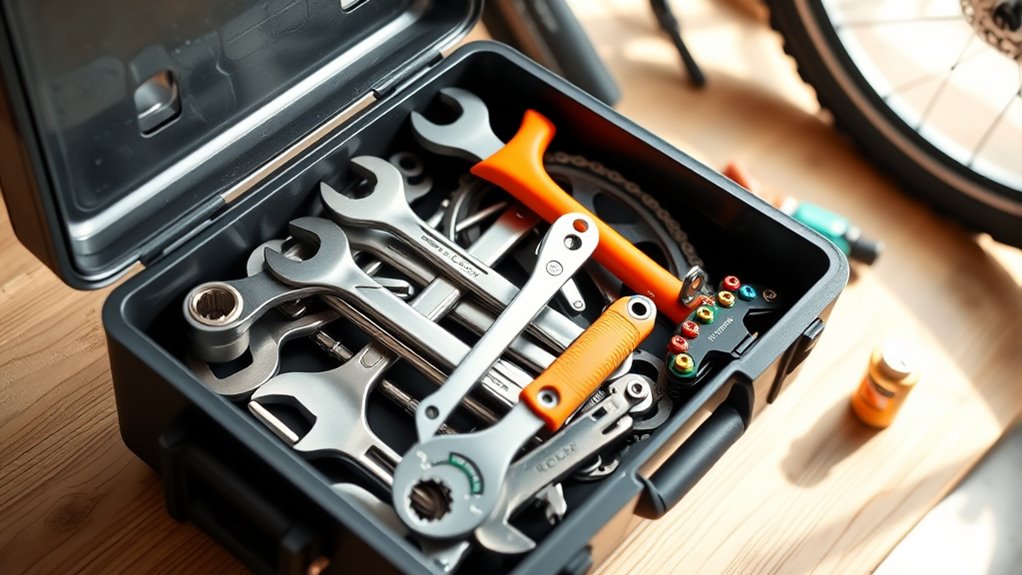
First, invest in a quality multi-tool designed specifically for bikes. These compact devices combine several functions—like Allen wrenches, screwdrivers, and chain tools—into one handy package. You’ll use it for tightening bolts, adjusting components, or removing the chain. Look for one with various Allen sizes, typically from 2mm to 8mm, as these cover most bike bolts. Keep it in your saddlebag or backpack for quick fixes during rides. The multi-tool is your go-to for minor adjustments and small repairs, making it an invaluable addition to your kit.
A quality bike multi-tool is essential for quick fixes and minor repairs on the go.
Next, grab a set of Allen wrenches or hex keys. While many multi-tools include these, having a dedicated set ensures you have the right size at all times. Allen bolts are common on handlebars, stems, seat posts, and brakes, so knowing their sizes helps you tighten or loosen them properly. Choose a set with multiple sizes, preferably in metric, and keep them organized in a small container or pouch. These tools are essential for adjusting saddle height, removing wheels, or fixing accessories.
A tire pump is another must-have. Flat tires are inevitable, and being able to fix them quickly keeps you on the road. A good pump should be compatible with your valve type—Presta or Schrader—and offer a reliable gauge to monitor pressure. Manual pumps are lightweight and portable, but if you ride frequently or over rough terrain, consider an electric pump for ease and speed. Always carry a patch kit or spare tube along with your pump to address flats on the go.
Additionally, understanding the role of climate control can help you select appropriate gear and maintenance routines to keep your bike performing well in different weather conditions, ensuring your riding experience remains smooth and safe. A chain tool is necessary if you plan to do more than minor adjustments. Chains stretch or break over time, and knowing how to remove and reassemble them is handy. A dedicated chain tool makes this process straightforward, allowing you to replace a broken link or remove a section for cleaning. Combined with the multi-tool, these basics give you the ability to handle most common repairs and keep your bike in top shape.
Being familiar with bike components can also help you identify when parts may need replacement or maintenance, further extending the longevity of your bike. Regular maintenance and understanding your bike’s maintenance needs can significantly improve riding performance and safety.

KEMIMOTO Bike Travel Bag, Heavy-Duty 900D Water-Resistant with Fixed Buckles & Interior Compartments, Airplane Bicycle Storage Box Cases Fits 26-29 Inch Mountain, Road E-Bikes (55.9" x 12.6" x 33")
Bike Travel Bag Size Details: Unfolded size - 55.91” x 33.07” x 12.60” (142 x 84 x 32...
As an affiliate, we earn on qualifying purchases.
Frequently Asked Questions
How Often Should I Perform Bike Maintenance With These Tools?
You should perform bike maintenance regularly to keep everything in top shape. For routine upkeep, check your bike every 1-2 weeks, especially before long rides. After each ride, give it a quick inspection for any loose parts or debris. Schedule a more thorough tune-up every 3-6 months, depending on how often you ride and the conditions. Regular maintenance guarantees safety, longevity, and smooth performance.
Can I Use These Tools on All Bike Types?
Did you know that over 80% of bike repairs can be done at home? You can generally use these tools on most bike types, but always check your bike’s manual for specific compatibility. For example, mountain bikes and road bikes often share many parts, but certain components like disc brakes or frame materials may require specialized tools. When in doubt, consult your bike’s manufacturer or a professional.
What Safety Precautions Should I Take When Using Bike Tools?
When using bike tools, you should always wear gloves to protect your hands, make sure your bike is stable before working on it, and work in a well-lit area to avoid mistakes. Keep your tools organized to prevent accidents, and follow instructions carefully to avoid damaging your bike or hurting yourself. Never force parts if they don’t move easily, and always double-check that everything is secure before riding.
Are There Beginner-Friendly Tutorials for Using Each Tool?
You’re enthusiastic to learn, but where do you start? The good news is, plenty of beginner-friendly tutorials are out there, ready to guide you step-by-step. You’ll find videos, articles, and even interactive courses that walk you through each tool’s use. Start with reputable sources like YouTube channels or cycling websites. With patience and practice, you’ll confidently master each skill, turning challenges into your next accomplishment.
How Do I Choose the Right Size Tools for My Bike?
When choosing the right size tools for your bike, you need to take into account your bike’s specific components. Check your bike’s manual or manufacturer’s website to find recommended sizes. Measure bolts and nuts carefully with a caliper or ruler, and select tools that match those measurements precisely. Using the correct size prevents damage and makes repairs easier. Always keep a set of adjustable tools for flexibility on different parts.

Young Hitch Mount Bike Rack with Ramp, 200 lbs. Capacity for 2 E-Bikes, Fat Tire and Standard, fits Cars, SUVs, RVs, Trailers with 2 Inch Receiver
DURABLE and SAFE: Young Electric bike rack is constructed with reinforced steel and aluminum which makes it durable...
As an affiliate, we earn on qualifying purchases.
Conclusion
With these essential bike tools in your kit, you’re practically unstoppable on the road or trail. Imagine zipping past problems like a superhero, fixing flats in seconds, and tuning your bike to perfection before anyone even notices. You’ll be ready for anything—whether it’s a sudden downhill or a sneaky loose bolt. With the right tools and a bit of confidence, you’ll conquer every ride like a biking legend. The open road is yours—go claim it!

CXWXC Bike Repair Stand 88lbs- E Bike Stand for Maintenance Workstand - Ebike Repair Stand Shop Home Mechanics for Mountain Bike and Road Bike (Max. 88lbs)
【Easy-Breezy Bicycle Maintenance】: A bike repair stand is an essential item when you’re working on your bike or...
As an affiliate, we earn on qualifying purchases.

BikeHand Bike Repair Stand - Home Portable Bicycle Mechanics Workstand - for Mountain MTB Road Bikes Maintenance - Max. 55 lbs
LIGHT, STRONG & PORTABLE: The repair stand is made of lightweight aluminium alloy with a durable plastic head...
As an affiliate, we earn on qualifying purchases.