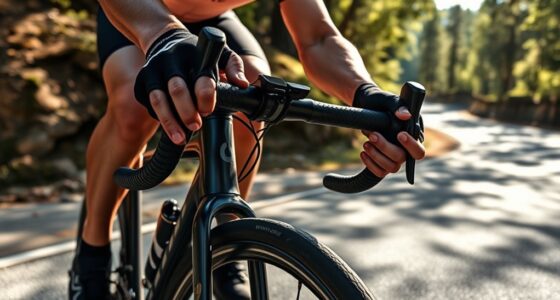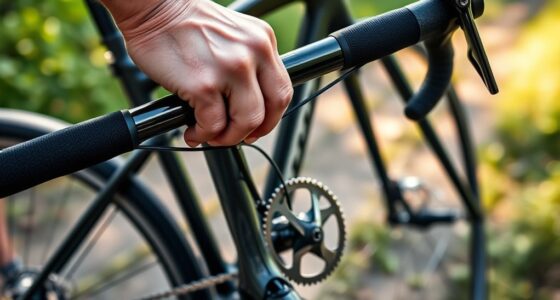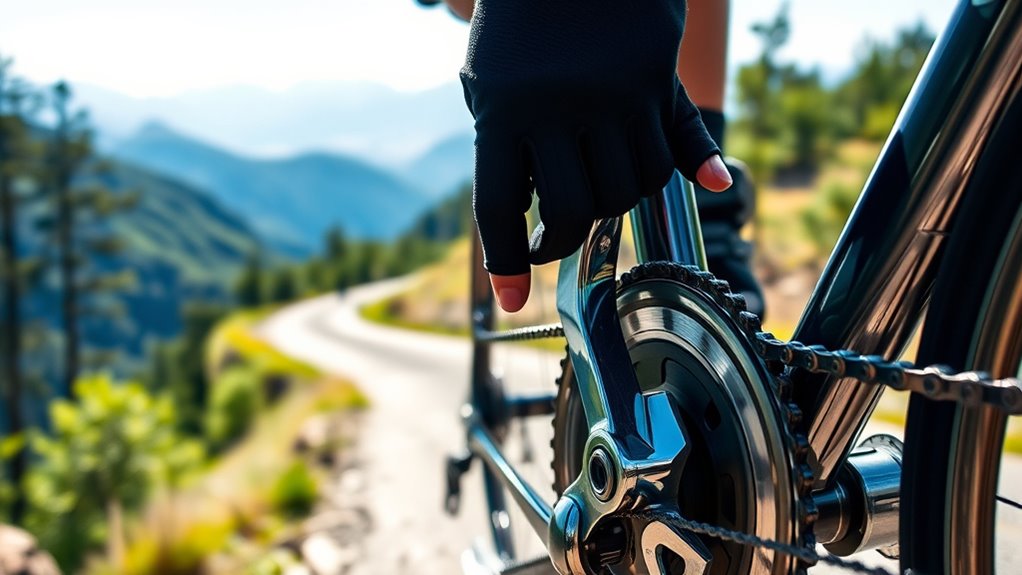

To shift smoothly and efficiently, you should anticipate terrain changes and shift gradually while easing pedal pressure. Keep your cadence steady by adjusting gears to match your riding conditions, avoiding heavy loads during shifts. Make sure your drivetrain is well-maintained for seamless gear changes, and practice shifting under different situations to build confidence. If you apply these techniques, you’ll enjoy more comfortable rides and better control—continue exploring these tips to refine your shifting skills even further.
Key Takeaways
- Shift gradually and lighten pedal pressure to ensure smooth gear changes.
- Anticipate terrain and shift before uphill slopes to prevent drivetrain strain.
- Maintain steady cadence (70-90 RPM) by adjusting gears for comfortable pedaling.
- Avoid shifting under heavy load to prevent skipping gears or damage.
- Regularly check and maintain drivetrain components for optimal shifting performance.

Whether you’re new to cycling or looking to improve your skills, mastering your gears is essential for better performance and efficiency. Shifting smoothly isn’t just about avoiding jerky movements; it’s about optimizing your ride, conserving energy, and extending your bike’s lifespan. When you understand how to shift properly, you’ll find riding becomes more comfortable, especially on varied terrains.
Master your gears for a smoother, more efficient, and enjoyable ride across all terrains.
Start by familiarizing yourself with your gear system. Most bikes have multiple gears, either on the front chainrings or the rear cassette. The front gears usually handle the larger jumps in pedaling effort, while the rear gears fine-tune your cadence. Before you start pedaling, plan your shifts based on the terrain. For climbs, shift to lower gears to make pedaling easier, and for descents or flats, shift to higher gears for speed.
When shifting, always anticipate changes in terrain rather than reacting to them. For example, if you see an uphill ahead, shift to a lower gear beforehand. This preemptive approach prevents straining your drivetrain. Shift gradually, easing pressure on the pedals as you change gears. If you try to shift under heavy load—like when you’re climbing and pushing hard—you risk skipping gears, damaging your chain, or causing a jarring shift. Lightening your pedaling force as you shift guarantees the chain moves smoothly onto the next gear.
Pay attention to your cadence, or how fast you pedal. Ideally, you want a steady, comfortable rhythm—around 70 to 90 revolutions per minute. Adjust your gear to maintain this cadence, avoiding the temptation to shift abruptly or to stay in a gear that makes pedaling feel unnatural. If you find yourself grinding or slipping out of gear, stop pedaling briefly, shift, then resume pedaling smoothly. This keeps your drivetrain in good shape and ensures a seamless transition. Regular maintenance of your bike components also plays a crucial role in achieving smooth shifts.
Practicing shifting while standing still can help you get comfortable with the mechanics, but remember that shifting while pedaling is different. Use your hands to operate the shifters smoothly, and avoid over-shifting—changing gears multiple times in quick succession can cause confusion or mechanical issues. Additionally, understanding the importance of drivetrain alignment and condition can significantly improve your shifting experience. Recognizing the gear ratio and how it affects your pedaling effort can help you select the most appropriate gear for each situation. Also, learn to listen to your bike; a squeaking or grinding noise when shifting might indicate you need a tune-up or different technique. Regularly checking your tire pressure and ensuring your drivetrain components are well-maintained will also contribute to smoother shifting.
Mastering your gears takes patience and practice, but once you get into the rhythm of smooth shifting, you’ll notice a significant difference in how your bike responds. Efficient gear changes will help you ride faster, farther, and with less fatigue. Keep practicing, stay attentive to your terrain, and you’ll soon shift like a pro, making every ride more enjoyable and effective.
Frequently Asked Questions
How Do I Shift Gears on an Electric Bike?
Shifting gears on an electric bike is straightforward. You simply use the gear shifter located on the handlebar, usually with your thumb or fingers. When riding, ease off the throttle slightly and pedal at a steady pace. Shift smoothly to the next gear, allowing the derailleur to adjust. Avoid shifting under heavy load or during rapid acceleration to guarantee smooth transitions and prevent damage.
What Are Common Mistakes When Shifting Gears?
When shifting gears, you might make mistakes like shifting too quickly, which can strain the drivetrain or cause slipping. You may also forget to ease off the pedals, leading to rough passages. Some people shift under heavy load or at high speeds, risking gear damage. To avoid these issues, shift smoothly, only when pedaling steadily, and anticipate changes in terrain. Practice patience to improve your gear-shifting skills.
How Can I Tell if My Gears Need Adjustment?
You can tell your gears need adjustment if you notice difficulty shifting, grinding noises, or if the chain slips unexpectedly. Also, if the gears don’t align properly when shifting or if the derailleur isn’t moving smoothly, it’s a sign. Check if the shifts feel stiff or unresponsive. Regularly inspect your drivetrain, and if you see these issues, it’s time to make a gear adjustment for smoother riding.
What’s the Best Way to Shift Gears on Steep Inclines?
When you’re tackling steep inclines, you want to shift gears smoothly to maintain control. Start by easing off the pedals slightly, then shift to a lower gear before you feel resistance. Keep your cadence steady, avoiding sudden changes. As you ascend, stay in the gear that allows you to pedal comfortably without straining. Consistent, gentle shifts help you stay balanced and prevent chain slips or strain on your bike.
How Do I Maintain My Gear System for Longevity?
To keep your gear system lasting longer, you should regularly clean and lubricate the components, especially the chain and derailleur. Check for wear and replace parts as needed to prevent damage. Keep your cables properly adjusted so shifting remains smooth. Avoid forcing gears under heavy load, which can cause damage. By maintaining a routine, you’ll guarantee your gear system stays efficient and durable, saving you money and hassle over time.
Conclusion
Now that you’ve learned to shift smoothly and efficiently, you’ll find driving becomes more enjoyable and less stressful. Remember, patience and practice are your best allies—think of it as riding a trusty steed through the ages. Keep your focus, anticipate the road ahead, and soon shifting will feel as natural as reciting a sonnet. With these skills, you’ll master your gears like a true virtuoso, ready to conquer any journey with grace and finesse.