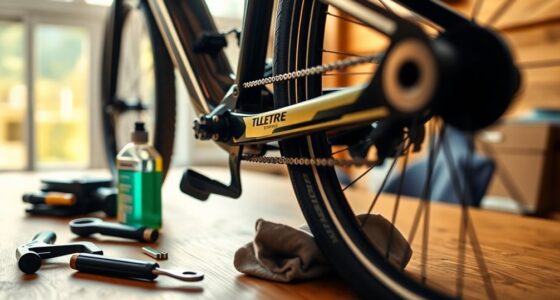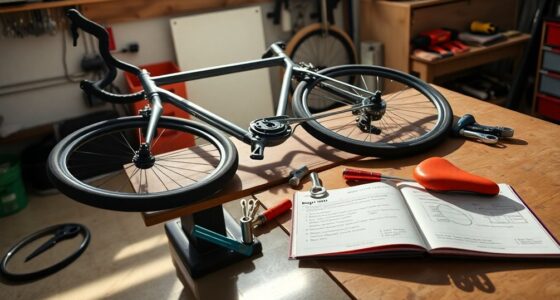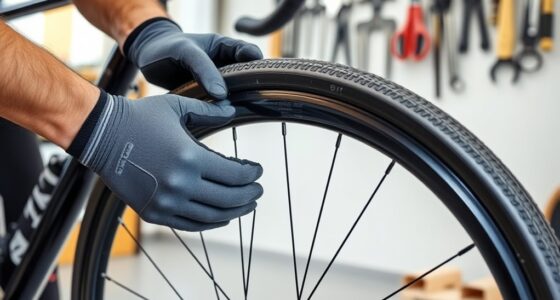
To measure chain wear correctly, use a chain wear indicator tool or a ruler to check the distance between specific links or pins. Position the tool or ruler along the chain and compare the measurement to the manufacturer’s guidelines. If the elongation exceeds about 0.5-0.75%, it’s time to replace your chain. Regular checks help prevent damage and keep your bike running smoothly—stay with us to learn the best ways to do it properly.
Key Takeaways
- Use a chain wear indicator tool or a ruler to accurately measure elongation at specific links or pins.
- Measure the distance between two pins or links according to the manufacturer’s reference points.
- Check if the chain elongation exceeds 0.5-0.75%, indicating it’s time for replacement.
- Measure regularly, especially after 2,000 miles or riding in harsh conditions, to prevent drivetrain damage.
- Ensure the chain is clean and lubricated before measurement for accurate results.

Measuring chain wear is essential to maintaining ideal bike performance and preventing costly repairs. When your chain starts to wear out, it can cause poor shifting, increased friction, and faster drivetrain component degradation. To keep everything running smoothly, you need to regularly check your chain’s condition, which involves understanding chain lubrication and knowing appropriate chain replacement intervals. Proper chain lubrication is crucial because a well-lubricated chain reduces friction, minimizes wear, and extends the lifespan of your drivetrain components. When your chain is dry or dirty, it wears out faster, so make sure to lubricate it regularly—ideally after every ride or whenever you notice squeaking or dryness. Applying lubricant properly ensures smooth operation and reduces the risk of accelerated chain stretch, which leads to premature replacement needs.
Knowing your chain replacement intervals is equally important. Most manufacturers recommend replacing your chain every 2,000 to 3,000 miles, but this can vary depending on riding conditions, maintenance habits, and the type of riding you do. If you ride in wet, muddy, or dusty environments, your chain will wear out quicker, and more frequent checks are necessary. Conversely, if you keep your chain clean and lubricated, it can last longer. To determine whether your chain needs replacing, you should measure its wear using a chain wear indicator tool or a ruler. Simply measure the distance between specific pins or links, and compare it to standard reference points. If the measurement exceeds the manufacturer’s recommended limit—often around 0.5% to 0.75% elongation—then it’s time to replace your chain to prevent excessive wear on your cassette and chainrings.
Regularly measuring chain wear also helps you plan your maintenance schedule effectively. Instead of waiting until your bike shifts poorly or you notice skipping, proactive checks allow you to replace your chain before it causes damage to other drivetrain parts. This approach saves you money and extends the life of your expensive gear components. Remember, maintaining proper chain lubrication and staying aware of your chain’s wear status go hand-in-hand; neglecting either can lead to unnecessary wear and costly repairs down the line. Additionally, understanding how different paint sprayer types operate can help you select the best tool for your specific needs. By making these checks part of your routine, you ensure your bike performs perfectly, rides smoothly, and avoids the inconvenience of unexpected breakdowns. Ultimately, measuring chain wear isn’t just about replacing the chain; it’s about preserving the health of your entire drivetrain and enjoying a reliable, efficient ride every time.
Frequently Asked Questions
How Often Should I Check My Chain for Wear?
You should check your chain for wear every 500 to 1,000 miles or after rough rides. Regular checks help prevent premature chain replacement, saving you money and extending your drivetrain lifespan. Use a chain wear gauge or measure with a ruler to see if your chain has elongated. Catching wear early keeps your gears smooth and reduces the risk of damage, ensuring your bike runs efficiently for longer periods.
What Tools Are Best for Measuring Chain Wear Accurately?
You should use a chain wear gauge or a ruler with precise measurement tools to check for chain stretch accurately. A chain wear gauge is specifically designed to measure the amount of elongation caused by wear, giving you a quick and reliable reading. Alternatively, you can use a ruler or calipers to measure the distance between pins, but a dedicated measurement tool guarantees more consistent and accurate results, helping you catch wear early.
Can Chain Wear Affect Bike Performance Significantly?
Yes, chain wear can considerably impact your bike’s performance. When your chain stretches, it hampers drivetrain efficiency, causing sluggish shifts and increased wear on gears and sprockets. Imagine riding, only to notice your bike feels less responsive—this is often due to unnoticed chain stretch. Regularly checking and replacing your chain prevents this decline, keeping your ride smooth and efficient, and avoiding costly repairs down the line.
Is It Better to Replace the Chain or the Entire Drivetrain?
It’s usually better to replace the chain rather than the entire drivetrain if your chain shows significant wear, especially if it’s made of durable material like nickel or steel. A worn chain can cause poor shifting and accelerate wear on gears. Make certain the new chain matches your drivetrain’s compatibility—like number of speeds and material—to avoid issues. Regularly check chain wear to prevent unnecessary damage and keep your bike running smoothly.
How Does Chain Lubrication Impact Wear Measurement?
Properly lubricating your chain plays a pivotal role in wear measurement. When you maintain lubrication consistency, it prevents uneven wear patterns and reduces friction. Consistent lubrication ensures accurate wear pattern analysis, helping you identify true chain stretch and wear. Without proper lubrication, dirt and grime can hide wear signs, skew measurements, and lead to premature component replacement. Keep your chain well-lubricated to monitor wear accurately and extend its lifespan.
Conclusion
Now that you know how to measure your chain wear properly, you’ll keep your ride smooth and save money in the long run. Don’t forget, even the most seasoned cyclists once relied on trusty tools and good instincts—like a good ol’ pocket watch. So, take a moment, check that chain, and avoid being caught with your pants down like a stranded caveman. Stay vigilant, and enjoy every pedal stroke with confidence!