
If you notice squeaking, squealing, or grinding noises when pedaling or shifting gears, your drivetrain might be dry. You’ll also feel a rough or gritty sensation under your feet, with increased resistance, especially on hills or during acceleration. Cold weather or heavier loads can make these sounds louder. Ignoring these signs can lead to faster wear or damage. Keep an eye and ear out—there’s more to uncover about keeping your drivetrain smooth and quiet.
Key Takeaways
- Listen for squeaking, squealing, or grinding noises when pedaling or shifting gears.
- Notice if sounds become more pronounced under load or in cold weather.
- Feel for roughness, grit, or increased resistance during operation.
- Detect changes in noise or feel when applying pressure or shifting gears.
- Recognize persistent sounds as early signs needing lubrication to prevent damage.
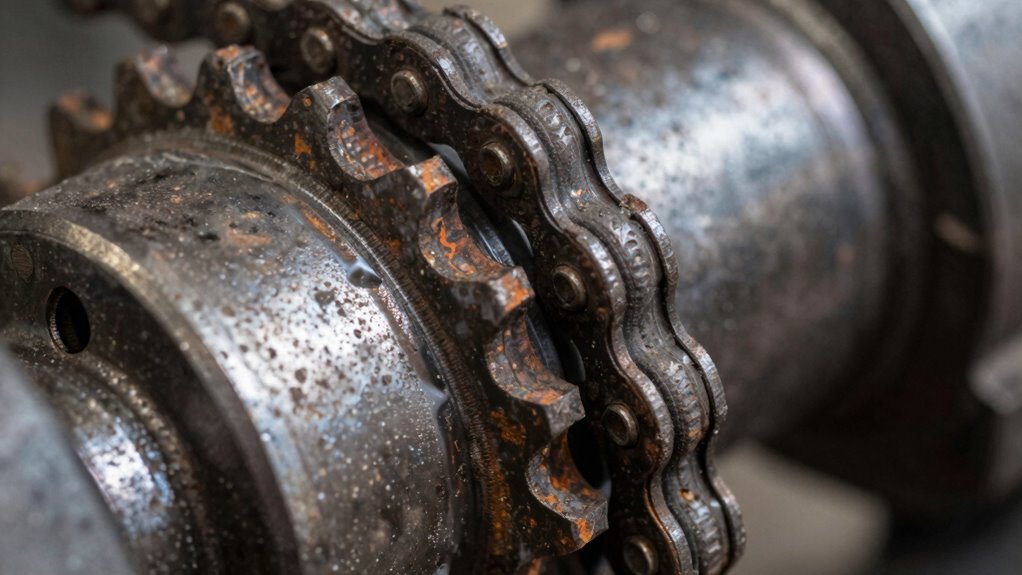
A dry drivetrain often makes distinctive sounds that can help you identify its condition before more serious problems develop. When your bike or vehicle isn’t properly lubricated, the lack of lubrication importance becomes immediately noticeable through audible cues. These sounds aren’t just annoying; they signal that your drivetrain components aren’t sliding smoothly against each other. Recognizing these common noise symptoms early on can save you time and money by preventing more extensive repairs down the line.
A dry drivetrain produces warning sounds, signaling the need for lubrication before costly repairs.
The first clue to a dry drivetrain is usually a squeaking or squealing noise that occurs when you pedal or accelerate. This high-pitched sound is a clear indicator that the chain, gears, or other moving parts are lacking proper lubrication. You might also notice a grinding or creaking sound, especially when shifting gears or applying pressure to the pedals. These noises happen because metal parts are rubbing directly against each other without the necessary lubricant to reduce friction. If you hear these sounds consistently, it’s a sign that you need to address the lubrication importance more urgently. Regularly inspecting the lubrication levels can help maintain smooth operation and prevent further wear. Additionally, neglecting proper lubrication can lead to increased component wear, which may ultimately require replacement. Proper lubrication also helps reduce friction, which is essential for smooth operation and longevity.
In addition to the sounds, you may notice a rough or gritty feeling when pedaling, which often accompanies the common noise symptoms of a dry drivetrain. This roughness results from increased friction and wear on the components, which can accelerate damage if ignored. The noise may also change or intensify under load, such as when climbing a hill or sprinting, emphasizing that the lubrication isn’t sufficient to keep the parts moving smoothly. Sometimes, the noise might be more noticeable in cold weather, where lubrication can thicken and become less effective, further highlighting the importance of proper maintenance. Regular inspections can help you detect wear and tear early, preventing further damage and costly repairs. Being proactive about lubrication and maintenance can significantly extend the lifespan of your drivetrain components.

WD-40 Specialist Bike Chain Lube, 6 OZ
- Versatile Lubrication: Suitable for dry, wet, and variable conditions
- Easy Application: Fast and simple to use formula
- Squeak Prevention: Reduces noise and prevents squeaks
As an affiliate, we earn on qualifying purchases.
As an affiliate, we earn on qualifying purchases.
Frequently Asked Questions
Can a Dry Drivetrain Cause Long-Term Engine Damage?
A dry drivetrain can cause long-term engine damage if neglected. Without proper lubricant quality, parts experience increased friction and wear, leading to drivetrain wear and potential engine stress. Over time, this can result in costly repairs or engine failure. Regularly maintaining and lubricating your drivetrain guarantees smooth operation and prevents long-term damage. Don’t ignore unusual sounds or signs of dryness, as early intervention saves you money and prolongs your engine’s life.
How Often Should I Check My Drivetrain Lubrication?
You should check your drivetrain lubrication regularly, ideally every 3,000 to 5,000 miles or as recommended in your vehicle’s lubrication schedule. Follow maintenance tips by inspecting for signs of dryness or noise, and reapply lubricant if needed. Keeping up with these checks helps prevent dry drivetrain issues that can lead to increased wear or damage, ensuring smooth operation and prolonging your vehicle’s lifespan.
Are Certain Driving Conditions More Likely to Dry Out the Drivetrain?
Certain driving conditions, like frequent stop-and-go traffic or long highway trips, can dry out your drivetrain faster. Rough terrains, extreme weather, and heavy loads also accelerate lubrication breakdown. To prevent damage, you should increase your lubrication frequency during such conditions. Don’t ignore signs of dryness; regular checks help maintain smooth operation. Staying proactive makes certain your drivetrain stays well-lubricated, regardless of challenging driving situations.
What Tools Are Best for Diagnosing Drivetrain Issues?
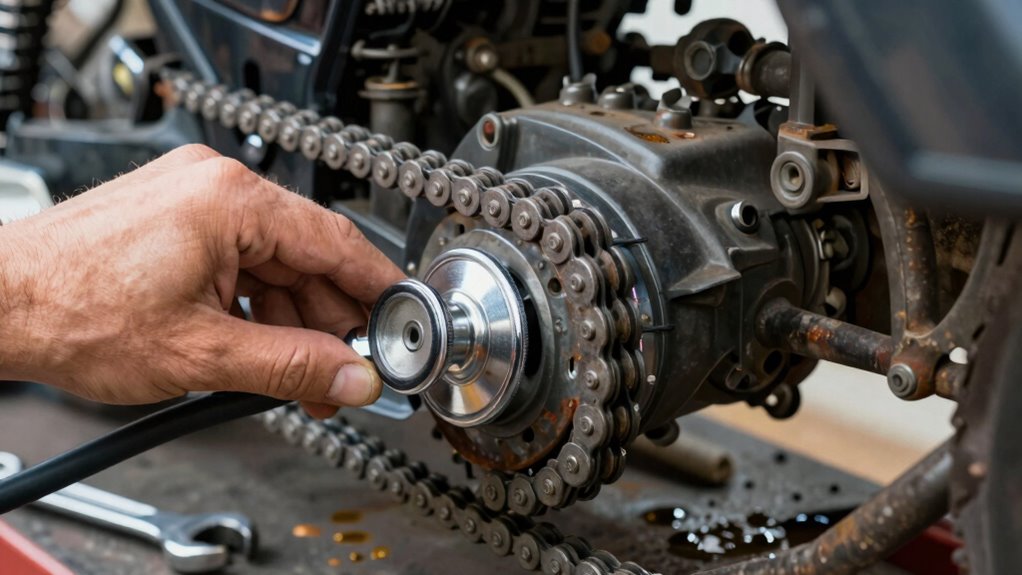
You should use diagnostic tools like electronic analyzers or vibration meters to identify drivetrain issues accurately. These tools help you detect signs of improper lubrication maintenance, such as unusual noises or vibrations. A stethoscope or ultrasonic tester can pinpoint specific problem areas. Regularly using these diagnostic tools guarantees your drivetrain stays properly lubricated, preventing dry conditions that cause noise and wear, ultimately extending your drivetrain’s lifespan.
Can a Dry Drivetrain Affect Fuel Efficiency?
Ever wondered if a dry drivetrain affects your fuel efficiency? It definitely does. Without proper lubrication, your drivetrain faces increased friction, making your engine work harder. This extra effort drains more fuel and causes unnecessary wear. Regular drivetrain maintenance guarantees components stay lubricated, reducing friction and improving efficiency. Skipping lubrication not only risks damage but also wastes fuel — so keep up with your drivetrain’s lubrication importance for smoother, more economical rides.
As an affiliate, we earn on qualifying purchases.
Conclusion
By paying attention to the sounds your drivetrain makes, you can catch dry or worn components before they cause major damage. Remember, often a strange squeal or grind isn’t just noise—it’s a warning sign from your bike. Investigating these sounds reveals that early detection isn’t just about maintenance; it’s about respecting the intricate harmony of your bike’s mechanics. Trust your ears, stay proactive, and your drivetrain will thank you for it.
As an affiliate, we earn on qualifying purchases.
As an affiliate, we earn on qualifying purchases.