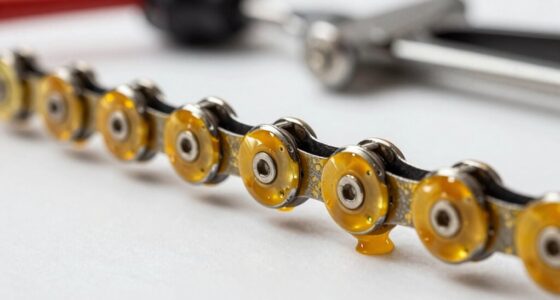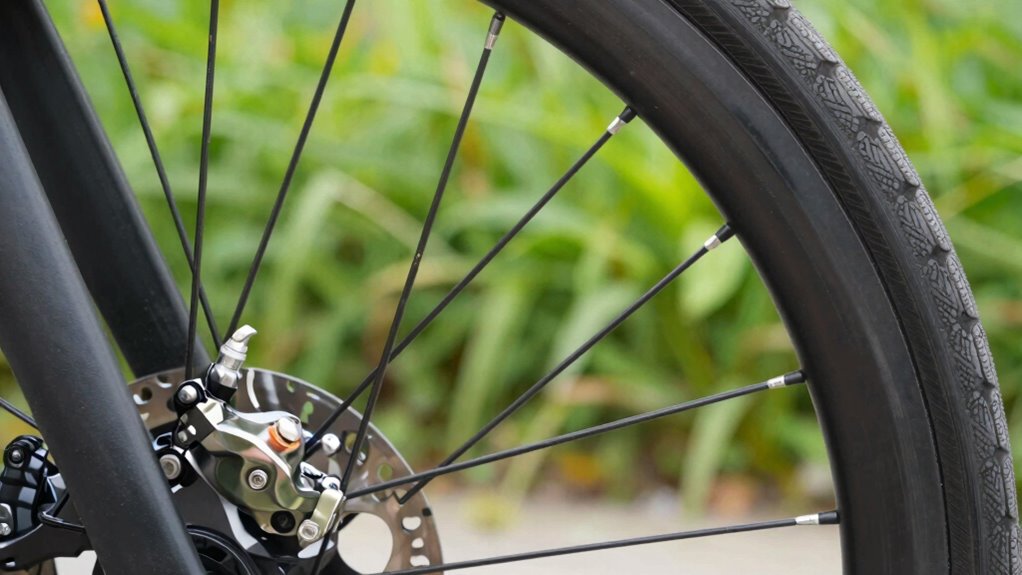

Hydraulic brakes feel so different from cable brakes because they use incompressible fluid to transmit force directly and smoothly, giving you an immediate and consistent response. Unlike cable brakes, which rely on physical linkages that can stretch or fray, hydraulic systems provide firm, predictable pedal feel with less effort. This makes braking more modulated, confident, and reliable, especially at high speeds or in emergencies. Keep exploring to understand how maintenance can keep these brakes performing their best.

Get your wardrobe favorites delivered free — and shop member deals
- Fast, free delivery on millions of items
- Access to Prime Big Deal Days deals on October 6–7
- Prime Video, Amazon Music and more included
Key Takeaways
- Hydraulic brakes use incompressible fluid for immediate, consistent force transmission, unlike cable systems that rely on physical linkages.
- The firm, responsive pedal feel in hydraulic brakes results from hydraulic pressure, whereas cable brakes can stretch or fray, affecting feel.
- Hydraulic systems offer better modulation and control due to even force distribution, making braking smoother and more predictable.
- Brake fluid’s properties and maintenance impact pedal firmness and response, contributing to the different feel from cable systems.
- Hydraulic brakes provide a more direct and reliable feel, especially during high-speed or emergency stops, compared to the slack-prone cable brakes.
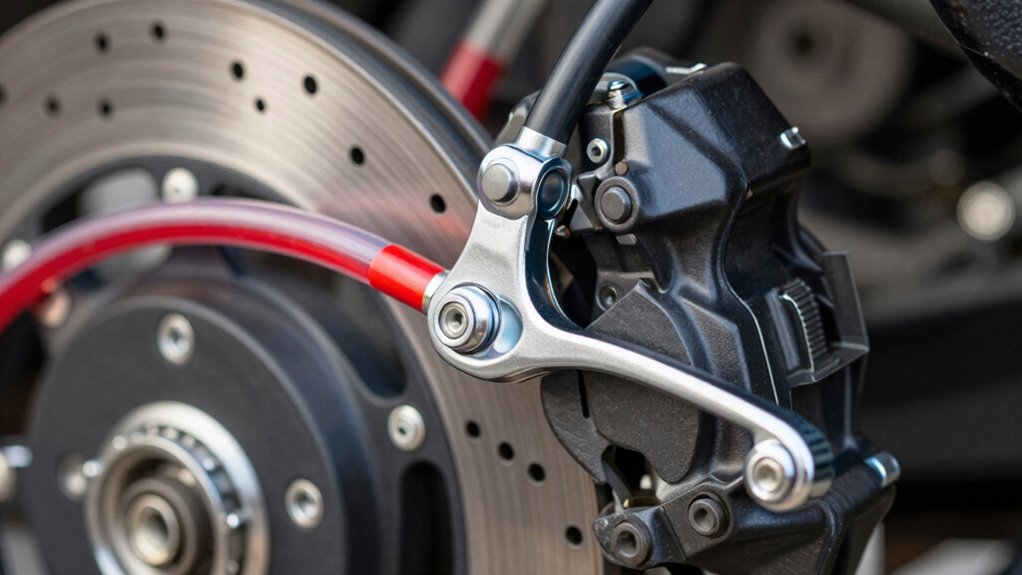
Hydraulic brakes are an essential component in modern vehicles, providing reliable and powerful stopping force through a simple yet effective system. When you press the brake pedal, you activate a master cylinder that pushes brake fluid through a network of hoses and calipers to clamp down on the rotors. This setup offers several disc brake advantages, making it a preferred choice for most cars today. Unlike cable brakes, which rely on physical linkages, hydraulic systems deliver consistent and smooth braking responses, giving you a feel that’s both predictable and reassuring. The fluid transmits force efficiently, so even small pedal movements translate into strong braking power, which is especially helpful during emergency stops or high-speed driving.
One of the key reasons hydraulic brakes feel so different from cable brakes is the way they operate. With cable brakes, you often notice a certain level of slack or a firm pedal that takes some effort before the brakes engage fully. Hydraulic brakes, on the other hand, provide immediate response because the fluid is incompressible. This means your pedal feels firm and responsive right from the start, giving you a sense of control and confidence. The smoothness and consistency are especially noticeable when you’re applying moderate pressure for everyday driving but also need powerful stops in critical moments. This difference in feel is largely due to the way hydraulic systems distribute force evenly, unlike cable brakes that can sometimes stretch or fray over time, reducing their effectiveness. Proper maintenance of brake fluid is crucial to ensure the hydraulic system continues to perform optimally and maintains its consistent response.
Maintaining brake fluid is essential to keeping your hydraulic brakes performing at their best. Over time, brake fluid can absorb moisture from the air, which lowers its boiling point and can lead to spongy pedal feel or even brake failure under extreme conditions. Regular brake fluid maintenance involves checking the fluid level and replacing it according to your vehicle’s recommended schedule. Doing so ensures the hydraulic system remains sealed and responsive, preventing corrosion inside the calipers and lines. Neglecting brake fluid maintenance can cause the system to become less efficient, making your brakes feel less predictable and increasing stopping distances. It’s a small but essential part of vehicle upkeep that guarantees your hydraulic brakes continue to deliver the power and feel you expect, maintaining safety and reliability with every stop.
In essence, hydraulic brakes stand apart from cable systems because of their superior force transmission, consistent pedal feel, and the ease of maintenance. Their design allows for better modulation and control, which is why you notice such a difference in how they feel. When you keep up with brake fluid maintenance, you guarantee that your braking system remains responsive and effective, giving you confidence behind the wheel. Whether you’re navigating city streets or tackling mountain roads, hydraulic brakes provide a level of precision and power that cable brakes simply can’t match, making your driving experience safer and more comfortable.
hydraulic disc brake system for cars
As an affiliate, we earn on qualifying purchases.
As an affiliate, we earn on qualifying purchases.
Frequently Asked Questions
How Do Hydraulic Brakes Perform in Cold Weather Conditions?
In cold weather, hydraulic brakes generally perform well if you use the right brake fluid. Cold temperatures can thicken standard brake fluid, making the brakes feel less responsive, but high-quality, cold-resistant brake fluid maintains proper flow. You might notice a slight delay or reduced power initially, but regular maintenance and using the correct fluid help guarantee reliable braking even in freezing conditions.
Are Hydraulic Brakes More Maintenance-Intensive Than Cable Brakes?
Hydraulic brakes are generally more maintenance-intensive than cable brakes because they require regular checks for brake fluid leaks and system bleeding to maintain peak performance. If you notice sponginess or decreased braking power, it’s likely time to bleed the system or address leaks. Cable brakes need less maintenance but may need adjustments over time. You’ll find hydraulic systems demand more attention but offer smoother, more powerful braking.
Can Hydraulic Brakes Be Installed on Any Bike Frame?
Hydraulic brake installation depends on bike frame compatibility. You need to check if your frame has the right mounts and enough space for hydraulic calipers and hoses. Some frames are designed specifically for hydraulic systems, while others aren’t compatible. Before installing hydraulic brakes, make certain your bike frame supports them. If it does, installation becomes straightforward; if not, you might need adapters or consider a different brake system altogether.
How Long Do Hydraulic Brake Fluid Cartridges Typically Last?
Hydraulic brake fluid cartridges typically last between 1 to 2 years, depending on usage and riding conditions. The brake fluid lifespan influences how often you’ll need to replace the cartridge. It’s best to adhere to the cartridge replacement schedule recommended by your bike’s manufacturer, usually during regular maintenance or if you notice decreased braking performance. Regular checks ensure your hydraulic brakes stay reliable and effective.
Do Hydraulic Brakes Require Special Tools for Repairs?
Think of your hydraulic brakes as a delicate puzzle needing precise tools. Yes, you do necessitate special repair tools to service them properly. When working on brake fluid types, like mineral oil or DOT fluid, using the correct tools ensures safety and effectiveness. These tools help you bleed, replace, or repair components without damaging the system. Without them, you risk leaks or improper function, so investing in the right equipment makes all the difference.
As an affiliate, we earn on qualifying purchases.
Conclusion
You might think hydraulic brakes just feel different, but their unique design actually offers better control and consistent stopping power. The theory that they’re harder to maintain isn’t entirely true; with proper care, they’re quite reliable. Once you get used to their smooth, responsive feel, you’ll appreciate their advantages over cable brakes. So, give hydraulic brakes a try—you might find they transform your riding experience for the better.
high performance hydraulic brake calipers
As an affiliate, we earn on qualifying purchases.
As an affiliate, we earn on qualifying purchases.
brake fluid tester and flush kit
As an affiliate, we earn on qualifying purchases.
As an affiliate, we earn on qualifying purchases.
Fall Picks
fall essentials
As an affiliate, we earn on qualifying purchases.