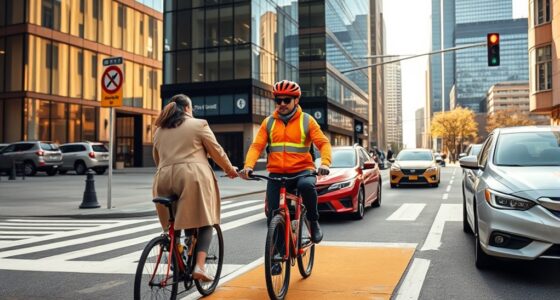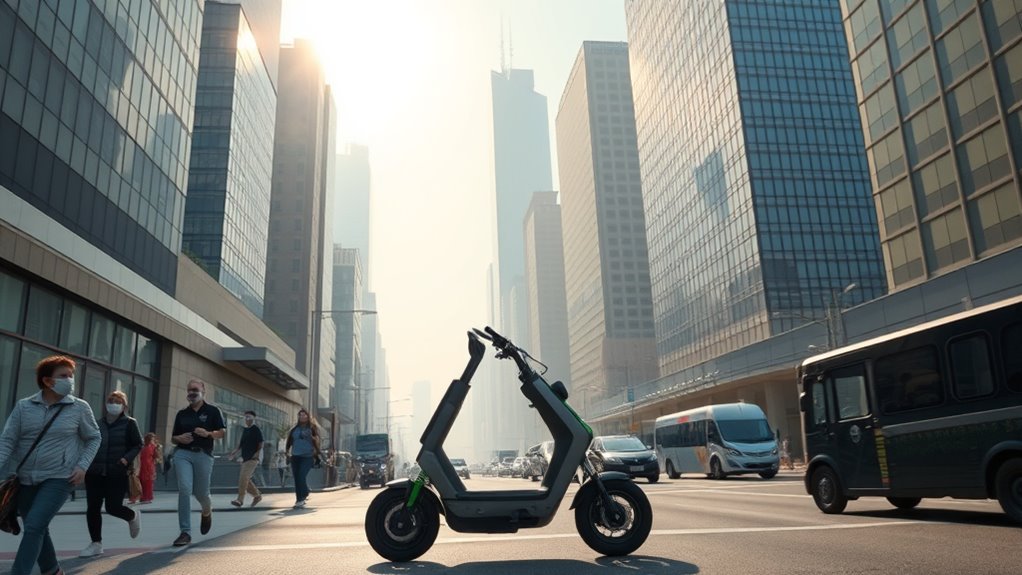

To improve air quality through smarter urban riding, you can choose alternatives like public transit, biking, or walking instead of driving alone. Carpooling and electric vehicles also reduce emissions, helping to lower harmful pollutants in the air. Supporting infrastructure like bike lanes and charging stations makes these options more accessible. By making conscious transportation choices, you directly contribute to cleaner city air and healthier living environments. Keep exploring how your actions impact urban pollution and solutions you can adopt.
Key Takeaways
- Choosing public transit, biking, or walking reduces vehicle emissions and improves urban air quality.
- Carpooling and electric vehicles lower individual carbon footprints and pollution levels.
- Investing in bike lanes and charging stations promotes cleaner, sustainable transportation options.
- Supporting urban greenery helps absorb pollutants and mitigate the effects of vehicle emissions.
- Combining personal choices with urban policies enhances overall air quality and public health.
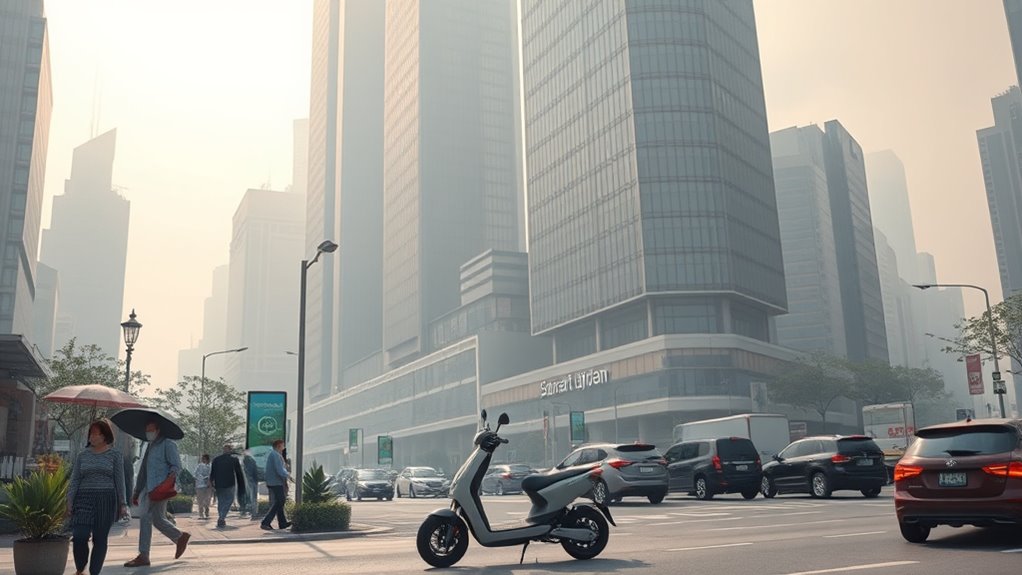
Have you ever wondered how clean the air around you really is? The truth is, the air quality in your city depends a lot on how we manage vehicle emissions and how we incorporate urban greenery into our environment. Vehicles are a major source of pollution, releasing exhaust gases and particulate matter that deteriorate the air you breathe daily. As more cars hit the roads, these emissions build up, contributing to smog, respiratory problems, and overall poor air quality. But there’s good news: cities are increasingly turning to urban greenery as a natural way to combat pollution. Parks, green rooftops, and tree-lined streets help absorb pollutants, filter airborne toxins, and improve the overall quality of the air you breathe. When you see a city with lots of trees and plants, know that those natural elements are actively working to reduce the harmful effects of vehicle emissions.
Urban greenery helps absorb pollutants and combat vehicle emissions for cleaner, healthier city air.
Reducing your personal contribution to pollution is essential, but urban planning also plays a critical role. Cities that prioritize the development of urban greenery create a more sustainable environment, where the air remains cleaner and healthier. Trees and plants act as natural air filters, capturing dust, nitrogen oxides, and other pollutants emitted by vehicles. *furthermore*, green spaces help lower temperatures, which can reduce the formation of ground-level ozone—a harmful component of smog. Increasing the use of sustainable materials in urban development can also significantly improve air quality by reducing emissions from construction and infrastructure. When you walk or cycle through greener neighborhoods, you’re experiencing firsthand the benefits of these natural air purifiers. And these efforts aren’t just about aesthetics; they’re about creating a healthier, more sustainable city for everyone.
You can also make smarter choices when it comes to your transportation habits. Opting for public transit, biking, or walking reduces the number of vehicles on the road, directly cutting down vehicle emissions. Carpooling and choosing electric vehicles further lessen your carbon footprint and lessen the pollution load. Cities that promote these cleaner modes of transportation often invest in infrastructure like bike lanes and electric charging stations, making it easier for you to choose smarter options. These initiatives not only improve air quality but also foster a community that values sustainability and health.
Ultimately, improving air quality requires a combination of individual actions and urban policies. Supporting efforts to increase urban greenery and reduce vehicle emissions creates a more breathable environment. When you become mindful of your transportation choices and advocate for greener city planning, you’re helping to breathe new life into your city’s air. It’s about making smarter urban riding decisions that benefit everyone—because cleaner air isn’t just a luxury; it’s a necessity for a healthy future.
Frequently Asked Questions
How Can Individuals Reduce Their Exposure to Urban Air Pollution?
You can reduce your exposure to urban air pollution by wearing personal protective equipment like masks when walking or biking in busy areas. Seek out urban green spaces, which often have cleaner air due to vegetation filtering pollutants. Additionally, avoid rushing near traffic during peak hours, keep windows closed at home, and stay informed about air quality forecasts to plan outdoor activities when pollution levels are lower.
What Are the Long-Term Health Effects of Air Pollution in Cities?
Long-term exposure to urban air pollution can considerably increase your risk of developing respiratory illnesses and cardiovascular issues. Over time, polluted air can cause chronic lung problems, asthma, and even heart disease. You might notice these health effects gradually, but they can lead to serious, lasting impacts on your well-being. Protect yourself by reducing exposure, staying indoors during high pollution days, and advocating for cleaner air policies.
Which Cities Have the Strictest Air Quality Regulations Globally?
You’ll find that cities like Stockholm, Singapore, and Zurich have the strictest air quality standards globally. These cities prioritize strong urban policies that enforce rigorous air quality standards, aiming to reduce pollution levels and protect public health. By implementing extensive regulations and monitoring systems, they set a high bar for air quality management. As a result, you benefit from cleaner air, making these urban environments healthier and more sustainable for residents and visitors alike.
How Effective Are Pollution Sensors in Monitoring Urban Air Quality?
Like a lighthouse guiding ships, pollution sensors substantially boost urban air quality monitoring. They’re quite effective when they maintain high sensor accuracy, providing real-time data that can be integrated seamlessly with other sources. This integration helps cities make informed decisions quickly. While individual sensors might have limitations, collectively, they create a powerful network, helping you stay aware of pollution levels and protect your health amidst urban chaos.
What Role Do Electric Vehicles Play in Improving City Air Quality?
Electric vehicles play a vital role in improving city air quality by markedly reducing emissions. When you choose electric cars, you’re cutting down on harmful pollutants like nitrogen oxides and particulate matter that come from traditional combustion engines. This emission reduction leads to cleaner air, healthier communities, and a more sustainable urban environment. By adopting electric vehicles, you actively contribute to reducing pollution and making your city a better place to live.
Conclusion
So, here you are, riding through cleaner streets, thinking you’ve escaped pollution’s grip. Ironically, your smarter urban ride is part of the solution—yet it still relies on the same old city infrastructure that caused the mess. Maybe the real irony is that your tech-savvy commute might just be the key to fixing what’s broken. So, keep riding smarter, because in the end, your choices might just clear the air—literally.