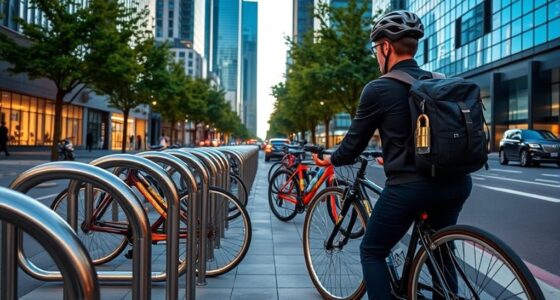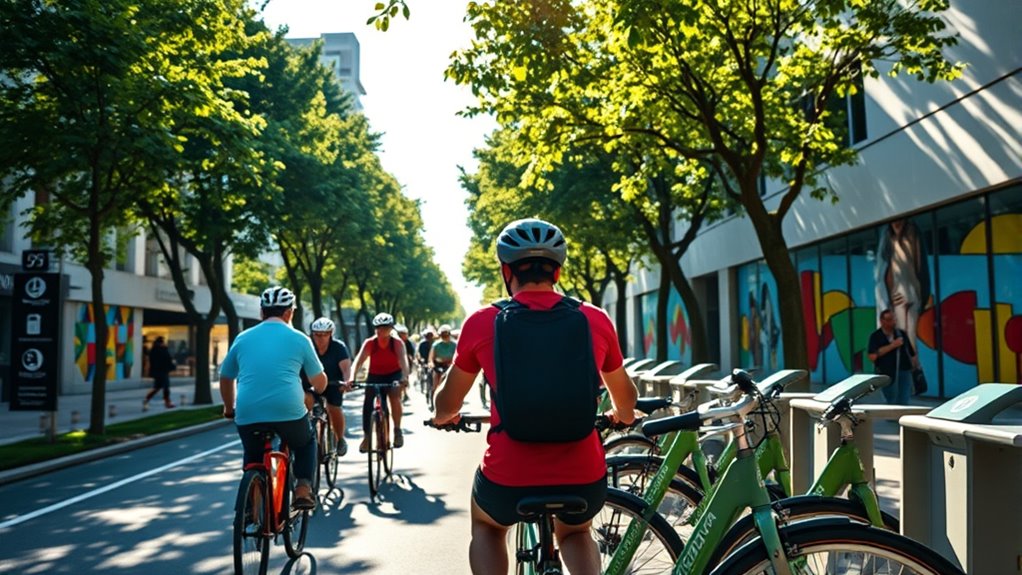

To use bikeshare safely and responsibly, always wear a properly fitted helmet to protect your head. Park bikes in designated areas and lock them securely to prevent theft and obstruction. Stay alert for pedestrians, vehicles, and road hazards, and follow traffic signals and signs. Use hand signals for turns and avoid distractions like phones or headphones. By following these guidelines, you help keep yourself and others safe—discover more tips to ride confidently and responsibly.

Get your wardrobe favorites delivered free — and shop member deals
- Fast, free delivery on millions of items
- Access to Prime Big Deal Days deals on October 6–7
- Prime Video, Amazon Music and more included
Key Takeaways
- Always wear a properly fitted helmet to protect your head during rides.
- Park bikes only in designated areas and lock them securely to prevent theft and obstruction.
- Stay alert, follow traffic signals, use hand signals, and avoid distractions for safe riding.
- Respect community spaces by parking responsibly and avoiding blocking walkways or entrances.
- Plan your route using urban features and smart city signals to navigate safely and efficiently.
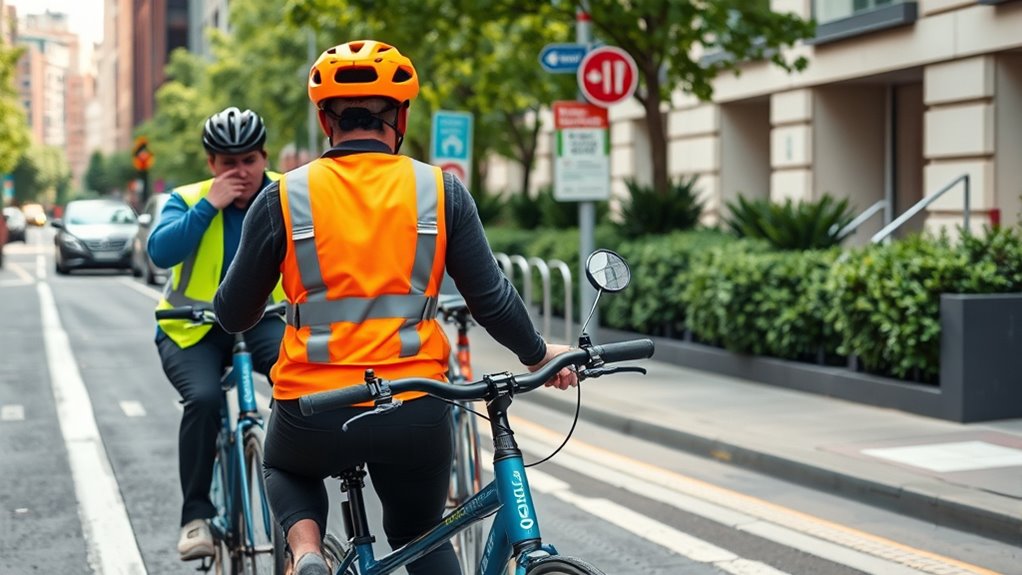
Riding a bikeshare can be a convenient and eco-friendly way to get around, but to do so safely and responsibly, you need to stay alert and follow basic guidelines. One of the most important safety measures is helmet safety. Wearing a helmet every time you ride markedly reduces the risk of head injury if you fall or collide with something. Even if you’re just riding a short distance or in familiar areas, don’t skip the helmet. It’s a simple step that can make a big difference in protecting your health. Make sure your helmet fits snugly and is properly secured before you start riding. Many bikeshare programs provide helmets, but if they don’t, it’s worth bringing your own or purchasing one that meets safety standards. Remember, no helmet is foolproof, but it’s your best defense against serious injury.
Parking etiquette is another key aspect of responsible bikeshare use. When you’re finished riding, always park the bike in designated bike racks or areas approved by the bikeshare program. Avoid leaving bikes in pedestrian walkways, door zones, or blocking entrances. Proper parking not only prevents accidents and injuries but also respects others who share the space. Check for signs or markings that indicate where bikes should be parked, and always lock the bike securely when not in use. Neglecting parking etiquette can lead to fines or the bikes being removed, which inconveniences both the bikeshare company and other riders. Being considerate about where you leave the bike helps keep the community safe and the system efficient.
Staying alert while riding is essential for your safety and the safety of others. Keep an eye out for pedestrians, vehicles, and road hazards. Follow traffic signals and ride in the correct direction, especially on shared pathways. Using hand signals to indicate turns and stops helps others anticipate your movements, reducing the risk of accidents. Avoid distractions like your phone or headphones, as they can impair your awareness. Maintaining a steady speed and being cautious at intersections give you more control and reaction time in unexpected situations. Additionally, understanding the importance of projector technology can help you better navigate and plan your routes, especially in urban environments where infrastructure may be equipped with smart features.
bicycle helmet with adjustable fit
As an affiliate, we earn on qualifying purchases.
As an affiliate, we earn on qualifying purchases.
Frequently Asked Questions
Can I Ride a Bikeshare Bike During Bad Weather Conditions?
You shouldn’t ride a bikeshare bike during bad weather conditions because weather hazards can compromise bike safety. Rain, snow, or strong winds make riding risky, increasing the chances of accidents. If you decide to ride in poor weather, make sure you’re extra cautious, wear appropriate gear, and check if the bike is suitable for such conditions. Always prioritize your safety and avoid riding when conditions threaten your well-being.
Are There Age Restrictions for Bikeshare Users?
Wondering if there are age restrictions for bikeshare users? Typically, you need to be at least 16 years old to rent a bikeshare bike, as most programs require valid licensing requirements for safety and legal reasons. Younger riders usually aren’t permitted because of safety concerns. Always check your local bikeshare program’s specific age restrictions before riding, so you can stay within the rules and enjoy your ride safely.
What Should I Do if I Lose My Bikeshare Key or Access Card?
If you lose your bikeshare key or access card, report the lost key immediately to the bikeshare provider. You’ll need an access replacement, which might involve a fee. Contact customer service through their app or website to request a replacement. Avoid trying to bypass security measures, and follow the provider’s instructions for securing a new access card to continue enjoying bikeshare services safely and responsibly.
Can I Customize or Add Accessories to the Bikeshare Bike?
Yes, you can personalize your ride with bike customization and accessory installation. Feel free to add a water bottle holder, phone mount, or bell to enhance your experience. Just make certain that any accessories you attach are secure, safe, and don’t interfere with the bike’s operation. Before customizing, check the bikeshare program’s guidelines to avoid any issues. Personal touches make your trip more practical and pleasurable.
How Do I Report a Bikeshare Bike That’s Damaged or Malfunctioning?
If you find a bikeshare bike that’s damaged or malfunctioning, you should quickly follow the reporting procedures provided by the bike share program. Usually, this involves using a mobile app or calling a support number to alert them about the issue. Make sure to provide specific details about the bike’s condition. Reporting promptly helps with bike maintenance and guarantees a safe riding experience for everyone.
As an affiliate, we earn on qualifying purchases.
Conclusion
By following these safety tips, you help keep yourself and others safe on bikeshare bikes. Remember, wearing a helmet can reduce head injuries by up to 50%. Nearly 70% of bikeshare riders report feeling more connected to their communities when they ride responsibly. So, stay alert, obey traffic laws, and enjoy your ride. Responsible biking not only protects you but also encourages a safer environment for everyone sharing the road.
reflective hand signal gloves for cycling
As an affiliate, we earn on qualifying purchases.
As an affiliate, we earn on qualifying purchases.
As an affiliate, we earn on qualifying purchases.
Fall Picks
fall essentials
As an affiliate, we earn on qualifying purchases.