
Rain impacts your city far more than bikes because it exposes infrastructure flaws like flooding, poor drainage, and limited stormwater management, leading to traffic disruptions and damaged streets. It washes dirt and pollutants into drains, making streets dirtier and less safe. Bikes alone can’t prevent water pooling or flooding—advanced engineering and green infrastructure are needed. To understand how cities can better adapt and stay resilient during storms, explore more about these challenges.
Key Takeaways
- Rain causes urban flooding, disrupting traffic and damaging infrastructure more extensively than bike lane issues.
- Heavy rainfall exposes deficiencies in stormwater management, affecting overall city functionality beyond biking concerns.
- Puddles and runoff wash pollutants onto streets, impacting cleanliness and safety more broadly than bike lane maintenance.
- Rain overwhelms drainage systems, undoing urban planning efforts like bike lane design and causing widespread disruptions.
- Green infrastructure and resilient systems are essential to address rain-related challenges that impact the entire city environment.
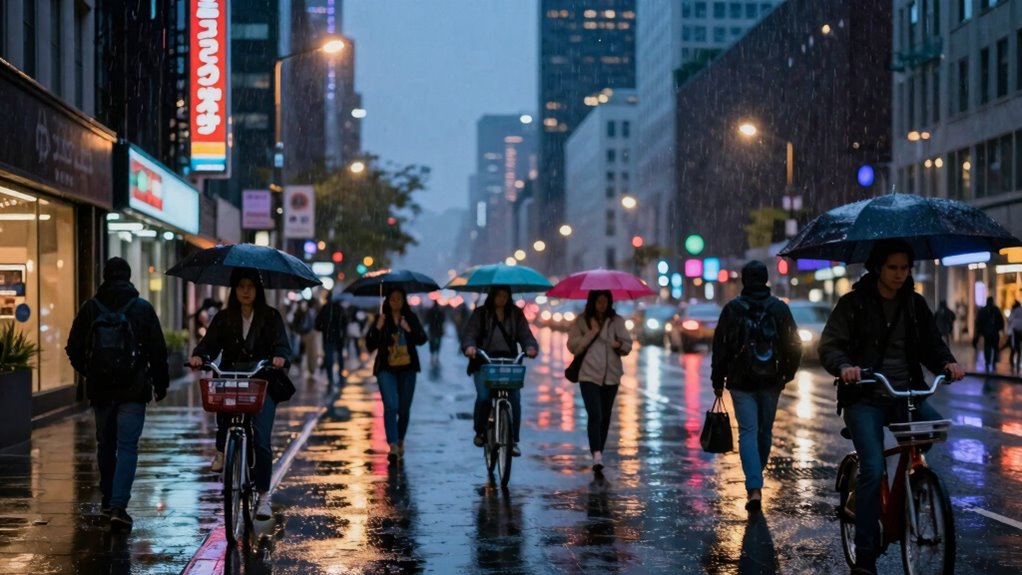
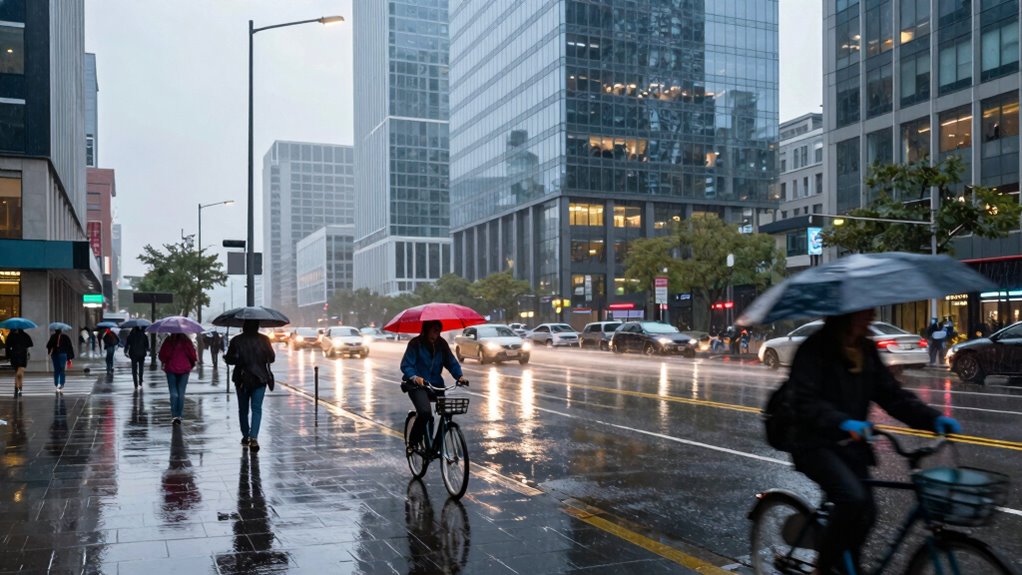
Rain transforms a city in ways that even the most well-designed bike lanes can’t. When the skies open up, the impact on your urban environment becomes unmistakable. One of the most immediate and visible effects is urban flooding. Streets that seem perfectly navigable in dry weather suddenly turn into rushing streams, forcing you to rethink your routes and consider alternative paths. This flooding isn’t just an inconvenience; it can disrupt traffic flow, damage infrastructure, and create hazards for pedestrians and cyclists alike. The water pooling on roads can overwhelm drainage systems, exposing weaknesses in city planning and maintenance. It’s a stark reminder that no matter how carefully a city designs its bike lanes or pedestrian pathways, heavy rain can undo that effort in seconds. Additionally, rain reveals stormwater management issues that can threaten long-term urban resilience. Proper stormwater infrastructure is essential for mitigating these effects and maintaining city function during storms. Rain also highlights the importance of adaptive urban planning strategies that can better handle extreme weather events, ensuring the city remains resilient. Beyond flooding, rain also plays a significant role in affecting street cleanliness. Puddles gather dirt, debris, and pollutants from the air, washing them into drains and onto sidewalks. This process leaves streets muddier and less inviting, especially after a downpour. As a city dweller, you notice how quickly trash and grime accumulate after a storm, making cleanliness a fleeting goal in wet weather. The streets become less safe and less appealing, with muddy puddles and scattered litter diminishing the overall aesthetic. Unlike bike lanes, which can be engineered to divert water and keep surfaces dry, street cleanliness hinges on ongoing maintenance and effective drainage. When it rains, the effort needed to keep streets tidy becomes even more apparent, highlighting how weather can undo hours of city sanitation work in a matter of minutes. Moreover, urban resilience is tested when rain exposes vulnerabilities in the city’s infrastructure, emphasizing the need for continuous investment in resilient systems. It also encourages cities to innovate with green infrastructure solutions that can absorb excess water and reduce flooding risks. This emphasizes the importance of comprehensive urban planning that anticipates weather-related challenges.

Design and Construction of Urban Stormwater Management Systems (20) (Manual of Practice)
As an affiliate, we earn on qualifying purchases.
As an affiliate, we earn on qualifying purchases.
Frequently Asked Questions
How Does Rain Impact Urban Infrastructure Differently Than Bikes?
Rain impacts urban infrastructure more than bikes because it tests storm drainage systems and pavement durability. You notice how heavy rain can cause flooding if drainage isn’t efficient, disrupting traffic and daily life. Plus, constant moisture weakens pavement over time, leading to cracks and potholes. Bikes, while affected by rain, don’t challenge infrastructure as directly. Your city’s ability to handle rain depends on well-maintained drainage and resilient pavement.
What Are the Economic Effects of Rain Versus Bike Usage?
Rain causes significant economic effects through rain-induced flooding, which damages infrastructure, disrupts transportation, and increases maintenance costs. It also reduces bike lane safety, discouraging cycling and lowering bike-related commerce. These factors lead to decreased productivity and higher city expenses. In contrast, bike usage has minimal economic impact, mainly affecting local businesses and transportation costs. Overall, rain’s unpredictability and hazards hit the economy harder than the steady, eco-friendly nature of biking.
How Do Residents Adapt Their Daily Routines to Rain?
On rainy days, you quickly adapt your routine, clutching your umbrella with a sense of urgency as the skies darken. You dodge puddles and hurriedly navigate through the city, embracing the umbrella culture that helps you stay dry. Rain transforms your daily commute into a cautious dance, making you more mindful of timing and routes, turning ordinary routines into a weather-aware ritual that keeps you prepared and resilient against the storm’s unpredictable mood.
Are There Specific Cities More Affected by Rain Than Bikes?
Yes, some cities are more affected by rain than bikes, especially those with strong cultural symbolism tied to rainfall, like Mumbai or London. Seasonal rainfall variations considerably influence daily life, forcing you to adapt routines and infrastructure. In these cities, rain’s cultural symbolism shapes attitudes and policies, making rain a central aspect of city life, often more impactful than bike usage. You’ll notice how rain dictates transportation, festivals, and even social interactions.
How Does Rain Influence City Planning Compared to Bicycle Infrastructure?
Rain profoundly influences city planning more than bike infrastructure because it impacts urban aesthetics and public safety. For example, in Seattle, planners prioritize drainage systems and waterproof surfaces to prevent flooding and maintain visual appeal. You’ll notice how cities adapt by installing better stormwater management, ensuring streets stay attractive and safe despite heavy rain. This focus on rain’s effects shapes broader infrastructure decisions, unlike bike lanes which mainly target mobility.

JIN YANG HU 10-Pcs Flood Protection Barrier, ABS L-Type Reusable Boxwall Home Flood Barriers,Removable Combination Water Barrier for Underground Passages,Garages,Warehouses,Home,Doors,Patio
- Durable ABS Construction: Impact and temperature resistant for harsh environments
- Effective Water Retention: Stable even at high water levels, prevents overturning
- One-Piece Molded Design: Sturdy, handle-resistant, easy to install and adjust
As an affiliate, we earn on qualifying purchases.
As an affiliate, we earn on qualifying purchases.
Conclusion
So, next time rain transforms your city into a shimmering maze, remember—it’s nature’s way of rewriting your familiar streets. Just like a master artist, rain paints over concrete, revealing new patterns and moods. The bike may carry you through, but it’s rain that truly reshapes the city’s soul, turning everyday scenes into poetic moments. Embrace these changes, and you’ll see your city not just as a place, but as a living, breathing story waiting to be told.

Green Cities: How Green Infrastructure Helps Urban Centers Thrive
As an affiliate, we earn on qualifying purchases.
As an affiliate, we earn on qualifying purchases.

Fernco QwikSeal QS-6S40 6-in. SCH-40
- Standards Compliance: Meets ASTM C 923
- Water Tight Seal: Creates a compression seal up to 10 psi
- Deflection Capacity: Handles up to 7 degrees of deflection
As an affiliate, we earn on qualifying purchases.
As an affiliate, we earn on qualifying purchases.