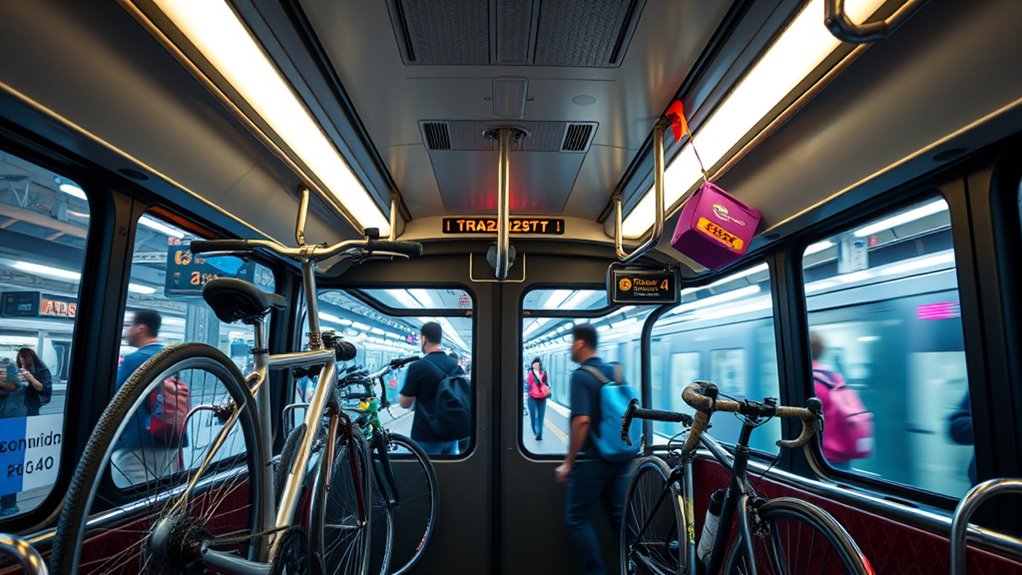

When commuting with your bike on buses and trains, check transit policies beforehand to guarantee compatibility, especially for folding bikes. Use straps or locks to secure your bike and always wear safety gear like helmets and reflective clothing for visibility. Find designated bike areas or racks on vehicles to make loading and unloading easier. Properly securing your bike prevents damage and theft. Keep these tips in mind—next, you’ll discover how to navigate specific transit options for a smoother ride.
Key Takeaways
- Check transit policies for bike carriage, including folding or size restrictions, before planning your trip.
- Use designated bike racks on buses or specific bike cars on trains for secure storage.
- Secure bikes with straps or locks to prevent movement and theft during transit.
- Wear safety gear and attach reflective accessories to enhance visibility and safety during multimodal commutes.
- Plan routes around bike-friendly schedules and storage options to ensure smooth, hassle-free travel.
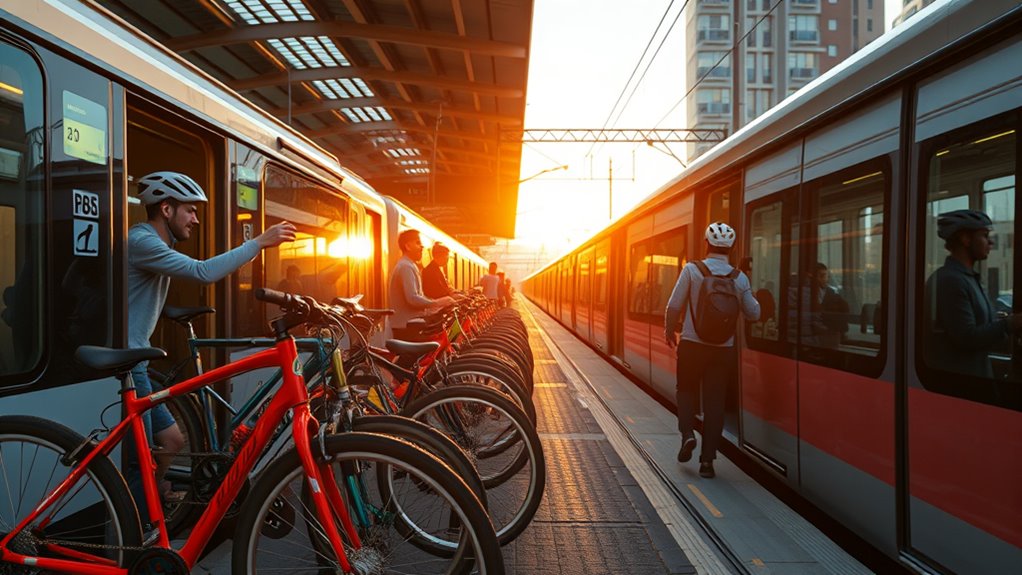
In today’s fast-paced world, more commuters are embracing multimodal travel—combining different transportation methods to reach their destinations efficiently. If you’re considering taking your bike on buses or trains, understanding how to guarantee bike safety and available bike storage options becomes essential. These strategies make your journey smoother and help you feel confident that your bike stays secure throughout the trip.
Bike safety is a top priority when planning to transport your bike via public transit. Before you board, check the transit authority’s policies on bike carriage. Some systems require you to fold certain types of bikes or use specific racks, so knowing these rules in advance prevents surprises. When loading your bike, make sure it’s stable and properly secured. Use any provided straps or locking mechanisms to prevent movement that could cause damage or inconvenience to other passengers. Wearing a helmet and gloves adds extra protection during your ride, especially if you need to navigate busy stations or streets after disembarking. Also, consider the visibility of your bike; attaching reflective gear or lights can improve safety during early morning or evening trips.
Prioritize bike security with proper locking, visibility gear, and following transit policies for a smooth, safe journey.
Equally important are the bike storage options available on public transit. Most buses and trains offer designated bike racks or storage areas designed to accommodate various bike sizes. On buses, these racks are usually located at the front, allowing you to load your bike quickly before the vehicle departs. Trains often have dedicated bike cars or designated bike spaces within carriages. Familiarize yourself with the layout of your local transit system to know where to position your bike comfortably and safely. If storage options are limited or unavailable, planning your route around bus or train schedules with bike-friendly times can save you hassle. Some transit agencies also provide foldable bikes that fit into standard spaces, giving you more flexibility.
When choosing your bike storage options, consider the security and convenience they offer. Secure racks with locking mechanisms are ideal, especially if you plan to leave your bike unattended for a period. Using a sturdy lock not only deters theft but also keeps your bike stable during transit. If storage options seem limited or if you’re concerned about bike safety, bringing along a lightweight lock to secure your bike at stations or stops adds an extra layer of protection.
Frequently Asked Questions
Are There Specific Bike Rack Sizes for Different Transit Systems?
Yes, transit systems have specific bike rack dimensions tailored to their vehicles. You should check the transit bike capacity and bike rack dimensions before your trip, as these vary by system. Some buses and trains offer smaller racks for single bikes, while others accommodate multiple bikes. Knowing these details helps you plan your multimodal commute efficiently, ensuring your bike fits securely and you avoid any inconvenience.
How Do Bike-On-Bus Policies Vary Internationally?
Did you know that over 60 countries have different bike-on-bus policies? International transit regulations vary widely; some systems allow bikes free during off-peak hours, while others restrict them entirely. Bike policy variations depend on regional infrastructure and safety concerns. As a rider, you’ll find that policies in Europe often promote bike integration, whereas North American transit systems might be more restrictive, reflecting diverse approaches to multimodal commuting.
What Safety Measures Are in Place for Bike Storage During Transit?
You should always look for secure transit storage options for your bike. Many transit systems use bike racks with locks, dedicated bike compartments, or secure areas designed for bike security. These measures help prevent theft and damage during transit. Some systems even require you to lock your bike before boarding or use straps to keep it stable. Always follow the specific safety protocols to guarantee your bike remains safe throughout your journey.
Are There Any Restrictions on Types of Bikes Allowed on Trains?
Yes, there are bike storage regulations and size restrictions on trains. You should check your transit provider’s guidelines, as some trains limit bikes to specific dimensions or types, like folding bikes. Typically, bikes must be stored in designated areas and not block aisles or doors. Always measure your bike beforehand to guarantee it complies with size restrictions, and arrive early to secure a spot.
How Does Multimodal Commuting Impact Transit Fare Pricing?
Did you know that multimodal commuting can increase transit fare flexibility? When you combine bikes with buses or trains, transit agencies often implement pricing strategies that offer discounts or bundled fares, making trips more affordable. This approach encourages more people to choose sustainable options and can lead to a more efficient transit system. So, your ability to mix modes impacts fare options, giving you greater control over your transportation costs.
Conclusion
By embracing multimodal commutes, you save time, reduce stress, and protect the environment. You choose convenience, flexibility, and sustainability. You gain health, happiness, and peace of mind. You become part of a movement toward smarter, greener transportation. So, take the leap—combine bikes with buses and trains. Because when you choose multimodal commuting, you’re not just traveling—you’re transforming your daily journey into a step toward a better future.