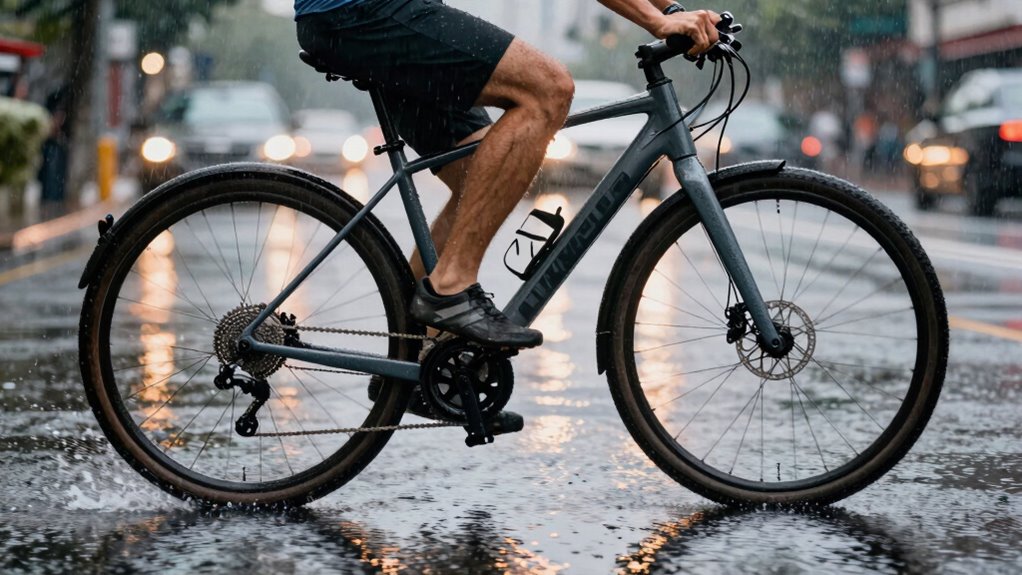

To stay upright during rainy commutes on your e-bike, focus on choosing tires with deep, grooved treads and maintaining proper pressure to improve grip. Use smooth braking and shift your weight back when decelerating to prevent skids. Modern e-bikes with traction control and anti-lock brakes help keep you stable, while waterproofing and regular maintenance guarantee reliability. Want to master riding in wet conditions? Keep going to learn how to maximize safety and control.
Key Takeaways
- Use high-traction, wet-condition tires with deep grooves to prevent hydroplaning and improve grip on slippery surfaces.
- Maintain proper tire pressure and regularly check tread depth for optimal contact and safety in rain.
- Utilize advanced braking systems like ABS and brake modulation to prevent skidding during sudden stops.
- Wear waterproof gear, fenders, and lights to enhance visibility and protect against water ingress and road spray.
- Ride with smooth, controlled movements, increase following distance, and shift weight slightly back during deceleration for better stability.
How Tire Tread and Pressure Improve Grip on Wet Roads
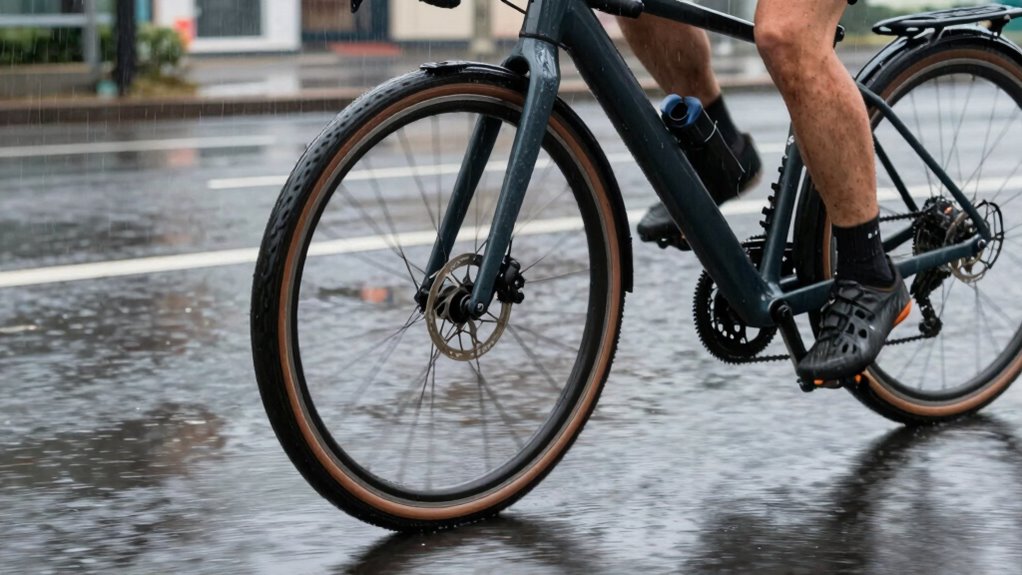
When riding your e-bike in the rain, tire tread and pressure play essential roles in maintaining grip on wet roads. The tire composition influences how well your tires handle moisture; rubber blends designed for wet conditions improve traction. The tread pattern is equally important—it channels water away from the contact patch, reducing hydroplaning risk. Deep, grooved treads provide better water displacement, helping you stay stable on slick surfaces. Proper tire pressure also matters; underinflated tires increase the contact area, enhancing grip but risking pinch flats, while overinflated tires reduce traction. Maintaining ideal pressure ensures your tires make consistent contact with the road. By choosing tires with the right tread pattern and maintaining proper pressure, you enhance your e-bike’s grip and safety during rainy rides.
How Traction Control and Braking Systems Keep You Safe in Rain
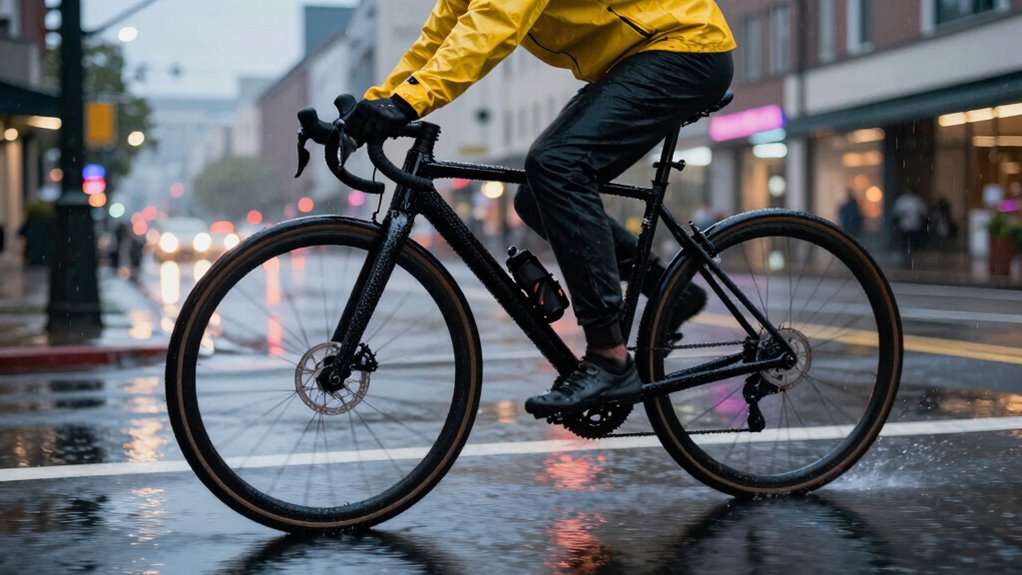
Modern e-bikes come equipped with enhanced traction systems that help you stay stable on wet surfaces. Advanced brake technologies quickly respond to your inputs, reducing stopping distances in rainy conditions. Together, these features work seamlessly to keep you safe and confident during your rainy commutes. Incorporating high-traction tires can further improve grip and stability on slippery roads. Additionally, understanding braking system technologies can help you choose models that provide optimal safety in wet weather. Being aware of traction control features can also assist in maintaining better stability on slick surfaces. Implementing wet-weather safety features ensures comprehensive protection during adverse conditions and can be supported by appropriate maintenance to sustain optimal performance.
Enhanced Traction Systems
Enhanced traction systems are essential for safe e-bike commuting in rainy conditions because they actively prevent slips and skids. By improving grip, these systems adapt to wet surfaces, giving you confidence on slick roads. Modern tire materials and grip enhancers work together to maximize traction, reducing the risk of sliding. For example:
| Tire Type | Grip Enhancers | Benefits |
|---|---|---|
| Rubber compounds | Silicone coatings | Better wet-weather grip |
| Tubeless tires | Textured treads | Improved control in rain |
| Eco-friendly tires | Nano-coatings | Enhanced durability and grip |
Additionally, traction control systems help optimize power distribution and braking, further enhancing safety. Advanced braking technologies ensure quick and reliable stops, even on wet surfaces. Incorporating adaptive traction management allows the system to respond dynamically to changing conditions, maintaining better contact with the road, even in heavy rain, keeping your ride stable and safe. Employing high-quality tire materials also plays a vital role in ensuring consistent performance in adverse weather.
Advanced Brake Technologies
Advanced brake technologies play a crucial role in keeping you safe during rainy commutes by providing reliable stopping power and preventing skidding. Modern systems, like anti-lock brake systems (ABS), prevent wheels from locking up when you brake suddenly, maintaining steering control. Brake modulation is key; it adjusts braking force dynamically, ensuring smooth, effective stops without skidding or losing traction. These technologies respond instantly to changing road conditions, giving you confidence even on wet surfaces. E-bike braking systems with advanced features help you stop safely without sacrificing control or stability. By optimizing braking performance, these innovations reduce the risk of falls and accidents, making rainy rides safer and more predictable. Proper braking system maintenance ensures these features function correctly when you need them most. Regular inspections and checks of brake gauges can help identify issues before they compromise safety. Additionally, understanding traction control systems can further enhance your safety by preventing wheel slip in adverse conditions. With advanced brake tech, you can focus on your ride, not on whether you’ll stay upright.
Riding Techniques to Stay Stable on Wet Surfaces
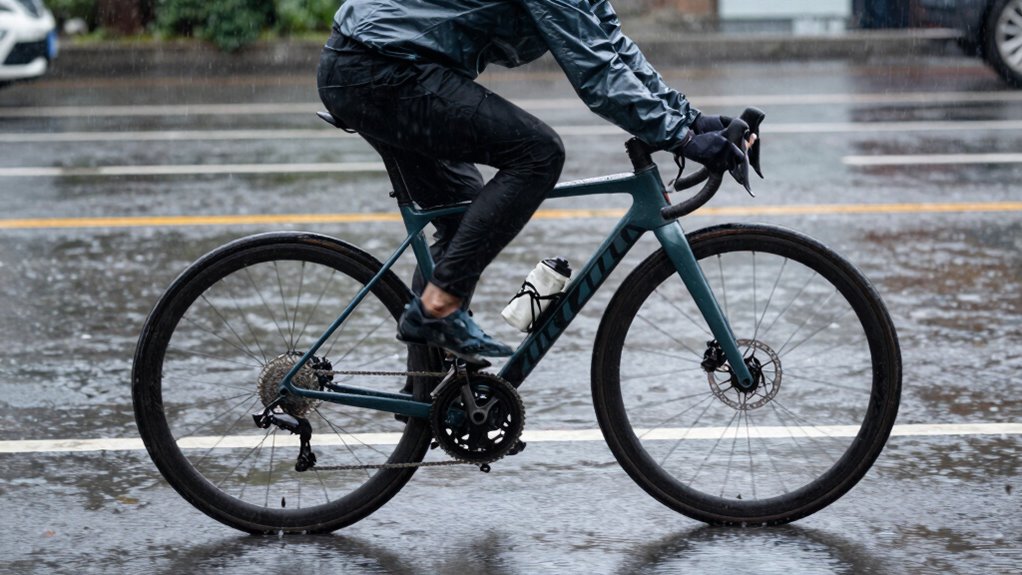
To stay stable on wet surfaces, you should start by adjusting your tire pressure—lowering it slightly can improve grip. Keep your speed moderate to give yourself more control and time to react. Additionally, use smooth, gradual braking to avoid skidding and maintain better balance on slippery roads. For optimal safety, consider using an air purifier in your home to reduce indoor pollutants that can affect your overall well-being. Remember, maintaining proper tire traction and being mindful of road conditions are key to safe riding in rainy weather. Regularly checking your tire tread depth can also help ensure your tires maintain adequate grip on wet surfaces, especially as digital literacy can include understanding how to monitor and maintain your vehicle’s safety features. Developing good riding techniques for wet conditions is essential for staying upright and confident during rainy commutes.
Adjust Your Tire Pressure
When riding on wet surfaces, adjusting your tire pressure can markedly improve stability and grip. Lowering your tire pressure increases the contact patch between your tires and the road, providing better traction on slick or uneven surfaces. This is especially helpful in rainy conditions where road conditions can vary from smooth asphalt to puddled streets. Striking a balance is key, as over-deflating tires can lead to pinch flats or reduced efficiency. Aim for a slight reduction in tire pressure relative to your usual setting, based on the current road conditions. Always check your tire pressure before your ride, ensuring your tires are adequately inflated for the wet environment while maintaining ideal performance and safety. Tire pressure adjustment can further enhance your ride stability on slippery surfaces. Additionally, understanding AI safety protocols can help you stay prepared for unexpected hazards during your commute. Proper supporting accessories such as fenders and lights can also improve visibility and safety in rainy conditions.
Maintain Moderate Speeds
Riding at a moderate speed is essential for maintaining stability on wet surfaces. When weather impacts road conditions, going slower gives you better control and reduces the risk of slipping. Adjust your tire pressure accordingly; lower pressure increases traction by enlarging the contact patch with the road, but don’t go too low to avoid pinch flats. Keeping your speed steady allows you to react to sudden changes, like puddles or slick patches. Avoid sharp accelerations or decelerations, which can cause skidding. By maintaining a moderate pace, you give yourself more time to respond to hazards and minimize sudden movements. Proper tire pressure can make a significant difference in traction and stability on wet surfaces. Additionally, practicing smooth riding techniques helps maintain better control during rainy commutes. Being aware of traction management strategies can further enhance your safety on wet days. Maintaining consistent riding posture also contributes to better balance and control in slippery conditions.
Use Smooth Braking Techniques
Smooth braking is essential for maintaining stability on wet surfaces. Sudden or harsh braking can cause your e-bike to slip or wobble, risking a fall. Focus on controlled, gradual deceleration to stay upright and safe. To achieve this, practice effective braking techniques: – Use both brakes evenly, avoiding heavy reliance on just one. – Anticipate stops early, easing off the throttle and applying brakes smoothly. – Shift your weight back slightly to improve traction and balance during deceleration. Incorporating proper brake application ensures better control and reduces the risk of slipping on slick roads.
E‑Bike Features That Help Prevent Slipping in the Rain
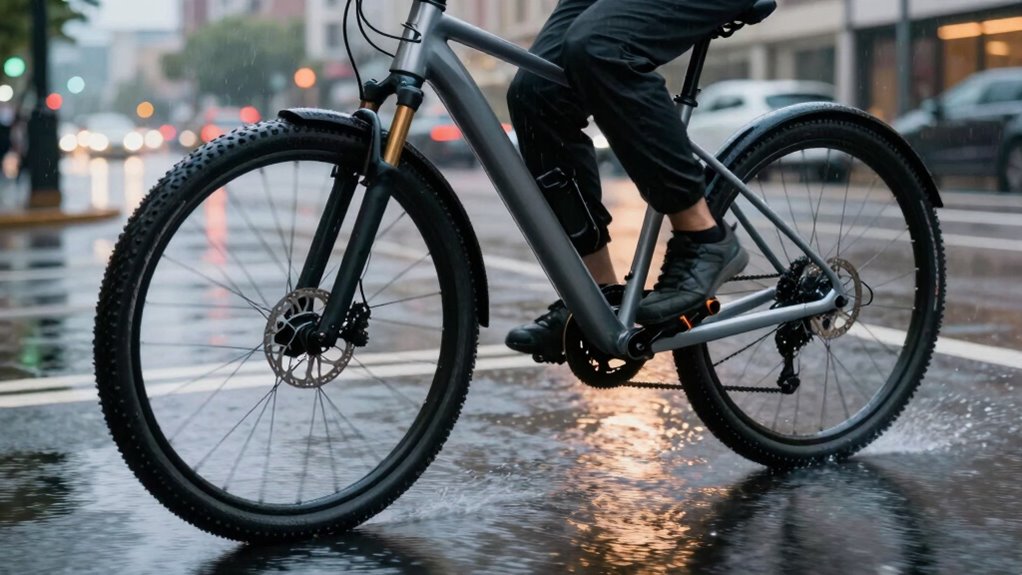
E-bikes equipped with specialized features can considerably improve your safety during rainy commutes by reducing the risk of slipping. One key feature is high-traction tires designed for wet surfaces, providing better grip on slippery roads. Additionally, some e-bikes come with rain gear accessories that help keep vital components dry, enhancing overall stability. Waterproof batteries are essential, preventing water ingress that could affect power delivery and control. By protecting the bike’s electrical system, waterproof batteries ensure consistent performance in wet conditions, helping you maintain traction and control. Combining these features with proper rain gear for yourself creates a safer riding environment. Investing in an e-bike with these slip-preventing features allows you to stay confident and upright, even when the roads are damp and slick.
Maintenance Tips to Keep Your E‑Bike Rain-Ready
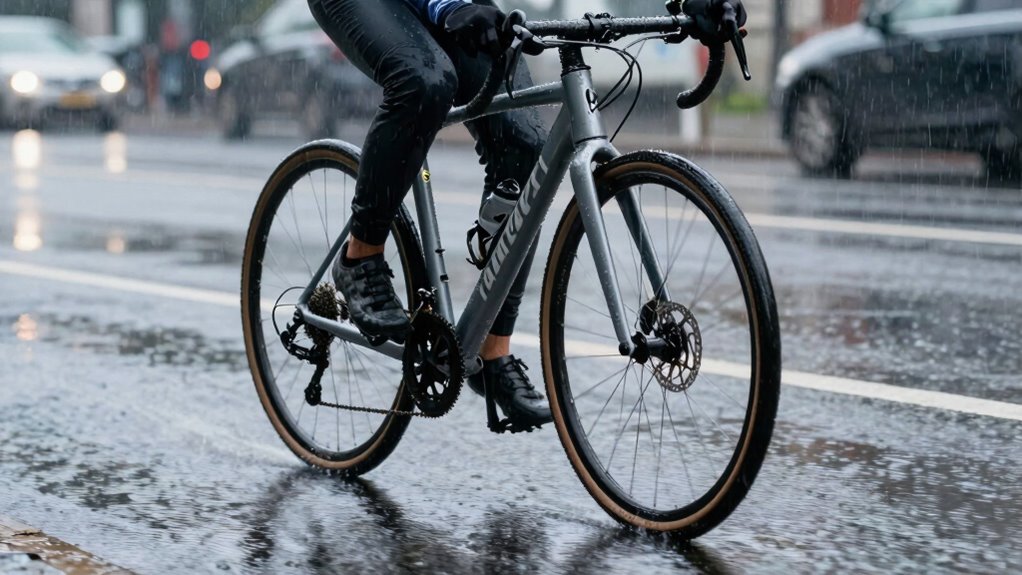
To keep your e-bike performing well in rainy conditions, regular maintenance is key. Start with battery maintenance by ensuring connections are dry and clean, and avoid exposing it to excessive moisture. Use waterproofing techniques, like applying protective sprays or sealants to vulnerable parts, to prevent water intrusion.
Consider these tips:
- Regularly inspect and clean electrical connectors and wiring for corrosion or debris.
- Use waterproof covers or boots on the battery and controller.
- Keep the chain lubricated with a water-resistant lubricant to prevent rust and ensure smooth operation.
How Different E‑Bike Models Handle Wet Weather
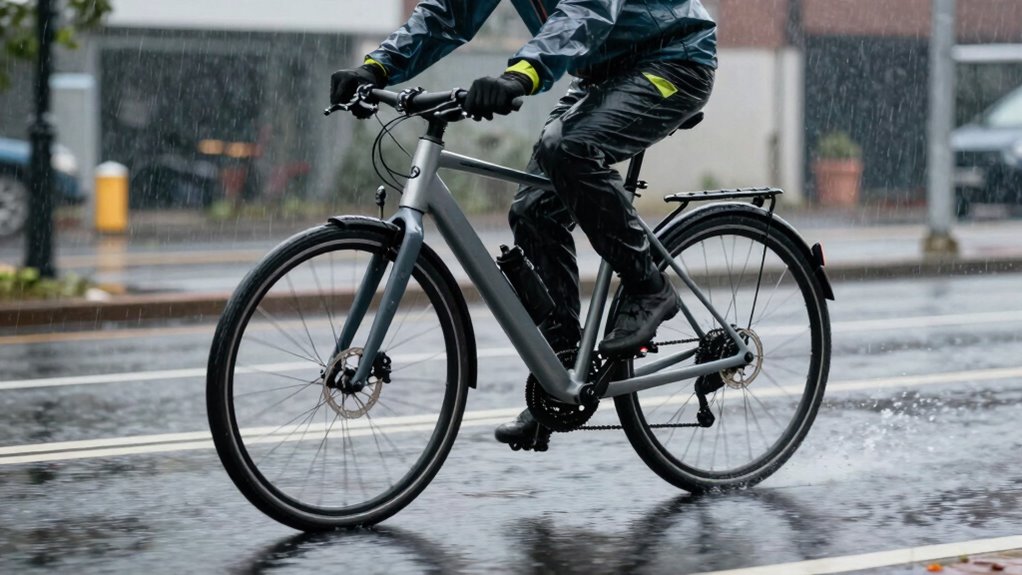
Since not all e-bike models are built equally, their ability to handle wet weather varies considerably. Some bikes feature tires with rubber compounds designed for wet traction, while others use slicker materials that slip easily on rain-slicked surfaces. Rider posture also matters; a more upright position helps you maintain balance and react quickly to slippery conditions.
| Model Type | Tire Material | Rider Posture |
|---|---|---|
| Mountain E-Bikes | Knobby, rubber-rich | Slightly forward |
| City Commuters | All-weather rubber | Upright |
| Folding E-Bikes | Smooth, water-resistant | Relaxed, upright |
| Touring E-Bikes | Durable, high-traction | Slightly leaned forward |
| Budget Models | Basic rubber compounds | Varies |
Practical Tips for Safe Riding During Rainy Days
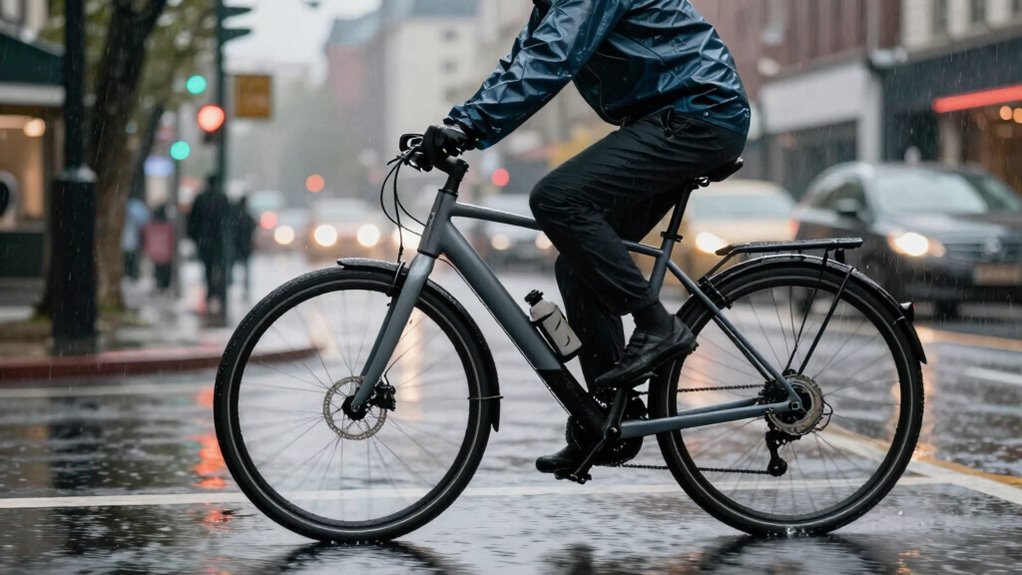
When riding in the rain, staying safe requires more than just a sturdy bike; your riding habits play a vital role. To stay secure, invest in good rain gear that keeps you dry and visible. Always use waterproof bags to protect your belongings from water damage. Reduce your speed and increase your following distance to maintain better control. Be mindful of slippery surfaces and avoid sudden turns or braking. Wear bright, reflective clothing to boost visibility in low-light conditions. Regularly check your brakes and tires to guarantee peak performance in wet conditions. Remember, cautious riding and proper gear make all the difference, helping you stay upright and confident during your rainy commutes.
Common Mistakes to Avoid When Riding Your E‑Bike in the Rain
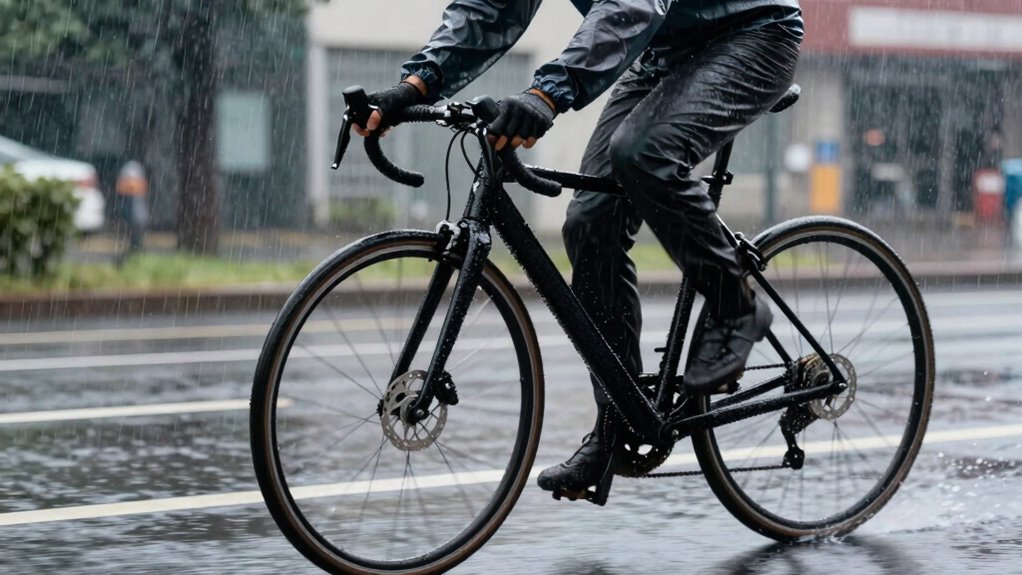
Riding your e-bike in the rain can be risky if you’re not careful about common mistakes. One mistake is neglecting proper rain gear; wearing waterproof clothing and a helmet with a visor helps keep you dry and improves visibility. Avoid riding with worn tires or inadequate brakes, as wet surfaces reduce traction and increase stopping distances. Don’t underestimate the importance of smooth, controlled movements—sudden turns or braking can lead to slips. Ignoring visibility can be dangerous, so always wear bright, reflective gear and ensure your lights work. Also, avoid riding through deep puddles or standing water, which can hide hazards or cause loss of control. Staying aware of these mistakes helps you stay safe and confident during rainy commutes.
Frequently Asked Questions
How Does Rain Affect E-Bike Battery Performance and Lifespan?
Rain can diminish your e-bike’s battery performance and accelerate battery degradation if moisture ingress occurs. Excess moisture from rain may seep into the battery pack, causing corrosion and reducing lifespan. To protect your battery, make sure it’s properly sealed and dry after rides. Avoid exposing it to heavy rain or puddles, and regularly inspect for any signs of moisture ingress. Proper maintenance helps prolong your e-bike’s battery life and keeps it functioning at its best.
Are There Specific E-Bike Models Best Suited for Heavy Rain Conditions?
Ever wondered which e-bikes handle heavy rain best? You should look for models with water-resistant tires and sealed motor units, designed specifically for wet conditions. These features prevent water damage and make sure safe traction on slick surfaces. Some brands prioritize these elements, making your commute safer and more reliable. Are you prepared to choose an e-bike that keeps you dry and secure, no matter the weather?
What Clothing Is Recommended for Safety and Comfort in Rainy Weather?
You should wear waterproof jackets to stay dry and comfortable during your rainy commute. Slip-resistant footwear helps you maintain good traction and prevents slips on wet surfaces. Opt for bright or reflective clothing to boost visibility, making sure you’re seen by other drivers. Layer your clothing for added warmth and flexibility. By choosing the right gear, you’ll stay safe, dry, and comfortable riding in rainy conditions.
Can E-Bike Sensors and Electronics Be Damaged by Water Exposure?
Waterproof electronics and sensor durability are designed to withstand rainy conditions, so your e-bike’s sensors and electronics generally won’t be damaged by water exposure. Imagine your bike confidently maneuvering slick streets, sensors functioning perfectly despite the rain. Manufacturers test these components rigorously, ensuring they resist water ingress. As long as you maintain proper sealing and avoid deep water crossings, your e-bike’s electronics stay safe, keeping your ride smooth and reliable.
How Should I Adjust My Riding Speed in Varying Rain Intensities?
You should adjust your speed based on rain intensity to stay safe. In light rain, maintain your usual pace but stay alert for slippery spots. During heavy rain, slow down markedly to improve traction and allow more reaction time. Use visibility enhancement features like bright lights and reflective gear to stay visible. Always ride cautiously, increasing your speed adjustment as rain worsens, ensuring you remain in control and upright at all times.
Conclusion
Riding your e-bike in the rain can be safe if you understand how tire tread, pressure, and tech features enhance grip. Remember, wet roads increase stopping distances by up to 50%, so stay cautious and use proper techniques. Regular maintenance and choosing the right model also boost safety. With these tips, you can confidently enjoy rainy commutes—just stay alert and ride smart to stay upright and safe on wet streets.