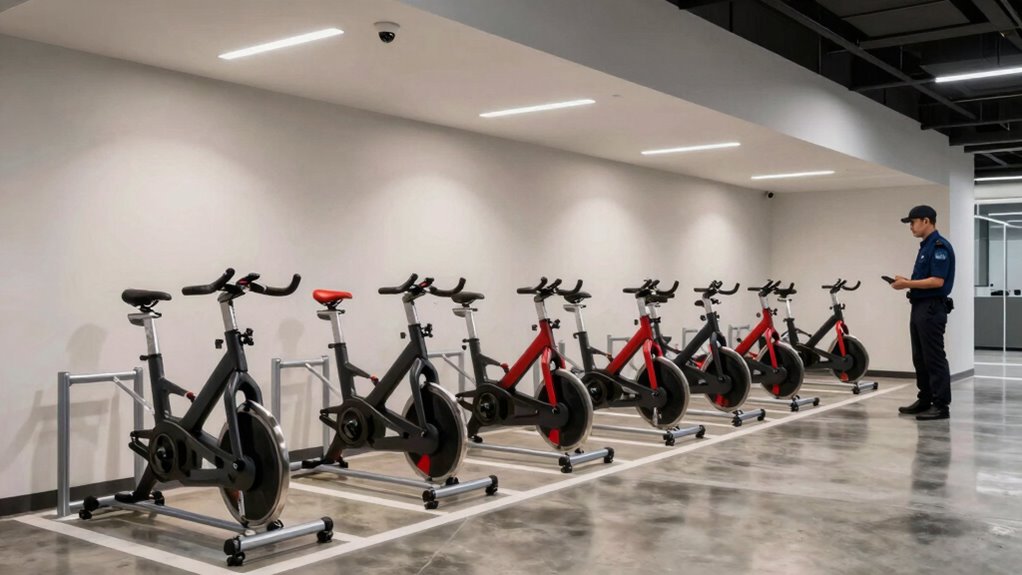
To secure your office bike parking, start by evaluating risks like poor lighting or weak locks. Choose sturdy locking options such as U-locks and install durable, well-lit racks in visible areas. Add surveillance cameras and restrict access with keypads or cards. Establish clear policies on proper parking and locking, then communicate and enforce them consistently. Keeping these security moves in place helps protect bikes effectively, and more tips follow to strengthen your setup even further.
Key Takeaways
- Develop clear security policies and conduct regular audits to identify vulnerabilities in bike parking areas.
- Install high-security locks, well-lit, visible racks, and surveillance cameras to deter theft.
- Implement access controls like keypads or card readers to restrict parking area entry.
- Engage employees through training, signage, and feedback to foster a security-conscious culture.
- Continuously review and upgrade security measures based on assessments and evolving theft tactics.
How to Evaluate Your Office’s Bike Security Risks
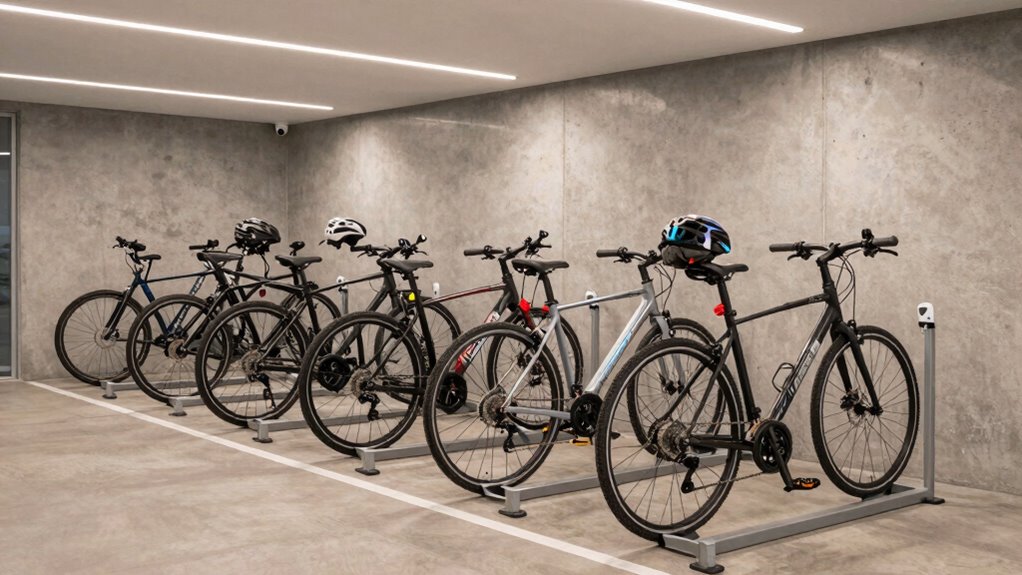
To effectively assess your office’s bike security risks, you need to identify potential vulnerabilities in your current setup. Start by examining where bikes are parked and how visible they are. Are bikes easily accessible or hidden from view? Use risk assessment techniques like inspecting lock placement, access points, and lighting conditions. Consider whether your current bike theft prevention measures are enough, or if bikes could be easily tampered with or stolen. Check if there are frequent foot traffic or secluded areas that might encourage theft. Talk to employees about past incidents or concerns. Additionally, conducting a security audit can help systematically identify weak spots and develop targeted strategies to improve security, reducing the likelihood of theft and ensuring your bikes stay safe. Incorporating sound security practices, such as surveillance cameras and secure bike racks, can further strengthen your office’s defenses. Regularly reviewing security protocols ensures that your measures stay effective against evolving threats. Implementing proper lighting in bike parking areas can also deter potential thieves and enhance overall safety. Furthermore, considering European cloud solutions that emphasize data security can provide added layers of protection for sensitive information related to your security infrastructure.
Selecting the Best Locking Solutions for Employee Bikes
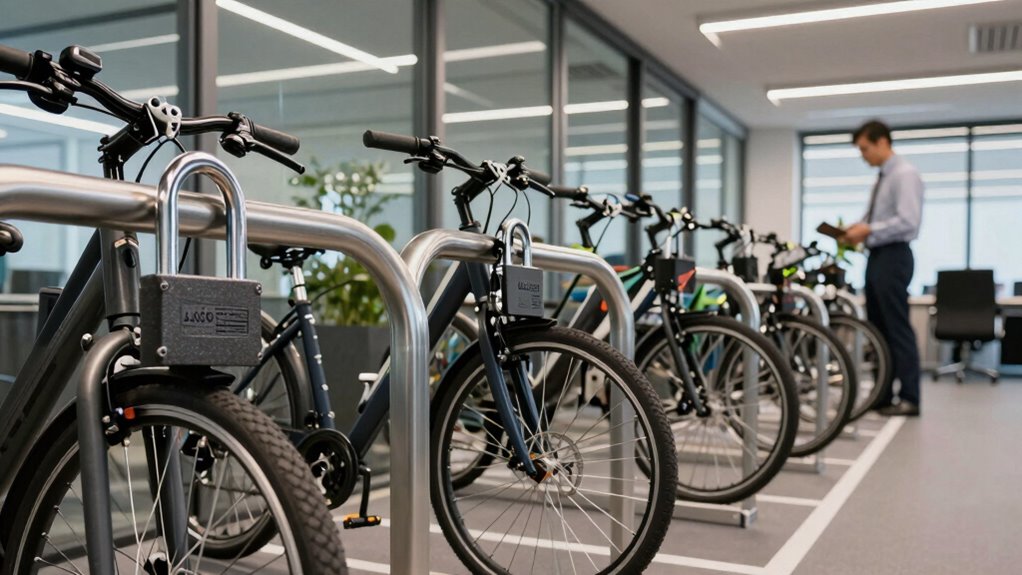
Choosing the right lock is a key step in protecting your employees’ bikes from theft. The best bike lock types include U-locks, chain locks, and cable locks, each offering different levels of security. U-locks are sturdy and resistant to cutting, ideal for high-theft areas. Chain locks provide flexibility and strength but can be heavier. Cable locks are lightweight and convenient but less secure. To maximize security, consider security accessories like lock alarms, tamper-evident labels, or reinforced lock brackets. Using secure locking techniques can further deter theft and protect valuable bikes. Properly lock placement and regular checks can also enhance overall security. Incorporating bicycle security best practices can create a safer environment for employees’ bikes. Use the table below to compare options:
| Lock Type | Security Level | Best For |
|---|---|---|
| U-locks | High | High-risk theft areas |
| Chain Locks | Medium-High | Versatile protection |
| Cable Locks | Low-Medium | Low-risk areas, short-term |
Installing Secure Bike Racks and Designated Parking Areas

Installing secure bike racks and clearly designated parking areas is essential for protecting your employees’ bikes and maintaining an organized workspace. Well-designed bike rack design ensures bikes are stable and easy to lock, reducing theft risk. Proper parking zones help prevent clutter and make bike storage convenient. To encourage usage, consider employee incentives like preferred spots or discounts. Focus on these key points:
- Select bike racks that support a variety of bike types
- Position racks in visible, well-lit locations
- Create designated zones separated from pedestrian pathways
- Promote bike parking as a valuable employee benefit
- Choose multi-surface capable bike racks that accommodate different terrains and bike styles. Additionally, selecting racks with connected features can enhance security and management through modern technology. Incorporating water‑resistant materials can further extend the durability of the racks in various weather conditions. Using appropriate anchoring systems is also crucial to prevent theft and vandalism. Ensuring that the racks are weather-resistant can further improve their longevity and usability in diverse climates.
Adding Surveillance and Access Controls for Bike Security
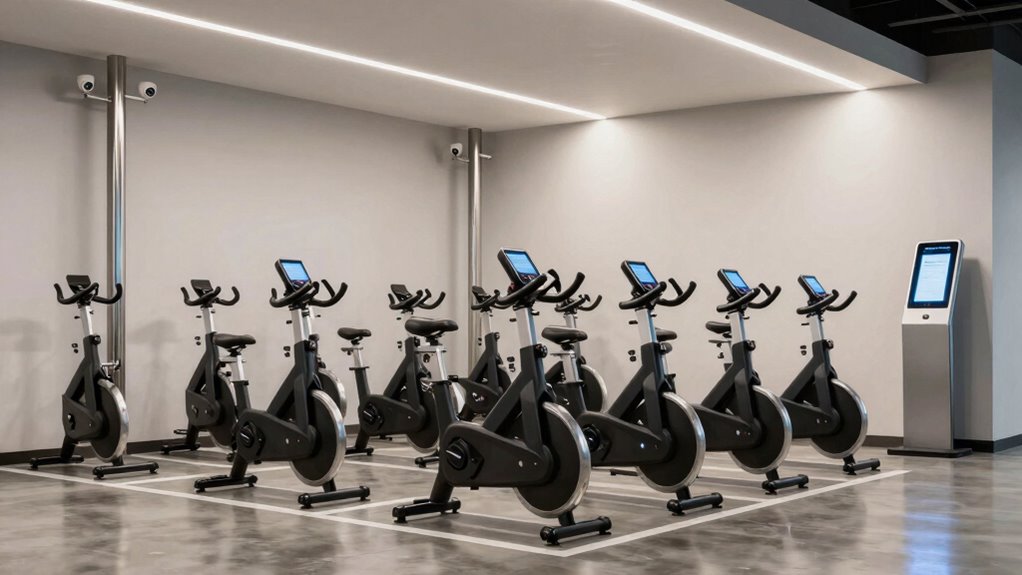
Enhancing bike security often involves adding surveillance cameras and access controls to deter theft and vandalism. Using surveillance technology, you can monitor bike racks and parking areas in real-time, making theft less likely. Installing cameras with clear views helps catch dishonest behavior and provides evidence if theft occurs. Access controls, like keypad or card readers, restrict entry to authorized personnel only, preventing unauthorized individuals from tampering with bikes. Combining these measures creates a layered security system that considerably boosts bike theft prevention. Keep signage visible to inform employees about the surveillance measures, which acts as a deterrent. Proper security planning ensures comprehensive protection and maximizes the effectiveness of your security investments. Additionally, selecting advanced security systems can further enhance protection against sophisticated threats. Incorporating real-time monitoring capabilities allows security teams to respond promptly to incidents, further safeguarding bikes. Utilizing integrated security solutions can streamline management and improve overall effectiveness. By investing in surveillance technology and access controls, you reinforce your commitment to bike security, reducing theft risks and fostering confidence among bike owners. Implementing comprehensive security strategies can also help identify vulnerabilities and adapt to evolving security challenges.
Creating and Communicating Bike Security Policies
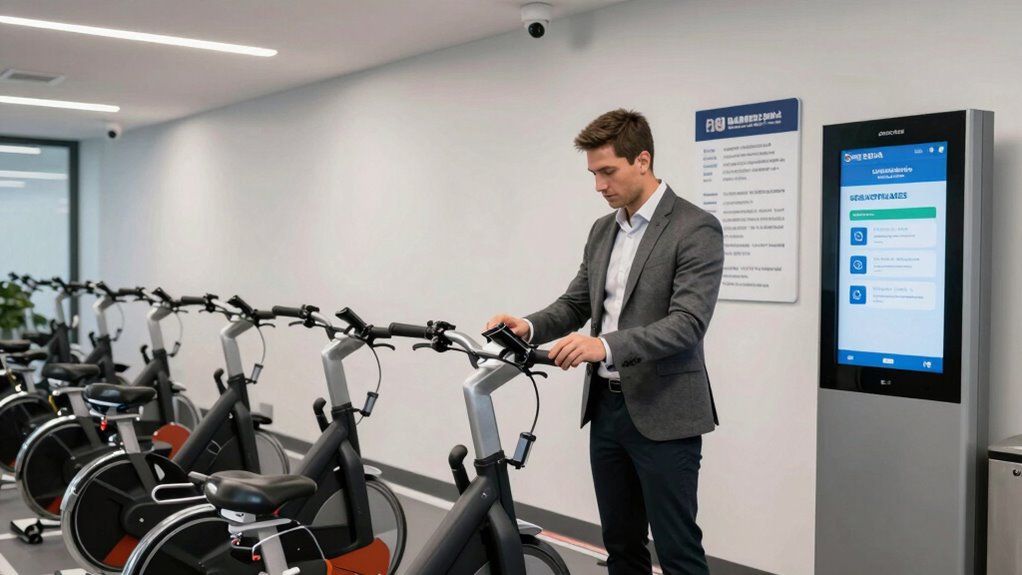
You need clear policy guidelines so everyone understands their responsibilities for bike security. Consistent enforcement makes sure these rules are followed and trusted by all employees. Communicating these policies effectively helps create a secure and organized bike parking environment. Incorporating security best practices into security practices can also enhance overall awareness of safety protocols. Regular training sessions can reinforce these policies and ensure everyone stays informed about bike security measures. Additionally, establishing clear signage can serve as a constant reminder of security policies, and integrating security awareness training can further improve vigilance among staff.
Clear Policy Guidelines
To guarantee bike security policies are effective, clear guidelines must be created and communicated consistently across the organization. Well-defined policies help prevent bike theft and ensure everyone understands security protocols. You should specify what constitutes proper bike parking, lock requirements, and reporting procedures. Make sure employees know the importance of securing their bikes properly and the consequences of non-compliance. Clear policies reduce confusion and foster accountability. To reinforce understanding, consider providing visual aids or written instructions. Regularly update and share these guidelines to address new security challenges. Consistency is key to maintaining a secure environment. Remember, clear policy guidelines empower staff to take responsible actions, minimizing theft risks and strengthening overall bike security. Additionally, implementing security hardware like specialized locks or surveillance can further enhance protection. Incorporating cybersecurity measures, such as monitoring surveillance footage or digital access controls, can also help deter theft and unauthorized access. Understanding security protocols can further ensure that staff respond quickly and effectively to any incidents.
Consistent Enforcement Strategies
Consistent enforcement of bike security policies guarantees that guidelines are more than just words on paper; they become a reliable part of daily routines. When you regularly apply security protocols, you create a culture where bike theft is less likely to occur. Communicate these policies clearly and consistently to all employees, ensuring everyone understands their role in maintaining security. Enforce rules fairly and promptly, whether it’s checking for proper locks or reporting suspicious activity. This consistency builds trust and reinforces the importance of security measures. By staying vigilant and applying policies uniformly, you reduce vulnerabilities and discourage potential thieves. Ultimately, sustained enforcement helps protect bikes, fosters a secure environment, and demonstrates your commitment to employee safety and property preservation.
Monitoring and Improving Your Office’s Bike Security Measures
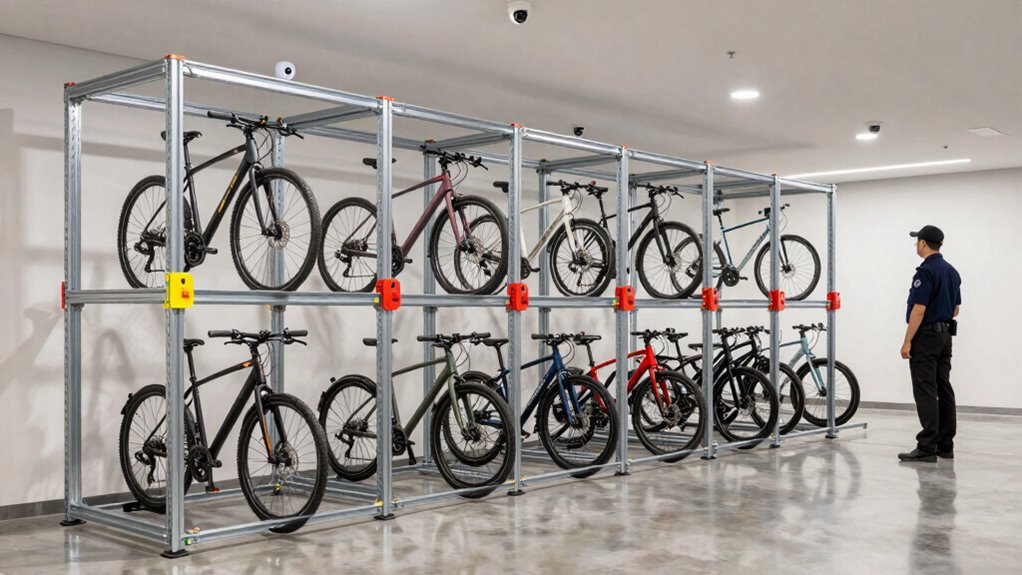
Monitoring your office’s bike security measures is essential for identifying vulnerabilities and guaranteeing that bikes remain safe. Regular assessments help detect weak points and adapt strategies to prevent bike theft. You should involve employees in security efforts to boost bike theft prevention and foster a security-conscious culture.
To improve your measures, consider:
- Conducting periodic security audits to identify gaps
- Gathering employee feedback on existing bike parking issues
- Installing surveillance cameras and lighting for increased visibility
- Updating locks and security equipment regularly
Engaging employees not only enhances security but also creates collective responsibility. Consistent monitoring and improvement ensure your bike parking remains secure, reducing theft risks and promoting peace of mind for everyone.
Frequently Asked Questions
How Can Employee Feedback Improve Bike Security Strategies?
You can improve bike security strategies by actively listening to employee feedback about cycle lanes and bike racks. When employees share concerns or suggestions, you can identify weak spots and implement targeted solutions, like better lighting or more secure bike racks. Their insights help you design a safer environment, ensuring that cycle lanes are well-maintained and bike racks are secure, which boosts overall security and encourages more bike commuting.
What Are Cost-Effective Security Options for Small Offices?
Think of your bike security as guarding treasure in a small castle. You can use sturdy bike lock types like U-locks or chain locks to keep your bikes safe without breaking the bank. Adding clear security signage signals vigilance, deterring potential thieves. These simple, cost-effective measures act like a watchful gatekeeper, protecting your bikes effectively while fitting into a tight budget, ensuring peace of mind for your team.
How Often Should Bike Security Measures Be Reviewed?
You should review your bike security measures at least annually, especially if you have cycling infrastructure or bike sharing programs. Regular checks help identify vulnerabilities, update locks or surveillance, and adapt to new theft tactics. Stay proactive by involving employees in feedback. This ensures your bike parking remains safe, encouraging more cycling and reducing theft risks. Consistent reviews keep your security strategies effective and aligned with evolving threats.
Are There Legal Considerations for Surveillance in Bike Areas?
Think of surveillance like a double-edged sword; it can protect or pierce privacy. You must prioritize legal compliance and address privacy concerns when installing cameras in bike areas. Check local laws, inform users about monitoring, and verify recordings are secure. By balancing security with respect for privacy, you create a safe environment that respects individual rights while safeguarding bikes. This approach keeps your facility both protected and compliant.
How to Handle Bike Theft Incidents Effectively?
When handling bike theft incidents, you should first review your locking protocols to guarantee they’re robust and enforce proper use. Contact security immediately and review security footage if available. Increase deterrence by installing clear security signage, reminding users to lock their bikes properly. Report the theft to authorities, document details thoroughly, and communicate with the victim. Taking these steps helps you respond swiftly and prevent future incidents effectively.
Conclusion
By implementing strong security measures, you can reduce bike thefts by up to 50%. Regularly evaluate risks, choose the right locks, and install secure racks with surveillance to protect your employees’ bikes. Clear policies and ongoing monitoring keep security top of mind. Remember, a well-secured bike area not only deters thieves but also boosts employee satisfaction. Taking these steps guarantees your office bike parking is both safe and inviting, making a real difference in your facility’s security.