
When moving bikes indoors, you should prioritize safety on stairs and elevators. Walk carefully on stairs, keeping the bike close and using handrails if available, and avoid rushing to prevent slips or injuries. For elevators, make certain they aren’t overcrowded, secure your bike with straps, and move slowly to avoid hitting walls or passengers. Understanding best practices can help you transport your bike safely, and there’s more to take into account if you keep exploring these tips.
Key Takeaways
- Walk bikes carefully on stairs, keeping them close to the body and using handrails for stability.
- Remove pedals or handlebars if needed to make carrying easier and more manageable.
- Ensure elevator is in good condition, not overcrowded, and follow building policies for safe use.
- Secure bikes with straps or locks during elevator transport to prevent shifting or damage.
- Prioritize safety by respecting shared spaces, avoiding rushing, and consulting building management for guidelines.

When it comes to moving between floors, stairs and elevators offer two very different options that cater to various needs. If you’re trying to transport your bike indoors, choosing the right method becomes even more important. Stairs might seem straightforward, but they can pose challenges when carrying bikes, especially if the bike is bulky or if you’re traversing a crowded building. Elevators, on the other hand, provide a convenient alternative, but only if you’re aware of proper safety practices. Understanding your options for bike rack options is essential—whether you’re installing a dedicated rack in an elevator or using existing spaces on stair landings.
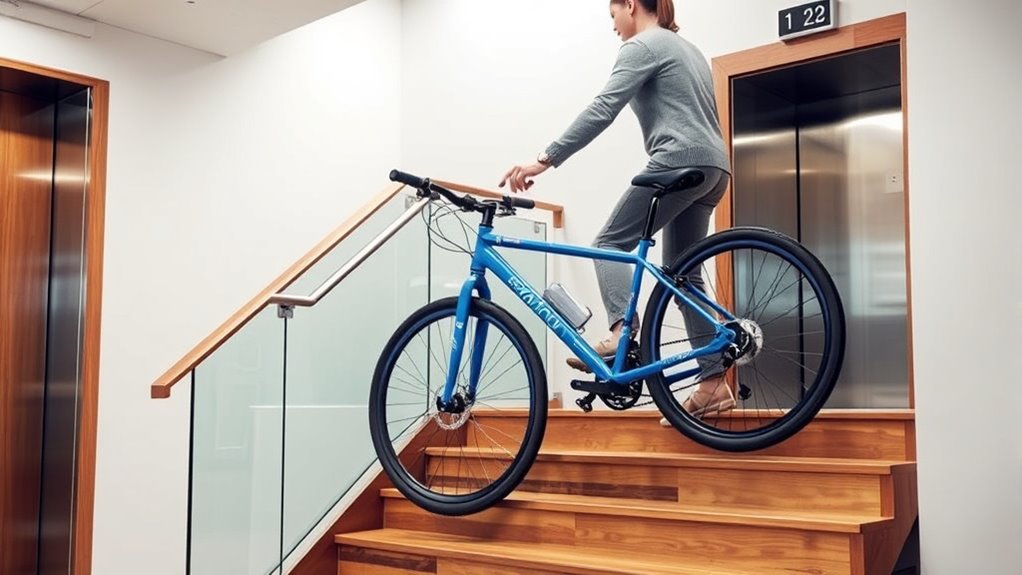
If you prefer using the stairs, be mindful of how you carry your bike to avoid accidents or damage. Keep your bike close to your body, and walk carefully to prevent slipping or losing control. Avoid rushing, especially when carrying bikes up or down stairs, as a fall could result in injury or damage to your bike. If your building has handrails, use them for added stability, and consider removing pedals or handlebars if necessary to make carrying the bike easier. For buildings with bike racks, check if there are designated areas designed for indoor bike storage; this can help prevent clutter and ensure your bike stays secure without the risk of falling or blocking pathways.
Elevator safety tips are vital when moving bikes in elevators. First, ensure the elevator is in good working order and is not overcrowded. Never overload the elevator, as this can compromise safety and damage the equipment. When entering, position your bike carefully to avoid hitting walls or other passengers. If your building has specific policies or bike rack options for elevator use, follow them strictly—some buildings restrict bikes during certain hours or require you to use a designated area. Always secure your bike if possible, using straps or bike locks to prevent it from shifting during transit. Remember that elevator doors can close quickly, so be attentive and ensure your bike is clear of the door’s path before closing it.
Additionally, be considerate of other elevator users. Keep your bike to one side, and communicate clearly if you need extra space. If you’re unsure about bike rack options or safe elevator practices, ask building management for guidance. Choosing the right approach depends on your building’s infrastructure and safety protocols. Whether you opt for stairs or elevators, prioritizing safety and respecting shared spaces will make moving bikes indoors smoother and more secure for everyone involved. Utilizing proper equipment can further improve safety and ease during the process.
Frequently Asked Questions
What Are the Best Protective Gear Options for Bike Transport Indoors?
For bike transport indoors, you should use bike bagging and padding protection to keep your bike safe. A padded bike bag or case offers excellent cushioning against bumps, while foam or bubble wrap adds extra padding around delicate parts like the gears and frame. Secure all parts properly and choose protective gear that minimizes scratches and damage. This way, you move your bike safely without risking damage or mess.
How Do Building Regulations Impact Bike Moving Policies?
Building regulations shape every move you make with your bike indoors, like a giant invisible hand guiding your actions. They set strict standards, including building codes and accessibility standards, that determine how you can transport bikes without causing chaos or damage. Ignoring these rules could turn your smooth move into a disaster, risking fines or safety hazards. So, always check local regulations—they’re your map to a safe, hassle-free bike indoor transfer.
Can Electric Bikes Be Safely Moved via Stairs or Elevators?
Yes, electric bikes can be safely moved via stairs or elevators if you follow proper indoor bike maneuvering techniques and prioritize electric bike safety. When using stairs, ensure you have enough space, lift with your legs, and carry the bike carefully. For elevators, make sure the bike fits comfortably, avoid damaging the interior, and stay cautious. Always check building regulations beforehand to ensure compliance and safe handling.
Are There Specific Tools Recommended for Disassembling Bikes for Indoor Transport?
Imagine your bike as a delicate treasure, and you’re its guardian. To protect it during indoor moves, you’ll want bike frame padding for cushioning and tools like tire levers for wheel removal techniques. These tools act as your shield and key, making disassembly safer and easier. Using the right equipment guarantees your bike’s journey inside is smooth, safeguarding its form and function while you navigate tight spaces.
How to Handle Delicate or Vintage Bikes During Indoor Moving Processes?
When handling delicate or vintage bikes indoors, prioritize custom padding to protect fragile parts. Use gentle, deliberate movements to avoid unnecessary stress or damage. Wrap the bike with soft blankets or foam padding, especially around the frame and components, guaranteeing secure but not tight fits. Always support the bike from the frame and avoid gripping delicate areas. This careful, deliberate approach ensures safe, damage-free transport during your indoor move.
Conclusion
By choosing the right method to move your bike indoors, you guarantee safety and preserve your equipment. Think of stairs and elevators as a delicate bridge—your careful approach keeps everything balanced. When you handle your bike with care, you prevent accidents and damage, just like a tightrope walker maintaining focus. Remember, moving your bike safely is like steering a boat through calm waters—confidence and caution keep everything steady and smooth.