
When riding in the rain, guarantee your tires have good tread and proper pressure to maximize grip. Ride smoothly, avoid sudden braking, and reduce your speed to stay safe on slick surfaces. Wear waterproof gear with reflective elements to stay dry and visible. Be cautious of puddles, painted lines, and potholes that slip more when wet. Staying alert to hazards and adjusting your riding style can prevent accidents—keep going to discover more tips for safe riding in rain.
Key Takeaways
- Ensure tires have sufficient tread depth and proper pressure for optimal grip on wet surfaces.
- Ride at reduced speeds and avoid abrupt throttle, braking, or steering to prevent slipping.
- Increase following distance to allow for longer stopping distances in rainy conditions.
- Use waterproof, reflective gear to stay dry, improve visibility, and maintain focus.
- Be vigilant of puddles, painted lines, and potholes that become more hazardous when wet.
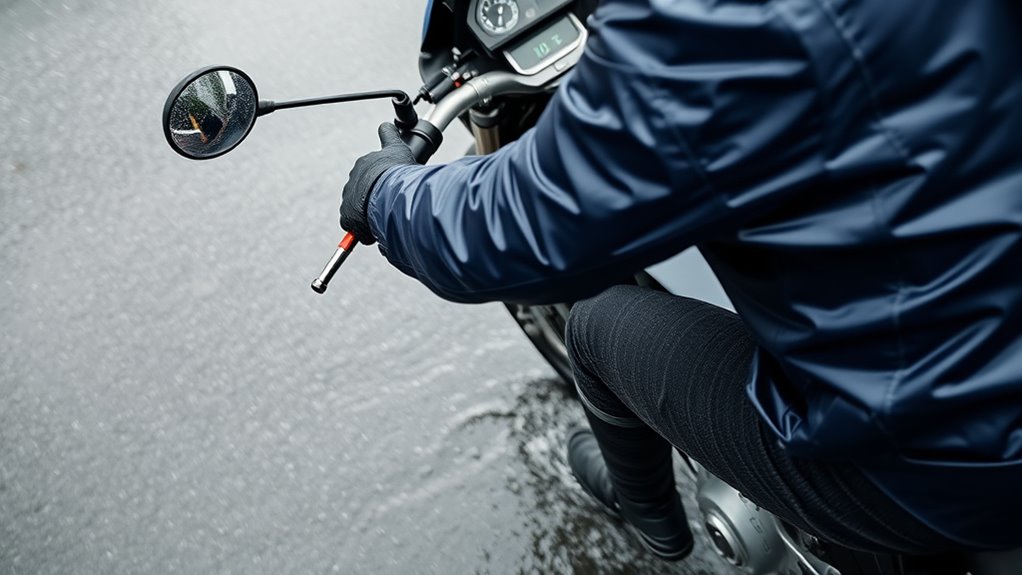
Riding in the rain can be challenging, but with the right mindset and preparation, it becomes a manageable and even rewarding experience. The key to staying safe lies in understanding how to optimize tire grip and wearing appropriate rain gear. Wet roads drastically reduce traction, so your tires need to be in top condition to maintain control. Make sure your tires have sufficient tread depth, as worn tires will slip more easily on slick surfaces. Proper tire pressure is equally important—under-inflated tires can lead to reduced grip, while over-inflated ones may decrease contact with the road, increasing the risk of slipping. When riding in the rain, you should also be mindful of your riding style; smooth, gradual movements on the throttle, brakes, and steering help prevent sudden loss of traction. Regularly inspecting your tires and maintaining optimal pressure enhances safety, especially in wet conditions.
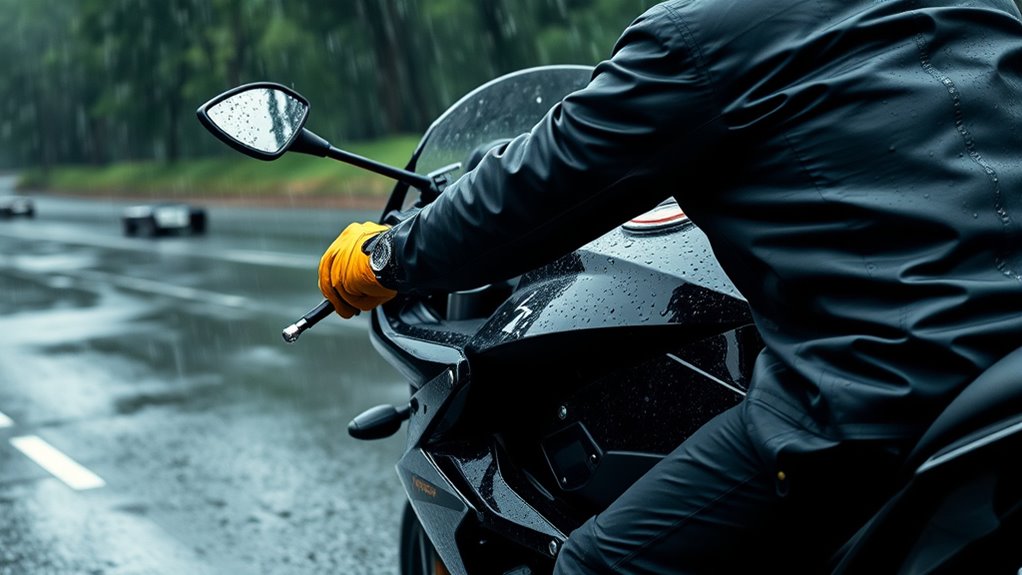
Rain gear plays a pivotal role in keeping you comfortable and focused. Waterproof jackets, pants, gloves, and boots are essential to prevent your clothing from becoming soaked, which can lead to discomfort and fatigue. Wet clothing not only distracts you but also adds weight, making it harder to maneuver your bike effectively. High-quality rain gear designed specifically for motorcyclists offers breathability, so you stay dry on the outside but don’t overheat on the inside. Reflective elements on your rain gear boost visibility, a vital factor when riding in reduced light conditions often accompanying rainy weather. Remember, staying dry isn’t just about comfort; it’s about maintaining your ability to react swiftly to hazards.
As you ride, keep your speed lower than usual to give yourself more time to react to unpredictable road conditions. Reduce your braking force, applying gradually to avoid skidding, especially on painted lines, metal surfaces, or potholes that become slicker when wet. Keep a safe distance from vehicles ahead, as stopping distances increase greatly in the rain. Always be alert to puddles and standing water, which can hide potholes or cause hydroplaning if you hit them at speed. Maintaining a relaxed grip on the handlebars allows your bike to move naturally with the road’s surface, reducing the chance of losing control. Being aware of tire condition and the importance of proper maintenance can significantly improve your safety in adverse weather.
Frequently Asked Questions
How Do Tire Tread Patterns Affect Wet Traction?
Tire tread patterns greatly influence wet traction by channeling water away from the contact patch, reducing hydroplaning risk. You’ll notice that designs with deep grooves and sipes improve grip on wet surfaces. Additionally, tire rubber compounds formulated for wet conditions stay softer and maintain better contact with the road. By choosing tires with ideal tread pattern design and rubber compounds, you guarantee safer, more confident riding in rainy conditions.
What’s the Best Way to Dry Your Riding Gear Quickly?
Ironically, the fastest way to dry your riding gear isn’t by leaving it out in the rain—it’s through effective drying techniques. Hang your gear in a well-ventilated area or use a fan to accelerate airflow. Avoid direct sunlight to prevent damage. Regular gear maintenance, like wiping down and storing properly, helps keep it dry and ready. Remember, quick drying is key to prolong gear life and stay safe on your ride.
Can Rain Reduce Visibility More Than Fog?
Rain can reduce visibility more than fog because rain-induced glare from headlights and streetlights diminishes your ability to see clearly, especially during heavy downpours. Fog scatters light, creating a hazy effect, but rain’s glare and streaks directly obstruct your vision. You should slow down, increase following distance, and wear proper gear to stay safe. Always be extra cautious in rainy conditions, as visibility can deteriorate rapidly compared to fog.
How Often Should You Replace Worn-Out Rain Gear?
You should replace worn-out rain gear immediately, as damaged clothing jeopardizes your safety and comfort. Experts recommend following a regular gear maintenance and replacement schedule—check your gear after each ride and replace it if you notice tears, leaks, or significant wear. Over time, materials degrade, reducing waterproofing and durability. Staying vigilant ensures your rain gear keeps you dry, protected, and safe during wet rides.
Are There Specific Bike Models Better Suited for Rainy Conditions?
Yes, some bike models are better suited for rainy conditions, especially those equipped with rain resistant tires and a sturdy frame for better traction. Look for bikes with wider, knobby tires that channel water away efficiently. Additionally, pairing your bike with waterproof jackets guarantees you stay dry and comfortable. Choosing a model with good mudguards and a reliable braking system also helps you ride safely in wet conditions.
Conclusion
As you ride through the rain, feel the cool droplets kiss your skin and the tires gripping wetter roads beneath you. Trust your gear to keep you dry and visible, while your focus sharpens with each splash and shimmer. Embrace the rhythm of the rain, flowing with the wet pavement rather than fighting it. With caution and confidence, you navigate the storm, your senses alive, riding smoothly through the gray, shimmering world around you.