
As a city rider, mixing frame locks, chain locks, and folding locks helps you stay secure in different situations. Frame locks are quick and discreet for short stops, while chain locks provide strength for longer or riskier periods. Folding locks balance portability and security for daily use. Combining these locks means you’re prepared for various environments and theft risks. Keep exploring, and you’ll discover how to choose the best combo for your ride.

Get your wardrobe favorites delivered free with Prime
- Fast, free delivery on millions of items
- Prime Video, Amazon Music and more included
- Member-only deals all year
Key Takeaways
- Combining lock types enhances security by addressing different theft scenarios and environments.
- Frame locks are lightweight and convenient for quick stops, while chain locks provide high security for longer or high-risk stops.
- Folding locks balance portability and security, making them ideal for city commuting.
- Layering locks reduces theft risk by creating multiple barriers, making theft more difficult.
- Mixing systems allows riders to adapt security based on environment, risk level, and convenience needs.
When it comes to securing your bike in the city, you’ll quickly realize that relying on just one type of lock rarely suffices. Urban environments pose constant risks, and a single lock might not offer enough protection against determined thieves. That’s why many cyclists opt for a combination of locks—each serving a specific purpose and complementing the others. Mixing systems boosts your overall bike security while addressing practical concerns like lock portability, which is vital when maneuvering busy streets or commuting long distances.
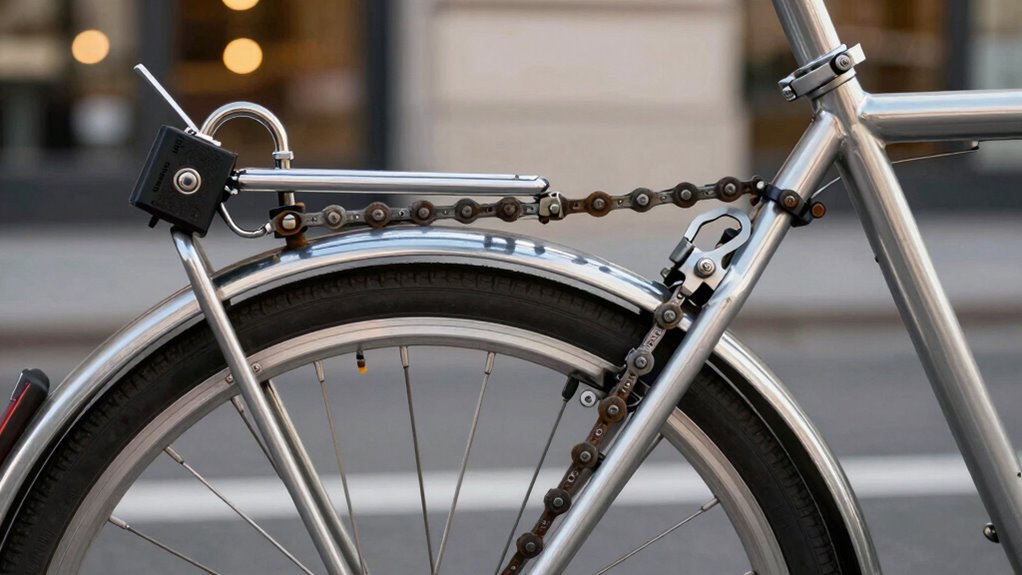
Frame locks are a popular choice for quick, everyday security. Often built into the bike frame itself, they are lightweight and easy to use. Because they’re integrated, they don’t add much weight or bulk, making them perfect for short stops or securing your bike in low-risk areas. However, their limited size means they’re best used as a secondary lock or for securing your wheel to the frame. They excel in providing quick deterrence but shouldn’t be your sole security measure. Their portability is a significant advantage—they’re always with the bike, no need to carry extra gear, which simplifies city riding. Additionally, integrated locks benefit from being less conspicuous, reducing the risk of theft attempts based on visual cues. Using a layered security approach ensures your bike is better protected in various scenarios.
Frame locks are lightweight, integrated, and ideal for quick stops in low-risk areas.
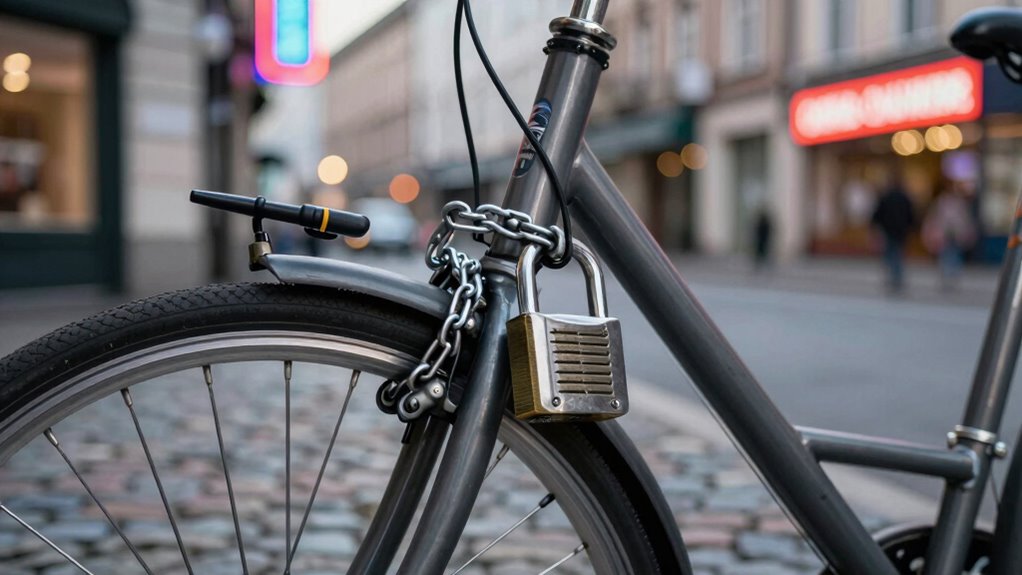
Chain locks, on the other hand, excel at offering high security for longer stops or more exposed areas. Their flexibility allows you to secure your bike to sturdy fixtures like bike racks or poles. While they tend to be bulkier and heavier, making them less convenient to carry around for extended periods, their strength makes them invaluable for guarding against theft in high-risk zones. They’re especially useful when you need to lock your bike to fixed objects that are difficult to secure with a smaller lock. Many riders carry a lightweight chain lock folded into a small bag or attach it to their bike frame, balancing security with portability.
Folding locks combine the best of both worlds. They are compact, lightweight, and portable, making them easy to carry in backpacks or mounted on your bike frame. Despite their size, they often provide a high level of security, especially when used properly. Folding locks are versatile—they can secure your bike quickly and then be stored easily when not needed. They’re ideal for city riders who want a reliable lock that doesn’t compromise on portability or security. Using a folding lock as your main lock and supplementing it with a frame lock for quick stops creates an effective, layered security system. This combination allows cyclists to adapt their security based on the environment and perceived risk.
As an affiliate, we earn on qualifying purchases.
Frequently Asked Questions
How Do Lock Weights Affect Daily Commuting?
Lock weight considerations directly impact your daily commute, as heavier locks can make your ride more cumbersome and tiring. If you choose a bulky chain lock, it might deter frequent use or quick stops. Conversely, lighter locks, like folding or frame locks, ease your journey. Balancing security with weight guarantees your commute remains manageable, preventing fatigue and making lock carrying a seamless part of your daily routine.
Are Certain Locks More Resistant to Specific Theft Methods?
Yes, certain locks are more resistant to specific theft methods. For example, sturdy chain locks resist bolt cutting better, while high-quality folding locks deter lock picking. You should choose your lock based on the theft risk in your area. Combining different lock types can further increase security, making it harder for thieves to target your bike with techniques like lock picking or bolt cutting. Always opt for locks with strong, cut-resistant materials.
Can Using Multiple Lock Types Compromise Security?
While combining different lock types can seem like a clever approach, it might subtly affect lock compatibility, potentially creating vulnerabilities. Using multiple locks does enhance theft deterrence, but if they don’t work seamlessly together, it could lead to overlooked weak points. To maximize security, choose compatible systems that complement each other, ensuring your bike remains well protected without inadvertently inviting unwanted attention.
How Do Weather Conditions Impact Lock Durability?
Weather conditions can considerably impact your lock’s durability. Exposure to rain, snow, or humidity can cause material corrosion, weakening the lock over time. If your lock isn’t weather-resistant, it may rust or jam, making it easier for thieves to break. To protect your bike, choose locks with high weather durability and materials like stainless steel or coated metals, and consider storing your bike indoors during harsh weather.
What Maintenance Is Needed for Different Lock Systems?
You need to regularly check the lock material for rust or wear and apply lubricant to keep it functioning smoothly. For lock installation, make certain all components are tight and secure, especially after harsh weather. Different systems require specific maintenance; for instance, chain locks benefit from lubrication, while folding locks need hinge care. Proper maintenance prolongs lock life, enhances security, and guarantees your bike stays protected in city conditions.
As an affiliate, we earn on qualifying purchases.
Conclusion
By mixing lock types, you can tailor your bike security to fit different situations. For instance, when parking downtown, you might use a sturdy chain lock for high-theft areas, then switch to a lightweight folding lock for quick stops. Imagine a rider who secures their bike with a frame lock near their apartment, then uses a chain lock for longer store visits. Combining systems keeps your bike safer and your options flexible, making city riding worry-free.
As an affiliate, we earn on qualifying purchases.
As an affiliate, we earn on qualifying purchases.
Fall Picks
fall essentials
As an affiliate, we earn on qualifying purchases.