
Choosing a Mac Pro for enterprise IT deployments calls for more than picking the most powerful Apple computer. Fleet teams need to weigh deployment scale, workload, ports, supportability, and whether a desktop or mobile workstation fits the job. My strongest fit for a new, compact desktop fleet is the Mac mini with M4: it pairs a small footprint with 1TB of storage. For heavier desktop workloads, the M4 Pro Mac mini adds more CPU and GPU capacity, while the M5 Max MacBook Pro suits staff who need workstation-class performance away from a desk.

Get your wardrobe favorites delivered free with Prime
- Fast, free delivery on millions of items
- Prime Video, Amazon Music and more included
- Member-only deals all year
The older Xeon Mac Pro remains a niche choice for organizations tied to its legacy expansion and professional hardware, but its refurbished condition and dated connectivity make it a poor default for a fresh rollout. The central tradeoff is clear: newer Apple silicon systems are compact and current, while the older tower offers a different hardware profile at the cost of age and support uncertainty. None of these four listings is a direct substitute for a managed enterprise deployment plan; I would evaluate them against application compatibility, peripherals, lifecycle policy, and available service options before standardizing.
Key Takeaways
- M4 Mac mini: My default pick for repeatable, space-constrained desktop deployments where 1TB storage matters.
- M4 Pro Mac mini: Better suited than the base M4 mini to CPU- and GPU-heavy desk workloads, but its listed 512GB SSD leaves less room for local data.
- M5 Max MacBook Pro: The strongest mobile workstation option here, with 128GB unified memory and 2TB storage, but it is a laptop rather than a shared desktop.
- Xeon Mac Pro: Its 64GB ECC memory and six Thunderbolt 2 ports may matter for specific legacy workflows; refurbished status and old interfaces limit its role in new fleets.
- Deployment fit is workload-specific: I would not treat any product as an automatic enterprise standard without checking app support, device management, security policy, and service coverage.
| Mac mini with M4 10-core CPU and 10-core GPU, 24GB Memory, 1TB Storage | 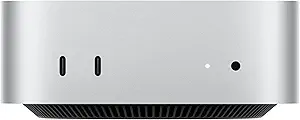 | Best Overall for New Desktop Fleets | Processor: Apple M4 | CPU: 10-core | GPU: 10-core | VIEW ON AMAZON | See Our Full Breakdown |
| Apple 2024 Mac mini Desktop Computer with M4 Pro Chip, 24GB RAM, 512GB SSD |  | Best for Compute-Heavy Desktop Roles | Processor: Apple M4 Pro | CPU: 12-core | GPU: 16-core | VIEW ON AMAZON | See Our Full Breakdown |
| Apple MacBook Pro Laptop with M5 Max, 16.2-inch Display, 128GB Memory, 2TB SSD, Space Black |  | Best Mobile Workstation for Specialized Users | Processor: Apple M5 Max | CPU: 18-core | GPU: 40-core | VIEW ON AMAZON | See Our Full Breakdown |
| Apple Mac Pro Quad Core 3.7GHz Xeon (ME253LL/A) 64GB RAM, 512GB SSD (Renewed) |  | Best for Specific Legacy Workflows | Processor: 3.7GHz quad-core Xeon | Memory: 64GB DDR3 ECC SDRAM | Storage: 512GB SSD | VIEW ON AMAZON | See Our Full Breakdown |
| mac pro for enterprise it deployment | Processor | Memory | Storage | CPU |
|---|---|---|---|---|
| Mac mini with M4 10-core CPU a | Apple M4 | 24GB | 1TB SSD | 10-core |
| Apple 2024 Mac mini Desktop Co | Apple M4 Pro | 24GB unified memory | 512GB SSD | 12-core |
| Apple MacBook Pro Laptop with | Apple M5 Max | 128GB unified memory | 2TB SSD | 18-core |
| Apple Mac Pro Quad Core 3.7GHz | 3.7GHz quad-core Xeon | 64GB DDR3 ECC SDRAM | 512GB SSD | — |
More Details on Our Top Picks
Mac mini with M4 10-core CPU and 10-core GPU, 24GB Memory, 1TB Storage
For a repeatable fixed-desktop rollout, I place this M4 Mac mini first because it balances compact deployment with a roomier 1TB SSD. The 5-by-5-inch enclosure can sit under a monitor or in a tight workstation bay, while 24GB of memory gives general business applications more breathing room than a bare-minimum configuration. Ethernet, HDMI, Thunderbolt, and USB-C also cover common desk setups without requiring a large tower.
Compared with the M4 Pro Mac mini, this model gives up CPU and GPU headroom but doubles the listed storage from 512GB to 1TB. That makes it a more sensible baseline for office, development, and shared workstation deployments where local files, applications, or caches need space. It is not a graphics workstation, however, and the compact design limits internal expansion. I would select it as a fleet candidate only after confirming its software and peripheral fit; the listing does not specify enterprise service terms or deployment management features.
Its advantage is not maximum performance but balanced desk deployment: modest physical demands, current Apple silicon, and practical built-in connectivity. If teams run sustained rendering, heavy GPU workloads, or large local datasets, the M4 Pro option or M5 Max laptop may be a better match. For ordinary office and technical teams, this is the most even compromise in the lineup.
Pros:- Small 5-by-5-inch footprint is easy to place across dense workstations.
- 1TB SSD offers more local capacity than either listed Mac mini with 512GB.
- 24GB memory and M4 silicon suit a broad range of everyday professional tasks.
- Ethernet, HDMI, Thunderbolt, USB-C, and headphone connectivity support common desk setups.
Cons:- No dedicated graphics card or listed internal expansion path.
- The supplied details do not establish enterprise warranty, support, or lifecycle terms.
Best for: IT teams standardizing compact desks for office, developer, and general technical workloads that benefit from 1TB local storage.
Not ideal for: Teams running sustained GPU-heavy workloads, requiring internal expansion, or needing a workstation that staff can carry between sites.
- Processor:Apple M4
- CPU:10-core
- GPU:10-core
- Memory:24GB
- Storage:1TB SSD
- Dimensions:5 x 5 inches
- Connectivity:Thunderbolt, HDMI, USB-C, Ethernet, headphone jack
Our verdict“I would make this the first configuration to evaluate for a new compact desktop fleet that needs balanced performance and 1TB local storage.”
Apple 2024 Mac mini Desktop Computer with M4 Pro Chip, 24GB RAM, 512GB SSD
This M4 Pro Mac mini is the more capable fixed workstation when a team’s applications can use extra CPU or GPU resources. Its 12-core CPU and 16-core GPU distinguish it from the standard M4 mini, making it a better fit for demanding development, media work, and technical tasks where sustained compute matters. The compact 5-by-5-inch format also keeps deployment density close to the base model instead of requiring a tower footprint.
The tradeoff is its 512GB SSD. The standard M4 mini offers twice the listed storage, so I would not choose this Pro model just because the name sounds more enterprise-ready. It makes more sense when workload profiles justify the added processing capability and data can live on managed network or external storage. Both minis lack a dedicated graphics card option and offer limited internal upgrade flexibility, but the Pro chip gives this unit more headroom than the base M4 system.
For IT, the strongest use case is a smaller pool of specialized desks rather than a one-size-fits-all rollout. I would identify users whose applications benefit from the 12-core CPU or 16-core GPU, then compare their storage needs against the standard M4 model. As with the other listings, the provided description does not confirm enterprise support, warranty, or management arrangements, so those need separate validation before procurement.
Pros:- 12-core CPU and 16-core GPU provide more compute headroom than the standard M4 mini.
- Compact footprint supports dense workstation layouts.
- 24GB unified memory suits demanding professional applications.
- Thunderbolt, HDMI, USB-C, and front USB-C access support varied desk peripherals.
Cons:- 512GB SSD is half the listed capacity of the standard M4 mini.
- No dedicated graphics card option or meaningful internal upgrade path is listed.
Best for: Technical teams deploying compact desks for development, creative production, or other workloads that can use stronger CPU and GPU performance.
Not ideal for: Organizations seeking a low-complexity standard fleet with generous local storage or users who do not need the M4 Pro’s extra compute capacity.
- Processor:Apple M4 Pro
- CPU:12-core
- GPU:16-core
- Memory:24GB unified memory
- Storage:512GB SSD
- Ethernet:Gigabit Ethernet
- Ports:Thunderbolt, HDMI, USB-C, headphone jack
- Size:5 x 5 inches
Our verdict“I would reserve this mini for users whose workloads benefit from M4 Pro compute, rather than deploying it as the default for every desk.”
Apple MacBook Pro Laptop with M5 Max, 16.2-inch Display, 128GB Memory, 2TB SSD, Space Black
When a user needs high-end compute but cannot stay at one desk, this M5 Max MacBook Pro is the most capable mobile option in the group. The 18-core CPU, 40-core GPU, and 128GB unified memory target demanding professional workloads; 2TB storage also gives it substantially more local capacity than either mini configuration. Its 16.2-inch Liquid Retina XDR display and broad port selection can support work away from a dock, while Thunderbolt 5, HDMI, and SDXC provide flexibility for specialist peripherals.
This is not a direct replacement for the M4 Pro desktop. The Mac mini is easier to position as a fixed, shared workstation, while the MacBook Pro can follow a named user between offices or work sites. That mobility comes with a large, expensive configuration that may be unnecessary for most employees, and the supplied specs do not describe a separate desktop graphics card or service plan. For enterprise teams, I see it as a targeted power-user device, not a sensible default for a broad fleet.
Compared with the Xeon Mac Pro, the M5 Max has a newer chip generation, a built-in high-resolution display, and modern Thunderbolt 5 connectivity, but it does not offer the same traditional tower form factor. The laptop’s weight and size also make it less convenient than smaller mobile computers, even though it is portable. I would match it to staff whose work truly benefits from its memory and GPU capacity, and avoid assigning it solely for general office productivity.
Pros:- M5 Max combines an 18-core CPU and 40-core GPU for demanding mobile workloads.
- 128GB unified memory and 2TB SSD exceed the listed capacity of the desktop minis.
- Thunderbolt 5, HDMI, and SDXC provide a broad set of connection options.
- Integrated 16.2-inch Liquid Retina XDR display supports work away from a dock.
Cons:- High-end memory and processing capacity may be unnecessary for most employees.
- Large, heavy laptop format is less convenient than smaller mobile systems.
- A mobile computer is less suited than a mini to shared, fixed workstation deployment.
Best for: Mobile specialists, creative professionals, and technical staff who need high memory and GPU capability across multiple work locations.
Not ideal for: Large standardized desk fleets, routine office users, or teams that prefer fixed workstations with simpler replacement and peripheral planning.
- Processor:Apple M5 Max
- CPU:18-core
- GPU:40-core
- Display:16.2-inch Liquid Retina XDR
- Memory:128GB unified memory
- Storage:2TB SSD
- Ports:Three Thunderbolt 5, MagSafe 3, SDXC, HDMI, headphone jack
- Wireless:Wi-Fi 7, Bluetooth 6
Our verdict“I would assign this to mobile power users with demonstrable memory and GPU demands, not use it as the general enterprise desktop standard.”
Apple Mac Pro Quad Core 3.7GHz Xeon (ME253LL/A) 64GB RAM, 512GB SSD (Renewed)
This renewed Xeon Mac Pro has a narrow place in an enterprise plan: organizations that already depend on compatible legacy workflows, peripherals, or software and need a tower-class Mac with 64GB ECC memory. Its quad-core 3.7GHz Xeon, dual AMD FirePro D300 graphics, and six Thunderbolt 2 ports set it apart from the compact Apple silicon minis. For a team maintaining an existing environment, those familiar interfaces and professional components may matter more than having the newest chip.
As a new fleet purchase, though, it trails the other entries. The refurbished condition introduces uncertainty around remaining service life and warranty coverage, while Thunderbolt 2 and USB 3.0 make peripheral planning less current than on the M4 minis or M5 Max laptop. The standard M4 mini is a more straightforward candidate for broad deployment, and the M4 Pro mini is a stronger fit for modern compute-heavy desk roles. The Mac Pro’s ECC memory is a meaningful distinction, but it does not erase its age or the need to verify compatibility.
I would shortlist this only if an organization has a documented reason to preserve a Xeon-era workflow and can confirm the seller’s condition grading, warranty, and maintenance path. Its 64GB DDR3 ECC memory and dual graphics may suit a specialized workstation, but the listed quad-core processor is modest beside newer Apple silicon systems. For most IT departments planning new hardware standards, this is a continuity option rather than a forward-looking default.
Pros:- 64GB DDR3 ECC memory distinguishes it from the listed Apple silicon systems.
- Dual AMD FirePro D300 graphics are included.
- Six Thunderbolt 2 ports and four USB 3.0 ports support legacy peripheral setups.
- Tower workstation format suits environments already built around this Mac Pro generation.
Cons:- Renewed condition makes warranty, component condition, and remaining service life key unknowns.
- Thunderbolt 2 and the quad-core Xeon are dated compared with the other listed systems.
- Bulkier design is harder to place than either Mac mini.
Best for: Organizations extending a known Xeon Mac workflow that specifically benefits from ECC memory, dual FirePro graphics, or existing Thunderbolt 2 equipment.
Not ideal for: IT teams buying new standard desktops, users needing current high-performance compute, or organizations without a verified refurbishment and support plan.
- Processor:3.7GHz quad-core Xeon
- Memory:64GB DDR3 ECC SDRAM
- Storage:512GB SSD
- Graphics:Dual AMD FirePro D300, 2GB GDDR5 each
- Thunderbolt:Six Thunderbolt 2 ports
- USB:Four USB 3.0 ports
- Video output:HDMI 1.4 UltraHD
- Condition:Renewed
Our verdict“I would consider this renewed Mac Pro only to sustain a verified legacy workload, not as the foundation for a new enterprise fleet.”

How We Picked
I ranked these systems for the practical demands of enterprise IT deployment, not for general consumer appeal. My priorities were whether a model can be deployed consistently across desks or teams, how its processor and memory profile match demanding business workloads, the value of its storage and connectivity for a managed setup, and the risks created by age, mobility, or limited upgrade options.
The ranking favors current Apple silicon desktop systems for organizations building a new fixed workstation fleet. The M4 Mac mini leads because its compact 5-by-5-inch footprint, 24GB memory, and 1TB SSD create a balanced configuration for general deployments. The M4 Pro Mac mini follows for teams that need more compute and graphics capability, although its smaller listed SSD weakens its case as a standard workstation. The mobile M5 Max MacBook Pro ranks highly for specialized users needing exceptional memory and portability, but its laptop format and high-end configuration make it less suited to a uniform desk fleet. The renewed Xeon Mac Pro comes last for broad rollouts: its ECC memory and workstation design have value, yet refurbished status and Thunderbolt 2 create lifecycle and compatibility questions.
I used only the supplied product information. It does not establish warranty terms, exact management compatibility, repair coverage, or full lifecycle commitments, so I do not assume those benefits. Before purchasing for an organization, I would confirm each item’s condition and support terms, validate required software, and check that the listed ports and network configuration match the deployment environment.
| mac pro for enterprise it deployment | Ports |
|---|---|
| Mac mini with M4 10-core CPU a | — |
| Apple 2024 Mac mini Desktop Co | Thunderbolt, HDMI, USB-C, headphone jack |
| Apple MacBook Pro Laptop with | Three Thunderbolt 5, MagSafe 3, SDXC, HDMI, headphone jack |
| Apple Mac Pro Quad Core 3.7GHz | — |
Factors to Consider When Choosing Mac Pro For Enterprise It Deployments
I would choose an enterprise Mac by matching the machine to a deployment role first, then checking compatibility, service coverage, and fleet management requirements. These four listings span compact Apple silicon desktops, a high-spec mobile workstation, and a refurbished legacy tower; they do not serve the same job.Set a standard desktop baseline
For most fixed desks, I would start with the M4 Mac mini’s 24GB memory and 1TB SSD. It combines a small footprint with more local storage than the other mini, and its listed Ethernet, HDMI, Thunderbolt, and USB-C connections cover common setups. A consistent baseline simplifies imaging, peripheral selection, and replacement planning compared with mixing several configurations without a workload reason.
That does not mean it suits every user. Before rolling it out, I would check memory pressure, application requirements, monitor support, and whether user data belongs on local storage or managed network services. If 1TB is more local capacity than the standard role needs, storage policy may affect which configuration is sensible; if the work is CPU- or GPU-intensive, the Pro mini may be a better fit.
Pay for compute only where the workload uses it
The M4 Pro mini is the targeted desktop choice when teams have a clear need for its 12-core CPU and 16-core GPU. Compared with the standard M4 mini, it offers more processing capability but only 512GB of listed storage. I would assign it to defined technical or creative roles rather than use the Pro label as a blanket reason to upgrade every workstation.
For staff who need both advanced compute and mobility, the M5 Max MacBook Pro offers a much larger memory and storage configuration. That extra capacity may matter for specialist workflows, but it also makes the device a poor stand-in for a broad, uniform desktop fleet. A job-based configuration policy helps keep each system aligned with actual application needs.
Treat refurbished hardware as a lifecycle decision
The renewed Xeon Mac Pro should be evaluated differently from new-generation systems. Its 64GB ECC memory and six Thunderbolt 2 ports may be useful when preserving a specific older workflow, but the listing alone does not settle warranty duration, condition, parts availability, or remaining service life. I would get those details in writing before considering it for business-critical work.
Legacy hardware can keep a compatible task running, but it can also complicate peripheral procurement and support. If an existing application or accessory depends on this generation, I would document that dependency and plan a migration path. If not, the current Mac minis are easier candidates for a new deployment standard.
Check fleet operations beyond the specification sheet
Processor and port counts do not tell me whether a system fits an organization’s full operating model. I would confirm compatibility with required macOS applications, endpoint management tools, security controls, authentication, backup, display standards, and any remote support process. The supplied listings do not specify enterprise management, warranty coverage, or lifecycle commitments, so I would verify those with the relevant seller and Apple support channel.
Also consider who owns each machine. A fixed mini can suit a shared or assigned desk; a MacBook Pro is more naturally allocated to an individual who works across locations. Cable security, docking, Ethernet availability, asset tracking, and replacement inventory can change the real deployment fit even when the core performance looks strong.
Match storage and connectivity to the desk
The listed storage spans 512GB in both minis and the Xeon tower, 1TB in the base M4 mini, and 2TB in the M5 Max laptop. I would set capacity by role and data policy rather than assume more local storage is always preferable. Teams relying on local media, virtual machines, or large project files may value the larger SSD; tightly managed environments may prioritize network or external storage instead.
Port generation is another practical separator. The M5 Max includes Thunderbolt 5, while the renewed Mac Pro lists Thunderbolt 2. The minis list Thunderbolt, HDMI, USB-C, and Ethernet, but the descriptions do not provide full port-generation detail. I would verify exact model specifications and test docks, displays, and specialized devices before ordering a fleet.
Frequently Asked Questions
Which option is the best starting point for a new enterprise desktop fleet?
I would begin with the M4 Mac mini with 24GB memory and 1TB storage for general fixed-desktop roles. Its compact footprint and balanced listed configuration make it the most broadly applicable desktop in this comparison. I would still validate application compatibility, service arrangements, and device management before adopting it as a standard.
Is the M4 Pro Mac mini worth choosing over the standard M4 mini?
It is the better candidate when a specific workload can use the M4 Pro’s 12-core CPU and 16-core GPU. The standard M4 mini has a 1TB SSD versus 512GB in the Pro listing, so I would not assume the Pro is the better fleet choice for every user. Match compute needs and storage policy before selecting the higher-capability desktop.
Does the M5 Max MacBook Pro make sense for a desktop deployment?
It can serve as a powerful workstation for a user who moves between locations, especially when the role benefits from its 128GB memory, 2TB SSD, and high-end CPU and GPU. For fixed desks or shared workstation pools, the Mac mini form factor is usually a more natural fit. I would reserve the laptop for roles where mobility and its specific performance profile justify the added complexity.
Should an enterprise buy the renewed Xeon Mac Pro?
I would consider it only when there is a verified need for a compatible legacy workflow, its ECC memory, or its Thunderbolt 2 connections. Before purchase, I would confirm the refurbished condition, warranty coverage, and practical service life. For a new standard fleet, the older quad-core platform and dated connectivity make the M4 minis more straightforward options.
What should IT confirm before deploying any of these Macs?
I would validate required software and peripherals, device management and security compatibility, network and monitor connections, backup policy, warranty terms, and the support path for each model. The product details supplied here do not establish enterprise service coverage or lifecycle commitments. A small pilot with representative users and accessories can expose issues before a wider deployment.
Conclusion
For a general enterprise desktop standard, I would shortlist the M4 Mac mini with 1TB storage first: it has a compact form and the most balanced listed desktop configuration. For a specialist fixed workstation whose software benefits from extra CPU and GPU capacity, I would choose the M4 Pro mini and plan around its 512GB SSD. For a mobile power user, the M5 Max MacBook Pro brings the strongest listed memory, graphics, and local storage, but its premium capability is hard to justify for ordinary desk roles.
I would keep the renewed Xeon Mac Pro out of new-fleet plans unless a documented legacy requirement makes its ECC memory, graphics, or ports necessary. Across all four options, my final procurement check would be application fit, management compatibility, warranty and support terms, and the organization’s replacement timeline. The best deployment is the one that matches a defined user role and can be supported consistently—not simply the machine with the most impressive specification.