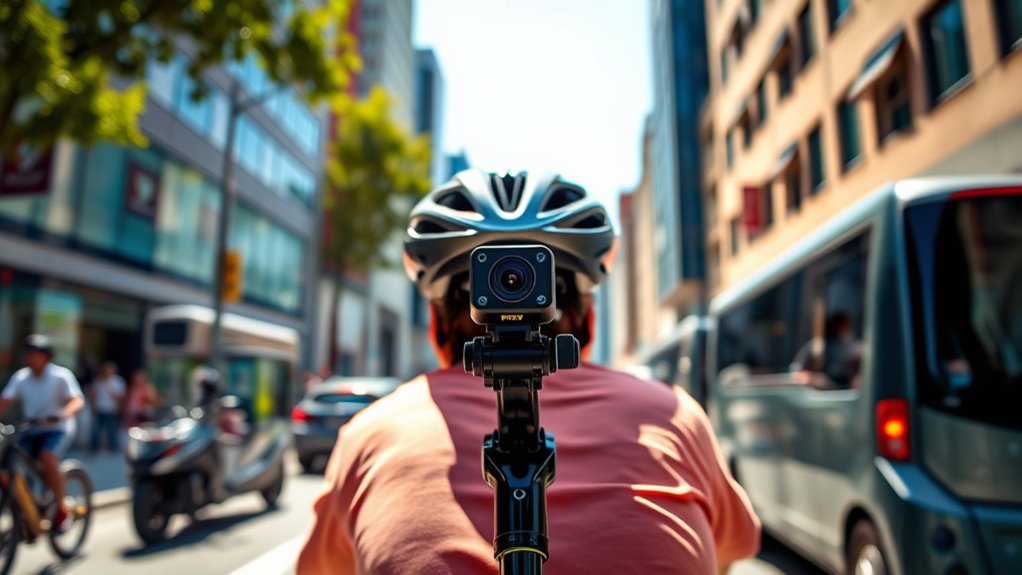

Rear bike cameras help riders see traffic approaching from behind, record rides, or add radar and tail-light alerts, but no single design does all three equally well. I rank the Garmin Varia RCT715 first for riders who want camera recording paired with radar and a tail light, while the Xybervu VeloScope is a strong alternative for an integrated display and smart light. For a simpler screen-based view, the Fitense 5-inch system offers a larger display, though it takes up more cockpit space. The main tradeoffs are screen size, recording features, mounting and power needs, and whether radar alerts matter more than a live view. Read on for the full comparison, buying advice, and picks by rider type.

Get your wardrobe favorites delivered free with Prime
- Fast, free delivery on millions of items
- Prime Video, Amazon Music and more included
- Member-only deals all year
Key Takeaways
- Radar and a live rear view solve different problems: the Garmin Varia RCT715 and Xybervu VeloScope pair a camera with alerting or lighting features, while most listed systems focus on showing a camera feed on a handlebar display.
- Display size is a cockpit tradeoff: Fitense‘s 5-inch model prioritizes a larger image, while the several 4.3-inch options leave a smaller footprint; check handlebar space and viewing position before choosing.
- Recording changes what a camera can do after the ride: the Garmin and several products explicitly list recording features, but buyers should verify storage, loop behavior, and how footage is retrieved before relying on it.
- Similar product names do not prove identical hardware: the lineup includes several PARKVISION 4.3-inch systems with different listed features, so buyers should compare the exact model’s zoom, recorder, monitor, and included accessories.
- Compactness brings a different compromise: the portable mini camera favors small size and loop recording, while dedicated monitor systems are better suited to riders who want a continuous rear image at a glance.


| rear bike camera | Battery capacity | Display | Water resistance | Video resolution |
|---|---|---|---|---|
| Fitense 5-Inch 1080p Bicycle R | 10,000 mAh | 5 inches, 1080p | IP67 | — |
| Fitense 4.3-Inch 1080p Bike Re | 5,000 mAh | 4.3 inches, 1080p | IP67 | — |
| PARKVISION Bicycle Rear View C | 8,000 mAh | 4.3-inch 1080p LED | — | — |
| Bike Rear View Camera 1080P wi | 5,000 mAh | — | IP68 | 1080p |
| Xybervu VeloScope Bike Radar C | — | 4.3 inches | — | — |
| PARKVISION Bicycle Rear View C | 8000mAh | — | Waterproof | 1080p |
| Garmin Varia RCT715 Rearview R | — | — | — | 1080p or 720p |
| VEKOOTO VB5 Bicycle Rearview C | — | — | — | 1080p |
| Portable Mini Bike Camera Fron | 2000mAh | — | IPX6 | — |
| FEISIKE Bike Rear View Camera | 6000mAh | — | IP64 | 720p |
| ATOVANKA Bicycle Rear View Cam | 10,000 mAh | 4.3 inches | — | — |
| PARKVISION Bicycle Rear View C | 10,000 mAh | 4.3 inches | — | 1080p |
| PARKVISION Bicycle Rear View C | 8000 mAh | 4.3 inches | IP68 | — |
| Wankskey W12 Bicycle Rear View | — | 4.3-inch LCD | — | 1080p |
More Details on Our Top Picks
Fitense 5-Inch 1080p Bicycle Rear View Camera with 360° Rotatable Mount
The 5-inch 1080p screen gives this Fitense a larger rear-view image than the 4.3-inch Fitense monitor, which may help riders who want to check traffic at a glance. Its 10,000 mAh battery is rated for 10–12 hours, giving it a longer stated runtime than the PARKVISION 4.3-inch model’s up-to-nine-hour rating. The camera’s angle adjusts from 130° to narrower views, so riders can trade peripheral coverage for a less crowded image. Color and infrared night vision, an IP67 rating, and a 360° mount add flexibility across conditions and handlebar setups. The tradeoff is a 5–6-hour recharge, and this system is for live viewing only: it does not record. Choose it for extended rides where runtime and screen size matter more than saving footage.
Pros:- Large 5-inch 1080p display
- 10–12-hour rated battery life from a 10,000 mAh battery
- Adjustable camera angle and color or infrared night vision
- IP67 rating and 360° tool-free mount
Cons:- Does not support video recording
- Takes 5–6 hours to recharge
- Larger display takes more handlebar space than the 4.3-inch alternatives
Best for: E-bike and touring riders who want a larger live rear view and battery capacity for long outings
Not ideal for: Riders who need recorded footage after a close pass or want a faster-charging, smaller display
- Display:5 inches, 1080p
- Camera field of view:130°, adjustable to 110° or 100°
- Battery capacity:10,000 mAh
- Water resistance:IP67
- Night vision:Color and infrared black-and-white
- Handlebar compatibility:20–30 mm
- Recording:Not supported
Our verdict“Choose this Fitense for longer rides that call for a large live image and extended battery life, provided you do not need recordings.”
Fitense 4.3-Inch 1080p Bike Rear-View Camera and Monitor
This Fitense keeps the core live-view setup of its 5-inch sibling while using a 4.3-inch monitor that takes up less space on the handlebars. It still offers a 1080p image, an adjustable 130° camera, and color or infrared night vision, so the smaller screen does not mean giving up the headline viewing features. Compared with the PARKVISION 4.3-inch camera, its stated 7–8-hour battery life is shorter than PARKVISION’s up-to-nine-hour rating, though this model lists a four-hour recharge. IP67 protection and tool-free mounting suit everyday riders who want a straightforward rear view. Its main limit is clear: like the larger Fitense, it does not record, and the battery may fall short for long days away from a charger.
Pros:- Compact 4.3-inch monitor with 1080p display
- Adjustable 130° view and color or infrared night vision
- IP67-rated design
- Tool-free handlebar installation and four-hour listed recharge
Cons:- Battery life is rated for only 7–8 hours
- Does not support video recording
- Fits handlebars measuring 20–30 mm, limiting mounting compatibility
Best for: Commuters with limited handlebar space who want a 1080p live rear view and a simpler, smaller monitor
Not ideal for: Touring riders who need all-day battery capacity or cyclists who want a recording of traffic events
- Display:4.3 inches, 1080p
- Camera angle:130°, adjustable to 110° or 100°
- Battery capacity:5,000 mAh
- Recharge time:4 hours
- Water resistance:IP67
- Handlebar compatibility:20–30 mm
- Recording:Not supported
Our verdict“Pick this Fitense when handlebar space matters more than the larger screen and longer runtime of its 5-inch sibling.”
PARKVISION Bicycle Rear View Camera with 4.3-Inch HD Display
PARKVISION’s standout detail is its 1,000-nit anti-glare display, a useful advantage for riders who struggle to see smaller monitors in bright daylight. Its 4.3-inch 1080p screen is the same size as the Fitense compact model, while the 120° lens is narrower than Fitense’s adjustable 130° view. That narrower view may suit riders who prefer a less expansive image, but offers less stated coverage. Battery life reaches up to nine hours from an 8,000 mAh battery, between the two Fitense systems’ stated runtimes. Broad mounting compatibility, including handlebars from 18–38 mm, also suits a wider range of bikes and mobility devices. The tradeoffs are a 5–6-hour recharge and no video or audio recording; this is a visibility aid, not a capture system.
Pros:- Bright 1,000-nit anti-glare display
- Up to nine hours of stated battery life
- USB Type-C charging
- Fits handlebars from 18–38 mm and several other vehicle types
Cons:- Does not record video or audio
- 120° field of view is narrower than the Fitense cameras’ 130° setting
- Takes 5–6 hours to recharge
Best for: Daytime commuters and e-bike riders who prioritize a readable screen and need a mount that fits wider handlebars
Not ideal for: Riders who need footage, a very wide camera view, or a short recharge before another ride
- Display:4.3-inch 1080p LED
- Screen brightness:1,000 nits
- Field of view:120°
- Battery capacity:8,000 mAh
- Recharge time:5–6 hours
- Handlebar compatibility:18–38 mm
- Recording:No video or audio recording
Our verdict“Choose PARKVISION for a bright, readable display and broader mounting compatibility, as long as live viewing is all you need.”
Bike Rear View Camera 1080P with Night Vision, Wide Angle Lens, Loop Recording, 5000mAh Battery
Unlike the three live-view-only systems in this batch, this camera supports loop recording and lists storage capacity up to 128 GB. That makes it the practical pick for riders who want footage as well as a rear image, a capability the Fitense models and PARKVISION camera lack. Its 110° field of view is narrower than their 120° or 130° options, so it gives up some stated coverage in exchange for recording. The 4.3-inch 1080p screen, night vision, mirror switching, and IP68 rating add useful range for daily rides in wet conditions. The 5,000 mAh battery is rated for up to 300 minutes—shorter than any of the first three systems’ stated runtimes—and the product data gives no GPS or advanced connectivity. It suits riders who put evidence capture ahead of all-day use.
Pros:- Supports loop recording with listed storage capacity up to 128 GB
- 1080p capture and night vision
- IP68 all-weather rating
- Mirror switching and a 4.3-inch screen
Cons:- Battery life is rated for up to 300 minutes
- 110° field of view is narrower than the Fitense and PARKVISION live-view options
- No built-in GPS or advanced connectivity features are listed
Best for: Commuters who want loop-recorded rear footage and an IP68-rated camera system for wet-weather trips
Not ideal for: Long-distance riders who prioritize a wide live view and longer battery life over saved footage
- Video resolution:1080p
- Screen size:4.3 inches
- Field of view:110°
- Storage capacity:128 GB
- Battery capacity:5,000 mAh
- Battery life:Up to 300 minutes
- Water resistance:IP68
- Recording:Loop recording supported
Our verdict“Choose this model if recorded rear footage matters more than the longer runtime and wider stated view of the Fitense systems.”
Xybervu VeloScope Bike Radar Camera with 1080p Rear View, Smart Tail Light, and 4.3-Inch Display
The VeloScope adds vehicle detection up to 190 meters to a 1080p live rear view, making it a different kind of safety tool from the Fitense and PARKVISION systems, which rely on the rider checking their screens. Its visual and audible alerts, paired with a tail light that activates when a vehicle approaches, can draw attention to traffic before it fills the camera image. Continuous recording also gives it an advantage over those live-view-only models. The stated over-10-hour battery life is competitive with the larger Fitense, while IP56 protection is a lower rating than the IP67 and IP68 options elsewhere in this lineup. At 0.7 kg, it is substantially weighty, and its display still takes handlebar room and attention. This suits riders who want alerts and recording in one system and accept a heavier setup.
Pros:- Radar detects approaching vehicles up to 190 meters away
- Visual and audible alerts plus an approach-activated tail light
- 1080p rear view with continuous recording
- Over 10 hours of stated battery life
Cons:- 0.7 kg unit adds noticeable weight
- IP56 weather resistance is lower than the IP67 and IP68 alternatives
- The display takes handlebar space and can compete for attention
Best for: Road cyclists who want approaching-vehicle alerts, an active tail light, and continuous recording alongside a rear view
Not ideal for: Weight-conscious riders or cyclists who prefer a simple monitor with stronger stated water protection
- Display:4.3 inches
- Camera resolution:1080p
- Radar detection range:Up to 190 meters
- Battery life:Over 10 hours
- Weather resistance:IP56
- Mounting:Seatpost mount
- Weight:0.7 kg
- Warranty:1 year
Our verdict“Pick the VeloScope if radar alerts and recording matter more to you than a lighter setup or a higher water-resistance rating.”
PARKVISION Bicycle Rear View Camera with 4.3-Inch 1080p Monitor
Its long stated runtime is the main reason I’d rank this PARKVISION ahead of the Garmin Varia RCT715 for riders who want a continuous rear view through a full day out. The 4.3-inch 1080p monitor and 110° lens give a broad, detailed view, while low-light sensitivity and automatic brightness adjustment help keep the picture usable as conditions change. The monitor detaches for carrying, which also makes it less tempting to leave on the bike when parked. Compared with the FEISIKE, PARKVISION offers higher listed resolution and a wider stated battery capacity, while FEISIKE adds zoom and a wider claimed field of view. The tradeoff here is the wired connection, which can constrain camera and screen placement, and the approximately nine-hour runtime can vary with settings.
Pros:- 1080p display feed gives more listed detail than the FEISIKE’s 720p video
- 110° lens and night vision support rear awareness across changing light
- Detachable monitor is easier to carry off the bike
- Approximately nine-hour stated runtime suits extended rides
Cons:- Wired connection can limit where the camera and monitor can be mounted
- Actual runtime varies with brightness and use
- Does not list radar alerts or automatic incident footage saving
Best for: Commuters and touring cyclists who want a live rear view for long rides and can route a cable between the camera and monitor.
Not ideal for: Riders who want a wireless setup or incident recording; this system is wired and its listed features focus on live viewing.
- Video resolution:1080p
- Display size:4.3 inches
- Field of view:110°
- Battery capacity:8000mAh
- Stated runtime:Approximately 9 hours
- Night vision sensitivity:0.01 Lux
- Connection:Wired
- Water resistance:Waterproof
Our verdict“Choose this PARKVISION for a detailed live rear view and long stated runtime if a wired setup fits your bike.”
Garmin Varia RCT715 Rearview Radar with Camera and Tail Light
Radar alerts paired with incident footage give the Garmin Varia RCT715 a different job from the monitor-led systems in this roundup. It can warn a compatible Garmin device or the Varia app about vehicles approaching from up to 140 meters behind, while its camera records video and automatically saves footage around detected incidents. The integrated tail light adds another layer of visibility. Compared with the VEKOOTO VB5, which provides a larger 4.5-inch live display, Garmin prioritizes alerts and recorded evidence over a dedicated monitor. That makes it a stronger fit for riders who want to know a vehicle is coming without constantly checking a screen. The tradeoff is four to six hours of stated battery life, depending on light mode, and the setup depends on a compatible phone or Garmin device.
Pros:- Radar detects approaching vehicles from up to 140 meters
- Automatically saves footage around detected incidents
- Integrated tail light improves visibility to motorists
- Multiple modes let riders manage battery use
Cons:- Four to six hours of stated battery life may not cover longer rides
- Alerts require a compatible Garmin device or the Varia app
- Camera use may be restricted in some jurisdictions
Best for: Road cyclists who ride with a compatible Garmin device or phone and want vehicle alerts, a tail light, and incident footage in one unit.
Not ideal for: Riders seeking a large, always-on rear view or a full-day setup without recharging; its battery life is shorter than the PARKVISION’s stated runtime.
- Video resolution:1080p or 720p
- Frame rate:30 fps
- Radar detection range:Up to 140 meters (153 yards)
- Battery life:Up to 4–6 hours, depending on light mode
- Connectivity:Bluetooth and Wi-Fi
- Storage:16 GB SD card included
- Weight:5.2 ounces
- Mounting type:Seat post mount
Our verdict“Pick the Garmin if vehicle alerts and saved incident footage matter more to you than a large live-view monitor.”
VEKOOTO VB5 Bicycle Rearview Camera System
The 4.5-inch screen is the VEKOOTO VB5’s clearest advantage for riders who want to see the road behind without squinting at a small monitor. Its 1080p, 30 FPS feed and 110-degree lens provide a live view, while color night vision is aimed at low-light rides. Compared with the 4.3-inch PARKVISION, the VB5 offers a slightly larger display and names a two-year warranty; PARKVISION, by contrast, lists an approximately nine-hour runtime and detachable screen. VEKOOTO’s plug-and-play positioning and broad bicycle compatibility make it appealing across city, road, mountain and electric bikes. The cable still links camera and monitor, though, and no battery runtime is specified, making it harder to judge whether it will suit long rides between charges.
Pros:- 4.5-inch monitor is larger than the 4.3-inch PARKVISION and FEISIKE displays
- 1080p, 30 FPS live feed
- Color night vision is specified for low-light viewing
- Two-year warranty and compatibility across several bicycle types
Cons:- Camera and monitor require a cable connection
- Battery runtime is not specified
- No radar alert or incident-saving feature is listed
Best for: Cyclists who value a larger live rear-view screen and want one system suited to different bicycle styles.
Not ideal for: Touring riders who need a known all-day battery estimate or anyone who wants a wireless camera-to-display connection.
- Model:VB5
- Video resolution:1080p
- Frame rate:30 FPS
- Display size:4.5 inches
- Field of view:110 degrees
- Night vision:Color
- Cable length:9.8 ft
- Warranty:2 years
Our verdict“Choose the VB5 if a larger live display matters most and you can accept a wired connection with unspecified runtime.”
Portable Mini Bike Camera Front/Rear with Gravity Anti-Shake, 7H Loop Recording Video Recorder, 2000mAh IPX6 Waterproof Small Pocket Cam for Cycling, Vlogging, Sports Travel Security Cam for E Bike
At 70g, this pocket camera favors portability and recording over the live rear-view experience offered by the PARKVISION and VEKOOTO systems. Loop recording can overwrite older clips, while locked files stay protected, giving commuters a way to retain selected footage without managing every recording. Its IPX6 rating suits wet rides, and the built-in 100-lumen light offers bright, dim and SOS modes. The camera can also mount on a helmet or chest strap, so it has more uses away from the bicycle than a dedicated rear monitor. But the supplied description does not state video resolution, lens angle, or a screen for viewing traffic live. This is a recording camera with flexible mounts, not a like-for-like substitute for a rear camera monitor; buyers should check the mounting orientation and app workflow for their intended rear-facing use.
Pros:- 70g main unit is lighter and more portable than the dedicated monitor systems
- Loop recording overwrites older clips while locked clips remain protected
- IPX6 water resistance is suited to rainy rides
- 100-lumen light includes an SOS flashing mode
Cons:- No display is specified for live rear viewing
- Video resolution and field of view are not provided
- The listed 2000mAh battery and seven-hour recording claim do not describe rear-view display runtime
Best for: Cyclists who want a lightweight, mountable recorder for protected loop footage, vlogging, and occasional rear-facing use.
Not ideal for: Riders who need a clear, continuous rear traffic view on a handlebar display; no monitor or rear-view specifications are provided.
- Main unit weight:70g
- Battery capacity:2000mAh
- Stated continuous recording:7 hours
- Water resistance:IPX6
- Storage support:8–256GB microSD
- Wireless connection:2.4GHz Wi-Fi
- Built-in light:100 lumens, three modes
- Recording format:MP4
Our verdict“Choose this compact camera for portable recording and locked clips, but pick a monitor system if live traffic viewing is your priority.”
FEISIKE Bike Rear View Camera with 4.3-Inch Monitor
Zoom gives the FEISIKE a framing advantage over the fixed-view PARKVISION and VEKOOTO systems: riders can switch among 1X, 2X and 3X to trade a broad scene for a closer look at traffic. It also lists a 145° lens angle, a 195° field of view, and six infrared lights for low-light visibility. The 4.3-inch IPS display is paired with a 6000mAh battery rated for up to ten hours, though resolution is listed as 720p. That makes it a more adjustable but lower-resolution option than PARKVISION’s 1080p monitor. The cable and separate camera add setup work, and the stated two-meter cable may constrain placement. Riders should also note that the listing gives both IP64 water resistance and 12 volts, so they should confirm power and mounting needs for their bicycle.
Pros:- 1X, 2X and 3X zoom let riders adjust how closely they view traffic
- 145° lens angle and listed 195° field of view provide broad coverage
- Six infrared lights support low-light visibility
- Up to ten hours of stated battery life
Cons:- 720p resolution is lower than the 1080p PARKVISION and VEKOOTO systems
- Separate camera and monitor connect by a two-meter cable
- 12-volt specification may need checking against the intended bicycle setup
Best for: Riders who want to adjust rear framing between a broad view and a closer look, and whose bike can accommodate the wired camera and monitor.
Not ideal for: Cyclists who prioritize 1080p detail or a simple, cable-free install; PARKVISION lists higher resolution and both systems require wiring.
- Screen size:4.3 inches
- Display technology:IPS/LCD
- Video resolution:720p
- Lens angle:145 degrees
- Field of view:195 degrees
- Zoom:1X, 2X, 3X
- Battery capacity:6000mAh
- Water resistance:IP64
- Cable length:2 meters
Our verdict“Choose the FEISIKE if zoomable framing matters more than 1080p detail and you can manage its wired installation.”
ATOVANKA Bicycle Rear View Camera with 4.3-Inch 1080p Display
The 10,000 mAh battery and up to 10-hour runtime make this ATOVANKA a strong fit for riders who want a live rear view across a long day without recording footage. Its four selectable viewing angles let you choose a narrower view for detail or a wider one to cover more of the road; the PARKVISION Bicycle Rear View Camera with Zoom offers a similar angle-adjustment approach and runtime. Automatic brightness adjustment helps the 4.3-inch screen adapt as light changes. The tradeoff is that this is strictly a viewing system: it does not record video. Its mounting fit is also more limited than the PARKVISION Zoom model, and the listed compatibility excludes flat handlebars, cargo racks, and high rear seats, so check your bike layout before choosing it.
Pros:- Up to 10 hours of battery life suits extended rides
- Four selectable viewing angles allow a narrower or wider rear view
- Automatic brightness adjustment adapts the display to changing light
- Tool-free installation includes a 3 m cable
Cons:- Does not record video
- Listed as incompatible with flat handlebars, cargo racks, and high rear seats
Best for: Long-distance riders who want an adjustable live rear view and up to 10 hours of operation, without needing recorded footage
Not ideal for: Cargo-bike riders or cyclists with flat handlebars or high rear seats, because the listed mounting compatibility excludes those setups
- Display:4.3 inches
- Resolution:1080p
- Viewing angles:60°, 90°, 110°, 130°
- Battery capacity:10,000 mAh
- Advertised battery life:Up to 10 hours
- Charging:USB-C
- Handlebar compatibility:22.2–31.8 mm
- Installation:Tool-free; includes 3 m cable
Our verdict“Choose the ATOVANKA for long rides and adjustable live viewing if your bike fits its mounting limits and you do not need recordings.”
PARKVISION Bicycle Rear View Camera with Zoom
The PARKVISION Zoom pairs a 4.3-inch 1080p live display with four viewing angles, but its wider stated handlebar range and seat-post fit give it a practical mounting advantage over the ATOVANKA. The anti-vibration mount and tool-free setup suit riders who want a straightforward installation on a compatible bike. Like the ATOVANKA, it runs for up to 10 hours and adjusts screen brightness automatically, so choosing between them comes down largely to fit: ATOVANKA lists a narrower handlebar range, while this PARKVISION option also lists seat-post mounting. It still cannot record video, and its product information excludes bikes with luggage racks. At 0.66 kg, the system is also a substantial addition for riders trying to keep their bike setup light.
Pros:- Four selectable viewing angles help tailor the rear view
- Up to 10 hours of battery life
- Automatic display brightness adjustment
- Tool-free mounting with an anti-vibration mount and listed seat-post fit
Cons:- Does not record video
- Not compatible with bicycles that have luggage racks
- Listed weight of 0.66 kg may be unwelcome on a lightweight build
Best for: Cyclists whose handlebar dimensions fall outside the ATOVANKA’s stated range or who need a listed seat-post mounting option
Not ideal for: Riders with luggage racks or anyone prioritizing a lightweight setup, given the stated rack incompatibility and 0.66 kg weight
- Display:4.3 inches
- Video resolution:1080p
- Viewing angles:120°, 100°, 80°, 60°
- Display brightness:Up to 1000 nits
- Battery capacity:10,000 mAh
- Advertised battery life:Up to 10 hours
- Handlebar fit:17–38 mm
- Seat-post fit:0.67–1.50 inches
Our verdict“Pick this PARKVISION when its broader stated mounting options suit your bike and you want long-runtime live viewing without recording.”
PARKVISION Bicycle Rear View Camera Recorder with 4.3-Inch 1080p Monitor
Unlike the ATOVANKA and PARKVISION Zoom, this PARKVISION model records rear-facing video with loop recording, so it can serve riders who want footage as well as a live view. The included 32GB TF card gets recording started without a separate card purchase, while night vision and an IP68-rated housing suit rides in dim or wet conditions. Its 110° view is fixed in the supplied specs, rather than offering the selectable angles listed for those two live-view systems. Runtime is also shorter on paper: up to 9 hours from an 8000mAh battery, compared with their stated 10 hours. Recordings are video only, with no audio, and the listing excludes cargo bikes. The fit range covers specified seatposts and handlebars, but installation depends on compatibility with your bike.
Pros:- Loop recording captures rear-facing video
- Includes a 32GB TF card and supports up to 128GB
- Night vision supports viewing and recording in dim conditions
- IP68-rated housing and tool-free installation
Cons:- Records video without audio
- Up to 9 hours of advertised runtime is less than the 10 hours stated for the ATOVANKA and PARKVISION Zoom
- Not compatible with cargo bikes
Best for: Commuters who want a live rear view plus loop-recorded video for reviewing rides or retaining footage
Not ideal for: Cargo-bike riders or cyclists who want adjustable viewing angles, recorded audio, or a longer stated runtime
- Camera resolution:1080p
- Display:4.3 inches
- Viewing angle:110°
- Battery capacity:8000 mAh
- Advertised runtime:Up to 9 hours
- Included memory:32GB TF card
- Maximum memory support:128GB
- Water resistance:IP68
- Recording:Loop recording; video only, no audio
Our verdict“Choose this PARKVISION recorder if recorded rear footage matters more to you than adjustable viewing angles or the longest stated runtime.”
Wankskey W12 Bicycle Rear View Camera System with 4.3-Inch 1080p Monitor
The Wankskey W12 stands out for its 130-degree field of view and color night vision, giving riders a broad live rear picture in conditions where a narrower view may miss more of the surroundings. Compared with the PARKVISION Recorder’s specified 110° view, the W12 covers a wider angle, but the PARKVISION adds loop recording and includes a memory card. Wankskey describes its camera as waterproof and its bracket as adjustable through 360 degrees, with tool-free installation for several bicycle types. That flexibility comes with a practical setup cost: the monitor needs mounting and a cable must be routed. The supplied information does not state battery runtime, making it harder to judge whether it will cover a full day like the ATOVANKA or PARKVISION Zoom.
Pros:- 130-degree field of view gives a broad rear picture
- Color night vision supports use in low light
- Adjustable 360-degree bracket allows flexible positioning
- Tool-free installation is listed for several bicycle types
Cons:- Battery runtime is not specified
- Requires mounting a monitor and routing a cable
- Recording capability is not listed
Best for: City, road, mountain, trailer, or e-bike riders who favor a broad live rear view and color night vision
Not ideal for: Riders who need a stated all-day battery runtime or want recorded footage, since runtime is unspecified and recording is not listed
- Model:W12
- Video resolution:1080p
- Display:4.3-inch LCD
- Field of view:130°
- Frame rate:30 FPS
- Mounting type:Handlebar mount
- Battery type:Lithium-ion
- Compatible bicycles:City, mountain, road, trailer, and electric bikes
Our verdict“Pick the Wankskey W12 for its wide live view and color night vision if you can accept cable routing and an unspecified runtime.”

How We Picked
I compared the listed systems by how directly they address common rear-camera needs: a view of approaching traffic, a record of the ride, or alerts that can help a rider notice vehicles. I also weighed display size and placement, stated recording functions, lighting or radar integration, battery and weather details where provided, and the likely setup burden. A camera’s advertised resolution alone does not establish image clarity in changing light, so I treated feature claims as selection criteria rather than proof of real-world performance.
The order favors versatility for riders who want more than a rear image, followed by systems whose stated features suit clear use cases such as a larger display, a compact recorder, or a simpler monitor setup. Products with near-matching names are kept distinct where their listed features differ, but I do not infer unlisted technical distinctions. Before buying, confirm the exact model, included mounting parts, display compatibility, recording storage, and power arrangements; the product names alone do not answer those questions.
Factors to Consider When Choosing Rear Bike Cameras
I would start by deciding what you expect the rear camera to do during and after a ride. A live image, a recording, and a vehicle alert are separate jobs, and choosing between them narrows the field more quickly than comparing resolution labels.
Choose Between a Live View, Recording, and Radar Alerts
A live display helps you glance at the traffic behind you, while recording creates footage you may want to review later. Radar adds a warning when vehicles approach, which can draw attention without requiring you to keep watching a screen. These functions overlap in some products but are not interchangeable. Decide which one would change your riding most, then check that the exact model supports it. A common mistake is to assume that a rear camera automatically records or detects vehicles. If you need evidence after an incident, check how the device stores and exports clips before buying.
Match the Screen to Your Cockpit
A larger monitor can make the rear image easier to pick out at a glance, but it occupies more handlebar space and may compete with a cycling computer, phone, or lights. A smaller screen can fit a crowded cockpit more easily, though its image may be harder to read quickly. Measure the free space and consider where the display will sit relative to your normal riding posture. A screen mounted too low or off to the side can demand more attention than a mirror or radar alert. Check whether the mount allows useful angle adjustment and whether it suits your handlebar shape. Prioritize a glanceable position over the largest screen you can fit.
Check Recording Storage Before You Depend on Footage
Recording claims do not tell you how much footage a device retains or how quickly old clips are overwritten. Look for details on memory-card support, loop recording, clip locking, and file transfer. Loop recording can keep a device recording without manual cleanup, but it may erase older footage unless important clips are protected. Battery capacity and stated recording time also matter, since a camera that runs out of power before the end of a ride cannot capture the full trip. Ask how easy it is to retrieve a file using the device or a computer. If recording is your main reason to buy, treat storage workflow as a core feature.
Plan for Power, Weather, and Ride Length
Camera systems can draw power from a built-in battery or another power source, and their runtimes may differ between recording, displaying video, and using lights. Compare the expected runtime with your longest regular ride, leaving room for cold weather and battery aging. Water-resistance labels also vary, so check what the stated rating covers and whether the display, cable connections, and mounts share that protection. A compact unit may be easier to pack, while a display-and-camera setup can mean more cables and parts to secure. Think through charging and storage at home as well as use on the bike. A setup that is inconvenient to recharge may spend more time unused.
Inspect Mounting and Compatibility as a Full System
Rear cameras need a stable view, and the camera angle can change if a mount shifts on rough roads. Confirm where the rear unit attaches, whether the mount clears a rack, saddle bag, or seat post, and whether the screen bracket fits your handlebar. Systems with separate camera and display units also need a sensible cable route or a reliable connection between components. A listing may show a mount in a product image without making clear which fittings come in the box. Check your bike’s accessories and frame layout before ordering. If you move the system between bikes, tool-free adjustments and included mounts can matter more than extra video features.
Spend More Only for Features You Will Use
Integrated radar, camera recording, and lighting can reduce the number of separate devices on a bike, but they also add functions you may not need. A straightforward monitor system may be the better fit if your priority is seeing traffic behind you. A compact camera can suit riders who want to record without a permanent display. Before paying for a feature bundle, decide whether you will use its alerts, footage, live screen, or light on most rides. Also check whether a phone or cycling computer is needed for setup or playback. The right choice is the least complicated system that covers your actual riding needs.
Frequently Asked Questions
Should I choose a rear camera with a display or one with radar alerts?
I would choose a display when seeing the scene behind you is the main goal, and radar when you want an alert that helps you notice approaching traffic without repeatedly looking back. A camera image can show context, while a radar warning is designed to call attention to a vehicle’s approach. Some products combine functions, but that can add setup and power demands. Think about whether you naturally glance at a screen while riding and whether the alerts would be useful on your usual roads. If you are unsure, prioritize the function you would use consistently rather than the longest feature list.
Can I rely on a rear bike camera to replace looking over my shoulder?
No camera view should be treated as a complete substitute for checking the road before changing position or turning. A display can help you monitor traffic, but its image may not show every angle or make distance easy to judge. Screen placement, glare, vibration, and changing light can also affect what you can see. Use the device as an aid alongside safe observation and signaling. When choosing a system, favor a view or alert that you can check with brief glances rather than one that holds your attention.
Do all rear bike cameras record video?
No. Some systems are presented mainly as a camera and monitor for a live rear view, while others explicitly list recording or loop recording. A product name that includes “camera” does not by itself confirm that it saves ride footage. Check whether storage is built in or requires a memory card, how clips are retained, and how you can transfer them. If you want footage for later review, confirm those details for the exact model before purchasing.
What should I check before buying one of the similar PARKVISION models?
Compare the full model listing and included parts rather than relying on the shared brand and 4.3-inch display description. This roundup includes PARKVISION options described as a rear-view camera, a 1080p monitor, a zoom model, and a recorder system. Those names suggest different feature sets, but they do not establish every compatibility or storage detail. Confirm whether the version you are buying records, what its zoom function does, how it is powered, and which mounts are included. Save the exact listing or model identifier so replacement parts and support match your unit.
Is a larger rear camera monitor worth the extra cockpit space?
It can be worthwhile if a larger image makes quick glances easier for you, especially when the display is mounted in a clear line of sight. The Fitense 5-inch option stands apart from the many 4.3-inch systems on screen size, but a larger monitor can crowd other controls and accessories. Screen size alone does not guarantee a clearer image or better visibility outdoors. Check mounting dimensions, angle adjustment, and how the display will fit alongside your existing gear. If your handlebars are already busy, a smaller screen or an alert-focused device may be easier to live with.
Conclusion
Best overall: I would start with the Garmin Varia RCT715 if radar, recording, and a tail light belong in one rear unit. Best value in function: the Fitense 4.3-inch system is a sensible shortlist choice for riders who want a dedicated live monitor without prioritizing a larger screen. Best premium: the Garmin is also the strongest feature bundle in this lineup for riders who will use its radar and camera functions. Best for beginners: I would look at a straightforward 4.3-inch monitor option, such as the FEISIKE, after confirming its mounting and power details. For specific needs, choose the Fitense 5-inch for a larger display, the Xybervu VeloScope for integrated camera, light, and radar features, or the portable mini camera if compact recording matters more than a dedicated screen. Match the system to the job you need it to do, then verify recording, fit, and power details for the exact model.
Fall Picks
fall essentials
As an affiliate, we earn on qualifying purchases.