The best wireless bike computer system for most riders is the iGPSPORT BSC500, which pairs a larger touchscreen with voice navigation for riders who want route guidance at a glance. The iGPSPORT BSC200S is a more compact navigation-focused alternative, while the CatEye Padrone suits riders who want a simpler, easy-to-read display without GPS complexity. The main tradeoff is between basic speed-and-distance tracking and GPS computers that add route features, connectivity, and more setup. Screen size, sensor support, and ease of use matter as much as the wireless connection itself. Read on for how all 14 systems differ and which one best fits your rides.

Get your wardrobe favorites delivered free with Prime
- Fast, free delivery on millions of items
- Prime Video, Amazon Music and more included
- Member-only deals all year
Key Takeaways
- The iGPSPORT BSC500 stands out for navigation: its larger touchscreen and voice guidance offer a more route-focused experience than the simpler speed-and-distance CatEye models.
- The BSC200S is the more compact GPS choice: it provides route navigation on a 2.4-inch screen, while the BSC500 favors a larger display and touch interaction.
- Not every wireless computer needs GPS: the CatEye Urban, Velo, and Padrone prioritize straightforward ride data, which can be a better fit for riders who do not need mapping.
- Water protection and screen size vary across GPS options: the S1 lists IPX7 protection, while the CooSpo lists IP67; buyers should compare the stated rating and mounting needs rather than assume all units handle weather alike.
- The lineup includes duplicate and closely related entries: the ROCKBROS M1 Pro appears twice, so its presence does not represent two distinct feature choices; compare its 2.9-inch GPS format against the alternatives instead.
| BKVTOP Wireless GPS Bike Computer with 2.4-Inch Screen |  | Best for Sensor-Free Simplicity | Display: 2.4-inch LCD | Weight: 50 g | Battery runtime: Up to 28 hours | VIEW ON AMAZON | See Our Full Breakdown |
| iGPSPORT BSC200S GPS Bike Computer, Wireless Route Navigation 2.4” Screen Bluetooth ANT+ Waterproof |  | Best for Connected Training | Screen: 2.4-inch color display | Dimensions: 82 x 53 x 14.1 mm | Weight: 66 g | VIEW ON AMAZON | See Our Full Breakdown |
| Wireless GPS Bike Computer with 2.4 Inch LCD, Waterproof, Auto Backlight, Supports MPH/KMH, 9 Languages |  | Best for Multilingual Basics | Display: 2.4-inch LCD | Battery: 650 mAh rechargeable | Battery life: Up to 28 hours | VIEW ON AMAZON | See Our Full Breakdown |
| iGPSPORT BSC500 GPS Bike Computer with 3.3-Inch Touchscreen and Voice Navigation |  | Best for Route-Led Rides | Display: 3.3-inch touchscreen | Controls: Touchscreen and buttons | Positioning: Dual-band L1/L5; GPS, BeiDou, GLONASS, Galileo, and QZSS | VIEW ON AMAZON | See Our Full Breakdown |
| CATEYE Urban Wireless Bike Computer |  | Best for Simple Sensor-Based Tracking | Display: LCD | Battery life: 1 year | Sensor type: Analog wireless speed sensor with wheel magnet | VIEW ON AMAZON | See Our Full Breakdown |
| S1 Entry Level GPS Bike Computer Wireless, Laminated 2.8″ Screen, Ultra Thin and Lightweight Bike Speedometer, IPX7 Waterproof |  | Best Lightweight GPS Starter | Display: 2.8-inch laminated anti-glare screen | Weight: 58 g | Thickness: 14 mm | VIEW ON AMAZON | See Our Full Breakdown |
| Navihood L4 Wireless GPS Bike Computer |  | Best for Sensor Connectivity | Display: 2.3-inch laminated anti-glare LCD | Weight: 45 g | Thickness: 13.5 mm | VIEW ON AMAZON | See Our Full Breakdown |
| SY Wireless Bicycle Speedometer and Odometer with LCD Display | 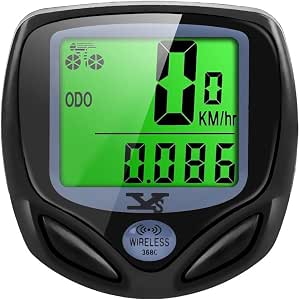 | Best for Simple Speed Tracking | Display: 1.2-inch LCD | Sensor type: Speed sensor | Measurements: Speed, distance, and riding time | VIEW ON AMAZON | See Our Full Breakdown |
| CYCPLUS G1 Wireless GPS Bike Computer | 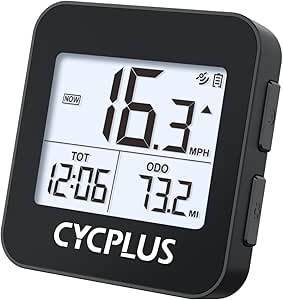 | Best for Long Battery Life | Display: 2-inch FSTN screen | Battery capacity: 1200 mAh | Battery life: More than 55 hours | VIEW ON AMAZON | See Our Full Breakdown |
| CatEye Velo Wireless Bike Computer |  | Best for Core Ride Metrics | Displayed metrics: Current, maximum, and average speed; trip and total distance; elapsed time; calories; pace arrow; clock | Stop detection: Automatically pauses elapsed time and average speed | Odometer setting: Manual setting after battery changes | VIEW ON AMAZON | See Our Full Breakdown |
| ROCKBROS M1 Pro Wireless GPS Bike Computer with 2.9-Inch LCD |  | Best for Long Battery Life | Display: 2.9-inch LCD | Positioning: GPS, GLONASS, BeiDou, Galileo, and QZSS | Connectivity: ANT+ and Bluetooth 5.0 | VIEW ON AMAZON | See Our Full Breakdown |
| CooSpo Wireless GPS Cycling Computer with 2.4-Inch LCD Screen, Auto Backlight, and IP67 Waterproofing |  | Best for Rainy-Weather Sensor Setups | Screen: 2.4-inch FSTN glass display | Connectivity: ANT+ and Bluetooth | GPS: Global positioning with two positioning modes | VIEW ON AMAZON | See Our Full Breakdown |
| ROCKBROS M1 Pro Wireless GPS Bike Computer with 2.9-Inch LCD |  | Best for High-Capacity Ride Storage | Display: 2.9-inch LCD | Positioning: GPS, GLONASS, BeiDou, Galileo, and QZSS | Connectivity: ANT+ and Bluetooth 5.0 | VIEW ON AMAZON | See Our Full Breakdown |
| CATEYE Padrone Wireless Bike Computer |  | Best for Simple, GPS-Free Tracking | Display: 5.5 cm LCD | Wireless sensor range: 70 cm | Connectivity: Analog wireless | VIEW ON AMAZON | See Our Full Breakdown |
| wireless bike computer system | Display | Connectivity | Weight | Water resistance |
|---|---|---|---|---|
| BKVTOP Wireless GPS Bike Compu | 2.4-inch LCD | No app connection or external sensor support | 50 g | IPX7 |
| iGPSPORT BSC200S GPS Bike Comp | — | — | 66 g | — |
| Wireless GPS Bike Computer wit | 2.4-inch LCD | Wireless GPS | — | — |
| iGPSPORT BSC500 GPS Bike Compu | 3.3-inch touchscreen | — | 107 g | IPX7 |
| CATEYE Urban Wireless Bike Com | LCD | — | 1.12 oz | — |
| S1 Entry Level GPS Bike Comput | 2.8-inch laminated anti-glare screen | Bluetooth 5.0 | 58 g | IPX7 |
| Navihood L4 Wireless GPS Bike | 2.3-inch laminated anti-glare LCD | ANT+, Bluetooth 5.0, and Type-C | 45 g | IPX7 |
| SY Wireless Bicycle Speedomete | 1.2-inch LCD | Bluetooth | 90 g | — |
| CYCPLUS G1 Wireless GPS Bike C | 2-inch FSTN screen | Wireless GPS | 70 g | IPX6 |
| CatEye Velo Wireless Bike Comp | — | Wireless | — | — |
| ROCKBROS M1 Pro Wireless GPS B | 2.9-inch LCD | ANT+ and Bluetooth 5.0 | — | IPX6 |
| CooSpo Wireless GPS Cycling Co | — | ANT+ and Bluetooth | — | IP67 |
| ROCKBROS M1 Pro Wireless GPS B | 2.9-inch LCD | ANT+ and Bluetooth 5.0 | — | IPX6 |
| CATEYE Padrone Wireless Bike C | 5.5 cm LCD | Analog wireless | 1.12 oz | — |
More Details on Our Top Picks
BKVTOP Wireless GPS Bike Computer with 2.4-Inch Screen
The BKVTOP suits riders who want GPS-based ride tracking without separate sensors. It records speed, distance, ride time, and elevation data on its own, while auto start and stop reduces the need to manage recording at every pause. Its 2.4-inch LCD and automatic backlight keep the display straightforward, and the stated 28-hour runtime is longer than the iGPSPORT BSC200S’s 25 hours. The tradeoff is a deliberate lack of expansion: there’s no app connection or external sensor support, so riders can’t add heart-rate, cadence, or power data. Compared with the sensor-based CATEYE Urban, this is a better fit for GPS independence, but it offers fewer ways to build out a cycling data system.
Pros:- Built-in GPS tracks rides without a wheel magnet or speed sensor.
- Records speed, distance, time, altitude, gradient, and accumulated ascent.
- Lightweight 50 g body with automatic green backlight.
- IPX7 water resistance and up to 28 hours of stated battery runtime.
Cons:- No app connectivity or support for external sensors.
- Standard handlebar mount may not suit riders who prefer an out-front position.
Best for: Riders who want GPS speed, distance, and elevation tracking without pairing a phone or buying separate sensors.
Not ideal for: Training-focused cyclists who want app syncing, heart-rate or cadence sensors, or a more configurable data setup.
- Display:2.4-inch LCD
- Weight:50 g
- Battery runtime:Up to 28 hours
- Water resistance:IPX7
- GPS tracking:Built-in
- Tracked data:Speed, distance, ride time, total mileage, temperature, altitude, gradient, and accumulated ascent
- Connectivity:No app connection or external sensor support
- Recording feature:Auto Start and Stop
Our verdict“Choose the BKVTOP for uncomplicated, sensor-free GPS tracking; choose the iGPSPORT BSC200S if you want app features and sensor compatibility.”
iGPSPORT BSC200S GPS Bike Computer, Wireless Route Navigation 2.4” Screen Bluetooth ANT+ Waterproof
The iGPSPORT BSC200S is the most flexible choice here for riders who want a connected wireless bike computer system, rather than a standalone speed display. It supports speed, cadence, heart-rate, and power sensors, plus front and radar lights, giving it a broader training and safety setup than the BKVTOP, which has no external sensor support. Its 2.4-inch color screen, route navigation, notifications, and storage for 400 hours of riding data suit regular training and longer rides. The stated 25-hour battery life is solid, though shorter than the 28 hours listed for the BKVTOP. The catch is setup: full functionality depends on a smartphone app, and the product information gives less detail about some functions than the feature list suggests. Riders seeking plug-and-ride simplicity may prefer a basic GPS unit.
Pros:- Supports speed, cadence, heart-rate, and power sensors, plus front and radar lights.
- Color display with route navigation and smart notifications.
- Stores up to 400 hours of riding data.
- IPX7 water resistance and up to 25 hours of stated battery life.
Cons:- Full functionality requires a smartphone app, which adds setup and phone dependence.
- Its stated battery life is shorter than the BKVTOP’s up-to-28-hour runtime.
- Available product details do not fully explain every navigation and data feature.
Best for: Regular cyclists who want to pair training sensors and lights, follow routes, and keep ride data in a connected system.
Not ideal for: Riders who want a standalone computer with minimal setup, or who prefer not to rely on a smartphone app for full functionality.
- Screen:2.4-inch color display
- Dimensions:82 x 53 x 14.1 mm
- Weight:66 g
- Battery life:Up to 25 hours
- Data storage:400 hours of riding data
- Waterproof grade:IPX7
- Compatible sensors:Speed, cadence, heart rate, power meter, front light, and radar light
- Interface:Type-C USB
Our verdict“Pick the BSC200S if sensor pairing and connected ride features matter more than the simpler, app-free operation of the BKVTOP.”
Wireless GPS Bike Computer with 2.4 Inch LCD, Waterproof, Auto Backlight, Supports MPH/KMH, 9 Languages
This computer is a straightforward GPS pick for riders who value a readable screen and multilingual operation more than a connected training setup. Its 2.4-inch LCD, automatic backlight, and support for nine languages make the core display accessible across a range of users, while the rechargeable battery is listed for up to 28 hours. Like the BKVTOP, it uses GPS rather than requiring a wheel sensor; unlike the iGPSPORT BSC200S, the supplied details do not list app functions, route navigation, or external sensor pairing. That keeps the proposition simple, but also limits what riders can build around it. GPS signal dependence can affect tracking in tunnels or dense urban areas, so it is less suited to routes where satellite reception is regularly obstructed.
Pros:- 2.4-inch LCD with automatic backlight for easier viewing in changing light.
- Supports nine languages.
- Built-in wireless GPS tracks ride data without a wheel sensor.
- IPX7 water resistance and up to 28 hours of stated battery life.
Cons:- GPS reception may be less reliable in tunnels or dense urban areas.
- The provided details do not list app connectivity or external sensor compatibility.
- Route navigation and training features are not specified.
Best for: Multilingual households or touring riders who want a basic GPS computer with a large display and long stated runtime.
Not ideal for: Riders whose routes pass through tunnels or dense urban streets, or who want sensor pairing, app syncing, or documented route navigation.
- Display:2.4-inch LCD
- Battery:650 mAh rechargeable
- Battery life:Up to 28 hours
- Languages:Nine, including English, German, French, Italian, and Spanish
- Connectivity:Wireless GPS
- Supported units:MPH and KMH
Our verdict“Choose this model for a multilingual, GPS-based basics setup; choose the iGPSPORT BSC200S for documented sensor support and connected features.”
iGPSPORT BSC500 GPS Bike Computer with 3.3-Inch Touchscreen and Voice Navigation
The iGPSPORT BSC500 is the strongest choice in this group for riders who want navigation to guide the ride, not just record it. Its 3.3-inch touchscreen is larger than the 2.4-inch displays on the BSC200S and BKVTOP, and it combines touch with physical buttons for control options while riding. Dual-band positioning across five satellite systems, turn alerts, automatic rerouting, voice navigation, and hill previews give it a more route-focused role than the simpler computers here. It can also resume an interrupted ride and display up to 12 data points per page. The tradeoff is a more involved route workflow: imports and planning can depend on the iGPSPORT app or compatible third-party services. At 107 g, it is also heavier than the other GPS units listed.
Pros:- Large 3.3-inch touchscreen paired with physical buttons.
- Dual-band positioning supports GPS, BeiDou, GLONASS, Galileo, and QZSS.
- Voice navigation, turn alerts, automatic rerouting, and hill previews.
- Displays up to 12 ride data points per page and can resume interrupted rides.
Cons:- Route planning and imports can rely on the iGPSPORT app or compatible third-party apps.
- At 107 g, it is heavier than the BKVTOP and BSC200S.
- Its extensive navigation features may be unnecessary for riders who only want basic ride tracking.
Best for: Riders who follow planned routes, want turn guidance and rerouting, and value a large display with training data.
Not ideal for: Minimalist riders who only need speed and distance, or cyclists who want to avoid app-dependent route planning and a heavier unit.
- Display:3.3-inch touchscreen
- Controls:Touchscreen and buttons
- Positioning:Dual-band L1/L5; GPS, BeiDou, GLONASS, Galileo, and QZSS
- Weight:107 g
- Water resistance:IPX7
- Data display:Up to 12 cycling data points per page
- Route compatibility:iGPSPORT app, Strava, Komoot, and route files
- Navigation features:Turn alerts, automatic rerouting, voice navigation, and hill previews
Our verdict“Choose the BSC500 for route guidance and a larger, information-rich screen; the lighter BSC200S is a better match for a smaller connected computer.”
CATEYE Urban Wireless Bike Computer
The CATEYE Urban takes a different approach from the GPS computers in this roundup: it measures speed with an analog wireless sensor and wheel magnet, rather than relying on satellite tracking. That makes it a practical choice for riders who want speed, distance, elapsed time, calories, pace, and a clock without GPS-based route features. Its automatic pause stops elapsed time and average-speed calculations when the bike stops, while the programmable odometer preserves total distance when the battery is changed. Compared with the BKVTOP, it offers a retained odometer and sensor-based speed measurement, but gives up GPS tracking and elevation data. The sensor and magnet also mean more setup than the sensor-free BKVTOP, and its controls use buttons rather than a touchscreen.
Pros:- Tracks current, maximum, and average speed, distance, elapsed time, calories, pace, and clock.
- Automatically pauses elapsed time and average speed when stopped.
- Programmable odometer retains total distance across battery changes.
- FlexTight mount can be adjusted and moved by hand.
Cons:- Uses an analog wireless speed sensor and wheel magnet, requiring more setup than the BKVTOP.
- Does not provide GPS tracking, route navigation, or elevation data.
- Button controls offer fewer interaction options than the BSC500 touchscreen.
Best for: Commuters and recreational riders who want basic speed and distance tracking with automatic stop timing and a persistent odometer.
Not ideal for: Riders who want GPS route recording, elevation metrics, a large navigation display, or a setup without a wheel sensor and magnet.
- Display:LCD
- Battery life:1 year
- Sensor type:Analog wireless speed sensor with wheel magnet
- Mounting:Handlebar mount with FlexTight mount kit
- Weight:1.12 oz
- Water protection:IPX8
- Controls:Buttons
- Warranty:2-year manufacturer warranty
Our verdict“Choose the CATEYE Urban for straightforward sensor-based ride statistics and a persistent odometer; choose a GPS model if route data or elevation matters.”
S1 Entry Level GPS Bike Computer Wireless, Laminated 2.8″ Screen, Ultra Thin and Lightweight Bike Speedometer, IPX7 Waterproof
The S1 is a good fit for riders who want GPS ride tracking and a large screen without stepping up to a sensor-heavy system. Its 2.8-inch display is larger than the Navihood L4’s 2.3-inch screen, making several ride fields easier to read at a glance. The app lets riders arrange up to nine pages from 14 data types, and Bluetooth syncing supports sharing rides with services such as Strava. At 58 g, it stays light on the handlebar, while its IPX7 rating and 21-hour battery suit regular rides in mixed weather. The tradeoff is that this model lists GPS and Bluetooth but does not specify ANT+ sensor support; riders building a setup around external sensors may prefer the L4. Its 1,000 km storage limit also favors regular syncing.
Pros:- Large 2.8-inch laminated anti-glare screen with automatic backlight
- IPX7 waterproof rating
- Customizable display with up to nine pages and 14 data types
- Up to 21 hours of battery life and Bluetooth app syncing
Cons:- ANT+ sensor support is not specified, unlike on the Navihood L4
- Ride-data storage is limited to 1,000 km before data management may be needed
- Page customization depends on the Navihood app
Best for: Riders who want a lightweight GPS computer with a roomy screen, customizable ride pages, and app syncing for everyday training.
Not ideal for: Cyclists who need ANT+ sensor compatibility or want to avoid using a phone app to customize their display.
- Display:2.8-inch laminated anti-glare screen
- Weight:58 g
- Thickness:14 mm
- Positioning:GPS and GLONASS
- Connectivity:Bluetooth 5.0
- Water resistance:IPX7
- Battery life:Up to 21 hours
- Data display:Up to 9 pages and 14 data types
- Data storage:Up to 1,000 km of riding data
Our verdict“Choose the S1 for a light, easy-to-read GPS setup, but pick the Navihood L4 if ANT+ sensor support matters more than screen size.”
Navihood L4 Wireless GPS Bike Computer
The L4 earns its place for riders who want a compact GPS computer that can also connect to ANT+ and Bluetooth sensors. That gives it more room to grow into a heart-rate or cadence setup than the S1, whose listed connectivity is Bluetooth. Its 2.3-inch anti-glare display is smaller than the S1’s 2.8-inch screen, but the L4 weighs just 45 g and measures 13.5 mm thick, so it keeps the cockpit light and uncluttered. It offers up to 22 hours of battery life, automatic backlighting, and nine customizable pages with 25 data types. The main compromise is reliance on the Navihood app for page setup, plus storage capped at 1,000 km. Riders who mainly want simple speed and distance readings may find the SY Wireless Bicycle Speedometer less complicated.
Pros:- Supports both ANT+ and Bluetooth sensors
- Light 45 g body with a slim 13.5 mm profile
- Up to 22 hours of battery life
- Customizable display with up to nine pages and 25 data types
Cons:- The 2.3-inch screen is smaller than the Navihood S1’s display
- Display customization requires the Navihood app
- Storage is specified for up to 1,000 km of riding data
Best for: Training-focused cyclists who want a light GPS computer and plan to pair ANT+ or Bluetooth speed, cadence, or heart-rate sensors.
Not ideal for: Riders seeking a large display, app-free setup, or a basic computer focused only on speed and distance.
- Display:2.3-inch laminated anti-glare LCD
- Weight:45 g
- Thickness:13.5 mm
- Positioning:GPS and GLONASS
- Connectivity:ANT+, Bluetooth 5.0, and Type-C
- Battery life:Up to 22 hours
- Water resistance:IPX7
- Data display:Up to 9 pages and 25 data types
- Data storage:Up to 1,000 km of riding data
Our verdict“Pick the L4 if sensor compatibility and a low-weight GPS setup matter more to you than a larger screen.”
SY Wireless Bicycle Speedometer and Odometer with LCD Display
The SY is the straightforward choice for riders who want speed, distance, and riding time rather than GPS route tracking or training integrations. Its sensor-and-magnet system measures wheel movement, and adjustable tire-size settings help it work across common bicycle types. Automatic wake-up means there is no need to switch the unit on before a ride, while the two-button interface keeps basic operation simpler than the customizable Navihood L4. The 1.2-inch display is much smaller, though, and it does not offer the L4’s GPS positioning or ANT+ sensor support. Its product description also warns that compatibility with some electric-assist bikes may be limited. The automatic wake feature and waterproof design suit routine rides, but riders wanting mapped routes or app-based ride records should choose a GPS system instead.
Pros:- Tracks speed, distance, and riding time with a wheel sensor
- Automatically wakes when it senses bicycle movement
- Adjustable tire-size settings support many common bicycles
- Waterproof design with backlighting for low-light viewing
Cons:- Does not provide GPS route tracking like the Navihood S1
- May not work with some electric-assist bicycles
- The 1.2-inch display offers less viewing space than the GPS computers here
Best for: Commuters and casual cyclists who want basic speed, distance, and ride-time readings from a simple handlebar computer.
Not ideal for: Riders who need GPS route tracking, a larger screen, advanced training data, or confirmed compatibility with their electric-assist bike.
- Display:1.2-inch LCD
- Sensor type:Speed sensor
- Measurements:Speed, distance, and riding time
- Connectivity:Bluetooth
- Controls:Buttons
- Weight:90 g
- Mounting:Handlebar mount
- Battery:Lithium metal
Our verdict“Choose the SY for uncomplicated ride measurements; select the Navihood S1 if you want GPS tracking and app syncing.”
CYCPLUS G1 Wireless GPS Bike Computer
The G1 is the strongest fit here for riders who want GPS tracking with fewer charging interruptions. Its listed battery life exceeds 55 hours, far beyond the Navihood S1’s 21 hours, which can suit long-distance riders or anyone who leaves a computer mounted between outings. It records route and ride data including distance, time, total mileage, clock, and altitude, while the 2-inch FSTN display has automatic backlighting and tempered glass. The tradeoff is a smaller screen than either Navihood unit, and its IPX6 water resistance is below the S1 and L4’s IPX7 rating. The G1’s 70 g weight is also higher than the L4’s 45 g. Its long runtime is compelling, but riders who want a broader display or ANT+ sensor connections should compare the L4.
Pros:- More than 55 hours of stated battery operation
- GPS tracks routes and records altitude alongside core ride data
- Automatic backlight and tempered glass
- IPX6 housing for rainy rides
Cons:- The 2-inch display is smaller than the Navihood S1 and L4 screens
- IPX6 water resistance is below the IPX7 rating of the Navihood computers
- At 70 g, it is heavier than the Navihood L4
Best for: Long-distance cyclists and frequent riders who prioritize extended battery runtime and GPS-recorded ride data.
Not ideal for: Riders who want a large screen, ANT+ sensor support, or the higher IPX7 water-resistance rating offered by the Navihood models.
- Display:2-inch FSTN screen
- Battery capacity:1200 mAh
- Battery life:More than 55 hours
- Water resistance:IPX6
- Weight:70 g
- Connectivity:Wireless GPS
- Mounting:Handlebar mount
- Controls:Buttons
- Warranty:Two years
Our verdict“Choose the G1 if long battery life is your priority, but favor the Navihood L4 for ANT+ sensors and a lighter setup.”
CatEye Velo Wireless Bike Computer
The CatEye Velo suits riders who want a simple wireless computer focused on everyday ride statistics, not GPS routes. It displays current, maximum, and average speed alongside distance, elapsed time, calorie consumption, pace, and clock, giving it a broader set of basic ride metrics than the SY Wireless Bicycle Speedometer’s listed speed, distance, and time. Automatic stop detection pauses elapsed time and average speed at a standstill, which helps avoid skewed averages during traffic stops. Its odometer can also be set manually after a battery change, so accumulated distance need not be lost. Compared with the GPS-equipped CYCPLUS G1, the Velo gives up route tracking and altitude data; the supplied information also does not specify its display size, battery life, or water-resistance rating. It makes most sense for riders who value straightforward stats over GPS features.
Pros:- Displays current, maximum, and average speed plus distance and elapsed time
- Automatically pauses elapsed time and average speed when stopped
- Manual odometer setting can preserve accumulated distance after a battery change
- Includes calorie, pace, and clock information
Cons:- Does not provide GPS route tracking or altitude data like the CYCPLUS G1
- Display size, battery life, and water-resistance rating are not specified in the supplied product details
- Uses a zip-tie handlebar bracket rather than a described quick-release mount
Best for: Commuters and recreational riders who want useful speed, distance, and time metrics without GPS route tracking.
Not ideal for: Cyclists who need GPS routes, altitude, a stated waterproof rating, or detailed information about screen size and battery runtime.
- Displayed metrics:Current, maximum, and average speed; trip and total distance; elapsed time; calories; pace arrow; clock
- Stop detection:Automatically pauses elapsed time and average speed
- Odometer setting:Manual setting after battery changes
- Mounting:Zip-tie handlebar bracket
- Connectivity:Wireless
- Computer type:Bike computer
Our verdict“Choose the CatEye Velo for practical ride statistics and automatic stop timing, not for GPS tracking or sensor-system expansion.”
ROCKBROS M1 Pro Wireless GPS Bike Computer with 2.9-Inch LCD
The ROCKBROS M1 Pro suits riders who want GPS ride records without frequent charging. Its five-constellation positioning tracks routes and elevation, while a 1200 mAh battery rated for up to 70 hours gives it more endurance than the CooSpo computer, which stores fewer hours of ride data and does not list a battery-life figure. The larger 2.9-inch customizable display and automatic backlight also make ride information easier to tailor than on CooSpo’s 2.4-inch screen.
This is still a GPS head unit, not a complete sensor kit: heart-rate, cadence, and power readings require compatible ANT+ sensors. Its IPX6 rating and included silicone cover add wet-weather protection, but the CooSpo’s IP67 rating offers a higher stated water-resistance level. I’d choose the M1 Pro for long rides and battery endurance, not for riders who need bundled sensors or advanced navigation.
Pros:- Five GNSS systems support route and elevation tracking.
- Up to 70 hours of stated battery life with USB-C charging.
- Customizable 2.9-inch LCD with automatic backlight.
- Includes a silicone cover and handlebar mounting hardware.
Cons:- Cadence, heart-rate, and power data require compatible ANT+ sensors.
- IPX6 protection is below the CooSpo computer’s IP67 rating.
- Time zone must be set during initial setup.
Best for: Riders who record long rides, want route and elevation data, and already own compatible ANT+ sensors.
Not ideal for: Cyclists seeking a complete sensor bundle, turn-by-turn navigation, or a higher water-resistance rating than IPX6.
- Display:2.9-inch LCD
- Positioning:GPS, GLONASS, BeiDou, Galileo, and QZSS
- Connectivity:ANT+ and Bluetooth 5.0
- Battery:1200 mAh; up to 70 hours
- Charging:USB-C; approximately 2 hours
- Ride data storage:Up to 150 hours
- Water resistance:IPX6
- Mounting:Handlebar mount
Our verdict“Choose the M1 Pro if long battery life and GPS ride records matter more than bundled sensors or advanced navigation.”
CooSpo Wireless GPS Cycling Computer with 2.4-Inch LCD Screen, Auto Backlight, and IP67 Waterproofing
The CooSpo stands out for pairing ANT+ sensor support with a 2.4-inch sunlight-readable display and an IP67 rating. It can record data from compatible heart-rate, speed, cadence, and power sensors, then sync ride files to Strava through the CoospoRide app. Compared with the ROCKBROS M1 Pro, it has a stronger stated water-resistance rating, but gives up the M1 Pro’s larger screen and its specified 70-hour battery life.
There is a practical setup cost beyond the head unit: sensors and the out-front mount are sold separately. The first GPS positioning can also take three to five minutes and needs to happen outdoors, so it is less convenient for riders who want to start a ride immediately. I’d pick it for a sensor-equipped rider who prioritizes wet-weather protection and activity syncing over a bigger display or long listed battery endurance.
Pros:- ANT+ compatibility supports heart-rate, speed, cadence, and power sensors.
- IP67 rating is the strongest stated water protection among these four options.
- Sunlight-readable 2.4-inch screen has automatic backlighting.
- Stores up to 80 hours of rides and syncs to Strava through CoospoRide.
Cons:- Sensors and the out-front mount are sold separately.
- Initial GPS positioning may take three to five minutes and requires being outdoors.
- The screen is smaller than the ROCKBROS M1 Pro’s 2.9-inch display.
Best for: Riders who already own ANT+ sensors and want a rain-ready GPS computer that can sync recorded rides to Strava.
Not ideal for: New riders who need sensors or an out-front mount included, or those who want a larger screen and specified long battery life.
- Screen:2.4-inch FSTN glass display
- Connectivity:ANT+ and Bluetooth
- GPS:Global positioning with two positioning modes
- Water resistance:IP67
- Ride data storage:Up to 80 hours
- App:CoospoRide
- Activity sync:Strava via .fit file
- Sensors and mount:Sensors and out-front mount not included
Our verdict“Pick the CooSpo for IP67 protection and sensor-driven ride records, provided you already have or plan to buy the sensors and mount separately.”
ROCKBROS M1 Pro Wireless GPS Bike Computer with 2.9-Inch LCD
This ROCKBROS M1 Pro listing is a strong match for riders who want GPS tracking plus substantial ride storage: it records speed, distance, routes, and elevation using five GNSS systems, and stores up to 150 hours of ride data. That storage capacity exceeds the CooSpo’s stated 80 hours, while its 2.9-inch display is larger than the CooSpo’s 2.4-inch screen. Bluetooth 5.0 smartphone connectivity and ANT+ sensor support round out the wireless setup.
The core tradeoffs are familiar: ANT+ sensors are not included, so heart-rate, cadence, and power data require compatible add-ons. Its IPX6 protection is also less than the CooSpo’s IP67 rating, despite the included silicone cover. This product has the same M1 Pro model name and nearly the same feature set as the other ROCKBROS entry in this group; I’d distinguish this listing by its clearly specified 150-hour storage rather than treat it as a different class of computer.
Pros:- Stores up to 150 hours of ride data.
- Five GNSS systems track routes and elevation.
- Large 2.9-inch customizable LCD with automatic backlight.
- USB-C charging and included silicone cover.
Cons:- ANT+ sensors for heart-rate, cadence, and power are not included.
- IPX6 rating is lower than the CooSpo’s IP67 rating.
- Time zone requires setup before all functions work properly.
Best for: Riders who keep long-term ride records on the device and want a large GPS display with ANT+ sensor compatibility.
Not ideal for: Cyclists who need included performance sensors, prefer a higher water-resistance rating, or expect this to offer a substantially different feature set from the other M1 Pro listing.
- Display:2.9-inch LCD
- Positioning:GPS, GLONASS, BeiDou, Galileo, and QZSS
- Connectivity:ANT+ and Bluetooth 5.0
- Battery:1200 mAh; up to 70 hours
- Charging:USB-C; approximately 2 hours
- Ride data storage:Up to 150 hours
- Water resistance:IPX6
- Included components:Type-C cable, handlebar mount base with 3 O-rings, manual, and silicone cover
Our verdict“Choose this M1 Pro listing if its stated 150-hour ride storage and large GPS display fit your needs, while recognizing it is closely matched to the other M1 Pro listing.”
CATEYE Padrone Wireless Bike Computer
The CATEYE Padrone takes a deliberately simpler approach to a wireless bike computer system. Its analog wireless speed sensor reports current, maximum, and average speed, distance, elapsed time, and clock information on a large LCD. Automatic stop detection pauses time and average-speed counting at stops, while ClickTec controls let riders change screens by pressing the unit base. Unlike the GPS-equipped ROCKBROS M1 Pro and CooSpo, it does not record routes or elevation, so there is no GPS setup or route data to manage.
That simplicity limits what it can do: there is no navigation, heart-rate tracking, or listed ANT+ or Bluetooth connectivity. The sensor is specified for front-wheel use, which is less flexible than a GPS unit that records rides without a wheel sensor. I’d choose the Padrone for basic ride statistics and a long stated battery life, but not for training data, route recording, or app-based ride syncing.
Pros:- Large LCD displays speed, distance, elapsed time, and clock.
- Automatic stop detection pauses time and average-speed counting during stops.
- ClickTec controls change functions by pressing the unit base.
- Hand-adjustable mount and approximately one-year stated battery life.
Cons:- No GPS, navigation, heart-rate tracking, or route recording.
- Analog speed sensor is specified for front-wheel use.
- Does not offer the ANT+ and Bluetooth sensor links found on the ROCKBROS M1 Pro and CooSpo.
Best for: Casual cyclists who want clear speed, distance, and elapsed-time readings without GPS, route recording, or app setup.
Not ideal for: Riders who need navigation, elevation and route logs, heart-rate data, or wireless sensor compatibility beyond the included analog speed sensor.
- Display:5.5 cm LCD
- Wireless sensor range:70 cm
- Connectivity:Analog wireless
- Battery life:Approximately 1 year
- Battery type:Lithium metal
- Mounting:Handlebar mount with FlexTight mount kit
- Dimensions:2.66 × 1.69 × 0.57 in
- Weight:1.12 oz
- Warranty:2 years
Our verdict“Choose the Padrone for straightforward speed and distance tracking, but pick a GPS computer if you want route records, navigation, or sensor-based training data.”
How We Picked
I ranked these wireless bike computer systems by how well their stated features address different ride needs, rather than treating every model as a feature checklist. Navigation capability, display size and readability, wireless sensor connectivity, weather protection, and the likely learning curve all shaped the order. A GPS unit with route guidance ranks ahead for riders who need more than basic ride data, while simpler computers remain strong fits when ease of use is the priority.
The top positions favor useful differences that change a ride: the BSC500’s larger touchscreen and voice navigation give it the broadest stated navigation feature set, while the BSC200S offers a more compact GPS alternative. CatEye’s Urban, Velo, and Padrone rank for riders who value simple operation over mapping. I also accounted for drawbacks: larger screens and navigation features can mean more setup and a busier interface, while basic computers offer less route support. The ROCKBROS M1 Pro is listed twice in the supplied lineup, so that duplicate does not count as a separate advantage.
Factors to Consider When Choosing Wireless Bike Computer Systems
Choosing a wireless computer starts with the kind of information you actually use on a ride. These broader checks can help you avoid paying for features you will not use or choosing a unit that leaves out a function you need.
Decide Whether You Need GPS Navigation
A wireless connection does not automatically mean a computer can guide you along a route. Basic units can show ride data without providing GPS mapping, while navigation-focused models add route planning and guidance features. Think about how often you ride unfamiliar roads, follow planned routes, or use a phone for directions now. If you already rely on a phone for navigation, a simpler computer may be easier to use and less distracting. If you want route guidance on the bars, check exactly how routes are loaded and displayed before buying. Do not treat GPS positioning and turn-by-turn navigation as interchangeable features.
Match the Display to Your Riding Position
Screen size affects more than appearance: it changes how easily you can read information without taking your eyes off the road for long. A larger screen can make navigation and multiple data fields easier to follow, but it may take up more handlebar space. Small computers can keep a cockpit uncluttered, though dense layouts or tiny figures may be harder to read while moving. Consider where you will mount the unit and whether your bars already hold a light, phone, or other device. Touchscreens can make interaction feel direct, but physical controls may be easier when hands are wet or gloved. Check display layout and mounting fit as well as the diagonal measurement.
Check Sensor Compatibility Before Buying
Wireless computers differ in which external sensors they can connect to and which connection standards they support. If you want cadence, heart-rate, or power data, confirm support for the specific sensors you own rather than relying on a general wireless or GPS label. ANT+ and Bluetooth compatibility can affect whether a computer pairs with existing equipment or requires a separate sensor purchase. Riders who only need speed, distance, and time can often avoid that extra setup. Make a list of the data you want on screen before comparing models. This simple check can prevent a computer from becoming an expensive display that cannot use your other cycling gear.
Read Water-Resistance Ratings in Context
Water-resistance ratings help describe protection, but they do not mean every unit is intended for every weather or cleaning situation. Compare the exact rating listed for each model and follow the maker’s care guidance, particularly around charging ports, buttons, and mounts. A computer used for year-round commuting faces different exposure from one used mainly on fair-weather rides. Avoid assuming that a higher-looking rating guarantees protection from every kind of impact or water exposure. Also check whether the mount holds securely on rough roads, since a weather-resistant unit still needs a stable installation. A protective case or careful storage may matter more for some riding routines than a feature-rich interface.
Choose a Complexity Level You Will Actually Use
More features can add setup steps, menus, route preparation, and pairing tasks. That may be worthwhile for training or navigation, but it can frustrate a rider who only wants to see current speed and distance. Before choosing a feature-heavy unit, check how routes are added, how data screens are configured, and whether a phone or app is needed for setup. Beginners often benefit from a small set of clear ride metrics rather than a screen crowded with fields. Experienced riders may value customization and sensor connections enough to accept a longer setup process. Match the computer’s interaction style to your habits, not just to the length of its feature list.
Think About the Whole System, Not Just the Head Unit
A bike computer works as part of a setup that includes its mount, sensors, charging or battery needs, and any companion app. Check what is included in the box and what must be purchased or paired separately. A model that fits an existing sensor collection may be a better practical choice than one with a longer feature list but incompatible connections. Consider whether you will move the unit between bikes and whether extra mounts are available. A basic computer may have fewer setup dependencies, while a GPS system can provide more useful ride information when paired with compatible sensors. Comparing the complete system helps reveal the real effort and accessories involved.
Frequently Asked Questions
Is a GPS bike computer worth choosing over a basic wireless speedometer?
GPS is useful when you want location-based ride tracking or route guidance, especially on unfamiliar roads. A basic wireless speedometer can be a better fit if you mainly want speed, distance, and elapsed ride information without navigation setup. The difference is not simply more features: GPS models may ask you to configure routes, connect to an app, or learn a more involved interface. If a phone already handles directions well for your rides, basic tracking may cover your needs. Choose GPS when its route or location features solve a regular problem rather than as a default upgrade.
Will a wireless bike computer connect to the sensors I already own?
Not necessarily; wireless describes how a device communicates, not which sensors or protocols it supports. Check the computer’s stated Bluetooth and ANT+ compatibility against each sensor’s connection type. Also confirm that the computer supports the data you want to display, such as cadence or heart rate, rather than assuming any paired sensor will work. If you only need basic ride tracking, you may not need external sensors at all. Make compatibility checks before buying so you do not have to replace working equipment.
Should I choose a larger screen or a smaller, simpler computer?
A larger screen can make route cues and several data fields easier to read, especially if you ride at a glance and want fewer screen changes. It can also occupy more handlebar space and may bring a more involved interface. Smaller computers suit riders who want a tidy setup and a few essential metrics, but small text can be harder to read while moving. Consider your eyesight, riding position, glove use, and available mounting space. The best choice is the display you can read comfortably without adding unnecessary controls or clutter.
Can I use a wireless bike computer in rain or on wet commutes?
Many computers list water-resistance ratings, but the rating and maker’s care instructions differ by model. Compare the stated protection level and check guidance for charging ports, buttons, and cleaning instead of assuming every unit is suited to the same exposure. Regular wet-weather commuting can make protection and a secure mount more important than extra data fields. Avoid directing high-pressure water at the unit unless its instructions specifically permit it. If your rides include frequent rain, choose a model whose documented protection matches that routine.
Do I need a companion app to use a wireless bike computer?
Some computers can show basic ride data without much phone interaction, while GPS and connected models may use an app for route setup, configuration, or syncing. Those functions can improve planning and review, but they also add account, pairing, and setup steps. Check what the app is required for and whether the computer can still display core ride information on its own. If you prefer a straightforward device, a simpler model may suit you better than a connected unit with features you will not use. If route planning is central to your riding, app support may be part of the system you want.
Conclusion
For most riders seeking a capable wireless bike computer system, I’d start with the iGPSPORT BSC500 because its larger touchscreen and voice navigation give it the broadest stated route-focused feature set here. The best value-style choice for simple riding is a CatEye model such as the Velo or Urban, provided basic ride data meets your needs; the supplied lineup does not establish a price comparison, so that recommendation is based on simplicity rather than cost. For beginners, the CatEye Velo or Urban offers a less involved alternative to GPS navigation systems. Choose the BSC200S if you want GPS route navigation in a more compact 2.4-inch format, or the S1 if its listed IPX7 protection and 2.8-inch screen match your priorities. For a premium-style feature set, the BSC500 is the standout, while riders who do not need mapping should skip the extra complexity and choose a basic CatEye computer.