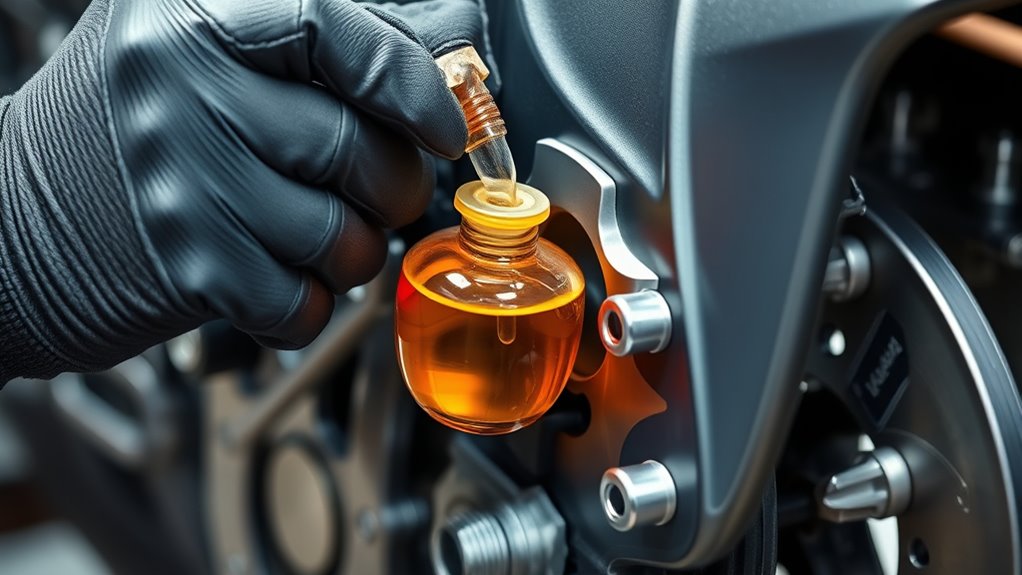
When bleeding hydraulic brakes, you remove air bubbles that reduce braking efficiency, ensuring the system works correctly. Use proper tools and follow a sequence, starting with the wheel farthest from the master cylinder. Be careful not to let the brake fluid reservoir run dry, and always use clean, compatible brake fluid. Rushing can introduce contaminants or incomplete air removal, compromising safety. If you want to know more about the full process and precautions, keep exploring these essential tips.

Get your wardrobe favorites delivered free — and shop member deals
- Fast, free delivery on millions of items
- Access to Prime Big Deal Days deals on October 6–7
- Prime Video, Amazon Music and more included
Key Takeaways
- Bleeding hydraulic brakes removes air bubbles that reduce braking efficiency and can cause a spongy pedal feel.
- Always monitor brake fluid levels during bleeding to prevent system contamination and ensure proper operation.
- Use the correct, clean brake fluid as specified in the vehicle’s manual to avoid damage and maintain safety.
- Follow the proper bleeding sequence, starting with the wheel farthest from the master cylinder, to ensure all air is expelled.
- Rushing or improper technique can introduce dirt or air, compromising brake safety; use proper tools and procedures for best results.

Have you ever experienced a spongy or unresponsive brake pedal? That feeling often signals that your hydraulic brake system needs attention. Bleeding your brakes is a vital step to remove air bubbles that may have entered the lines, as trapped air compresses more easily than brake fluid, leading to poor braking performance. Before you start, it’s essential to understand the different brake fluid types compatible with your vehicle. Most modern cars use DOT 3, DOT 4, or DOT 5.1 brake fluids, each with specific properties and boiling points. Using the wrong fluid can cause damage to seals or reduce braking efficiency. Always check your owner’s manual to determine the correct brake fluid, and verify you’re using fresh, clean fluid from a sealed container for the best results.
Next, gather the right bleeding equipment. This typically includes a clear hose, a container to catch old fluid, a wrench to open and close the bleeder valves, and a brake bleeding kit if you prefer a more streamlined process. Many kits come with a one-way valve or a hand pump that makes bleeding much easier and reduces the risk of introducing more air into the system. Proper equipment not only speeds up the process but also minimizes contamination or mistakes that could compromise your brake system. Remember, bleeding brakes is a delicate task—air is the enemy, and even the smallest bubble can jeopardize your safety. Resources and tools such as proper equipment can significantly improve the safety and efficiency of the process.
When you’re ready to begin, start by ensuring the vehicle is securely supported and the engine is off. Open the master cylinder cap carefully, making sure not to let dirt fall inside. Attach the clear hose to the bleeder valve on each wheel, starting with the wheel farthest from the master cylinder, usually the passenger rear. Have someone press the brake pedal slowly while you loosen the bleeder valve to allow air and old fluid to escape. Then tighten the valve before they release the pedal. Repeat this process until clear, bubble-free fluid flows through the hose. It’s vital to keep an eye on the brake fluid reservoir—never let it run dry, or you’ll introduce more air into the system.
Throughout the process, stay attentive to the quality of the fluid and the equipment. Using contaminated or old brake fluid, or rushing the bleeding process, can lead to compromised brakes. Always dispose of old brake fluid properly, as it’s toxic. When finished, check the brake pedal firmness and test drive your vehicle cautiously. Proper bleeding ensures your brakes deliver consistent, reliable stopping power, keeping you safe on the road.
As an affiliate, we earn on qualifying purchases.
Frequently Asked Questions
How Often Should Hydraulic Brakes Be Bled for Optimal Performance?
You should bleed your hydraulic brakes every 1 to 2 years, following the bleeding frequency guidelines for your vehicle. Regularly checking your brake fluid lifespan helps prevent moisture buildup and guarantees peak performance. If you notice spongy brakes or decreased responsiveness, it’s time to bleed the system sooner. Consistent maintenance keeps your brakes effective and safe, so don’t wait until issues arise to schedule a bleeding session.
Can I Bleed Hydraulic Brakes Without Professional Tools?
Imagine you’re in your garage, ready for some DIY maintenance on your bike, and you wonder if you can bleed hydraulic brakes without professional tools. The answer is yes, but it’s tricky. You can use makeshift methods, but be aware of different brake fluid types—DOT or mineral oil—that require specific handling. While possible, using proper tools guarantees safety and effectiveness, so consider investing in a brake bleeding kit for best results.
What Are Signs That My Brake System Needs Bleeding?
You’ll notice your brake system needs bleeding if you experience uneven brake response or a spongy pedal feel. Additionally, brake fluid contamination can cause poor performance, so check for dark or dirty fluid. If your brakes feel less responsive or you see air bubbles in the fluid, it’s a sign to bleed the system. Regularly inspecting your brake fluid helps prevent issues caused by contamination and air in the lines.
Are There Risks of Over-Bleeding Hydraulic Brakes?
Think of over-bleeding your brakes as pouring too much ink into a pen—things get messy. You risk removing too much brake fluid, leading to contamination and air bubble formation, which can compromise braking power. Over-bleeding can cause spongy brakes or even loss of braking entirely. So, be cautious and follow proper procedures, ensuring you don’t introduce risks like brake fluid contamination or air bubbles that weaken your brake system.
How Does Ambient Temperature Affect Brake Bleeding Procedures?
Ambient temperature impacts brake bleeding because thermal expansion can cause brake fluid to expand or contract, affecting system pressure. Warmer temperatures may lead to fluid expansion, requiring you to perform temperature compensation during bleeding to avoid over-pressurizing the system. Conversely, colder temperatures cause fluid contraction, possibly leaving air bubbles or moisture behind. Always account for ambient temperature changes to guarantee a proper, safe brake bleed, maintaining ideal brake performance.
hydraulic brake fluid transfer pump
As an affiliate, we earn on qualifying purchases.
As an affiliate, we earn on qualifying purchases.
Conclusion
Remember, maintaining your hydraulic brakes with proper bleeding isn’t just a task—it’s a gentle act of care that keeps your ride smooth and safe. A little attention now guarantees you won’t face unexpected bumps along the way. By staying mindful and cautious, you’re nurturing your bike’s harmony, allowing it to serve you faithfully. Embrace these small moments of upkeep, and enjoy the quiet confidence that comes with knowing you’re riding on a foundation of thoughtful maintenance.
As an affiliate, we earn on qualifying purchases.
As an affiliate, we earn on qualifying purchases.
Fall Picks
fall essentials
As an affiliate, we earn on qualifying purchases.