
Wider tires make urban riding better by offering more comfort, stability, and grip on uneven city streets. They work well at lower pressures, absorbing bumps and potholes, which smooths out your ride. Their larger contact patch increases traction and control during quick turns or stops. But, not all frames fit wider tires, so checking compatibility is key. Want to discover how proper inflation and bike setup can maximize these benefits? Keep exploring to find out more.

Get your wardrobe favorites delivered free with Prime
- Fast, free delivery on millions of items
- Prime Video, Amazon Music and more included
- Member-only deals all year
Key Takeaways
- Wider tires operate better at lower pressures, increasing comfort and shock absorption on rough city streets.
- They provide a larger contact patch, enhancing grip and stability during quick maneuvers and sudden stops.
- Properly inflated wider tires reduce rolling resistance, improving efficiency and ride quality.
- Compatibility with bike frames is essential to prevent rubbing and ensure safe, optimal performance.
- They help absorb bumps and cracks, offering a smoother, safer urban riding experience.

Have you ever wondered if broader tires could make your urban rides smoother and more comfortable? The truth is, they often do, and understanding why can help you make smarter choices for your bike. One key factor is tire pressure. Wider tires naturally operate better at lower pressures, which means you can run them with less air. This softer contact with the road absorbs bumps, cracks, and potholes more efficiently than narrow tires. When you reduce tire pressure, you’ll notice a significant improvement in comfort, especially over rough city streets. Plus, lower pressure increases the contact patch—the area where the tire meets the pavement—giving you better grip and stability. This is vital for urban riding, where quick maneuvers and sudden stops are common.
Wider tires at lower pressure boost comfort, grip, and stability on city streets.
However, before switching to wider tires, you need to think about frame compatibility. Not all frames are designed to accommodate larger tires. Check your bike’s clearances—measure the space between the tire and the frame or fork. If your current setup is tight, you might need a new frame or fork designed for wider tires. Some bike manufacturers produce models with extra clearance, but older or more traditional frames might limit how wide you can go. Ignoring this can lead to rubbing, which not only damages the tire but also compromises safety and handling. So, it’s vital to verify whether your bike can handle the wider tires you’re considering. If it can, you’re in for a smoother, more controlled ride.
Another aspect to think about is how wider tires influence your bike’s overall geometry and performance. Because they are larger, they can slightly raise your bike’s height and change how it responds to steering. This isn’t necessarily a problem, but it’s worth keeping in mind. Also, wider tires tend to be heavier, which can impact acceleration and climbing, but the trade-off is often worth it for the extra comfort and grip. Additionally, choosing the right tire pressure is crucial to maximize these benefits, as improper inflation can negate the advantages of wider tires. Properly inflated tires also reduce rolling resistance, making your ride more efficient. When installing wider tires, make sure your tire pressure is appropriate—not too high, which negates the benefits, or too low, which risks pinch flats. Many urban riders find that experimenting with different pressures within the recommended range helps find the perfect balance between comfort, control, and efficiency. Being mindful of tire selection can further enhance your riding experience by ensuring compatibility and optimal performance. Moreover, understanding how urban terrain impacts your choice of tires can help you better tailor your setup to your riding environment. Additionally, selecting tires with suitable tread patterns can improve traction on various city surfaces, further enhancing your ride quality.
In the end, the real reason wider tires make urban riding better is their ability to improve comfort, grip, and stability—if your bike can support them. By paying attention to tire pressure and checking frame compatibility, you set yourself up for a smoother, safer, and more enjoyable city ride.
wider bike tires for urban riding
As an affiliate, we earn on qualifying purchases.
As an affiliate, we earn on qualifying purchases.
Frequently Asked Questions
Do Wider Tires Require Special Rims or Rims Modifications?
Wider tires typically need compatible rims for proper rim compatibility and safe tire installation. You don’t usually need rim modifications, but you should guarantee your rims are designed to handle the increased width. Check your bike’s specifications and consult a professional if unsure. Proper rim compatibility ensures the wider tires fit securely and safely, making your urban riding smoother and more comfortable without risking tire or rim damage.
How Do Wider Tires Affect Bike Weight and Handling?
Wider tires increase your bike’s weight slightly, but they considerably improve tire traction, especially on urban surfaces, which boosts your ride stability. The added width offers a larger contact patch with the ground, enhancing grip and control. While the extra weight might feel noticeable at first, the improved handling and stability make your urban rides smoother and safer, particularly when steering through tight corners or uneven pavement.
Are Wider Tires More Prone to Flats in Urban Environments?
You might think wider tires are more prone to flats, but that’s not always true. While they can be more vulnerable to sharp objects, their increased tire durability and puncture resistance often compensate. Plus, their wider footprint helps distribute forces better, reducing pinch flats. So, in urban environments, they can actually be more resilient, giving you peace of mind and fewer flats, even if the risk feels higher at first glance.
What’s the Cost Difference Between Standard and Wider Tires?
Wider tires generally cost more than standard ones, often by $20 to $50 per tire, depending on the brand and quality. The price difference mainly stems from the tire tread design and rubber composition, which are more substantial for wider tires to guarantee durability and grip in urban settings. You’ll also find that thicker rubber layers and specialized tread patterns add to the expense, offering better performance but at a higher cost.
Can Wider Tires Improve Riding Comfort on Cobblestone Streets?
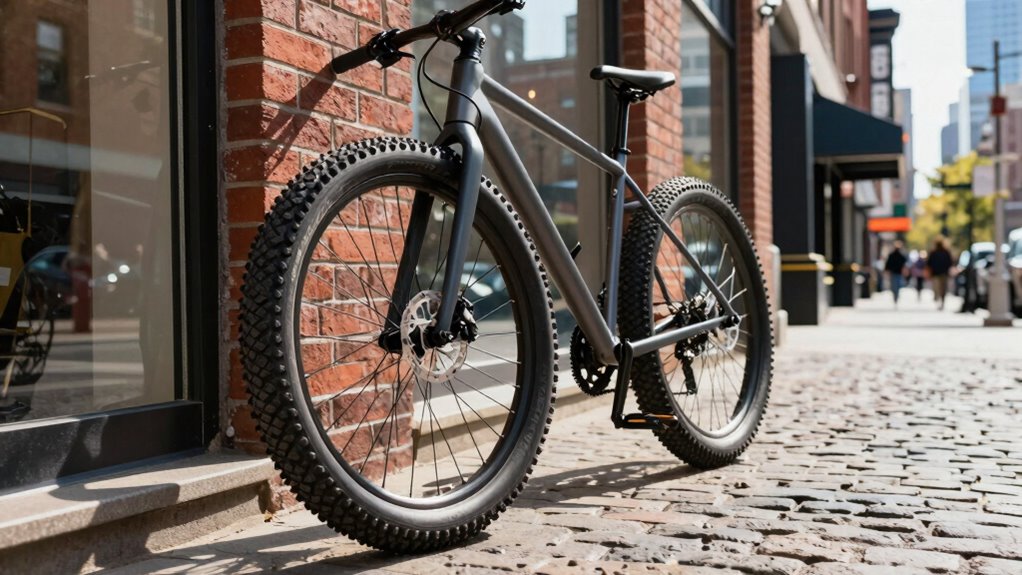
Imagine gliding smoothly over cobblestones, your wider tires cushioning each bump like a gentle bounce. They absorb vibrations better, making your ride more comfortable, especially if your riding style involves frequent stops or city commutes. Besides, wider tires often enhance tire aesthetics, giving your bike a bold look. So yes, wider tires can considerably improve comfort on cobblestone streets, aligning perfectly with your riding style and desired bike appearance.
bike tires compatible with city frames
As an affiliate, we earn on qualifying purchases.
As an affiliate, we earn on qualifying purchases.
Conclusion
So, next time you hit the streets, remember that wider tires are like a trusted dance partner—steadier, more confident, and ready to glide over life’s little bumps. They’re your secret armor against city chaos, turning rough roads into gentle whispers under your wheels. Embrace the wider stance, and watch your urban adventures become a smooth, unstoppable journey. With every pedal stroke, you’re not just riding—you’re mastering the city’s pulse with style and ease.
As an affiliate, we earn on qualifying purchases.
As an affiliate, we earn on qualifying purchases.
Halloween Picks
halloween
As an affiliate, we earn on qualifying purchases.